Updated Bio: Dr. Celucien L. Joseph

Celucien L. Joseph is an interdisciplinary scholar, researcher, and educator with a liberative intent. He is an associate professor of English at Indian River State College. He holds a PhD in Literary Studies from the University of Texas at Dallas and a PhD in Theology and Ethics from the University of Pretoria (Pretoria, South Africa). His writings engage various fields of learning such as history, literature, anthropology, religion, race relations, and history of ideas. In particular, he is an intellectual historian,  a literary scholar, and Christian theologian whose research and teaching specialties include Haitian Intellectual History and Literature, Postcolonial Theory and Literature, Religion and Race, Religion and Culture, Liberation Theology, Theological Ethics and Anthropology, Comparative History, Literature, and Culture of the African Diaspora, African American Intellectual History and Literature.  He is the author of numerous popular and academic books; his books have been published in English, Kreyol, and French. Some of his publications include Approaches to Teaching the Works of Edwidge Danticat (2019), Between Two Worlds: Jean Price-Mars, Haiti, and Africa (2018), Vodou in the Haitian Experience: A Black Atlantic Perspective (2018), Vodou in Haitian Memory: The Idea and Representation of Vodou in Haitian Imagination (2018), Thinking in Public: Faith, Secular Humanism, and Development in Jacques Roumain (2017), etc.  His books From Toussaint to Price-Mars: Rhetoric, Race, and Religion in Haitian Thought (2013), and Haitian Modernity and Liberative Interruptions: Discourse on Race, Religion, and Freedom (2013) received Honorable Mention at The Pan African International 2014 Book Awards. Dr. Joseph is a board member of Haitian Studies Association, a member of the editorial board of Africology: The Journal of Pan African Studies, and a frequent reviewer of manuscripts for various publishers and academic journals. 

Dr. Joseph is a frequent conference speaker, both nationally and internationally, and has given over 50 invited/guest lectures in the past eight years. He is the founder of Hope for Today Outreach (HTO), a non-profit and faith-based organization that takes a holistic approach to sustainable development and human flourishing so we can empower the poor, the marginalized, and the economically-disadvantaged individuals and families in Haiti. HTO provides leadership training to inspire and empower both men and women and serves the Haitian population in the areas of literacy and education, health, water and sanitation, agriculture and food, spiritual and theological formation, etc. In September 2019, he founded Hope Academy de Bois d’eau (HABD), a primary school that targets impoverished families in Port-Margot, Haiti.  The motto of HABD is: “Educating the next generation to become committed citizens, great leaders, and a catalyst of hope.” Dr. Joseph and his family live in Fort Pierce, Florida. 

“It is possible to be a good and critical scholar, a committed follower of Christ, and a transformational and engaged citizen.”– Dr. Celucien L. Joseph

My New Book: “Revolutionary Change and Democratic Religion”

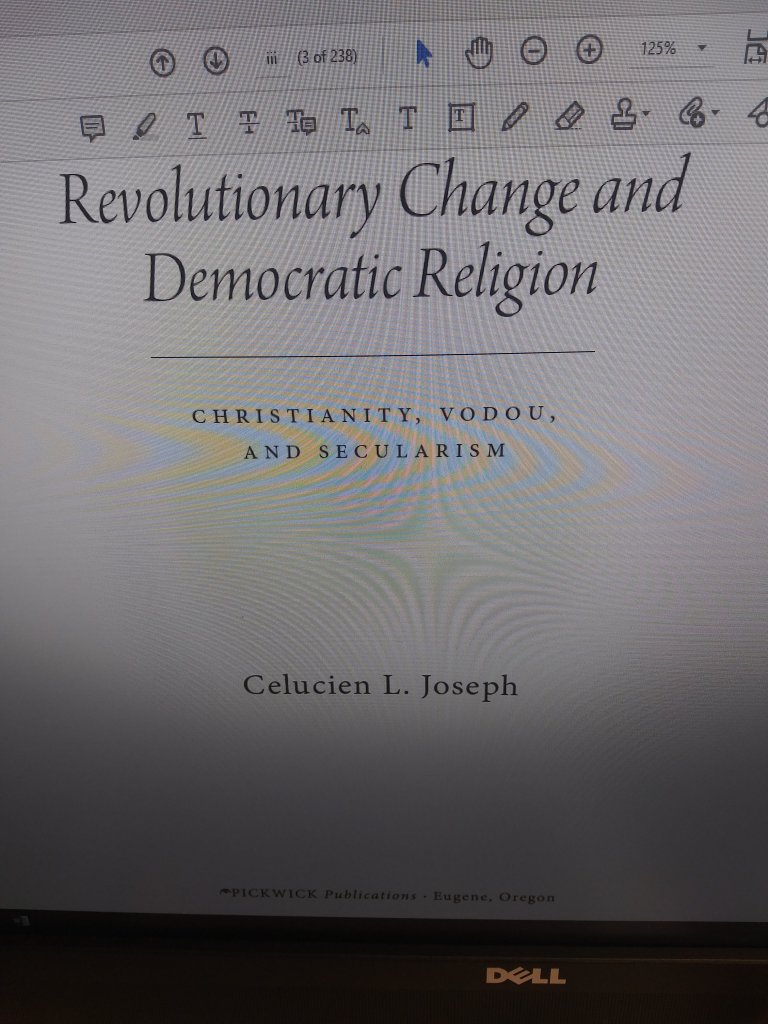
I just finished reviewing the final proofs for a forthcoming book 📖 entitled “Revolutionary Change and Democratic Religion: Christianity, Vodou, and Secularism” (Pickwick Publications, 2020). pp. 238

I also emailed the typesetter and the copy editor for final approval. Book cover is not ready yet, but will share when it’s approved.

Day Five: February 7, on Black History Month

Day Five: February 7, on Black History Month

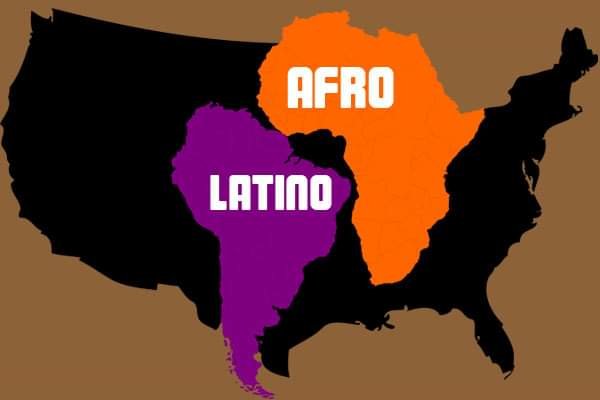
In honor of Black History Month, I am recommending the following five texts on Afro-Latin American History:

  1. “Slave and Citizen: The Negro in the Americas” by Frank Tannenbaum
  2. “Cuban Counterpoint: Tobacco and Sugar” by Fernando Ortiz
  3. “The African Experience in Spanish America” by Jr. Leslie B. Rout, Jr.
  4. “Afro-Latin America, 1800-2000″ by George Reid Andrews”
  5. “The Afro-Latin@ Reader: History and Culture in the United States” edited by Miriam Jiménez Román and Juan Flores

*** Every day is Black History Month.

Every day we celebrate human beings created in the image of God.

Every day we celebrate the gift of life and the gift of black life because black people and all people MATTER to God.

#CelebratingBlackHistoryMonth

Day Four: February 6, on Black History Month

Day Four: February 6, on Black History Month

In honor of Black History Month, I am recommending the following five texts on Caribbean History:

  1. “The Black Jacobins: Toussaint L’Ouverture and the San Domingo Revolution” by C. L. R. James
  2. “The Caribbean: The Genesis of a Fragmented Nationalism” by Franklin W. Knight
  3. “From Columbus to Castro: The History of the Caribbean, 1492-1969” by Eric Williams
  4. “Holding Aloft the Banner of Ethiopia: Caribbean Radicalism in Early Twentieth-Century America” by Winston James
  5. “Caribbean Freedom: Economy and Society to the Present” by Hilary Beckles and Verene Shepherd

*** Every day is Black History Month.

Every day we celebrate human beings created in the image of God.

Every day we celebrate the gift of life and the gift of black life because black people and all people MATTER to God.

#CelebratingBlackHistoryMonth

Day Three: February 5, on Black History Month

Day Three: February 5, on Black History Month

In honor of Black History Month, I am recommending the following five texts on Pan-African History or Pan-Africanism:

  1. “Pan-Africanism or Communism” by George Padmore
  2. “A History of Pan-African Revolt” by C. L. R. James
  3. “Pan-Africanism: The Idea and the Movement, 1776-1963” by P. Olisanwuche Esedebe
  4. “Pan-African History: Political figures from Africa and the Diaspora since 1787” by Hakim Adi and Marika Sherwood
  5. “Stokeley Speaks: From Black Power to Pan-Africanism” by Stokeley Carmichael

*** Every day is Black History Month.

Every day we celebrate human beings created in the image of God.

Every day we celebrate the gift of life and the gift of black life because black people and all people MATTER to God.

#CelebratingBlackHistoryMonth

Day Two: February 4, on Black History Month

Day Two: February 4, on Black History Month

In honor of Black History Month, I am recommending the following five texts on African History:

  1. “The African Origin of Civilization: Myth or Reality” by Cheik Anta Diop
  2. “Key Events in African History: A Reference Guide” by Toyin Falola
  3. “The Africans: A Tripple Heritage” by Ali A. Mazrui
  4. “A Thousand Years of West African History” by Jacob Ade Ajayi
  5. “The World and Africa: An Inquiry Into the Part which Africa Has Played in World History” by W. E. B. Du Bois

*** Every day is Black History Month.

Every day we celebrate human beings created in the image of God.

Every day we celebrate the gift of life and the gift of black life because black people and all people MATTER to God.

#CelebratingBlackHistoryMonth

Day One: February 3, on Black History Month

Day One: February 3, on Black History Month

In honor of Black History Month, I am recommending the following five texts on African American History:

  1. “Black Reconstruction in America, 1860-1880” by W. E. B. Du Bois
  2. “From Slavery to Freedom: A History of African Americans” by John Hope Franklin
  3. “Up from Slavery” by Booker T. Washington
  4. “The American Negro: Old World Background and New World Experience” by Rayford W, Logan and Irvin S. Cohen
  5. “Black Manhattan” by James Weldon Johnson

*** Every day is Black History Month.

Every day we celebrate human beings created in the image of God.

Every day we celebrate the gift of life and the gift of black life because black people and all people MATTER to God.

#CelebratingBlackHistoryMonth

“Extreme Poverty in Rural Haiti”

“Extreme Poverty in Rural Haiti”

I’ve been taking frequent trips to Haiti since 1995; usually, I visit Haiti two to three times a year. It hit me very hard this year when I recently went to Haiti early in January. The good team from Hope for Today Outreach and I visited about 130 homes distributing hygienic items to Haitian peasant families in a remote area (i.e. mountain) in Grande Rivière. The human condition is inhumane and quite depressing in that rural area. The level of suffering has grown over the years and touched every aspect of (peasant) life. The level of poverty that I witnessed in that area is disheartening and problematic.

I met a lady who is the mother of five children. Her husband was not home at that time. The family lives in extreme poverty. She and I share the same last name. About five years ago, she lost her home to a tragic rainfall. Her house was totally destroyed by the rain.

As a result, she and her husband relocated to the new area where I met her. She is renting her current home for $ 1500 Haitian dollars annually, which is equivalent to $ 80 U.S. dollars, annually. She is is unable to pay her rent and several months behind.The current home she is renting is made of mud, wood, and palm trees. It’s a tiny 2 bedrooms. The wall in one bedroom is severely damaged and collapsed. She has no beds inside the house; all the five children sleep on the hard floor in the tiny living room. There’s no toilet or kitchen. Some of her children were wearing very torn clothes, and the little girls had no underwear on. Folks, this is extreme poverty!

Grace and peace!

Dr. Joseph

“Pro-Life and the Way of Jesus”

“Pro-Life and the Way of Jesus”

If American christians are going to be an impartial pro-life Christian community, supported both by moral conviction and scriptural mandate, their pro-life ethico-theology must transcend the geo-political boundary of the United States.

To put this differently, when American christians promote unwarranted American military interventions in the developing world and support American wars with developing nations for the sake of American interest, thousands of unborn babies die in their mothers’ womb, newly-born infants and toddlers are also victims of American military aggression and bombing tactics, and the health of thousands of unborn babies and mothers are substantially affected by missiles and bombs. Those dangerous weapons not only cause birth defects; they are the results of thousands of deaths in the womb.

Let’s take another example that destroys life. American sanctioned-embargo in the developing world in food, medical supplies, and life necessities may result in higher starvation and poverty in those countries, affecting thousands of unborn babies and mothers (because of the lack of food and medical assistance)–leading to thousands of deaths in the womb.

It is only those who pursue peace and activate peacemaking projects who are called children of God. Non-American unborn babies and pregnant mothers in Non-American territories are also created in the image of God. Jesus loves all little children, born and unborn, American and non-American, etc. This is the way of Jesus, the christocentric ethic!

“10 Theses about Contemporary Christian International Mission and Cross-Cultural Evangelization”

“10 Theses about Contemporary Christian International Mission and Cross-Cultural Evangelization”

For many years, I have been thinking about the interreligious conflict between Christianity and other religions in the world, and the work of Christian missionaries in international mission and cross-cultural evangelization. In the context of Haiti, the conflict lies in the relationship between Vodou and Christianity, Christians and Vodouizan.

As will be observed, the essay below reveals many things about my values, ethics, theology, my understanding of human cultures and cross-cultural friendship, my understanding of the message of the Gospel and its demands upon people, and the infinite value of Jesus Christ and his atoning sacrifice for the world.

My target-audience is Christian missionaries who are investing in cross-cultural evangelization and international mission.

“10 Theses about Contemporary Christian International Mission and Cross-Cultural Evangelization”

Historically, the practice of Christian mission and evangelization, both at the cross-cultural and international level, has been influenced by American-Western ideology of conquest and an attempt to deracinate the culture and traditions of the people being evangelized. Correspondingly, Christian mission and evangelization has been operating from the foundational philosophy of the superiority of American and European cultures and value-systems, and the belief in the triumphal achievements of Western countries in global history. Also, the rhetoric of Christian mission and evangelization has also been shaped by the rhetoric of dehumanization and demonization, as circulated in American-Western books, media, and news outlets, of the non-white and Western people. In short, Christian international mission and cross-cultural evangelization has been detrimental to the values, cultures, and concerns of the brown and non-Western people.

Unfortunately, many Christian missionaries originated from Western and powerful countries support aggressively Western military interventions and wars, coups, economic sanctions and embargoes—often resulting in deaths, abject poverty, and underdevelopment—in the country they claim they are called to serve as missionaries and evangelists; to the great dishonor of the Gospel of peace, they would also interpret these human-made tragedies, catastrophes, suffering, and pain as part of the divine plan for the Gospel to penetrate that foreign land. To continue to contribute to the (on-going) misery and suffering of the people one is called to reach is the very antithesis of the Gospel of peace and reconciliation. Such attitude clearly indicates a grave misunderstanding of the task of the Christian missionary and the essence of biblical Christianity—as if one were to support a politics of human destruction and an ethics of death: social, existential, and physical.

In the same line of thought, the Christian missionary should never sustain international policies and diplomatic-immigration laws that will lead to the obliteration of (foreign) individuals, and the separation and dehumanization of the families of the people they are called to love and reach overseas. Because you are called to be a peacemaker and light of the world, God has also urged you to be on the side of the poor, the vulnerable, the economically-oppressed, and correspondingly, to defend their rights to exist and be free.The Gospel is about the activation of God’s justice and goodness in the world, and the application of divine justice in the social order; thus, the missionary-messenger should be a fierce bearer of human justice and a zealous promoter of God’s intended goal to harmonize everything and make all things right.

Moreover, because of the complexity of transmitting the message of the Gospel to a culture where Christ was not formerly known and to a people of different values than those of the Christian missionary, it creates a problem for the missionary to find the appropriate evangelistic strategy and missional method to bridge walls of division and isolation, to establish genuine human interactions and relationships, and ultimately, to share effectively the message of God’s saving grace, loving-kindness, and compassion. The insensitivity and ignorance of the Christian missionary to the culture of the non-Christian is another hindrance to the effective interpretation and proclamation of the Gospel. The presentation of the Gospel requires boldness, audacity, but not forceful conversion; by consequence, the messenger should not compromise the message, undermine the reality of human sin and oppression, and reciprocally, he/she should not negotiate the distinctive demands of the Gospel and the truths about God revealed in the character and deeds of Jesus Christ. The beauty of the Gospel lies in the person and saving work of Jesus Christ, and his message of grace, love, peace, and fraternity. It is never about the missionary’s wisdom, strength, and persuasion.

In summary, I articulate ten propositions regarding the attitude and actions of Christian missionaries engaging in international missionary endeavors and cross-cultural evangelistic activities and projects.

1. It is God who is the ground of human hope and Jesus Christ the light of cultures and the nations; it is not the culture of the missionary and certainly not the strength and resources of the missionary’s country.
2. The Christian missionary should not conflict the power of the Gospel with the political power of his/her native land; because of human greed and the longing of one nation to dominate or subdue another nation, the workings of the political power of powerful nation-states often leads to further human suffering and death, estrangement, and alienation.
3. The value and worth of the people the Christian missionary is called to reach do not lie in their knowledge of your own culture nor should you continually attempt to forcefully impose your culture upon them as if assimilation to your own culture is a prerequisite to salvation in Christ and the effective understanding of the Gospel.
4. In the same line of thought, the value and worth of the people you are commissioned to is not dependent upon them knowing your native (Western) language, as you may already and falsely assume that your language is far more superior than theirs; in fact, it will be more beneficial to your missionary outreach and effectiveness had you taken the time to learn well their language and be proficient in it. You are “the sent one” and “the commissioned one.” It is not the other way around.
5.While human sin and unrighteousness may bring about all forms of human suffering and destruction, the missionary should not rejoice in the suffering and death of the people he/she is trying to reach and thus interpret them explicitly as God-given opportunities to engage in Gospel-conversations. Certainly, without postulating a spirit of patronizing, there is an honorable way to discuss the hard life and economic poverty of the target people without undermining their worth and dignity—as they are also created in the Image of God.
6. The Christian missionary should develop a positive attitude toward the people he/she is called to evangelize and correspondingly, the messenger-missionary should foster a relationship of respect, mutual reciprocity, friendship, care, and interconnectedness. The alienated missionary is not a relational human being nor will he or she be an effective God’s servant in that given culture.
7. The Christian missionary ought to know that the saving power of the Gospel and the effective proclamation of Christ to a culture in desperate need of God’s intervening grace and redemption does not depend upon the missionary’s rhetoric of manipulation, fear, and aggression as he/she relates the message of the Gospel to the non-Christian believer in the foreign land.
8. The Christian missionary should know that the non-Christian is entitled to the exercise of religious freedom and right of his or her own religious tradition, and the deliberate practice of such a given faith. God is bigger than religious traditions, and the saving power of Christ transcends all religious authorities, rituals, and practices. Christ saves; religions do not!
9. It is not the conversion from one religion to another one that brings God’s salvation to the individual; Christ alone is the Redeemer of the human soul. The fundamental philosophy of biblical conversion and Christian mission is to make known the distinctive qualities of the person of Christ and the infinite value of his cross resulting in genuine repentance from and forgiveness of sins to the total surrender of the person’s life to God and the Lordship of Jesus Christ.
10.The end of Christian conversion is not to make new religious converts or proselytes, but to make genuine and permanent followers of Christ of all nations, cultures, and ethnic groups.

The Gospel is about the activation of God’s justice and goodness in the world, and the application of divine justice in the social order; thus, the missionary-messenger should be a fierce bearer of human justice and a zealous promoter of God’s intended goal to harmonize everything and make all things right.