“On Violence, War, Hostility, and the Radical Call to be Peacemakers”

“On Violence, War, Hostility, and the Radical Call to be Peacemakers”

“Blessed are the peacemakers, for they shall be called children of God.”
—Matthew 5:9

In the biblical tradition, the word peace is intimately associated with the character of Yahweh/God. Peace is a divine attribute of Yahweh. God is called the God of peace, and peace is what he does and who he is. Peace is a natural expression of Yahweh’s power, dominion, and sovereignty. It also communicates how Yahweh rules the world, works with people, and facilitates the affairs of the nations.

In this verse, peace is related to the Hebraic idea of shalom. The latter means harmony, flourishing, wholeness, and to cultivate a right relationship with God and others.

A peacemaker is one who serves as an active agent of reconciliation. In this verse, the term does not simply refer to a peacekeeper or a lover of peace; rather, it describes someone intentionally engaged in the hard work of (1) resolving conflict and tension, (2) restoring broken and fragmented relationships among individuals, nations, ethnic groups, and races, (3) promoting justice, unity, and reconciliation, and (4) resisting evil, violence, alienation, and division. At the same time, a peacemaker possesses a deep disposition toward peace—valuing and cultivating it both within local communities and on a broader national and global scale.

For Jesus Christ to call his disciples to be “peacemakers” in the Sermon on the Mount is to issue a clear and compelling summons for his followers to become active agents of peace, reflecting God’s commitment to all peoples and all nations. In this sense, the peacemaker is called a child of God because he or she both belongs to God and embodies God’s character. As the King of peace, God is continually initiating and sustaining peace in his governance of the nations; therefore, those who are called children of God participate in this redemptive work of peacemaking: restoring, promoting, and maintaining peace for the flourishing of humanity in the world.

Thus, in practice, those who claim to know God, belong to Him, and live in communion with Him are called to reject war, violence, and any political—whether legal or illegal—actions that do not contribute to shalom and the flourishing of humanity among the nations. This radical humility is also an intentional effort to prevent human suffering, degradation, and destruction; it’s a deliberate commitment to human dignity and sanctity of life.

To be called a peacemaker by Jesus Christ is to live as one. It is a radical calling and identity: one that seeks to transform culture, politics, law, public policy, and all forms of human relationship. By identifying the children of God as peacemakers, Jesus makes clear that they are not to be passive observers or neutral agents in the face of what is broken in society and the world. Rather, this is a call to action: to lead, to persuade, and to unify in a world often marked by intimidation, threats, injustice, aggression, retaliation, power struggles, and violence—where tensions persist between powerful and marginalized nations, and between the Global North and the Global South. Those whom Jesus calls peacemakers are charged with interrupting cycles of violence and working to end conflict, mediating disputes rather than fueling them, and pursuing unity and reconciliation even when it is unpopular. They labor intentionally toward true justice and harmony, seeking both communal and global healing even when such work is costly and sacrificial.

“Living the Jesus Way vs the Way of the Nations“

“Living the Jesus Way vs the Way of the Nations“

Violence is not associated with the Jesus Way. The Prince of peace does not conquer the world with force or lead with a sword.

Oppression contradicts the message of Christ.
It stands in defiance of the Christ who proclaims good news to the poor and sets the oppressed free. Anywhere people are in chain,
Christ is betrayed and crucified again.

War is not the language of Jesus, the crucified lamb. He still calls his followers to a higher aim of life, an obedience marked by an ethic of care and relationality, not conquest and retaliation.

Dehumanization is a threat to the biblical idea of human dignity and to the God who declares all life is sacred. Every person is a human being who bears the imprint of divine breath and beauty.

Xenophobia opposes God’s commitment of inclusive embrace of all peoples and nations, races and ethnicities. The purpose of God is to gather nations, not alienate them, and to guide and unite them as one people in grace and mercy.

The desire to dominate, conquer, and control other peoples and their nations and cultures betrays the shared values and the clarion call to love one’s neighbor and practice hospitality.
Power without love is tyranny and oppression; strength without compassion is corruption and selfishness.

If love is not the driven motive to engage others, the outcome will not bring honor to the God of peace ad love. The Jesus Way is marked by the narrow road of humility, justice, and radical love.

“Reimagining God in an Age of Chaos and War: Ten Questions for Those Committed to Peace, Justice, and Human Dignity”

“Reimagining God in an Age of Chaos and War: Ten Questions for Those Committed to Peace, Justice, and Human Dignity”

As stewards of the earth and its resources, we live in a world marked by war, alienation, displacement, and profound human suffering. In this context, questions of God, faith, and the nature of divine presence, justice, and responsibility in our midst and the world extend far beyond the boundaries of church or religion. They reach policymakers, activists, scholars, and everyday people, as well as anyone seeking meaning, peace, accountability, justice, and hope.

The following questions are not only for Christians, theologians, religious leaders, or people of faith. They are for anyone concerned with global peace, global security, and the protection of human rights and human dignity at the moment and in the future.

  1. What kind of God-language do people of the world need to hear now?
  2. What does faith look like after war, migration, exile, suffering, and displacement?
  3. Can Christianity in the United States and the West move beyond cultural dominance and political power without losing its spiritual integrity, and what would this mean for the global pursuit of justice and peace?
  4. How can religious traditions (i.e., Christianity, Islam) remain faithful to their core values while being liberated from histories of empire and domination?
  5. In what ways do religious institutions and societies misunderstand God and the liberating message at the heart of faith traditions?
  6. How has Western Christianity been complicit in systems of violence, empire, and domination, and what does repentance and reconciliation require now—toward future hope and human flourishing?
  7. Can people of faith proclaim a God of justice without reducing the divine to political ideology?
  8. What does faith look like for displaced, colonized, and marginalized peoples in a fractured world?
  9. Where is God in the suffering of the innocent during war and global crisis?
  10. Is it possible to speak of liberating hope after devastation and dehumanization without trivializing human suffering and death ?

These are not questions seeking easy answers or quick solutions. Rather, they are invitations to rethink God, biblical and global Christianity not from positions of comfort, control, and power, but from the edges of history and the life in the margins, where faith is most tested and most needed. These are questions that invite us to think deeply about the relationship between faith and culture, Christianity and global politics, theology and human experience, God and human suffering, Christian discipleship and human liberation.

Moreover, these questions invite all of us, regardless of background, religious traditions, or political position, to wrestle with the moral, spiritual, political, and human implications of our shared global crisis. As we seek an answer to these existential challenges or questions, we should always hold to the basic principle that all life is sacred and all humans are equal, and that protecting human dignity is a shared ethical responsibility.

The harsh reality is that our greatest adversary is often the person closest to us. Yet biblical wisdom calls us to love our neighbor as ourselves and to respond with goodness and compassion even to those who mistreat us. Similarly, the relentless pursuit of greed, power, and glory by the world’s dominant nations blinds them to a simple truth: humanity is one global family, and every nation is a neighbor to the others.

“Children of Light, Children of Peace”

“So Jesus said to them, ‘The light is among you for a little while longer. Walk while you have the light, lest darkness overtake you. The one who walks in the darkness does not know where he is going. While you have the light, believe in the light, that you may become [children] sons of light.’”
—John 12:35-36

The children of light are also children of God and peacemakers of this world (Matthew 5:9).
Those who do not walk in the light of Christ are not advocates of communal and global peace. They do not follow the way of the Messiah Jesus and are alienated from the ethical knowledge of God.

Those who have identified with Jesus morally and ethically do not endorse the political order and economic decisions that produce chaos or disorder in their community—i.e. political unrest, human suffering, alienation, death—nor do they stand on the side of global darkness and international oppression towards vulnerable countries and peoples. They are the light of the world and unapologetic about their moral convictions and Jesus-centered leadership.

Book Announcement

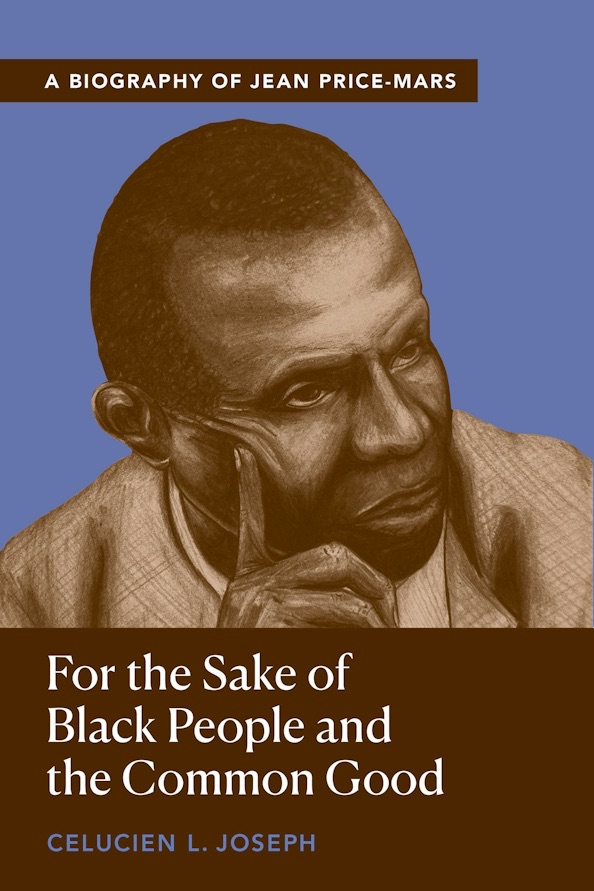
Vanderbilt University Press just announced December 15, 2026, as the publication date of my forthcoming book, “For the Sake of Black People and the Common Good: A Biography of Jean Price-Mars.” The book cover is coming soon.

Here’s the book description from their page:

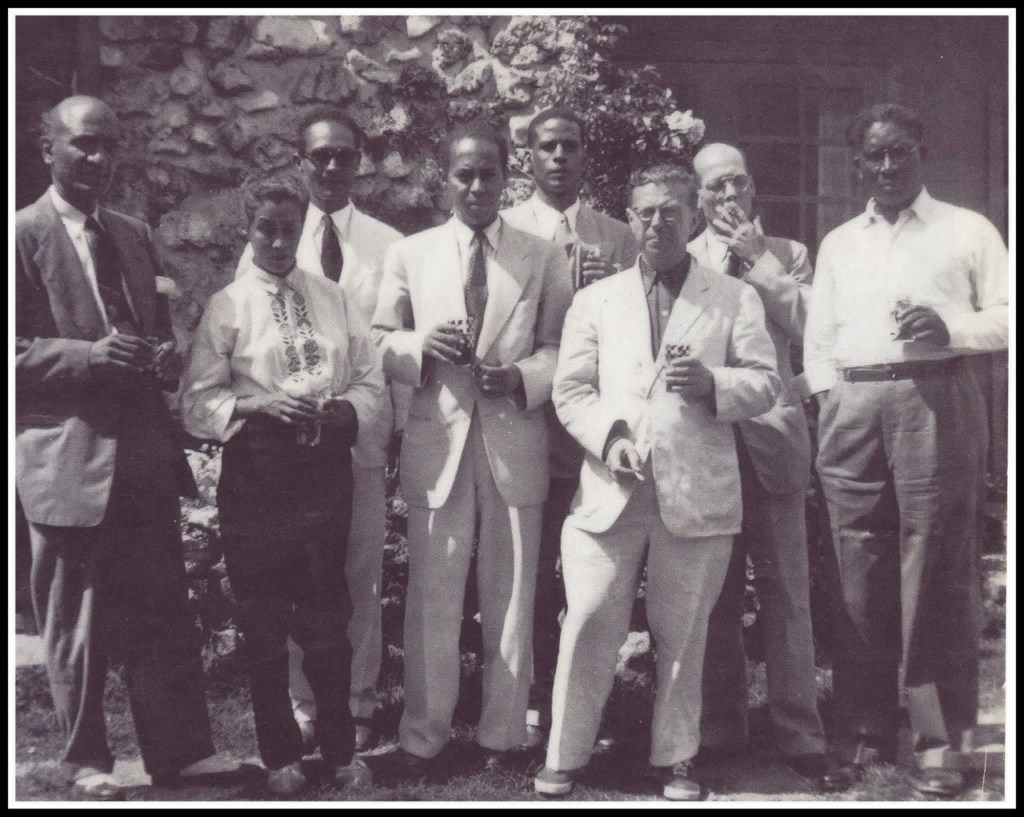
“Jean Price-Mars (1876–1969) was a doctor, teacher, diplomat, and one of Haiti’s most visionary intellectuals. This biography offers the first comprehensive look at his writings, revealing a thinker dedicated to the transformation of Haiti, the advancement of his people, and the broader Black Diaspora.

From his rigorous education and intellectual formation to his engagement with social, political, and cultural issues, Price-Mars championed women’s empowerment, gender equality, and transformative leadership. He reinterpreted the Haitian Revolution and Dessalines’ legacy while articulating Pan-Africanist ideals that connected Haiti to the wider Black world.

A modernist scholar and pluralist, Price-Mars affirmed the validity of all religions while remaining independent of any single tradition. His humanistic spirituality and radical epistemology reimagined race, culture, and nation-building, offering a new vision for Haiti and the possibilities of Black achievement across the Americas.

This book presents a full portrait of Price-Mars as a thinker, reformer, and moral visionary, and a man whose lifelong mission was nothing less than the birth of a new people and the pursuit of the common good.”

“The English Language DOES NOT Humanize the Haitian People”

“The English Language DOES NOT Humanize the Haitian People”

The American academic world produces some of the most arrogant and selfish academics and thinkers in the world. Because most American scholars and historians write and publish in the English language the same history or story that’s already been published by Haitian/African/Caribbean writers who write in French or Spanish, they give more intellectual value to their own work simply because it is written in English, and it is not because they are assessed as quality scholarship or good research. I call this attitude “intellectual imperialism” relating to the politics of the American Empire in the world to undermine the intellectual and literary productions of writers and historians in the Global South or developing world. Haiti, because of its complex history with the United States and the West, as well as with American and Western academics and writers, is a primary victim of this intellectual climate.

  1. Some of them (American academics) do not even bother to cite, for example, Haitian writers who have written on the same issue 50 years ago before they were even born or received an American doctoral (research) degree. C’mon, good people: you cannot just pretend that Haitian historians and writers did not exist in the 18th century, or nobody in Haiti wrote about Haitian national history or Haitian intellectual history from 18thto 20th century, for example.
  2. Haitian historians, writers, and scholars have been marginalized in their own discipline (s) of study, especially those who write in French about Haitian national history and Haitian political history.
  3. Not because one writes in English for an English-speaking (or American) audience means that individual has to deliberately disengage with a body of scholarship produced in a different language. It is intellectual dishonesty not to give credit or acknowledge intellectual predecessors. For example, you do not give Haitian studies legitimacy because it is done in the English language by American writers, nor do you humanize the Haitian people because you write in English about Haiti and the Haitian experience. Here, I am not referring to Haitian-born writers or those of Haitian descent who write or produce in English. This is not my point here!
  4. Unfortunately, in the American academia, producing academic works in the English language does come with academic entitlement or pedigree; nonetheless, I have to state that English as a language does not make one naturally more intelligent than others who write in a different language. I know this is a popular attitude among Americans, even among some American academics that speaking or writing in English is connected with high civilization or culture, intelligence, and fame. By contrast, I also understand writing in English comes with a great deal of academic privileges and reputation because the English language has now become more connected with the politics and expansion of the United States as the world’s most powerful country and empire today. Interestingly, this is a colonial practice in American academia. Such attitude needs to go, what we call decolonization or decolonial practice (See Ngũgĩ wa Thiong’o, “Decolonising the Mind,” 1986)
  5. Nobody expects American academics to be fluent (In fact, some of you are fluent in other languages) in French, Spanish, Kreyòl, Swahili, Swahili, Yoruba, Igbo, Fula, or another language than your native tongue: English. At least, if you are going to work or specialize on a non-English speaking country as a scholar or academic specialist, it is important to try to “read in translation” or even to “cite in translation.” Or you can seek the help of an expert. DO NOT JUST IGNORE THE NATIVE WRITERS and THEIR INTELLECTUAL PRODUCTIONS!
  6. Interestingly, American academics do not express this same attitude toward, for example, French, German, or English writers or historians. This is a rare tradition if they are writing about the history and experience of any of the countries in the West: Germany, France, Italy, England, Spain, Switzerland, etc. Haiti and Haitian writers, for example, continue to be victims of this tradition.
    How to move forward and change this BAD academic practice in America’s intellectual or academic landscape. I want to use Haiti, as an example. Haitian writers and historians have written prolifically and produced good works about some of the key issues in Haitian national history:

· The Haitian Revolution
· Haiti’s colonial history/Slavery and colonization in Haiti
· Haitian resistance to slavery and Western imperialism
· France’s economic exploitation of Haiti (the indemnity/the debt)
· The 1860 revolution
· American military occupation and invasion in Haiti (1915-1934)
· The rise of Haitian radicalism and Marxism in the 20thcentury
· The rise of Feminist movement in Haiti
· Haiti’s popular culture
· The foreign relations between Haiti, the United States, and the West
· The Duvalier regime
· The Aristide phenomenon and the 2nd American military invasion in Haiti
· Haitian Vodou
· Haitian anthropology and ethnology
· The politics of NGOS in Haiti
· Haiti’s economic development and dependency
· Haiti’s public health system
· Haiti’s education system
· Haiti’s environmental issue

Below, I highlight some of the major Haitian writers and thinkers to get acquainted with their writings, especially those published in the French language. For each historical period, I list 30 to 45 well-known writers and thinkers.

A. The 19th century

  1. Louis Félix Mathurin (“Boisrond-Tonnerre”
  2. Pompée Valentin Vastey (“Baron de Vastey”)
  3. Hérard Dumesle
  4. Joseph Saint Remy
  5. Anténor Firmin
  6. Beaubrun Ardouin
  7. Coriolan Ardouin
  8. Celigny Ardouin
  9. B. Lepinasse
  10. Antone Dupre
  11. Jean-Baptiste Romane
  12. J. Leger
  13. Démesvar Delorme
  14. Bénito Sylvain
  15. Louis-Joseph Janvier
  16. F.É. Dubois
  17. Thomas Madiou
  18. Frederic Marcelin
  19. Hannibal Price
  20. Pauléus Sannon
  21. Etzer Vilaire
  22. Justin Lhérisson
  23. Juste Chanlatte
  24. Jules Solime Milscent
  25. Massillon Coicou
  26. Ignace Nau
  27. Emeric Bergeaud
  28. P. Lochard
  29. Oswald Durand
  30. Antoine Innocent

B. The 20th century

  1. Marie Vieux-Chauvet
  2. Duracine Vaval
  3. Dantès Bellegarde
  4. François Duvalier
  5. Paulette Poujol-Oriol
  6. Marie-Thérèse Colimon-Hall
  7. Jean Price-Mars
  8. Jacques Roumain
  9. Jacques Stephen Alexis
  10. René Depestre
  11. Alfred Auguste Nemours
  12. Horace Pauleus Sannon
  13. Henock Trouillot
  14. Michel-Rolph Trouillot
  15. Ernst Trouillot
  16. Jean Fouchard
  17. Gérard Mentor Laurent
  18. Madeleine Sylvain-Bouchereau
  19. Suzanne Comhaire-Sylvain
  20. Pradel Pompilus
  21. Laennec Hurbon
  22. Fernand Hibbert
  23. Jean-Baptiste Cineas
  24. Philippe Thoby-Marcalin
  25. Pierre Thoby-Marcalin
  26. J. C. Dorsainvil
  27. Leon Laleau
  28. Catts Pressoir
  29. Louis Borno
  30. Roger Gaillard
  31. Normil Sylvain
  32. Cleante Valcin
  33. Suzy Castor
  34. Roussan Camille
  35. Edris Saint-Amand
  36. Ida Salomon Faubert
  37. Jacques Stephen Alexis
  38. Franketienne
  39. Jean Cassimir
  40. Morisseau-Leroy
  41. Ghislain Gouraige
  42. Edwidge Danticat
  43. Dany Laferrière
  44. Jean F. Brière
  45. Carl Brouard
  46. Georges Sylvain
  47. Felix Morisseaux
  48. George Anglande
  49. Christophe Philippe-Charles
  50. Anthony Phelps
  51. René Philoctète
  52. Laroche Maximilien
  53. Enock Trouillot
  54. Georges Corvington
  55. Gergard Barthemy
  56. Roger Dorsainvil
  57. Leslie F. Manigat
  58. Catts Pressoir
  59. Roger Gaillard
  60. Timoléon C. Brutus
  61. Damase Pierre-Louis

C. Late 20th century and early 21st century

  1. Patrick Bellegarde-Smith
  2. Danny Laferriere
  3. Georges Castera
  4. Louis Philippe Dalenbert
  5. Evelyn Trouillot
  6. Josaphat Robert Large
  7. Marie-Celie Agnant
  8. Yanick Lahens
  9. Jessica Fievre
  10. Felix Morisseaux
  11. Kettly Mars
  12. Lyonel Trouillot
  13. Odette Roy Fombrun
  14. Roussan Camille
  15. Jean-Bertrand Aristide
  16. Lemete Zephyr
  17. Robert Fatton
  18. Alex Dupuy
  19. . Edwidge Danticat
  20. Michel S. Laguerre
  21. Myriam J. A. Chancy
  22. Patrick Bellegarde-Smith
  23. Laennec Hurbon
  24. Louis-Philippe Dalembert
  25. Gary Victor

*** Of course, I am missing other influential thinkers in my list and may have repeated some writers twice. I wrote this post in response to a series of important articles published in the New York Times (“The Ransom: 6 Takeaways About Haiti’s Reparations to France”; “The Ransom: A Look Under the Hood”; Investigating Haiti’s ‘Double Debt”; “The Root of Haiti’s Misery: Reparations to Enslavers”). Please do not misunderstand the intent of my post! As an academic, I clearly understand academic scholarship is a teamwork that engages the labor of other scholars, for which I am thankful. I also understand academics or scholars depend on previous works done by others to further their own contribution in the field of study or advance knowledge in a particular discipline–hopefully toward the common good and human flourishing in the world. In other words, no one works in isolation, and no one can claim intellectual monopoly when it comes to academic studies, research, and epistemology. Yet we must not ignore those who are writing on the margins and work predominantly from the context of a developing country in the Global South. Their work matters! Their ideas are worth citing (in English)! Their contribution is worth acknowledging in public.

There are actually existing “traditions,” a reference to the way of thinking, intellectual practices, and of perceiving and interpreting the Haitian world and other worlds in Haitian history, and those traditions encompass various worldviews, and fields of study and different areas in the human and Haitian experience, including literary, religious, historical, political, philosophical, and ideological traditions.
It is my idea of the “Haitian canon.” In the same way, throughout the Haitian history, since its birth in 1804, there existed movements, such as labor, feminist, economic, human rights, political movements that have shaped the human experience in Haiti. Haitian writers and historians have documented their own histories and stories, experiences and living conditions, and such (literary) receipts could be traced to the country’s first piece of writing: Haiti’s Declaration of Independence (1 January 1804). In other words, Haitian writers have not been silenced about the Haitian experience in the world.