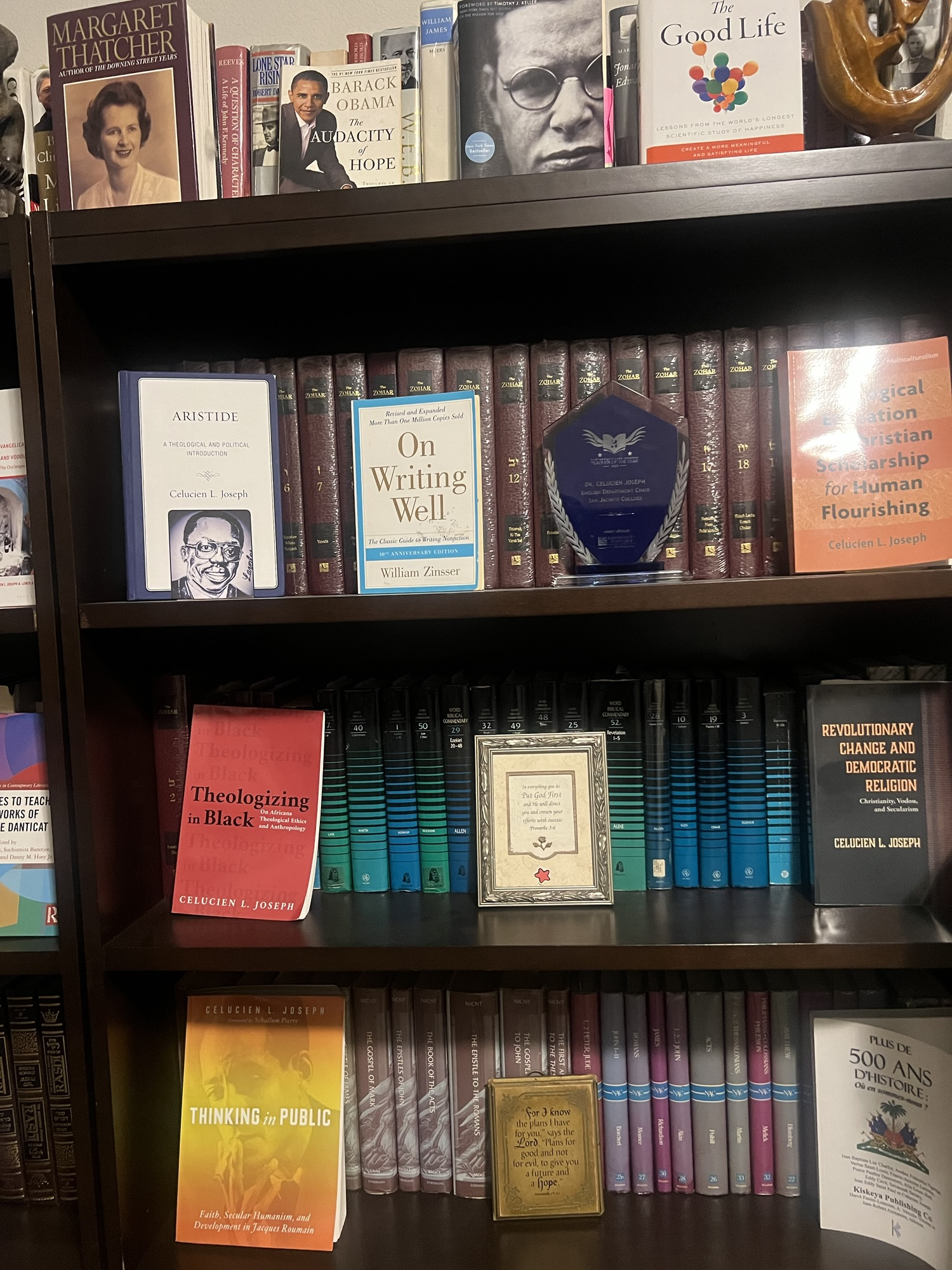
Selected Publications
- Reconstructing the Social Sciences and Humanities: Antenor Firmin, Western Intellectual Tradition, and Black Atlantic Tradition edited with Paul Mocombe (Routledge, 2021)
- Theologizing in Black: Africana Theological Anthropology and Ethics (Pickwick Publications, 2020)
- Revolutionary Change and Democratic Religion: Christianity, Vodou, and Secularism Paperback (Pickwick Publications, 2020)
- Approaches to Teaching the Work of Edwidge Danticat edited with Marvin E. Hobson, Suchismita Banerjee, and Danny Hoey (Routledge, 2019)
- Between Two Worlds: Jean Price-Mars, Haiti, and Africa edited by Celucien L. Joseph, Jean Eddy Saint Paul, and Glodel Mezilas (Lexington Books, 2018)
- Thinking in Public: Faith, Secular Humanism, and Development in Jacques Roumain(Pickwick Publications, 2017)
- Radical Humanism and Generous Tolerance: Soyinka on Religion and Human Solidarity (Hamilton Books, 2016)
- Vodou in Haitian Memory: The Idea and Representation of Vodou in Haitian Imaginationedited by Celucien L. Joseph & Nixon Cleophat (Lexington Books, 2016)
- Vodou in the Haitian Experience: A Black Atlantic Perspective edited by Celucien L. Joseph & Nixon Cleophat (Lexington Books, 2016)
- Haitian Modernity and Liberative Interruptions: Discourse on Race, Religion, and Freedom (University Press of America, 2013)
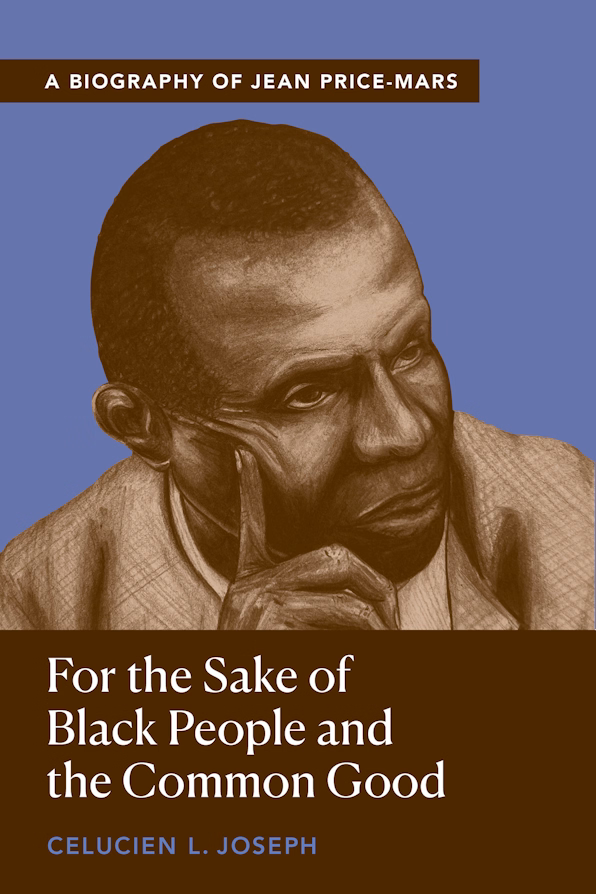
Description
Jean Price-Mars (1876–1969) was a doctor, teacher, diplomat, and one of Haiti’s most visionary intellectuals. This biography offers the first comprehensive look at his writings, revealing a thinker dedicated to the transformation of Haiti, the advancement of his people, and the broader Black Diaspora.From his rigorous education and intellectual formation to his engagement with social, political, and cultural issues, Price-Mars championed women’s empowerment, gender equality, and transformative leadership. He reinterpreted the Haitian Revolution and Dessalines’ legacy while articulating Pan-Africanist ideals that connected Haiti to the wider Black world.
A modernist scholar and pluralist, Price-Mars affirmed the validity of all religions while remaining independent of any single tradition. His humanistic spirituality and radical epistemology reimagined race, culture, and nation-building, offering a new vision for Haiti and the possibilities of Black achievement across the Americas. This book presents a full portrait of Price-Mars as a thinker, reformer, and moral visionary, and a man whose lifelong mission was nothing less than the birth of a new people and the pursuit of the common good. For the Sake of Black People and the Common Good (December 2026) is published by Vanderbilt University Press and can be pre-ordered online.
Praise
“This is a monumental and much-needed intellectual biography that will stand as a major contribution to Haitian studies and Black Atlantic thought.”
—Linsey Sainte-Claire, assistant professor of Francophone Studies at Rice University
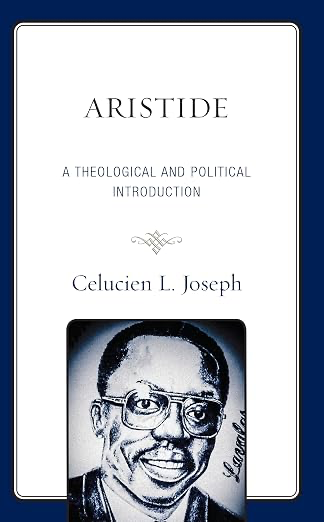
Description
Aristide: A Theological and Political Introduction (Fortress Academic, 2023) is an engaging biography of Jean-Bertrand Aristide that examines his intellectual life, theological ideas, and political vision. The book also explores how his theology has influenced his politics of solidarity and relationality and his social activism on behalf of the working class and the poor in Haiti, and it considers the implications of his ideas for Christian ethics and engagement in society and the democratic life. The book seeks to answer three questions: What is the relationship between theology, ethics, and social activism and transformation in the writings of Aristide? What is the relationship between (political) theology and defensive violence in Aristide’s thought in the struggle for democracy and human rights in Haiti? Or can a theology of peace and a theology of bellicosity and violence coexist? Celucien L. Joseph also considers Aristide’s efforts to foster democratic change, development, and human flourishing in the context of Haitian society.
Praise
“Haiti holds a revered place in the long history of the Black liberation movement, as the first Black republic in the west and the scene of the greatest anti-colonial uprising the world has ever seen. This hugely impressive book on Aristide by Celucien Joseph provides a theo-political commentary on the continued struggle for Black liberation on this Caribbean island where self-determination remains an essential marker for a people who will never give in or give up on their dreams to be free.” ―Anthony G. Reddie, director of the Oxford Centre for Religion and Culture, Regent’s Park College, the University of Oxford; Extraordinary Professor of Theological Ethics at the University of South Africa
“This book provides a needed and interesting theological approach to the study of Aristide’s political trajectory.” ―Robert Fatton, Jr., University of Virginia
“[There] are brilliant, helpful and constructive insights here that would add towards a fuller picture and greater appreciation of Jean-Bertrand Aristide. Celucien Joseph has clearly produced a much-needed volume in reclaiming Aristide as part of the history of Caribbean ideas and intellectual discourse. The research, thought and intentional work towards delivering this volume cannot be underestimated and is certainly an addition to Caribbean critical, theological and historical scholarship that others will build upon and expand.” ―Black Theology: An International Journal
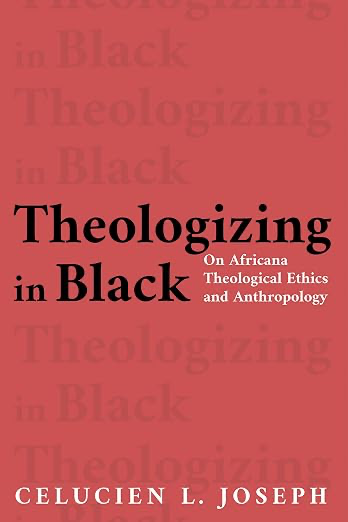
Description
Theologizing in Black (Pickwick Publications, 2020) is a creative and rigorous comparative study on black theological musings and liberative intellectual contemplations engaging the theological ethics and anthropology of both continental African theologians (Tanzania, Kenya, Democratic Republic of the Congo) and black theologians in the African Diaspora (Haiti, Trinidad, Jamaica, Antigua and Barbuda, United States). Using the pluralist approach to religion promoted by the philosopher of religion and theologian John Hick, the book is also an attempt to bridge an important gap in the comparative study of religion, Africana Studies, and Liberation theology, both in Africa and its diaspora. The book provides an analytical framework and intellectual critique of white Christian theologians who deliberately disengage with and exclude black and Africana theologians in their theological writings and conversations. From this vantage point, Africana critical theology is said to be a theology of contestation as it seeks to deconstruct white supremacy in the theological enterprise. This book not only articulates a rhetoric of protest about the misrepresentation and underrepresentation of the humanity of African and black people in white theological imagination; it also enunciates a positive image of black humanity and congruently promulgates a constructive representation of blackness. The paramount goal of Africana theological anthropology and ethics is the preservation of life and promotion of human dignity and the sheer acknowledgement that the African people and people of African descent are bearers of the image of God.
Praise
“Theologizing in Black by Celucien Joseph brings the voices of Africa and the African Diaspora to center stage while avoiding the US-centric bias of African Diaspora studies by locating distinctly US voices like James H. Cone in global context. Joseph challenges Africana studies and black liberation theology to engage theological writings in languages other than English, thereby providing a much-needed corrective to the Western and Eurocentric cultural hegemony within academic discourse.”
–Rubén Rosario Rodríguez, Saint Louis University
“Joseph’s work is theoretically sophisticated and pedagogically innovative. Joseph interacts with major thinkers in the field of black and African religions, but he also introduces other voices who should have been part of the conversations long ago. His analysis of the work of Jean Price Mars, a towering nineteenth-century Haitian intellectual, and his nuanced treatment of black and African religious expressions make his contribution a refreshing scholarly addition. For its clear exposition and thought-provoking ideas, I wholeheartedly recommend this book.”
–Ronald Charles, St. Francis Xavier University, Nova Scotia, Canada
Description
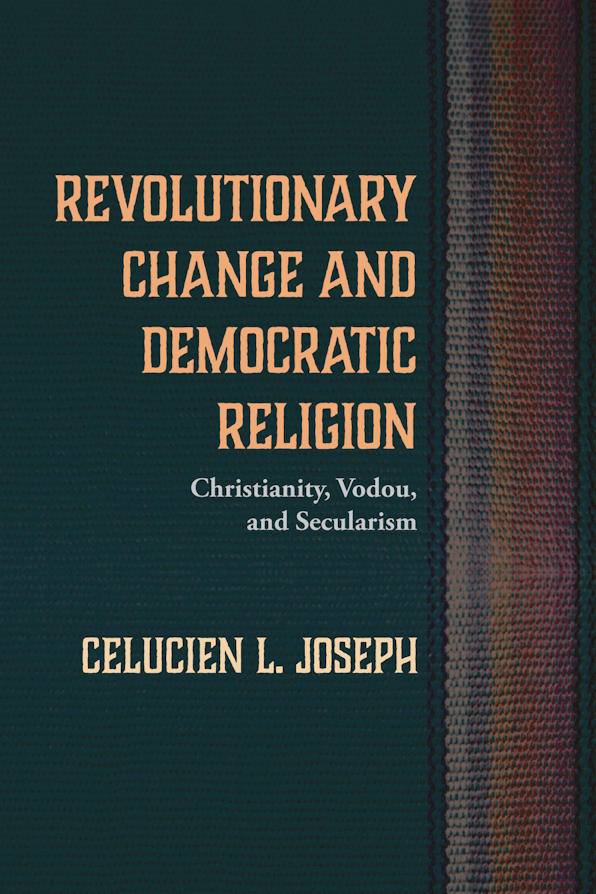
In Revolutionary Change and Democratic Religion (Pickwick Publications, 2020), Celucien Joseph provides a fresh and careful reexamination of Haiti’s intellectual history by focusing on the ideas and writings of five prominent thinkers and public intellectuals: Toussaint Louverture, Joseph Antenor Firmin, Jacques Roumain, Dantes Bellegarde, and Jean Price-Mars. The book articulates a twofold argument. First of all, Haiti has produced a strong intellectual tradition from the revolutionary era to the postcolonial present, and that Haitian thought is not homogeneous and monolithic. Joseph puts forth the idea that the general interweaving themes of rhetoric, the race concept, race vindication, universal emancipation, religious pluralism, secular humanism, the particular and the universal, and cosmopolitanism are representative of Haiti’s intellectual tradition. Secondly, the book also contends that Haitian intellectuals have produced a religious discourse in the twentieth century that could be phrased religious metissage. The religious ideas of these thinkers have been shaped by various forces, ideologies, religious traditions, and philosophical schools. In the same way, the religious experience of the Haitian people should be understood in terms of conflicting, heterodox, and pluralistic manifestations of religious piety, as the people in Haiti reacted to the crisis of slavery, Western colonialism and imperialism, and the arrogance of race in modernity in their striving to reposition themselves within the framework of universal and human metanarratives. The book departs from the dominant (contemporary) Vodou scholarship that is often characteristic of North American and Western studies on the religious life of the Haitian people and Haitian thinkers.
Praise
“This provocative book provides an opportunity to reflect on Dr. Joseph’s summaries of historical Haitians and their intellectual understandings of race, politics, religion, and their intersectionality. The book is an opportunity to engage with the role of Haitian religion as intellectual and social praxis from a variety of perspectives.”
—Charlene Désir, T.E.N. Global
“In the tradition of liberation theology, Celucien Joseph’s work, Revolutionary Change and DemocraticReligion, marries the metaphysics of religion with dialectical materialist revolutionary social change to offer a utopian vision for society. Although as a metaphysical materialist I disagree with the underlying idealist premise of the work, its utopian vision assuages my opposition enough to offer my endorsement of this worthwhile text.”
—Paul C. Mocombe, West Virginia State University and The Mocombeian Foundation, Inc.
“This book offers us an interesting reflection on questions relating to freedom, human dignity, and religious traditions in Haiti. The author examines various works contributing to the development of Haitian thought and in relation to universal and human rights. He also studies different approaches to religion and secularism developed by Haitian authors (Jacques Roumain, Jean-Bertrand Aristide, Laënnec Hurbon, and Jean Fils-Aimé) in a context of social change. It is an important book to offer! It is a book to discover, absolutely!”
—Lewis A. Clorméus, State University of Haiti
“Spanning from colonial Saint Domingue to twenty-first-century Haiti, Revolutionary Change and Democratic Religion re-examines the political and social thought of six influential Haitian thinkers, including Toussaint Louverture, Anténor Firmin, and Jean-Bertrand Aristide. In doing so, it provides an important reconsideration of Haitian intellectual history. As Joseph shows, Haitian thinkers have offered enduring theories of freedom, humanism, history, and social justice. They must be centered in any comprehensive intellectual history of the modern world.”
—Brandon R. Byrd, Vanderbilt University
Description
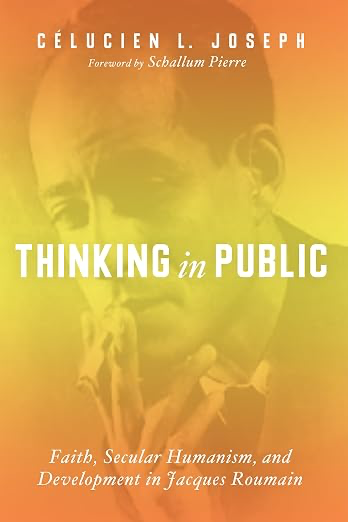
Thinking in Public (Wipf and Stock Publishers, 2017) provides a probing and provocative meditation on the intellectual life and legacy of Jacques Roumain. As a work of intellectual history, the book investigates the intersections of religious ideas, secular humanism, and development within the framework of Roumain’s public intellectualism and cultural criticism embodied in his prolific writings. The book provides a reconceptualization of Roumain’s intellectual itineraries against the backdrop of two public spheres: a national public sphere (Haiti) and a transnational public sphere (the global world). Second, it remaps and reframes Roumain’s intellectual circuits and his critical engagements within a wide range of intellectual traditions, cultural and political movements, and philosophical and religious systems. Third, the book argues that Roumain’s perspective on religion, social development, and his critiques of religion in general and of institutionalized Christianity in particular were substantially influenced by a Marxist philosophy of history and secular humanist approach to faith and human progress. Finally, the book advances the idea that Roumain’s concept of development is linked to the theories of democratic socialism, relational anthropology, distributive justice, and communitarianism. Ultimately, this work demonstrates that Roumain believed that only through effective human solidarity and collaboration can serious social transformation and real human emancipation take place.
Praise
“Celucien Joseph offers a definitive study of Jacques Roumain as an engaged ‘native intellectual, ‘ whose novels, essays, and public intellectual interventions in the Haitian cultural sphere should be regarded of global importance. Joseph’s thorough analysis of Roumain’s Marxist, anti-clerical, anti-capitalistic, pro-peasant, spiritual, Kreyol, community-focused perspectives re-awakens for a contemporary audience the genius and insight of a sleeping giant in a world still yearning for vision, transformation, and healing in the wake of (neo)colonialism’s violent imprint.”
–Myriam J. A. Chancy, Hartley Burr Alexander Chair, Scripps College; Guggenheim Fellow
Description
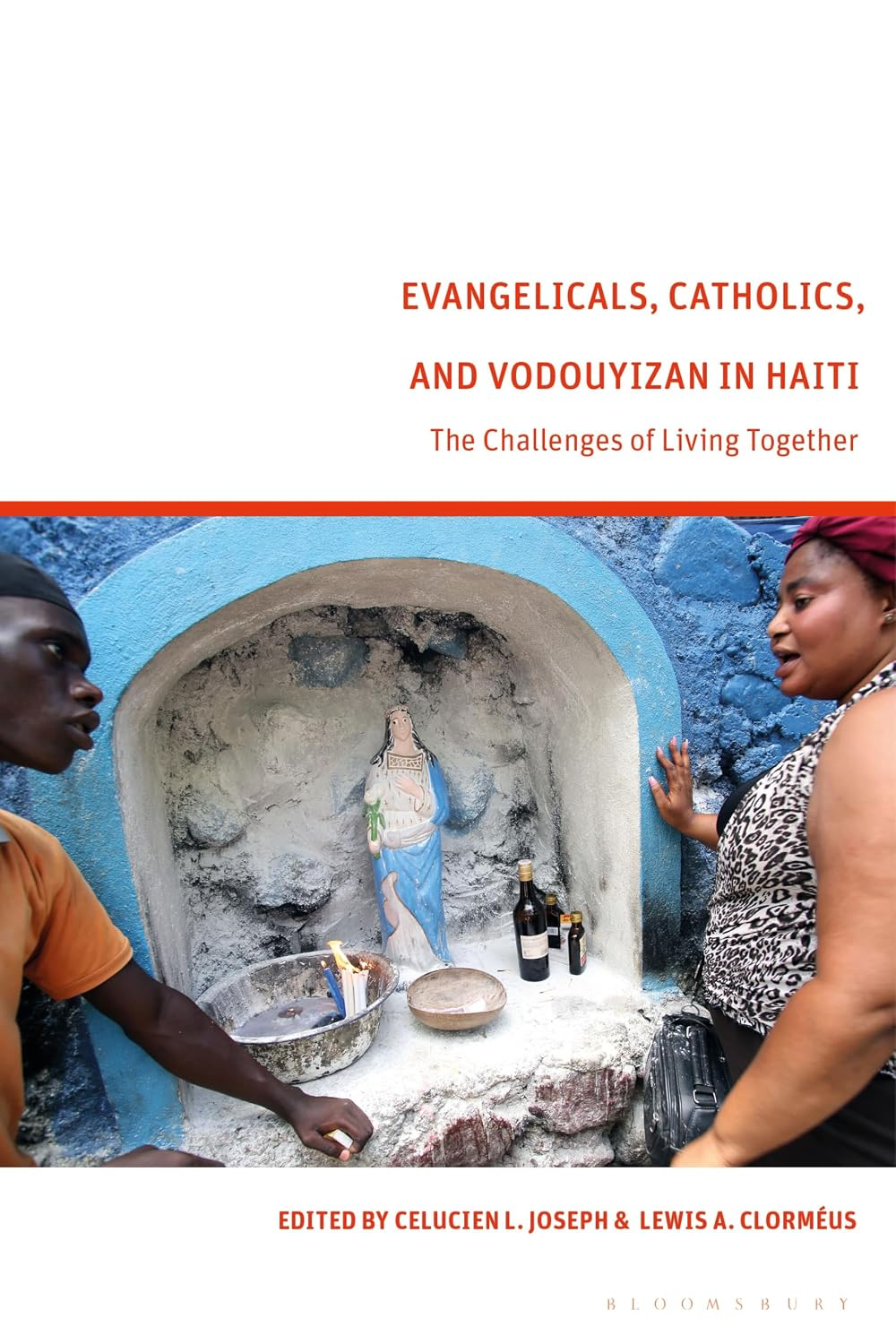
Exploring the subject through many different theoretical frameworks and epistemological traditions, this book (Bloomsbury Academic, 2024) confronts the history of Haiti’s three major practicing religious faiths: Vodou, Roman Catholicism, and Protestant Evangelicalism. Scholars, researchers, and faith practitioners have often depicted relations between these traditions as antagonistic, conflicting, unproductive, and lacking in mutual understanding. With the aim of exploring the possibility of nation building in Haiti and the benefits of interreligious collaboration, contributors to this book consider topics such as the obstacles to interfaith dialogue, religious conflict, interreligious dialogue in schools, race and identity, and religious pluralism. This book will be beneficial to scholars, practitioners, historians, and sociologists of religion, as well as the religious communities themselves in Haiti and the Haitian Diaspora.
Praise
“The volume’s editors … along with the contributors, provide a valuable collection of research papers and policy positions. They offer the hope that the Catholics, Protestants, and Vodouyizan of Haiti may pull together to bring Haitians into a better understanding of their conflicted religious history. Readers of this collection will certainly come to a better understanding themselves.” ―Nova Religio
“Combining the insightful voices of seasoned Haiti experts and exciting emergent scholars, this timely and compelling volume is a must read for anyone interested in religious pluralism in general and contemporary Caribbean religion in particular. Highly recommended!” ―Terry Rey, Professor or Religion, Temple University, USA
“This landmark interdisciplinary volume illuminates religious plurality, transformation, conflict, and interconnection across Haiti and in the Haitian diaspora. The collection’s wide-ranging contributions spotlight the complexity of Haiti’s religious landscape transhistorically and transnationally, with particular attention to the roots of division and the dynamics of coexistence. This book advances scholarship across multiple fields as well as the project of interfaith dialogue in and beyond Haiti.” ―Kate Ramsey, Associate Professor Department of History, University of Miami, USA
Description
Joseph Anténor Firmin (1850–1911) was the reigning public intellectual and political critic in Haiti in the nineteenth century. He was the first “Black anthropologist” and “Black Egyptologist” to deconstruct the Western interpretation of global history and challenge the ideological construction of human nature and theories of knowledge in the Western social sciences and the humanities. As an anti-racist intellectual and cosmopolitan thinker, Firmin’s writings challenge Western ideas of the colonial subject, race achievement, and modernity’s imagination of a linear narrative based on the false premises of social evolution and development, colonial history and epistemology, and the intellectual evolution of the Aryan-White race. Firmin articulated an alternative way to study global historical trajectories, the political life, human societies and interactions, and the diplomatic relations and dynamics between the nations and the races.
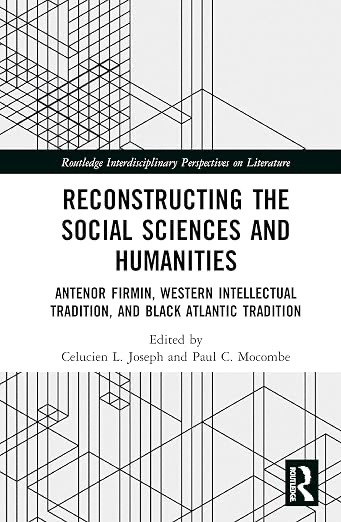
Reconstructing the Social Sciences and Humanities (Routledge, 2021) is the first full-length book devoted to Joseph Anténor Firmin. It reexamines the importance of his thought and legacy, and its relevance for the twenty-first century’s culture of humanism, and the continuing challenge of race and racism.