“Me and my Favorite Women Novelists”

“Me and My Favorite Women Novelists”

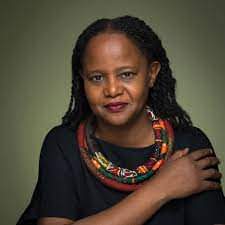
There are four women novelists that I would like to take a creative writing class with or a writing workshop: Toni Morrison (if she were alive), Edwidge Danticat, Myriam J.A. Chancy, and Alice Walker. If anybody is going to train me in the art of writing a novel, I want it to be them 😅😄🥰

In more than one occasion, I had the pleasure to teach their work in my literature classes. There are four central themes which bring all these four women writers in conversation: (1) the way they humanize the life of ordinary women and the marginalized groups in society in their fiction; (2) their work is grounded on an ethic of care, empathy, and human compassion; (3) their writing exalts human dignity and the triumph of hope in the midst of despair and chaos; and (4) the significance of religion and spirituality in shaping the human experience and guiding human relationships.

The Language of Prayer

Prayer is the highest form of human spirituality toward God. All human prayers should be self-reflective in the sense that they express our self-consciousness as thinking people and self-determined individuals. The language of our prayers is the articulation of our own struggle with language itself and our commitment toward God to whom we expose our naked soul.

I like reading people’s prayers recorded in the Bible to learn about how individuals voice their concerns, complaints, and worries to God. Prayers often instruct us about the vulnerability of human existence and the importance of relying on the Almighty God, and not to trust in our own resources and power, to get through life on our own. I read prayers in the Bible to remind myself about my own weaknesses and the fragility of my life, in other words, to keep me humble and not to grow into a lifestyle of self-arrogance and self-sufficiency. Oh sovereign and gracious God, we need Thee. Every hour. Every minute. Every moment. We need You!

One of my favorite prayers in the Bible is found in Daniel 9

“2 In the first year of his reign, I, Daniel, understood from the Scriptures, according to the word of the LORD given to Jeremiah the prophet, that the desolation of Jerusalem would last seventy years.
3
So I turned to the Lord God and pleaded with him in prayer and petition, in fasting, and in sackcloth and ashes.
4
I prayed to the LORD my God and confessed: “O Lord, the great and awesome God, who keeps his covenant of love with all who love him and obey his commands,
5
we have sinned and done wrong. We have been wicked and have rebelled; we have turned away from your commands and laws.
6
We have not listened to your servants the prophets, who spoke in your name to our kings, our princes and our fathers, and to all the people of the land.
7
“Lord, you are righteous, but this day we are covered with shame–the men of Judah and people of Jerusalem and all Israel, both near and far, in all the countries where you have scattered us because of our unfaithfulness to you.
8
O LORD, we and our kings, our princes and our fathers are covered with shame because we have sinned against you.
9
The Lord our God is merciful and forgiving, even though we have rebelled against him;
10
we have not obeyed the LORD our God or kept the laws he gave us through his servants the prophets.
11
All Israel has transgressed your law and turned away, refusing to obey you. “Therefore the curses and sworn judgments written in the Law of Moses, the servant of God, have been poured out on us, because we have sinned against you.
12
You have fulfilled the words spoken against us and against our rulers by bringing upon us great disaster. Under the whole heaven nothing has ever been done like what has been done to Jerusalem.
13
Just as it is written in the Law of Moses, all this disaster has come upon us, yet we have not sought the favor of the LORD our God by turning from our sins and giving attention to your truth.
14
The LORD did not hesitate to bring the disaster upon us, for the LORD our God is righteous in everything he does; yet we have not obeyed him.
15
“Now, O Lord our God, who brought your people out of Egypt with a mighty hand and who made for yourself a name that endures to this day, we have sinned, we have done wrong.
16
O Lord, in keeping with all your righteous acts, turn away your anger and your wrath from Jerusalem, your city, your holy hill. Our sins and the iniquities of our fathers have made Jerusalem and your people an object of scorn to all those around us.
17
“Now, our God, hear the prayers and petitions of your servant. For your sake, O Lord, look with favor on your desolate sanctuary.
18
Give ear, O God, and hear; open your eyes and see the desolation of the city that bears your Name. We do not make requests of you because we are righteous, but because of your great mercy.
19
O Lord, listen! O Lord, forgive! O Lord, hear and act! For your sake, O my God, do not delay, because your city and your people bear your Name.”
20
While I was speaking and praying, confessing my sin and the sin of my people Israel and making my request to the LORD my God for his holy hill–
21
while I was still in prayer, Gabriel, the man I had seen in the earlier vision, came to me in swift flight about the time of the evening sacrifice.
22
He instructed me and said to me, “Daniel, I have now come to give you insight and understanding.

–Daniel 9: 2-22

“Why We Must Protect One Another”

“Why We Must Protect One Another”

So, if
Black people are killing Black people;
Whites are killing Whites;
Asians are killing Asians;
Mixed races are murdering other mixed-raced folks;
Igbos are destroying other Igbos;
Yorubas are taking other Yorubas’ lives;
Haitians, Jamaicans, French, British, Russians, Americans, Japanese, Indians, etc, are following the same pattern in taking away the life of another national or natural citizen

then the root of the problem of human destruction and annihilation in modern times is beyond the problem of racial or ethnic hatred. It is deeply rooted in the fragility of the human heart and the human conscience, and the vulnerability of the social milieu that influences the human experience and people’s attitude toward and interactions with one another.

To create a better world and humanize human interactions in society and in the world, we must cultivate the human heart, train the human conscience, and radically transform the deepest human motivations to produce good virtues, such as individuals doing good, showing kindness and compassion to our fellow brothers and sisters, and always promoting the sanctity of human life regardless of our motivation to avenge ourselves or justify our actions by human destruction.

The people who will save humanity and rescue the modern world from self-destruction are peace builders, conciliators, and the initiators of human kindness and love. To further contribute to human flourishing in the world, we must train our minds and hearts to resist doing moral wrongs, to use our power and influence for redemption and moral transformation in society, and to move away from what is deemed ethically suspect and dehumanizing.

***In addition to other ethical issues in my mind, the motivation for this short reflection is the barbarous beating and eventual death of the 29-year-old (very young) Black man Tyre Nichols by five Black Police Officers.

My Spring 2023 Reading List!

My Spring 2023 Reading List!

In April 2022, I put together a list of the books that I’ve intended to read during the summer of 2022. Due to other responsibilities and engagements, I did not get to read all the books on the list. For the spring 2023, I would like to consider reading the ones that I did not have the opportunity to read last summer.

What books do you plan to read in the new year?

Preface:

I enjoy reading widely, interdisciplinarily, or across the disciplines. People read for different reasons and reading coincides with the reader’s interest and disposition. My reasons for reading also vary. I read because I am intellectually curious and take pleasure in reading. As an intellectual adventure, I read to learn so I can teach others and write with authority and rhetorical clarity and precision. Along this line of thought, I read to explore different worlds; to be exposed to different epistemologies and worldviews; to learn different perspectives about human ideas and actions; and to understand and know how people live, think, and interact with each other in the world. Reading allows me to travel intellectually and mentally to various places or locations where my body cannot go or where I cannot reach physically. Reading teaches me (and even forces me) how to have a disciplined life and to organize the life of the mind.

Usually, my book selection is from the Humanities. For spring 2023, I would like to expand my knowledge in the field of the natural sciences. It is my pleasure to share with you my spring 2023 reading list; it includes seven books: one book on human biology and chemistry; two books on physics and astronomy; one book on gender and Christianity; two books on literature; and one book on history: the history and role of the Bible in the United States.

  1. “Death by Black Hole: And Other Cosmic Quandaries” by Neil deGrasse Tyson

Tyson is a well-known theoretical physicist and an innovator in the field of modern physics and theoretical physics. What I admire about his work is his ability to explain with great clarity and precision difficult scientific and theoretical concepts, formulas, and ideas to the common people and those with no or little background in physics and astronomy.

  1. “Biocentrism: How Life and Consciousness are the Keys to Understanding the True Nature of the Universe” by Robert Lanza with Bob Berman
  2. “The World According to Physics” by Jim Al-Khalili
  3. “Chronicles from the Land of the Happiest People on Earth: A Novel” by Wole Soyinka

Soyinka is a giant in African literature. I admire the way he represents traditional African culture in his work and the manner he plays with different forms, symbols, and literary aesthetics in the English language. He is a novelist of great literary imagination and creativity. Soyinka is also a writer and cultural critic of profound intellectual force and human sensitivity. I will never get tired of reading Soyinka.

  1. “The Love Songs of W.E.B. Du Bois” by Honoree Fanonne Jeffers
  2. “Jesus and John Wayne: How White Evangelicals Corrupted a Faith and Fractured a Nation” by Kristin Kobes Du Mez
  3. “America’s Book: The Rise and Decline of a Bible Civilization, 1794-1911” by Mark A. Noll

Noll is my favorite Christian historian who writes about the history of Christianity in the United States. As an esteemed scholar in the field, he writes with analytical balance and rigor, historical clarity and precision, and intellectual breath and honesty. He does not shy away to expose the dark sides of Global Christianity and American Evangelicalism.

***These books above are my “leisure reading.” I am reading a bunch of other books for research and writing projects.

What books do you plan to read in the new year?

Spring2023readinglist

Happyreading

Thepleasureofreading

My Wishes for You and Your Family in 2023

My Wishes for You and Your Family in 2023

May you and your family continue to grow in love, excellence, kindness, and compassion!

May you become more relational and sensitive to human needs and suffering!

May you use your seat of power and privilege to do good and contribute to the common good!

May you strive to be a better brother, sister, father, mother, friend, co-worker, and a companion!

May the Most Merciful and the Most Gracious & Sovereign God bless every step you take, guide every decision you make, and radically transform you to imitate his most excellent communicable attributes and moral virtues in the new year!

Happy New Year 2023!

10 Things (Highlights) to Remember from 2022

10 Things (Highlights) to Remember from 2022

  1. On behalf of the popular blog, Haiti Then and Now, from January to August 2022, I interviewed ten scholars for the well-known series called “Haitian & Haitianist Thinkers in the Public Space: An Interview Series.”
  2. Wifey and I vacationed in Dominican Republic in March.
  3. Family Trip/Vacation in Paris (France) and Lisbon (Portugal) in June.
  4. My little book on Christian catechism was translated in Spanish in June: “El Catecismo de la Nueva Vida para Niños” (English title: “The New Life Catechism for Children: 100 Questions and Answers to Teach Us to Live in Peace and Good Relationships in the World”).
  5. Katia and I celebrated 20 years of marriage in August, and we traveled to New York.
  6. My first book of poetry was published in August: “Pearls of Light in the Raindrops: Love Poems.”
  7. Josh got his Learner’s Permit in August.
  8. One of my most important books on theological education and Christian theology was published in September: “Theological Education and Christian Scholarship for Human Flourishing: Hermeneutics, Knowledge, and Multiculturalism” (Pickwick Publications).
  9. In October, I attended the 34th annual conference of Haitian Studies Association at Howard University and in November, was elected as the organization’s Vice President.
  10. The family relocated to Texas in December.

“Voice of My Father”

This poem celebrates the influence of a Father in his son’s life, even after he’s gone. As a father of two sons, this poem is very personal to me.

“Voice of My Father”

Powerful and loud,

redirecting his steps from the sea waves
holding on to the promise of hope

to be the father’s charm
To follow his steps ahead,

he will be the star above
The father’s words claim a wandering son

This life below wanders away from the father’s truth
Painful is tomorrow’s joy
Hope is far when he is not near

to tie up the bow
The father’s voice follows the run-a-away son

“Farewell to an Old Lover”

I wrote this new poem for those who are lamenting over a past love or a negative experience in the past. At the end of the poem, the poet is optimistic about the possibility of a future romance or a bright new adventure.

“Farewell to an Old Lover”

I flirt with life
I end up with Love, the garden of earthly delights
Endurance subdues my heart
Like a lion in the forest

I flirt with life
I let go of all my worries
Life is now cool
Like a flowing river at dawn

I flirt with life
I know it is true
You can’t tell me otherwise
The rose on the other side of the river will bloom again

“The Good Life as Radical Practice”

“The Good Life as Radical Practice”

Love is a practice.
Rest is a practice.
Peace(making) is a practice.
Empathy is a practice.
Kindness is a practice.
Doing good to others is a practice.
Forgiveness is a practice.
Transformation is a practice.
Tolerance is a practice.
Humility is a practice.

None of these human virtues or qualities is natural to any human being in the world. In other words, each individual is responsible to learn how to rest, love, make peace, and show empathy and kindness toward other people. We do not naturally prompt to forgive those who’ve wronged us nor do we automatically demonstrate acts of goodness and compassion toward all people. Growing is natural to our evolution and experience in life, and we must grow always toward these ideals and perfections.

However, we can love and forgive people by seeing how it’s done to others. While we may have the disposition to perform or demonstrate any of these human qualities, it might require an external force, an influencer in our lives from whom we can learn, lean on, or look up to practice the good life and humanize all aspects of life. Sometimes, all we need is the heart of a mentor and the will of a role model. Remember that every virtue is connected to humility as an everyday practice.

Therefore, surround yourself with individuals who are known for practicing good virtues and others who strive daily to live in community and harmony with others, act relationally, and have the intentionality to make living more humane–toward the common good and human flourishing in the world. Having a good mentor and role model is vital for character development and the radically-transformed life.

Learn to be a “practitioner,” and a “doer” of all these things for the sake of all people. A practitioner understands that good virtues are part of the different processes and phases of life that make individuals more humane, and that these ideals are in-tune with the reality of life and human experience. As you continue to grow toward these virtues, be patient with yourself so you could also mark people’s lives through your radical kindness and love.

“15 Tips to Help Start the New Year and the New You”

“15 Tips To Help Start the New Year and the New You”

  1. Always be thankful for your health and life itself
  2. Be patient with yourself and find yourself a good mentor
  3. Always try to improve yourself educationally, socially, intellectually, and ethically
  4. Have high expectations and moral standards in whatever you do
  5. Always treat people with kindness and understanding
  6. Respect all people and acknowledge their dignity in all things
  7. Serve your community and contribute to human flourishing through your attitude, speech, writing, and actions.
  8. Always ask God for guidance and wisdom before you make a decision.
  9. Seek good counsel from people who care for you and love you
  10. Be humble and resist any attempt to be prideful or arrogant
  11. Make time to connect with new people and repair broken relationships if it’s all possible
  12. Think Big and Have a Grand vision about human cultures, life, and people
  13. Do not mistreat or disrespect a person because he or she is poor, uneducated, or does not have any social status.
  14. Be the difference you want to see in your family, community, or in your circles
  15. Cultivate a life of prayer and pursue godliness in all things