“Seeking the Dead among the Living:On the Real and the Unreal”

“Seeking the Dead among the Living:On the Real and the Unreal”

Why are some people in this generation seeking for reality and words of affirmation to boost up their self-esteem and humanize their humanity from the virtual and unreal world?

Evidently, there’s a crisis of character formation and a profound conflict within the self and the collective soul in our culture.

We are confused about the difference between the real and the unreal, fiction and truth, the world of forms and the world of the real, the sphere of robots and the sphere of humans.

“Joy to the World:The Poor at the Beginning of Christianity, and the True Meaning of Christmas”

“Joy to the World: The Poor at the Beginning of Christianity, and the True Meaning of Christmas”

Christianity started in the Roman Empire as the Religion of the poor, the oppressed, the economically-disavantaged people, the socially-outcast folks whom God in Christ has chosen to begin this radical Movement and to whom Jesus the Messiah and Savior of the World has come to save spiritually, give them life abundantly, and rescue them from oppression. God has a special affection and passion for the poor and the weak in our society.

Christians ought to keep this population closely connected with modern Christianity and its evolution in our contemporary society.
Followers of Christ need to always be mindful about the life of the poor and their participation in the life and actions of modern Christian churches. This relationship is vital for human flourishing and necessary in the survival of Christian churches in the twenty-first century, and no Christian church is a biblical and apostolic church if it is neglecting this segment of individuals and families in our population. God is on the side of the weak and the least among us.

Don’t you ever forget it was the oppressed population that began the Christian movement in the Roman Empire and zealously spread it beyond the Empire to places like Africa, Asia, Europe, etc.–in that order–just because they believed that God loves the poor and the humble and was doing something remarkably different and new in the world redeeming other poor and outcast people elsewhere and everywhere! That’s the true meaning of Christmas and the central message of the Christian faith!

If your favorite theologian, religious scholar, or even your own pastor tells you something different, tell that person he or she is talking about a different religion and that he or she is/has been reading the wrong Bible or is currently reading the Bible wrongly!
If it is possible, buy him/her a new Bible for Christmas! 🙂

“Remember the poor!” (Galatians 2:10)

Merry Christmas!
Joy to the World!

“The Gospel and Social Justice in Public”

“The Gospel and Social Justice in Public”

This brief note is intended for some of my Evangelical friends who separate the Gospel and justice issues; it is also beneficial for many American evangelicals who do not believe that the Gospel is intrinsically connected with social justice and human rights issues, especially the rights and freedom of women in society.

Congolese gynecologist Denis Mukwege is a new recipient of the Nobel Peace Prize for his tremendous work in healing rape victims and defending the dignity of women in his native land, the Republic of Congo. He is a “Christian” and a medical doctor. It is impossible to divorce the biblical understanding of justice and love for one’s neighbor from the heart of the Gospel or Christianity itself–that is to become a disciple of Jesus Christ, to do justice, show mercy, and love God and love your neighbor. This is exactly what this Christian doctor has done for the oppressed women and the poor in his country;these Congolese women have been raped, abused, exploited, killed, and tortured. Dr. Mukwege showed them what love and justice look like in public. He defended their cause and their right to live with dignity as bearers of God’s image.

The gospel is not only the exposition of the Word one hears on Sunday morning or Wednesday night Bible study; it is both word and action, and is about how we love and care for our neighbor, and how we intentionally pursue their interests in matters of social justice–such as feeding the hungry, healing the sick, clothing the naked, visiting the prisoner, defending the rights of the oppressed and the poor, providing hospitality to the unknown such as the undocumented immigrant.

There is no valid biblical reason why a committed christian or a serious Christian congregation cannot and should not work towards both ends: the faithful proclamation of the Gospel and the public acts and demonstrations of the Gospel in deeds. This is not “social gospel,” but a Christianity that willingly engages the culture and the people responsibly, ethically, and morally by working together to alleviate the social concerns and ills of our society, and to heal the wound and oppression of the people. A lot of people in our society are hurting spiritually and existentially. They need the spiritual food; they also need food for their body; they need shelter, hospitals and clinics, healthcare; they need educational and literary programs; they also need jobs; they also need to live in peace in their homeland. Similarly, women need to feel safe in their homes and workplaces without having to worry about the threat and act of sexual abuse and violence from men.

As the doctor asks these pivotal questions in his speech:

How can we have communal peace without respect for human life and rights?

How can we have peace without justice and reparations?

How can we have peace without truth and reconciliation?

There is no sustaining peace without justice, truth, reconciliation, and reparations.

I wish there was an English translation available of Dr. Mukwege’s Nobel Prize acceptance speech, which he delivered in French.

Sometimes this week, I posted a detailed article about his work on restoring women’s dignity in his country.

https://www.christianitytoday.com/news/2018/october/denis-mukwege-congo-nobel-peace-prize.html

https://m.facebook.com/story.php?story_fbid=532843877192956&id=1514153295507495

Here’s Dr. Denis Mukwege’s Nobel Prize Speech with English Entitles.

“Ten Words about the Reality of Death and Living Dyingly, and the Dignity of the Dead”

“Ten Words about the Reality of Death and Living Dyingly, and the Dignity of the Dead”

The Haitian national anthem unapologetically glorifies heroic death, patriotic death with its famous and memorable line every student in Haiti proudly memorises in school and sings: “Mourir est beau,” “To die is beautiful.” Accordingly, the death that earns our tears and calls for our grief is the patriotic death; dying for one’s country is truly worth remembering and celebrating because it will ultimately contribute to human flourishing and the dignity of the country. “To die is beautiful” carries a sense of patriotic ritual and zeal, and a passion for sacrificial love and the unflinching commitment to love one’s country sacrificially. “Mourir est beau” is a story on its own, a written narrative that says a true patriot is willing to undertake the greatest human sacrifice: to die for one’s country and to risk dyingly for one’s ancestors.

However, there’s something special about reading words on printed pages and meditating critically and responsibly upon (the ethics of) words that have the potential to alter our values and our perception about life and death. We are changed by words and similarly, we readers and writers have the potential to modify the impact of language in our lives. Words that transform our vision of reality are words that we tolerate and embrace, and that happens (only when and if) we willingly surrender the sovereignty of our mind to the power and force of language. There has to be an intentional “let go” from our part and of our control if we want to experience the transformative change a novel, a play, or a poem can/may introduce to our lives. The individuals who have experienced the radical change and evolution of the mind through a book, whether a fiction or non-fiction, are those who have submitted the authority of their reason and psyche to the authority of the text and its author. Without this act of voluntary submission, the power of the text will be dull and null to the reader.

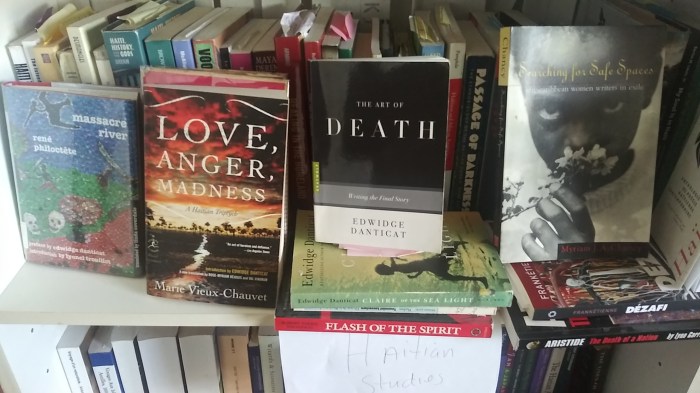
Reading Edwidge Danticat’s latest book, “The Art of Death: Writing the Final Story” (Graywolf Press, July 11, 2017), a moving tribute to and personal account of (their shared stories and memories) her mother living dyingly and dying with dignity, makes me realize how much I love my mother and how much I want to spend more time and quality time with her before she transitions to another and better world, where there is no grief, no death, no pain, no suffering, and where one’s life or existence does not expire, but continues to blossom. My mother is 71 years old, and for the past six to seven years, she has endured various medical complications; her health continues to deteriorate. Danticat has helped me to imagine life differently and to rethink about the importance of presence and time, and the significance of absence and fragmentation in the human experience. This book has had a tremendous psychological impact on my thought-process and drastically brought back to life the sweet memories I shared with my mother when I was a little boy and the memories we continue to create and archive as she continues to live meaningfully and optimistically. Below, I draw ten statements–that have left me with a mental scar–from Danticat’s emotional text about the reality of death and living dyingly, and the dignity of of the dead:

1.“There are websites devoted to memorializing the dead, virtual cemeteries where our life stories continue.”

2.“My mother has given birth to more women than me, and perhaps in her death she will breed even more.”

3.“When you’re young, your parents can seem immortal, then they get terminally ill and they remove the possibility of either you or them being immortal. When they die, you realize what it’s like to suddenly occupy an ambiguous space in the world.

4.“If both your parents, who are the people who created you, can die, then you too can die. With this in mind, you become acutely aware that we are all ‘living dyingly.’”

5.“We cannot write about death without writing about life…The act of writing, or talking about one’s death, makes one an active participant in one’s life.”

6.“Even when we are not writing about death, we are still writing about death. After all, death is always the eventual outcome, the final conclusion of every story.”

7.“We want to write not just of our mother’s deaths, but of their lives too and of the ways, beyond the obvious, that our lives and theirs were linked.”

8.“The final moment of death, especially when a prolonged illness is involved, is one of many deaths, anyway. Smaller deaths precede it, including, among other things, possibly one’s loss of autonomy and dignity.”

9.“The zombie’s inner spiritual geography has been erased by death, but the body is still forced to wander the earth. This is the kind of life and death nobody wants, a painfully eternally living death.”

10.“We are all bodies, but the dying body starts decaying right before our eyes.”

“Covenant Faithfulness and God’s Very Good Idea for Marriage” (Part II)

“Covenant Faithfulness and God’s Very Good Idea for Marriage” (Part II)

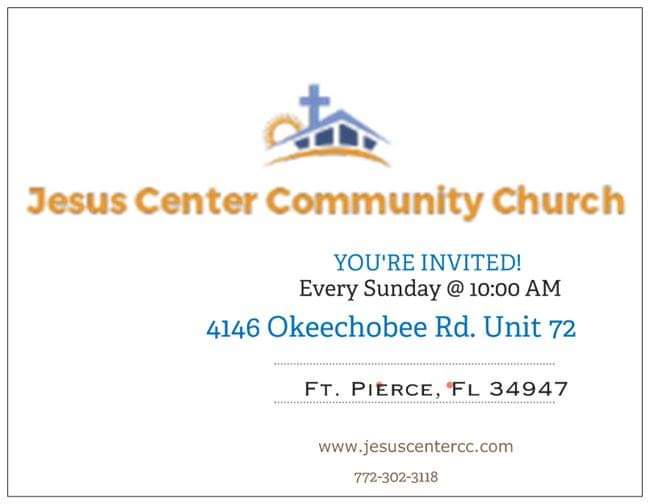
Tomorrow morning (December 9) at Jesus Center, Pastor Joseph will be teaching about God’s idea about marriage associating with faithfulness and sexual purity in marriage. He will also discuss the central objectives of (the Christian) marriage according to the Bible. We invite you to be part of this conversation.

Worship service at Jesus Center Community Church begins at 10:00 am; however, we come half and hour early ( about 930 am) for coffee☕, fellowship, and conversation before the service.

You are our special guest. Please bring a friend with you.

“In Praise of Books and Reading Well: My Journey with Books”

“In Praise of Books and Reading Well: My Journey with Books”

I love good and beautifully written books. I also admire and have great respect for writers who use language with precision and clarity and words with great economy, emotional and intellectual restraint, and linguistic control.

I must admit the fact that I am a bibliophile and have always been a book enthusiast since I was a kid–growing up in Haiti, a country where books and good public libraries are rare. However, Haitian literature is very rich, and Haiti is a country of great writers, great minds, and great literature. Arguably, the country of Haiti has produced some of the most important, prolific, and influential writers in the Americas, writing in French, Spanish, and English languages.

Nonetheless, I became more conscious about my love for books, uncontrollable interest in good writing/ writers, and the weight and glory of good words and the correct usage of the right words when I was probably in 5th grade. In 7th grade, my passion for good books exploded with an enormous and enduring zeal that would eventually shape my High school years, and eventually my academic life and my identity as a writer.

In Haiti, I attended an all-boys Roman Catholic School, Collège Notre Dame du Perpétuel Sécours (CNPS), a rigorous and college preparatory school that has trained some of the most brilliant minds, who originated from Northern Haiti; Haiti has ever produced, such as Jean-Bertrand Aristide, Arly Lariviére, etc. I was able to attend CNPS not because my parents could afford it financially; it was because of my high academic performance and excellence that granted me access to this bourgeois school in Cap-Haitien, Haiti. It was the school where all the rich kids and those in the upper class and the sons of the most powerful figures in society attended. My parents struggled to pay the semester-by-semester tuition and other related expenses. God is always on the side of the poor and the economically disadvantaged group; he generously provided for my brother and me every semester, while we were attending; I managed to make it through the academic year and until my final year of Middle School. The trajectories of my life would change when I immigrated to the United States at the age of 15; I attended a new school, in a foreign environment, a High School that was not like the one at home. Yet, I would find comfort and peace in and through books at the Broward County Public Library in Fort Lauderdale, where I would visit four to five times a week, when school was dismissed.

My favorite Middle School memory was not the time of recess or hanging out with friends, but the memorable Friday when my class would go to the library to check out novels. Oh yes, the visit to the library was the most delightful time in my childhood in Middle school. The school administration and librarian did not allow students to check out more than three books, at one time, but I attempted on several occasions to break the rule and to cheat. In fact, I would take four to five books at one time and take them to the library desk to check out. The library would kindly refuse the extra one or two. That one or two books that I couldn’t check out from the library were usually among the top ten novels I wanted to read for the next two weeks or for the month and before I would return to the library to check out more books.

Books give meaning to life. Good books deconstruct, construct, and reconstruct the human imagination and action, and they breathe new lives to dead souls and the spirit in the dark. They also bring dignity to human relationships and friendship. Books change history, culture, and society. Good books and good writers change people and contribute to human flourishing and the common good.

“Jesus: An Old Story for a Dying American Christianity, Desperate Humanity, and Disoriented World”

“Jesus: An Old Story for a Dying American Christianity, Desperate Humanity, and Disoriented World”

The most important Person in Christianity and Christian history was an Immigrant Refugee and a Person of Color

1. Who challenged the Capitalist banking system of the Roman Empire.
2. Was an anti-imperial fighter.

3. Challenged the structures, forces, powers, and the government (and the class system and the individuals that support them) that oppressed the Poor, the underclass, and the Outcast.
4. Who fed the poor and the hungry.
5. Who provided free healthcare to the uninsured.
6. Who tablefellowshipped with the homeless, and the street prostitutes and gangsters.
7. Who told all of these people and groups named above that he was sent to serve them, to improve their lives, to love them, and to die sacrificially and willingly so they could be free spiritually from both social and spiritual oppressions and sins.

*This Jesus is absent in most conservative-evangelical Theology books, ministerial-seminary training schools, preaching, churches, and Sunday school lessons. The problem is that this Jesus is not a power-seeking-and-hungry Lord and Savior. His teaching, leadership style, and ethics–that is his cultural, economic, moral, and political preferences and choices– contradict those of the contemporary Christian churches and American Evangelicalism. His moral vision is the antithesis of the contemporary economic model, globalization, world-systems, and worldviews, which contemporary American Christianity supports.

Most Contemporary Christians in America prefer the majestic and glorious Jesus as God and not the Jesus as Man, the lover of the poor, the homeless, the refugee, the immigrant and the friend of the underclass, the wage worker, the exploited, and the colonized.

This Jesus was committed wholeheartedly to the practice and promotion of justice, equality, human dignity, and godliness. This Jesus who was/is a social reformer and “The Way” to God was God-incarnate in the human flesh.

“Covenant Faithfulness and God’s Very Good Purposes for Marriage”

“Covenant Faithfulness and God’s Very Good Purposes for Marriage”

Tomorrow morning (December 2) at Jesus Center, I will be teaching about faithfulness and sexual purity in marriage and the main objectives of (Christian) marriage. I invite you to be part of this conversation.

Worship service at Jesus Center Community Church begins at 10:00 am; however, we come half and hour early ( about 930 am) for coffee☕, fellowship, and conversation before the service.

You are our special guest. Please bring a friend with you.