“The Word Became Flesh: The Reason I write”

“The Word Became Flesh: The Reason I write”

The most fundamental reason I love writing and publishing my thoughts on certain issues and share them with the world is this: I love words and believe that ideas communicated through words can change the world, transform the course of society, heal and restore broken lives and friendships, and orient us to an alternative future and more promising way of life. This is the reason I write and the most important thing about me as a writer and citizen of the world.

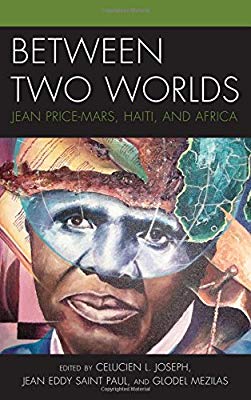
“Between Two Worlds: Price-Mars, Haiti, and Africa”

“Understanding Price-Mars: Africa First not Haiti” (Part 2)

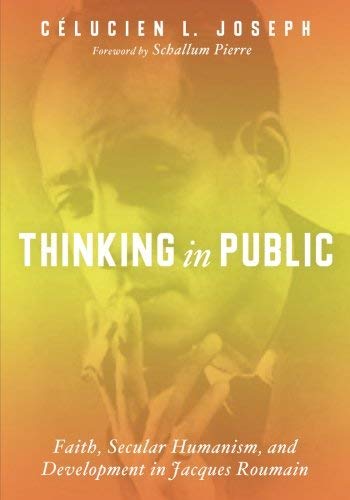
The single passion of Jean Price-Mars was to become “a great man for his nation (Haiti) and race (black people).” In his (45-page) controversial response to René Piquion (“Lettre ouverte au Dr. René Piquion, directeur de l’École normale supérieure, sur son Manuel de la négritude”: Le préjugé de couleur est-il la question sociale?” 1967), he informed us that was his mother’s driven vision for him: to be an exemplary man of valor to the Haitian people, the people of Africa, and those of African ancestry in the Black Diaspora. Because of this obsessive childhood dream (or a dream driven by a passion for Haiti and Africa), in his scholarship and public intellectual activism, Price-Mars resisted the separation of Africa, Haiti, and the black diaspora.

Unlike other Haitian intellectuals (i.e. Baron de Vastey, Joseph Antenor Firmin, Hannibal Price, Louis Joseph Janvier, etc.) who portrayed Haiti and interpreted the history of Haiti, by the virtue of its existence as the first postcolonial state and Black Republic, and its successful revolution and tremendous contributions to universal emancipation, human rights, and the end of slavery (as the rehabilitation of the black race in modernity), Price-Mars constructed an alternative narrative of Haitian history and Haitian society premised on the history of Africa and the Old Continent’s contributions to universal civilization in human history.

On one hand, Price-Mars would not use African traditional society and life, or the culture of Haitian peasants, which is African in content and practice, as a model to “build” the contemporary Haitian society. On the other hand, he would urge Haitian intellectuals and the country’s elite-minority to reconsider the African retentions on Haitian soil and Haiti’s indebtedness to Africa. The Price-Marsian clarion call to affirm the African presence in Haiti does not mean that Price-Mars has undermined Haiti’s triple heritage: Africa, Native American, and Western. It does convey, however, Africa is first, and that the “Black Continent” should shape and occupy the Haitian imagination.

A Good Book For the Holidays!

Warning: Self-Promotion!

If you’re looking for a good present to give to a friend and even yourself during the Winter Holiday, consider buying some of my books.

I

n all of my books, I seek to interpret the human condition through the Black experience in modernity and explore the intersection of history, anthropology, literature, race, religion, theology, and history of ideas. As an intellectual historian, literary scholar, and theologian, I use my scholarship as a medium to promote human flourishing, the common good, and foster better interpersonal relationships between individuals and the various races and ethnic groups in the world–to the glory of God.

h

*** All the profits I gain from my books are donated to Haiti to contribute to the leadership, educational (literacy), medical, and religious education and training of the Haitian people.

ttps://www.amazon.com/Celucien-L.-Joseph/e/B00ATZKOX4

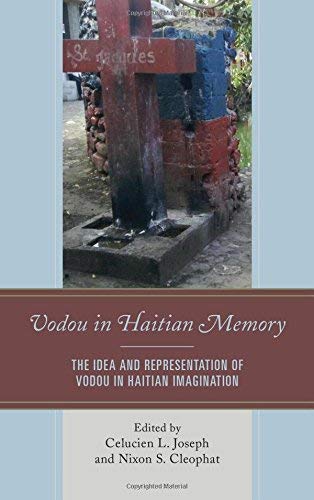
“The Misappropriation of the Concept of Culture in Black Diasporic Religions: The Case for the ‘Black Church’ and ‘Haitian Vodou'”

“The Misappropriation of the Concept of Culture in Black Diasporic Religions: The Case for the ‘Black Church’ and ‘Haitian Vodou'”

One of the major issues in Black Diasporic Religious History is the misinterpretation and misappropriation of the concept of “culture” to the sphere of (Black) religion. While African Americans scholars have argued that “The Black or Negro Church” is the birthplace of Black culture, similarly, Haitian scholars have contended that “Vodou” is Haiti’s culture. In both perspectives, black culture is identified with religion as an essential category of black life and existence. In other words, black existence is essentially a religious phenomenon the same way black culture is essentially a religious practice.

It seems to me we’re dealing with a categorical misappropriation and conceptual misunderstanding in both contexts: that of African American, and that of Haitian. Culture includes the sum of all (human) practices, beliefs, philosophy, ideologies, traditions, lifestyle, language, food, music, food, clothing, painting, the arts, ideas of beauty, aesthetics, values, worldviews, rites of passage, family, morality, ethics, etc. Culture is not restricted to just and only one (“cultural”) phenomenon or (“cultural”) element, as noted above. Culture is a broad concept that encompasses multiple (human) expressions, modalities, and the soul of the human experience.

It is a false misappropriation of the concept of culture when one posits that one particular item such as religion constitutes a people’s full and integral culture. The existence of a nation, a people’s or racial group is not contingent to its religious worldview–as important as religion as a human tradition is and might be to help us see through the soul of a people or racial category. Religion is not the sole denominator of a people’s dignity and personhood, in the collective sense. While we understand that religion is an essential characteristic in human existence, but human existence should not be equated restrictively with religion. Religion is not just spiritual, it is a form of social identity in the same way human beings are spiritual as much as they are also relational, rational, and social animals or beings.

Therefore, as social animals, human beings express their humanness (or ontology) through music, painting, food, dance, or any form of entertainment that articulates the human experience in the world. These are different forms of human communication, which do not necessarily associate with faith or which do not have to be linked to religion. Religion is a form of human connection and communication.
In the same line of thought, human beings as complex entities articulate their sense of themselves and ways of being in the world through various ethical, religious, and philosophical beliefs and worldviews. A belief does not have to be associated with religion the same way religion can be construed as a body of thought (belief) and as a body of practical rituals, performances, and physical expressions. A philosophy as a body of knowledge is not essentially connected to religion; all philosophical systems are not essentially religious ideas the same way that all ethical frameworks are not essentially philosophical, moral, or religious. On the other hand, there are some philosophical and moral beliefs that have a religious connection or basis.

Further, religion not only constitutes a system of belief–whether theological, moral, ethical, philosophical, political–but also a system of practices or rituals. Religion is not only a body of ideas; it also includes everyday practices, but not all ideas are religious in nature and not all everyday practices are (and should be) essentially religious.

Comparatively, it is also a terrific misunderstanding of the idea of religion to be the engine of culture just because of the fact of the complexity of human nature and the various expressions of human interplays in the world. The human (“The Black Experience”) experience is not one of a religion, but some experiences can be religious and non-religious, equally. The elevation of religion to the whole of the human experience in the world, as “The Black Church” (or “The Negro Church”), a form of religion and an expression of the African American culture, is said to be the “birthplace of black culture” and that the whole of the Haitian culture and identity (cultural identity) is essentially linked to “Haitian Vodou,” a form of religion and an expression of Haitian culture, is a categorical fallacy, which needs to be reassessed, even rejected in contemporary African American Religious scholarship and contemporary Haitian Religious scholarship.

Culture is not religion, and religion is not culture. Nonetheless, religion is a constituent of culture or a cultural element and expression just like language, music, dance, food, and painting are various forms of cultural communication. These various forms of culture are either religious and non-religious, profane and spiritual. Religion is one category of the broad concept of culture. Black Diasporic and African-derived religions such as the Shango of Trinidad and Grenada; the Candomblé of Brazil; the Vodou of Haiti, the Santería of Cuba, Puerto Rico, and the Dominican Republic; the Kunina and Obeah of Jamaica; the Kele of St Lucia; the Confa Obeah of Guyana; and the Vodou and Hoodoo of the United States had their genesis in the broad notion of (Afro-Diasporic) culture; they are all cultural expressions in religion. By consequence, “The Negro Church” is not the birthplace of Black (the African American) culture, both before and after slavery. From the same perspective, Haitian culture is not originated in Haitian Vodou. As previously argued, religion has always been a cultural category and an essential element of culture, both in continental Africa and before the institution of slavery, and after the emancipation of the African people in the United States and the nation of Haiti. While the “The Black Church” emerged from the system of slavery and it is in fact a form of slave culture, African American religion is connected to the pre-slavery (Black African Religious) tradition. This same argument can be made for Haitian Vodou and Haitian culture.
“Seven Words about Promises”

“Seven Words about Promises”

Do not make promises you will not keep and will not be able to fulfill.

Resist the temptation to make promises to organizations that are seeking assistance to help the needy and the poor when you know for certain that you will not succeed in keeping your word.

Do not make promises on social media so you can look nice and kind to people who are observing you.

The word of a promise is linked to your character, and it is also connected to your relationships with people.

The word of a promise has a face; that face is your personality.

The word of a promise has a memory; people will remember you.

The word of a promise has a name; your name is attached to it.

“A Brief Note on Wallace Best’s Langston’s Salvation”

“A Brief Note on Wallace Best’s Langston’s Salvation”

It’s good to know that there’s a resurgence in African American Religious History/Studies and that many fine scholars (such as Wallace D. Best on Hughes, Blum and Kahn on Du Bois, Harris on Ellison, Buck on Locke, etc.) are reassessing the religious sensibility and life of many prominent African American thinkers such as Langston Hughes.

What a fine book Prof. Wallace Best has written on one of my favorite poet-religious thinkers, Langston Hughes!

One of the most important features of this book is Best’s attempt to periodize and historicize Hughes’s attitude toward religion, which he also associates historically with Hughes’s poetic corpus, and some of Hughes’s fiction writings. We learned from Best that Hughes’s attitude toward faith has evolved over the course of his career as a writer, thinker, and public intellectual. Best’s attention to Hughes’s theology and its role in his writings is remarkable, illuminating, and nuanced. Third, the book is meticulously researched and well-written. Finally, “Langston’s Salvation” is a compelling story about the complexity of religion and theology in African American Intellectual tradition.

Nonetheless, in 1935, Hughes wrote an important play entitled “Emperor of Haiti: A Historical Play,” which was staged in 1938. Scholars have not paid attention to the religious ethos of this text, but Hughes has integrated many relgious modalities and expressions in the piece. In 2013, I wrote an article to explore Hughes’s engagement with religion, black heroism, and the Haitian Revolution in the play.

“Memory, the Spirit of the Revolution, and Slave Religion: The Representation of the Haitian Revolution in Langston Hughes’s Emperor of Haiti,” Journal of Postcolonial Theory and Theology 4:1 (April 2013): 1-35

Hopefully, future scholarship will reevaluate the attitude of Jessie Redmon Fauset, Hubert Harrison, James Weldon Johnson, James Baldwin, Richard Wright, Marcus Garvey, George. Schuyler, A. Philip Randolph, etc. toward religion.

Thank you, sir, for writing this excellent text!

“In Praise of Vertières, and In Praise of Freedom and the Haitian Revolution”

“In Praise of Vertières, and In Praise of Freedom and the Haitian Revolution”

O Vertières, how could we forget Thee!

You remind us that God created men and women to be free and not to be enchained and enslaved by men.

O Glorious Vertières, where we wrought our freedom and independence through our shed blood, You will always be a scar on our hearts and the path of freedom and inspiration for today’s troubles.

Today, the Haitian people are celebrating the Battle of Vertières (November 18, 1803) which gave birth to two significant events in world history: the end of slavery and the founding of the first postcolonial state and the first slave-free Republic of Haiti in the Western world. It was in Vertières African revolutionarries and men and women who dared to die free and independent conquered the greatest military and imperial power in the world: France.

To remember Vertières is to never forget the danger and threat of the unholy trinity of institutional slavery, colonization, and White supremacy in the world.

To remember Vertières also means to continue the fight against the vestiges of slavery (modern day slavery), colonization (neocolonization), imperialism, and any form of human oppression that engenders human suffering, dehumanizes people, defers human dignity, and challenges the image of God in humanity.

“On National Security and Internal Terrorism”

“On National Security and Internal Terrorism”

There are two current great threats to national security and peace in America. The continuous threat and fear of white supremacist and neo-Nazi groups, and the great amount of democratic freedom and group expression they are allowed to carry out in this culture. These two great American evils are a severe threat to our children, a moral danger and an ethical menace to the welfare of our society, and a demoralizing force to the American future.

If the American government does not take strick measures against these nationally-spread white supremacist and neo-Nazi groups, one day it will be impossible for people in this country to go anywhere without the fear of a gun or bomb attack; or it will be inconceivable for individuals in this country to go socialize in any public places and learning centers (i.e. churches, temples, mosques, grade schools, universities, movie theaters, coffee shops, shopping malls and centers, goverment offices, doctors’ offices, hospitals, medical centers, recreational places) without the threat of death and internal terrorism.

Stricter laws and effective interventions must be put in place and are necessary to stop these internal (state-wide) terrorist groups and national violence. There is no democracy without internal peace. It is impossible to have national unity if we’re constantly (death-) threatening our neighbor and killing each other. Evidently, this is a democracy in decay.

Further, NO, it does not make any sense in any civilized country in the world for every institution to have to hire an armed security guard or a police officer to prevent possible gun crimes and bomb attacks and to promote the safety and peace of individuals.

If it is necessary for people in position of authority, power, and administrators (or any American citizen per se) (to have) to carry a concealed weapon or gun in our public places, we must agree that we have a national crisis of high proportion that can’t be controlled by our government, police forces, and our current criminal laws and justice system. It is either our government is not working efficiently and diligently to protect the American people or our current laws and police forces are inadequate to foster greater national security and maintain national peace. Clearly, we’re dealing with a justice issue and the miscarriage of integral justice in this country.

It is recently reported that “Thirty-nine members of the United Aryan Brotherhood and Unforgiven neo-Nazi groups were arrested in a Florida drug trafficking sting — and one had functional pipe bombs in his home.Tampa’s WFTS-TV reported that the multi-agency sting codenamed “Operation Blackjack,” a three-year-long investigation, led to the seizure of more than 110 illegal firearms, a rocket launcher and two pipe bombs from the individuals mostly based in Pasco County, Florida.”

To read further about this matter, click on the link below:

https://www.rawstory.com/2018/11/authorities-find-rocket-launcher-pipe-bomb-massive-florida-white-supremacist-sting/

“Redefining Poverty and what It Means to be Human”

“Redefining Poverty and what It Means to be Human”

FB_IMG_1542362423852.jpg

1. Being poor does not mean you are not intelligent and can’t contribute to human flourishing.
2. Being poor does not mean you can’t have big dreams and lofty goals, and that you have nothing constructive to contribute to society.
3. Being poor does not mean you can’t become somebody great in life and does not have a (political) voice.
4. Being poor does not mean you can’t beat the odds of life and overcome all the unfortunate circumstances in your life.
5. Being poor does not mean you are linguistically deficient and psychologically unfit for society and upward mobility.
6. Being poor does not mean you are not a person and does not have dignity.
7. Being poor does not mean you should allow people to mistreat and disrespect you just because you are poor.
8. Being poor does not mean you’re a hopeless individual and that your life has no meaning.
9. Being poor does not mean you are not beautifully and unwanted.
10. Being poor does not mean God is done with you.