“Work & Ideas in Progress”

“Work & Ideas in Progress”

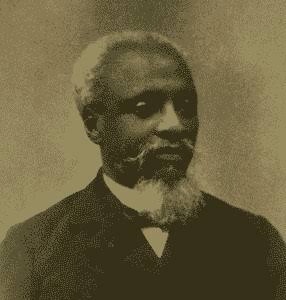
My next and third intellectual biography on a major Haitian, Caribbean, and Black Atlantic thinker is on Joseph Antenor Firmin, “Apostle of Human Equality: An Intellectual Biography of Firmin” (SUNY Press). Projected publication date: 2028

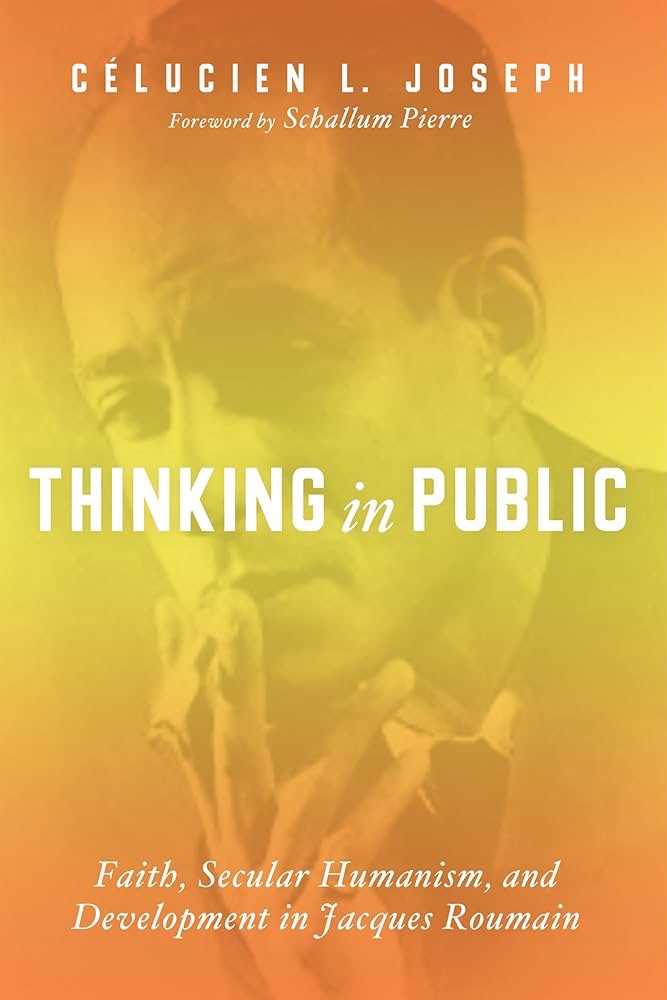
My first one was on Jacques Roumain, “Thinking in Public: Faith, Secular Humanism, and Development in Jacques Roumain” (2017).

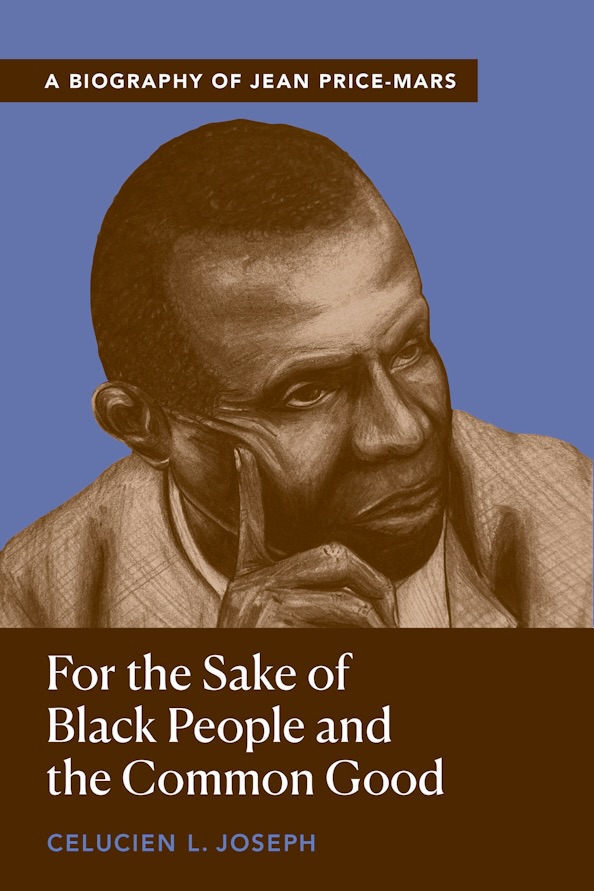
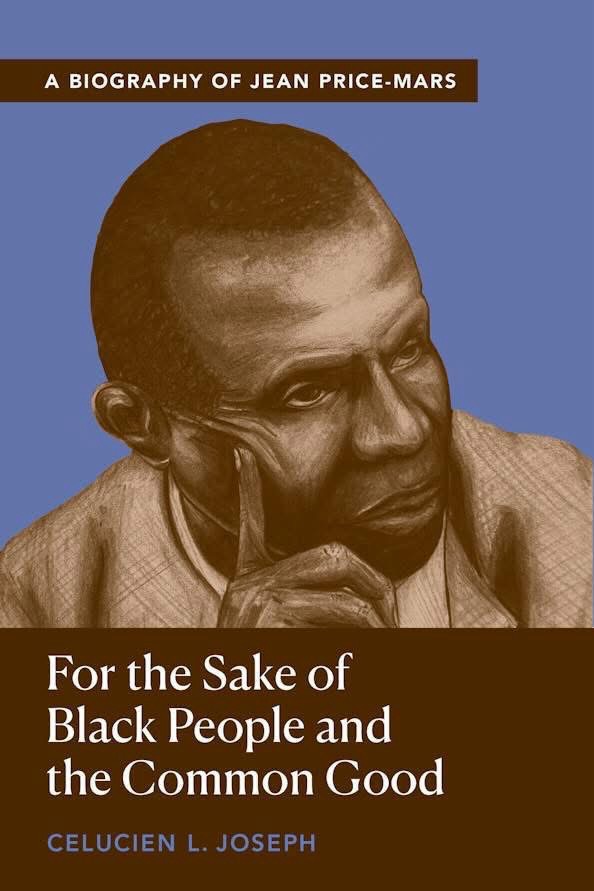
My second one on Price-Mars, “For the Sake of Black People and the Common Good: A Biography of Jean Price-Mars” (forthcoming, Vanderbilt University Press, 2026).

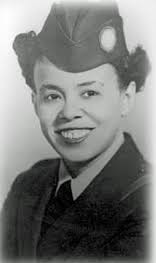
After I am done with Firmin, I’d like to turn my attention to the writings & ideas of the brilliant sociologist & public intellectual Madeleine Sylvain-Bouchereau. Projected publication date: 2030

Folks: I would need lots of prayers, mental strength, and intellectual & physical energy.

Preorder my new book: “For the Sake of Black People and the Common Good A Biography of Jean Price-Mars”

Happy Wednesday, Good People!

My forthcoming book with Vanderbilt University Press is now available for pre-order. 388 pp.

“For the Sake of Black People and the Common Good A Biography of Jean Price-Mars”

Let me know what you think about the cover!

Book Details

“On Violence, War, Hostility, and the Radical Call to be Peacemakers”

“On Violence, War, Hostility, and the Radical Call to be Peacemakers”

“Blessed are the peacemakers, for they shall be called children of God.”
—Matthew 5:9

In the biblical tradition, the word peace is intimately associated with the character of Yahweh/God. Peace is a divine attribute of Yahweh. God is called the God of peace, and peace is what he does and who he is. Peace is a natural expression of Yahweh’s power, dominion, and sovereignty. It also communicates how Yahweh rules the world, works with people, and facilitates the affairs of the nations.

In this verse, peace is related to the Hebraic idea of shalom. The latter means harmony, flourishing, wholeness, and to cultivate a right relationship with God and others.

A peacemaker is one who serves as an active agent of reconciliation. In this verse, the term does not simply refer to a peacekeeper or a lover of peace; rather, it describes someone intentionally engaged in the hard work of (1) resolving conflict and tension, (2) restoring broken and fragmented relationships among individuals, nations, ethnic groups, and races, (3) promoting justice, unity, and reconciliation, and (4) resisting evil, violence, alienation, and division. At the same time, a peacemaker possesses a deep disposition toward peace—valuing and cultivating it both within local communities and on a broader national and global scale.

For Jesus Christ to call his disciples to be “peacemakers” in the Sermon on the Mount is to issue a clear and compelling summons for his followers to become active agents of peace, reflecting God’s commitment to all peoples and all nations. In this sense, the peacemaker is called a child of God because he or she both belongs to God and embodies God’s character. As the King of peace, God is continually initiating and sustaining peace in his governance of the nations; therefore, those who are called children of God participate in this redemptive work of peacemaking: restoring, promoting, and maintaining peace for the flourishing of humanity in the world.

Thus, in practice, those who claim to know God, belong to Him, and live in communion with Him are called to reject war, violence, and any political—whether legal or illegal—actions that do not contribute to shalom and the flourishing of humanity among the nations. This radical humility is also an intentional effort to prevent human suffering, degradation, and destruction; it’s a deliberate commitment to human dignity and sanctity of life.

To be called a peacemaker by Jesus Christ is to live as one. It is a radical calling and identity: one that seeks to transform culture, politics, law, public policy, and all forms of human relationship. By identifying the children of God as peacemakers, Jesus makes clear that they are not to be passive observers or neutral agents in the face of what is broken in society and the world. Rather, this is a call to action: to lead, to persuade, and to unify in a world often marked by intimidation, threats, injustice, aggression, retaliation, power struggles, and violence—where tensions persist between powerful and marginalized nations, and between the Global North and the Global South. Those whom Jesus calls peacemakers are charged with interrupting cycles of violence and working to end conflict, mediating disputes rather than fueling them, and pursuing unity and reconciliation even when it is unpopular. They labor intentionally toward true justice and harmony, seeking both communal and global healing even when such work is costly and sacrificial.
“Living the Jesus Way vs the Way of the Nations“

“Living the Jesus Way vs the Way of the Nations“

Violence is not associated with the Jesus Way. The Prince of peace does not conquer the world with force or lead with a sword.

Oppression contradicts the message of Christ.
It stands in defiance of the Christ who proclaims good news to the poor and sets the oppressed free. Anywhere people are in chain,
Christ is betrayed and crucified again.

War is not the language of Jesus, the crucified lamb. He still calls his followers to a higher aim of life, an obedience marked by an ethic of care and relationality, not conquest and retaliation.

Dehumanization is a threat to the biblical idea of human dignity and to the God who declares all life is sacred. Every person is a human being who bears the imprint of divine breath and beauty.

Xenophobia opposes God’s commitment of inclusive embrace of all peoples and nations, races and ethnicities. The purpose of God is to gather nations, not alienate them, and to guide and unite them as one people in grace and mercy.

The desire to dominate, conquer, and control other peoples and their nations and cultures betrays the shared values and the clarion call to love one’s neighbor and practice hospitality.
Power without love is tyranny and oppression; strength without compassion is corruption and selfishness.

If love is not the driven motive to engage others, the outcome will not bring honor to the God of peace ad love. The Jesus Way is marked by the narrow road of humility, justice, and radical love.

“Reimagining God in an Age of Chaos and War: Ten Questions for Those Committed to Peace, Justice, and Human Dignity”

“Reimagining God in an Age of Chaos and War: Ten Questions for Those Committed to Peace, Justice, and Human Dignity”

As stewards of the earth and its resources, we live in a world marked by war, alienation, displacement, and profound human suffering. In this context, questions of God, faith, and the nature of divine presence, justice, and responsibility in our midst and the world extend far beyond the boundaries of church or religion. They reach policymakers, activists, scholars, and everyday people, as well as anyone seeking meaning, peace, accountability, justice, and hope.

The following questions are not only for Christians, theologians, religious leaders, or people of faith. They are for anyone concerned with global peace, global security, and the protection of human rights and human dignity at the moment and in the future.

  1. What kind of God-language do people of the world need to hear now?
  2. What does faith look like after war, migration, exile, suffering, and displacement?
  3. Can Christianity in the United States and the West move beyond cultural dominance and political power without losing its spiritual integrity, and what would this mean for the global pursuit of justice and peace?
  4. How can religious traditions (i.e., Christianity, Islam) remain faithful to their core values while being liberated from histories of empire and domination?
  5. In what ways do religious institutions and societies misunderstand God and the liberating message at the heart of faith traditions?
  6. How has Western Christianity been complicit in systems of violence, empire, and domination, and what does repentance and reconciliation require now—toward future hope and human flourishing?
  7. Can people of faith proclaim a God of justice without reducing the divine to political ideology?
  8. What does faith look like for displaced, colonized, and marginalized peoples in a fractured world?
  9. Where is God in the suffering of the innocent during war and global crisis?
  10. Is it possible to speak of liberating hope after devastation and dehumanization without trivializing human suffering and death ?

These are not questions seeking easy answers or quick solutions. Rather, they are invitations to rethink God, biblical and global Christianity not from positions of comfort, control, and power, but from the edges of history and the life in the margins, where faith is most tested and most needed. These are questions that invite us to think deeply about the relationship between faith and culture, Christianity and global politics, theology and human experience, God and human suffering, Christian discipleship and human liberation.

Moreover, these questions invite all of us, regardless of background, religious traditions, or political position, to wrestle with the moral, spiritual, political, and human implications of our shared global crisis. As we seek an answer to these existential challenges or questions, we should always hold to the basic principle that all life is sacred and all humans are equal, and that protecting human dignity is a shared ethical responsibility.

The harsh reality is that our greatest adversary is often the person closest to us. Yet biblical wisdom calls us to love our neighbor as ourselves and to respond with goodness and compassion even to those who mistreat us. Similarly, the relentless pursuit of greed, power, and glory by the world’s dominant nations blinds them to a simple truth: humanity is one global family, and every nation is a neighbor to the others.