“Liberation Theology and Evangelical Theology: Let the Real Enemy of Evangelical Theology Stand Up”
As a former seminary student, I attended the most conservative and Evangelical seminaries (SBTS and SWBTS) in the United States. Both schools are owned and subsidized by the Southern Baptist Convention. Generally speaking, the problem with the theological education and curriculum in the SBC schools is that those in the seat of power and influence created a culture of fear that is manifest in three connecting linkages and intersections: “theological fear,” “intellectual fear,” and “mental fear” among both the faculty body and student body. Seminary students enrolled in SBC schools are introduced in passing to “liberal theology” and “liberal theologians” not with the intended purpose to understand their ideas and writings; rather, this body of students is theologically prepared (or being trained) to wage war against its enemy. Second, the underlying goal is not to engage in real intellectual reflections and constructive theological conversations with those individuals (or “theological texts”) who might defer with them intellectually, doctrinally, and theologically.
Comparatively, some instructors teaching in SBC schools have internalized both intellectual fear and psychological fear in the sense that there are certain intellectual contours and theological boundaries they will not dare to explore, cross, discuss in the classroom, or even publish about. There exists among the faculty body a disastrous fear of losing one’s job at the corresponding institution. This mental fear evidently limits the professor’s freedom of expression in the classroom and his or her freedom of expression in the world of text (“literary freedom” or “theological freedom”). Personally, I believe both instances (in the case of seminary students and instructors) could be construed as a possible disservice to the life of the mind and the life of faith (i.e. the church or Christian ministry). This particular way of forming seminary students who will become professors, pastors, missionaries, and civil servants will eventually lead to the intellectual incapacity and irresponsibility for them to genuinely and constructively engage with individuals who may hold opposing views and counter worldviews. Interestingly, the phenomenon of cultural plurality and the complexity of sea of ideas define our contemporary society and human interplays, both nationally and internationally.
On a personal note, I remember being enrolled in an Advanced Theology and Culture seminar at one of the seminaries mentioned above. It was a special class designated for students pursuing the Advanced Master of Divinity with emphasis in Theological and Biblical Studies. We were reading selected texts such as “The Gagging of God” by D.A. Carson, and “Dissonant Voices: Religious Pluralism & the Question of Truth,” and “Encountering Religious Pluralism: The Challenge to Christian Faith Mission” by Harold Netland (There were a few other books whose titles I do not recall.) Our Professor overtly warned the class to be careful with the writings and ideas of the philosophers of religion of Paul F. Knitter and John Hick, and the Open Theist theologians such as Clark Pinnock ( i.e. “The Grace of God and the Will of Man,” Most Moved Mover: A Theology of God’s Openness,” and “The Openness of God: A Biblical Challenge to the Traditional Understanding of God”), Gregory A. Boyd (“God of the Possible: A Biblical Introduction to the Open View of God”), and John R. Sanders (i.e. “The God Who Risks: A Theology of Divine Providence,” and “Does God Have a Future?: A Debate on Divine Providence”)—whom many Evangelical theologians consider theologically unorthodox and heretic. He remarked that if we read their work, we would become liberal theologians like them—especially if we allow ourselves to be influenced by the ideas John Hick. Because intellectual curiosity defines my academic life and intellectual journey at an early point of my life, I did exactly what my great seminary professor prohibited. Eventually, I purchased every single book John Hick has written on religion, theology, and culture.
Further, to get the Advanced M. Div. degree, students in the program had to select the thesis or the non-thesis option or one can choose to write a very long publishable paper, about 25 to 30 pages, followed by an oral defense at the professor’s office (That was quite intimidating for most of us!). For my research topic, I chose to study the theology and exegesis of Open theism. The Professor, who had already published, at that time, two important books against/on Open Theism, was very happy that I took a similar theological position, as he had advocated brilliantly and powerfully in his texts. During my research, I have read everything that I could find on Open Theism and arguments against it. While I was reading theologically, exegetically, and responsibility, I began to notice that some of the arguments advanced by Open theists made sense to me, both philosophically and theologically. I wanted to articulate and incorporate some of these ideas in my long research essay but was both intellectually and psychologically terrified that the Professor would fail me and that I will not get my seminary degree (Of course, that was an act of intellectual cowardliness on my part. I lacked courage and boldness to take a stand about what I thought was biblically sound about Open Theism). Evidently, I am not an Open Theist Theologian or have I embraced Theological Liberalism. That does not mean, however, that I have rejected all the tenets of Open theism and Liberal Theology.
In addition, I remember clearly that the decision to go contrary to my professor’s theological position on the openness of God theology would have come with a high cost: the fear of alienation and exclusion from this small circle, and my future career as a Protestant and Evangelical Theologian) Secondly, I did not want to be called a heretic or liberal by the Professor or my classmates—as those epithets are used loosely and insensibly in evangelical circles. As the great African American poet Paul Laurence Dunbar wrote almost in 1913, “We wear the mask.”
We wear the mask that grins and lies,
It hides our cheeks and shades our eyes, —
This debt we pay to human guile;
With torn and bleeding hearts we smile
And mouth with myriad subtleties,
Why should the world be over-wise,
In counting all our tears and sighs?
Nay, let them only see us, while
We wear the mask.
We smile, but oh great Christ, our cries
To thee from tortured souls arise.
We sing, but oh the clay is vile
Beneath our feet, and long the mile,
But let the world dream otherwise,
We wear the mask!
So, I had to wear my own “theological mask” as well as an “intellectual mask” to safeguard my seminary study and correspondingly safeguard white theological fragility in these two institutions.
To clarify my point of view, it was not that I consented fully with Open theist theologians on every single argument they articulated in respect to the nature of the future and the nature of God’s knowledge/foreknowledge, as well as the dynamics between God, future events, and the actions of volitional agents. Theologically, I was reformed, and for a better word, a Calvinist. Logically, yet some of the objections raised by Open theists made sense to me. As previously mentioned above, the culture of fear that was already present at both institutions contributed to my personal fear on three complex dimensions: psychologically, intellectually, and theologically.
Another similar incident occurred to me while I was enrolled in a course on “Christology.” The Professor assigned three texts: “Jesus in the Gospels: A Biblical Christology” by Rudolf Schnakenburg, and “Christology: A Global Introduction: An Ecumenical, International, and Contextual Perspective” by Veli-Matti Karkkainen (I do not recall the title of the third one.) Karkkainen provides a good overview on various types of Christologies such as “Black Christology” by James Cone, “Christ as Liberator” by John Sobrino, “Feminist Theology,” “Postmodern Christology,” “Process Christology,” etc. In the small seminar-size class, every student had to present on a “Christology” of interest. The white students in the course presented “successfully” on white European thinkers such as the “Messianic Christology” of Jurgen Moltmann, the “Universal Christology” of Wolfhart Pannenberg, and the “Evangelical Christology” of Stanley Grenz, etc.
There were two Black students in the classroom: me and an African American peer. While my African American classmate did his presentation on James Cone’s Black Christology, I did mine on John Sobrino’s Christ as Liberator. For my presentation, not only have I read the assigned chapter in Karkkainen’s book, I consulted two other texts: Jon Sobrino’s seminal work “Christology at the Crossroads” and Gustavo Gutierrez’s groundbreaking book, “A Theology of Liberation.” Our student audience did not find our topics of interest favorable and orthodox enough. They harshly criticized both Sobrino and Cone. In my own estimation, I believe both of us did an excellent job in presenting accurately the theological ideas of James Cone and John Sobrino, as they come closer in intellectual dialogues in these two pertinent theological systems and contextualized Christologies.
By contrast, there were no issues raised when the white students presented on Grenz, Moltmann, and Pannenberg. I supposed that Liberation Theology and Black Liberation Theology fall under theological peripheries, even theological heresies for most theologians of the Evangelical world. After the Professor dismissed us from class, I walked to his office to learn more about Liberation Theology and the (transnational) historical and political (global) context in which it emerged in Latin American soil. Since he himself is from South America, I assumed that he will teach me about both the milieu—poverty, American and European imperialism, military interventions, famine, dictatorship—and context—political, economic, cultural, historical, linguistic—in which Latin American Liberation Theology was born, developed, and expanded.
Moreover, my formative interest in Liberation Theology or Black Liberation Theology was not due because I rejected Christian orthodoxy and biblical authority. It was neither because I gave primacy to critical theory and cultural Marxism over my conservative evangelical hermeneutics and theological tradition. By contrast, I wanted to find out how the Bible could relate to me as a person born in a developing country, my people live abject poverty, and our collective life trajectories that have been menaced by political turmoil and social death, as well as marked by American military interruptions, Western hegemonic control of our life, resources, and our destiny. Second, I wanted to find a biblical response to the devastating effects of American and Western imperialism and globalization in the Caribbean and Latin American Region, or in the so-called developing nations, for short, in the world of the darker nations, etc. Third, I also wanted to know what God had to say about issues of injustice, poverty, economic inequality, hunger, diseases, HIV/AIDS, unemployment, planned military occupation and death of the world’s poor and oppressed nations, etc. Fourth, I became attracted to Liberation Theology because White Evangelical Theology was not relatable to my plight as a black person, the predicament of my people and the conundrum of the majority of the world’s populations—which is black and brown—and that White Evangelical Theologians did not have me or other people of color in mind when they wrote their theological treatises, yet from a position of white privilege and white power. White Evangelical Theology is the embodiment of the white world, white values, and the white worldview; it deliberately excludes alternative worldviews, perspectives, and values that challenge its content, structure, message, and the “White God.”
In addition, as students of the Bible and theology, we must always remember that any theological system (i.e. Evangelical Theology, Liberation Theology, Black Liberation Theology, Feminist Theology, Postcolonial Theology) is fundamentally a question of theological hermeneutics that intersect with the issues of geographical location, power, resources, ethnicity, race, sexuality, gender, and identity. Maybe we should consider the following questions: what is it that makes White Evangelical Theology a more promising and doctrinally sound theological enterprise than Postcolonial Theology or Liberation Theology? If one wants to assess a particular theological system or method against another one by using the theology of John Calvin or the theological method of Martin Luther, where would then one place Gustavo Gutierrez, James H. Cone, or Karl Barth in the hermeneutical spiral? On what basis one would say that the theology of John Calvin is more faithful to Scriptural tradition than the theological narrative of James Cone? On what criteria one would assess Martin Luther and Gustavo Gutierrez to determine whose theological method and approach is closer to the will of God and the spirit of the Biblical Text?
To explore a different aspect of this important conversation, allow me to share something that just emerged only this week. In a recent conversation that took place on social media (i.e. twitter, Facebook, official websites/pages), two SBC seminary Presidents declared Liberation Theology (LT) as the enemy of Evangelical Theology and Christian Orthodoxy. Both of them stated that they will not hire a Liberation Theologian to teach in their respective seminary. While I have no objection to the President’s choice of a particular candidate for employment, I do, however, question the basis the President would reject Liberation Theology but promote in the school’s curriculum the theology of slave-holding theologians and biblical scholars like Jonathan Edwards, James P. Boyce, John A Broadus, Basil Manly Jr., etc. To enhance our conversation and deepen our understanding on the subject matter, let us consider a set of provocative and ethical questions below:
• Is it scripturally moral for one to articulate great theological propositions in the so-called Reformed Tradition, but one’s moral actions and ethical choices deny the very tradition one so jealously professes and proclaims?
• Where does theology and ethics meet in this conversation?
• Should we just talk about justification by faith alone and simply ignore the good and practical deeds of justification and the demonstration of Christ’s salvation in our lives?
• Should we just embrace the written text while ignoring the spirit of the text?
• Where does the heart and the mind meet in theological exposition and theological praxis?
• Is it ethically sound and biblically justified to teach in seminary classrooms the Reformed Theology of slave master theologians and biblical scholars and shun the theology of those who critique them and declare unapologetically that a Christian should not own slaves, Christian theology should not promote racism, imperialism, colonization, military invasion, and Christian theology should not promote the status quo?
• Which theologian or theological system is biblical and faithful?
• Is it the one that proclaims that God is sovereign over all human choices and justify us through the atoning work of Christ?
• Or is it the one that asserts God, the Sovereign Lord who justifies us through Christ’s substitutionary work, also despises slavery, colonization, injustice, racism, oppression, xenophobia, sexism, etc.
Evidently, the “real enemy of Evangelical Theology today is not Liberation Theology, Black Liberation Theology, or even cultural Marxism; rather, the real fear lies in the inability and unwillingness of white Evangelical theologians to face their own internal demons and embrace theological diversity and inclusion, especially from the pen of brown and black theologians who are also faithful interpreters of Scripture and exegetes of God’s actions in human history.
Contemporary Evangelical Theology in America is a very dangerous enterprise for three reasons, as it does not provide the proper tools and lens (1) to read different cultural traditions and practices holistically and biblically, (2) to interpret and represent accurately the history and movement of God in the midst of the darker peoples and nations of the world, and (3) to constructively interact with heterogeneous and contextualized forms of Christianity within both global Christianity and local Christianity (i.e. the practice of “Jamaican Christianity” or “Mexican Christianity” in the United States) Perhaps, one of the central reasons of this evangelical dilemma has to do with the embraced methodology (methodologies) and theoretical approaches of those who believe that they are the “modern guardians of Christian orthodoxy” and the “appointed gatekeepers of Biblical authority.” These individuals present Evangelical theology as a single story, embedded in a homogeneous voice and culture, of a monolithic people and race. White Evangelical theologians may have the best theological training and formation, best intellectual tools and resources, and adequate financial assets to study and interpret the Scripture, it does not mean that they best represent theologically, morally, and responsibly the will and voice of God in the world, as embodied in the pages of the Bible. White Evangelical Theology is not the substance of biblical hermeneutics and the bedrock of theological interpretation.
Moreover, White Evangelical Theology deliberately erases the history of God’s movement in the non-white Christian populations in the world. It is primarily concerned with the study and exegesis of God’s intervention in European history and culture, that is the white world. Modern Evangelical Theology in America, for example, should not be equated with biblical orthodoxy. Evangelical Theology, as it is intimately converged with the American culture and politics, has a starting point–the white world. It is informed by how white Evangelical Theologians understand conceptually their world in respect to other worlds they choose to ignore, and correspondingly how they reflect theologically, practically, ethically, and racially—both through direct and indirect allusions–about the human experience and dynamics in both of these worlds.
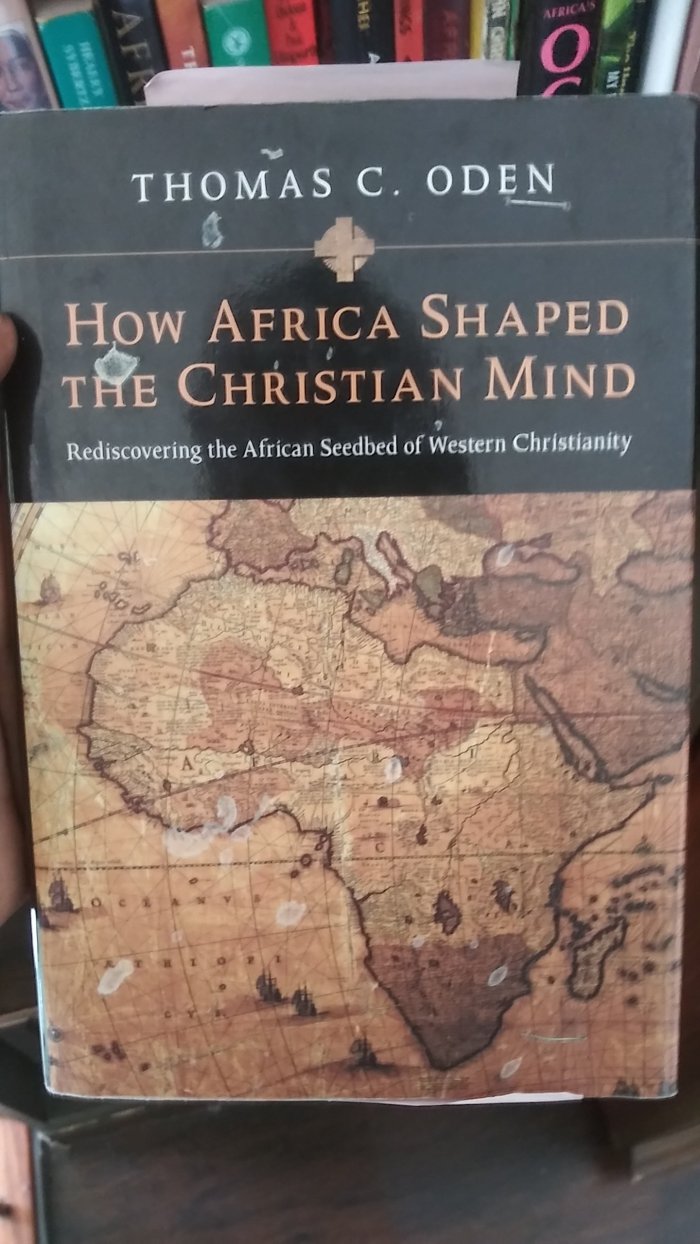
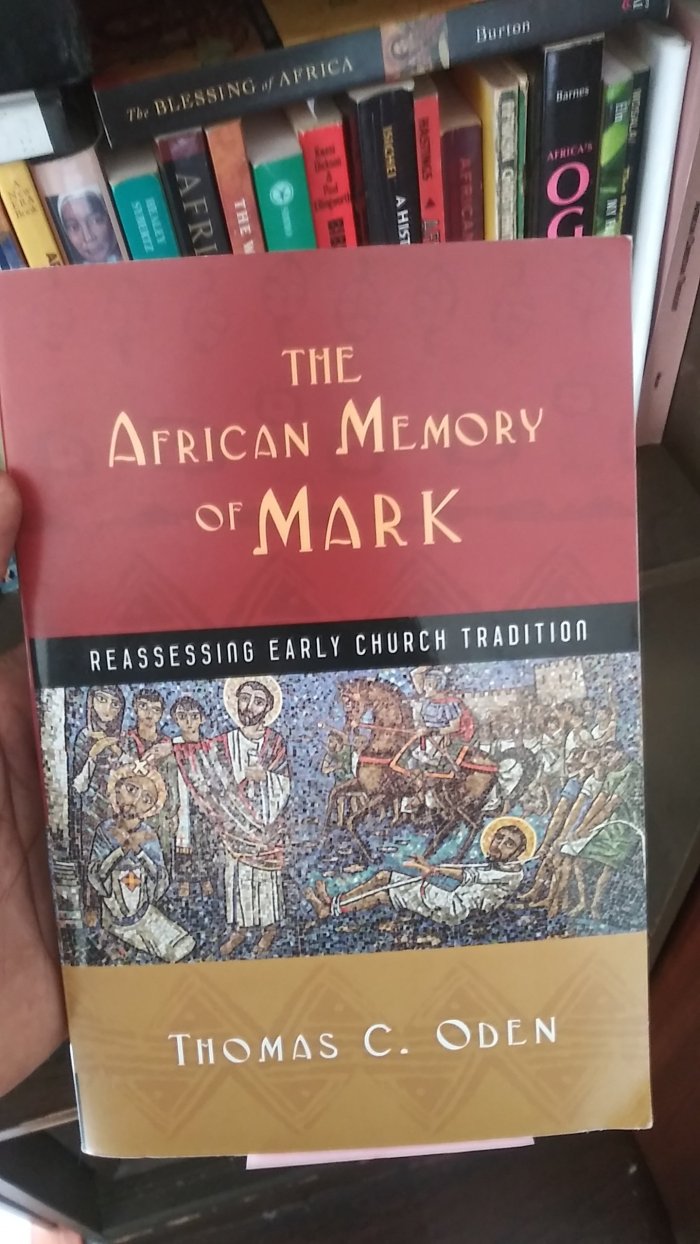
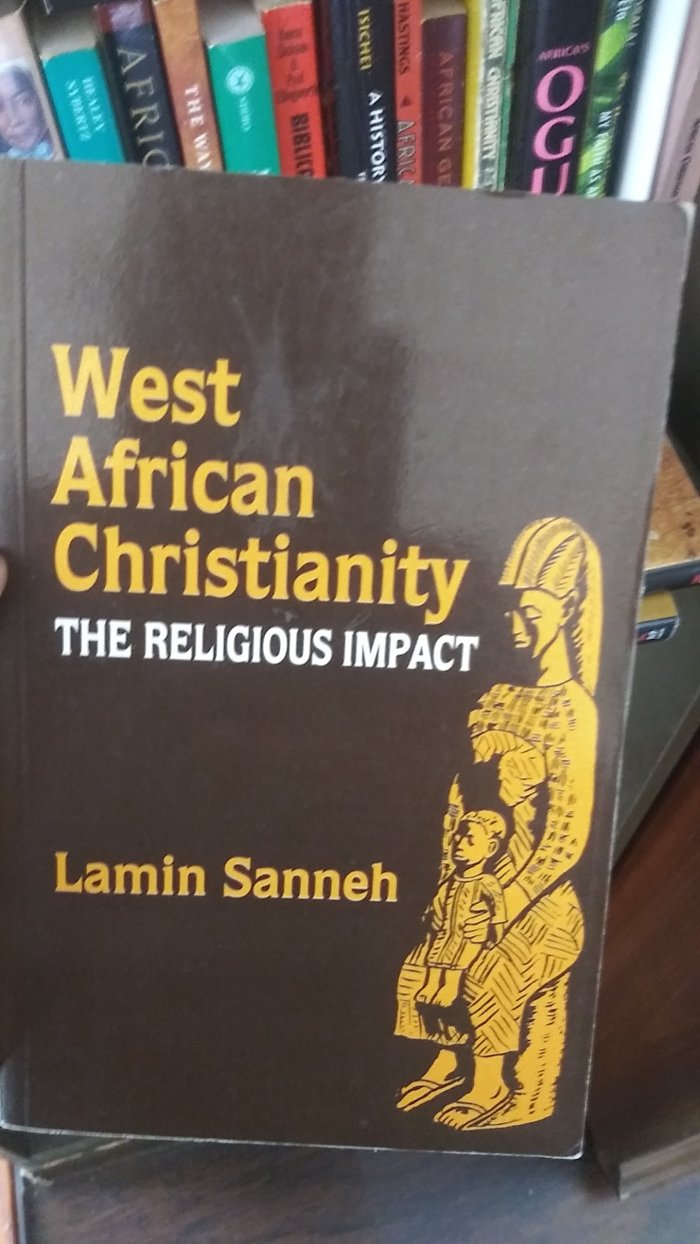
Finally, Christian orthodoxy is not a synonym for white theological values and white interpretation of the Biblical witness. Biblical orthodoxy and theological exegesis did not begin with European theologians, even with the Protestant Reformers. The Reformers inherited the Biblical orthodoxy tradition. For so long, (Biblical) Christianity has been taken captive by and engulfed in Western European theological lifestyle, history, and intellectual tradition, as if the story of Biblical Christianity and Christian theology had its genesis in Europe and that European theological thinkers gave birth to Biblical orthodoxy. This false premise has shaky grounds and often overlooked Patristic theological writings and biblical exegesis, and other voices in the grand theological enterprise and global hermeneutical spiral.
To rescue Evangelical Theology/Evangelical Christianity from its contemporary crisis, it must be divorced completely from White Evangelical culture and the white world and equally be separated totally from theological thinking emerged explicitly from white theologians and biblical scholars who promote theological triumphalism. Christianity is not the product of European genius or civilization, and Evangelical Theology precedes Western civilization. No one’s theological system or tradition is the appointed guardian of Biblical Orthodoxy and the so-called Apostolic beliefs. The real enemy of Evangelical Theology today is its methods, approaches, logical reasoning, and the exclusion of other relevant and equal (Orthodox) voices in the grand theological spectrum and hermeneutical fellowship.
Finally, any theological system that denies the humanity, dignity, and history of the black and brown peoples and excludes them from the grand theological enterprise and God’s providence in human history just because of geography of birth, geography of reason, racial or ethnic identity, or linguistic accent or difference is the real enemy of Biblical orthodoxy and Christian theological orthodoxy. This system needs to be deracinated and rejected.

































 drcelucienjoseph, "Thinking and Meditating"