Author: Dr. Celucien Joseph








































Fallen from Grace and Falling Apart: On the Future of the SBC
Even though I am no longer affiliated with the Southern Baptist Convention or an SBC church, the SBC has marked my theological education and Christian identity in many ways. I continue to interrogate some of the Denomination’s practices of racial and gender exclusion and underrepresentation in its affiliated theological schools and congregations (the SBC churches), its unholy union with a particular political ideology and worldview: the Republican party, and the SBC’s refusal to deal effectively and honestly with the profound problems of sexual sins and abuse and deep racial division and wounds in its churches and institutions.
Personally, I am not optimistic about the future of the SBC and its affiliated theological institutions and churches (that is why I left!); yet I applaud its present (hopeful) attempts to listen to the voice of minority Christians and to deal with some of its contemporary demons and terrors: cases of sexual abuse, the underrepresentation of black and brown Christians in positions of leadership and power, and the exclusion and invisibility of Christian women in spheres of influence and power. What the SBC needs is long-term, practical, and permanent solutions on these crucial and existential matters that are shaping and reshaping the Convention and its affiliated churches and theological schools. Such attempt must be achieved at nine inseparable levels and dimensions: structural, institutional/organisational, administrative, theological, political, ethical, gender, racial, and moral. Thankfully, the good Lord still has a remnant in a Convention that is falling apart and has fallen from grace. I support progress and growth at all levels.
“The convention approved Vision 2025, a five-year plan setting a series of goals for Great Commission advancement. Messengers added to the EC’s five proposed Vision 2025 goals on missions, evangelism and CP giving a sixth stating the convention’s intent to eliminate all incidents of racism and sexual abuse. They also amended a goal placing emphasis on reaching teenagers to those under age 18.
Diversity
The SBC constitutional amendment against racism was among several ways messengers attempted to catalyze ethnic diversity in the convention.
Juan Sanchez, pastor of High Pointe Baptist Church in Austin, Texas, became the first Hispanic elected convention preacher. He will deliver the convention sermon next year in Anaheim, Calif. Messengers also elected a Hispanic first vice president, Ramón Medina, lead pastor of the Spanish ministry at Champion Forest Baptist Church in Houston. Medina was elected in a runoff over another Hispanic nominated for the post, Georgia pastor Javier Chavez.
Southern Baptists tapped to serve on committees likewise were diverse. A majority (51 percent) of Greear’s presidential appointments to committees were non-Anglo, as were 30 percent of those elected to serve on boards and committees.
In his final presidential address, Greear drew a standing ovation when he addressed racial tension within the SBC and told “people of color”: “We need you.”
Critical race theory (CRT) – the subject of a 2019 SBC resolution that has sparked controversy over the past two years – drew several mentions during the convention, including messenger motions and resolution submissions calling for its denunciation as well as questions to SBC presidents during their reports. Yet no official convention action addressed CRT by name.
Instead, messengers adopted a broad resolution regarding race and racial reconciliation. The resolution repudiated “any theory or worldview that denies that racism, oppression, or discrimination is rooted, ultimately, in anything other than sin.” It also reaffirmed a resolution regarding racial reconciliation on the SBC’s 150th anniversary in 1995 in which messengers apologized to African Americans for “condoning and/or perpetuating individual and systemic racism.”
“‘Mature Love’: Thinking Out Loud”
“‘Mature Love’: Thinking Out Loud”
If you are getting married this summer or very soon in the future, let me recommend a wedding song to you: “Thinking Out Loud” by Ed Sheeran. It is written both by Edward Christopher Sheeran and Amy Wadge. Ed met Amy when he was 17 yrs old and in 2014, they released this song, which articulates some of the most powerful words about the enduring power of love. What is the true language of love is the central question this song attempts to answer.
“Thinking Out Loud” not only celebrates the immortal character of love, but also the faithfulness associating with mature love and growing old in love. Fidelity in love is a process and a journey, which binds two souls and cements two hearts together toward an ultimate end: everlasting love.
The clearest expression of fidelity in love and the purpose of love are found in the first stanza:
“When your legs don’t work like they used to before
And I can’t sweep you off of your feet
Will your mouth still remember the taste of my love
Will your eyes still smile from your cheeks”
Consider the promise of love articulating the subsequent evocative language (pay close attention to the first two lines):
“And darling I will be loving you ’til we’re 70
And baby my heart could still fall as hard at 23
And I’m thinking ’bout how people fall in love in mysterious ways
Maybe just the touch of a hand
Oh me I fall in love with you every single day
And I just wanna tell you I am
So honey now
Take me into your loving arms
Kiss me under the light of a thousand stars
Place your head on my beating heart”
Next, the strength of mature love (or the love that endures and continues to grow) is stressed in the next verse:
“When my hands don’t play the strings the same way, mm
I know you will still love me the same
‘Cause honey your soul can never grow old, it’s evergreen
Baby your smile’s forever in my mind and memory”
Consequently, mature love transcends the sexual intimacy love itself could create or fosters in a relationship. According to this stanza, the memory of love in his/her mind is adequate, especially when two people in love continue to grow old together and when one of the spouses has amnesia or the Alzheimer disease. The memory of love is love in itself; Love is ENOUGH! The memory of love is the very essence of what mature love is about, and it is the thousands of future possibilities and virtuous qualities mature love creates or produces in the process of growing old together. Mature love is a committed kind of love ; it is what we might call covenantal love. It is resistant love. This kind of love is radical and revolutionary. Mature love is also deep and sure love. Mature love is sacrificial love, and it is the love that endures, creates hope and optimism, is pure, and will never die. Folks, there is nothing less and more profound than everlasting love.
Enjoy the full lyrics below and do listen to the song itself:
“When your legs don’t work like they used to before
And I can’t sweep you off of your feet
Will your mouth still remember the taste of my love
Will your eyes still smile from your cheeks
And darling I will be loving you ’til we’re 70
And baby my heart could still fall as hard at 23
And I’m thinking ’bout how people fall in love in mysterious ways
Maybe just the touch of a hand
Oh me I fall in love with you every single day
And I just wanna tell you I am
So honey now
Take me into your loving arms
Kiss me under the light of a thousand stars
Place your head on my beating heart
I’m thinking out loud
Maybe we found love right where we are
When my hair’s all but gone and my memory fades
And the crowds don’t remember my name
When my hands don’t play the strings the same way, mm
I know you will still love me the same
‘Cause honey your soul can never grow old, it’s evergreen
Baby your smile’s forever in my mind and memory
I’m thinking ’bout how people fall in love in mysterious ways
Maybe it’s all part of a plan
I’ll just keep on making the same mistakes
Hoping that you’ll understand
But baby now
Take me into your loving arms
Kiss me under the light of a thousand stars
Place your head on my beating heart
I’m thinking out loud
That maybe we found love right where we are, oh
So baby now
Take me into your loving arms
Kiss me under the light of a thousand stars
Oh darling, place your head on my beating heart
I’m thinking out loud
That maybe we found love right where we are
Oh baby, we found love right where we are (maybe)
And we found love right where we are”
New Book Contract Signed!
I also imagine a particular brand of Christian scholarship and theological hermeneutic that (1) take into account different sources of knowledge and human experience in the formation of Christian thinking and spirituality; (2) give serious attention to the practice of equity and diversity in the training and formation of students for the Christian vocation and Christian scholarship; (3) and give voice to a new pedagogy that acknowledges the contributions of both women and people of color (especially the Global South) in various areas of Christian academia or academic disciplines: Theological Studies, Biblical Studies, Christian Counseling, Christian Education, Christian Leadership, Christian Philosophy, Christian Apologetics, Ecclesiastical History, Christian Preaching, etc. I propose that both theological education and Christian scholarship should be used as tools of empowerment to make us better human beings and world citizens, and permanent committed followers of Jesus Christ. The common and unifying thread in those written chapters are the eventual achievement of human flourishing and the good life in this world. In brief, this is the kind of pedagogical optimism and promissory hermeneutics that I articulate in the written pages.
I signed a book contract today with Wipf and Stock Publishers. This is the book (“Theological Education and Christian Scholarship for Human Flourishing: Hermeneutics, Knowledge, and Multiculturalism”) I have always wanted to write about the intersections of theological education, Christian scholarship, multiculturalism, and participatory democracy. As an educator and scholar, these topics are very dear to my heart and scholarship. I have an abiding interest for a theological/religious education that would engage continuously our multicultural society and our complex human condition; in those written pages, I envision a theological curriculum and pedagogy that would enrich our democracy and shared humanity, and promote both racial and gender diversity–toward holistic transformation and individual/collective growth. Such theological curriculum should inform the grammar and hermeneutics of Christian scholarship, and the selection of a diverse faculty and administrators in theological education and classrooms, respectively.
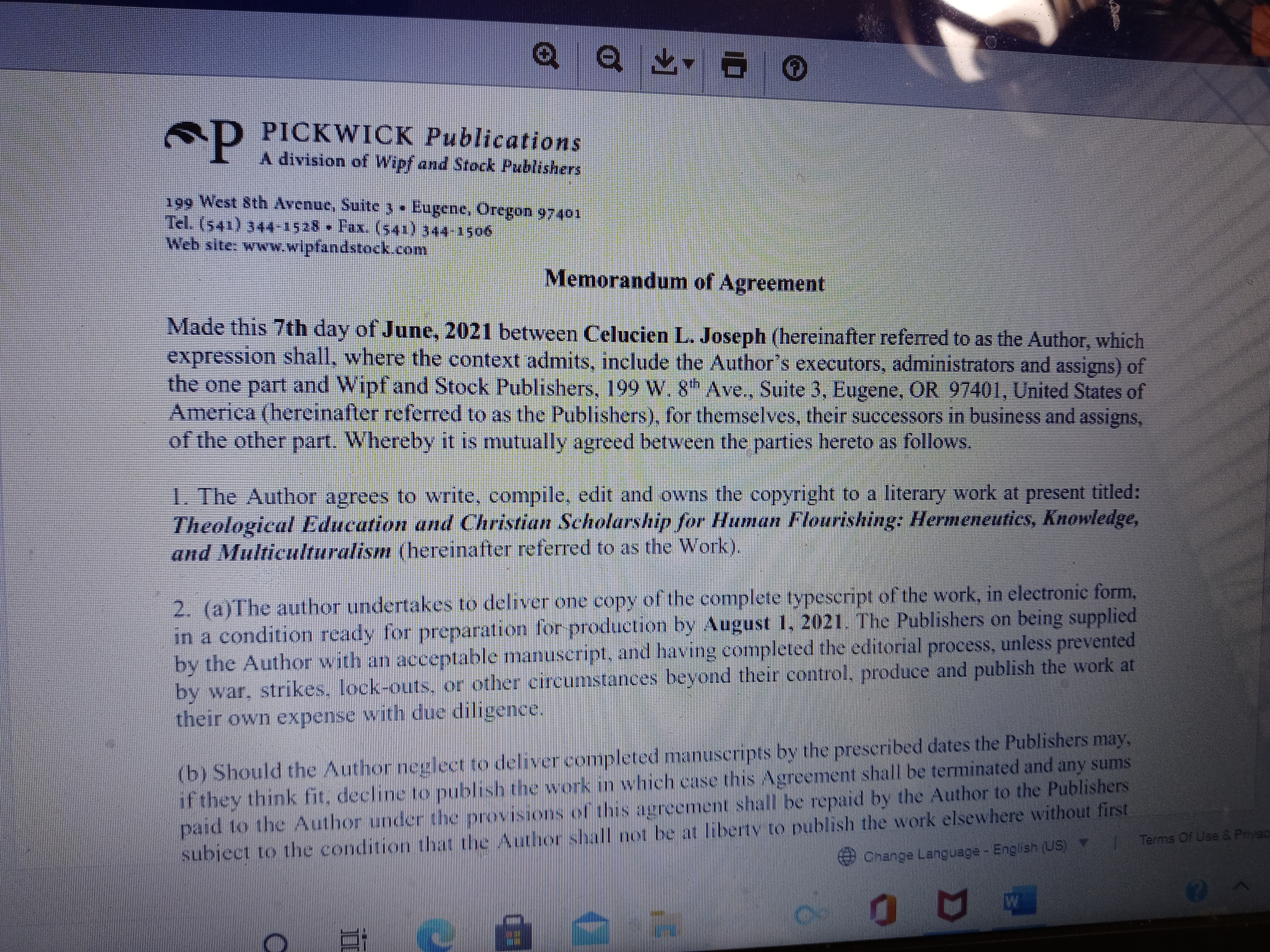
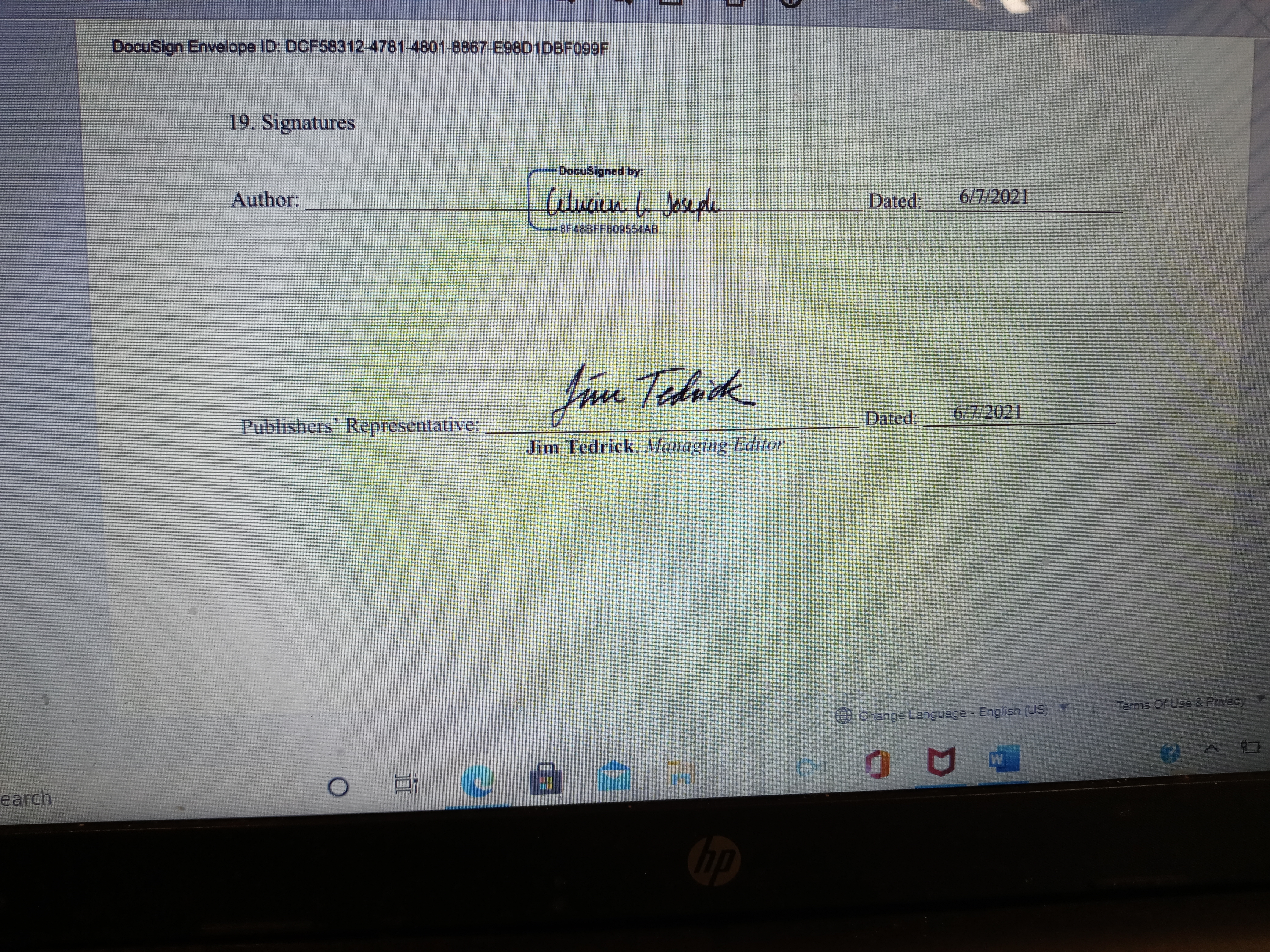
***My initial thought for this book began in 2002 during my first semester in seminary–that is, 19 years ago. Say a little prayer for me so I could successful submit the manuscript by August 1, 2021.
What’s due in June, 2021!
What’s due in June, 2021!
- A book review on two books on the Haitian Occupation in Haiti, 1915-1934;
- A book review on a Haitian Anthology book;
- A book review on a book on African American Evangelicalism;
- A book review on a book about Haiti’s nineteenth century and early twentieth century’s literary production;
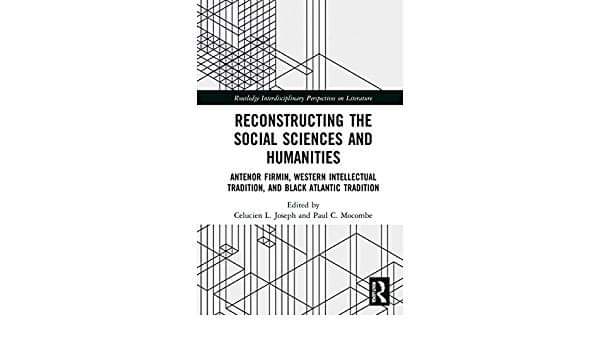
- An essay for an Anthropology journal on Joseph Anténor Firmin and my new edited book about him: “Reconstructing the Social Sciences and the Humanities: Anténor Firmin, Western Intellectual Tradition, and Black Atlantic Tradition” (*** I received an invitation to write the short essay and to introduce the book.)
- Course essays to grade and final grades to submit for two summer classes.
How am I going to get all of these things done in 30 days? I am only one person and can’t be in two different places at once 🙂
Can I just enjoy my summer vacation peacefully and without doing any academic works?
Why am I punishing myself? Lol
***The truth is that I have missed the due dates for # 1, 2, and 4; the editors were very gracious to grant me extension, but June seems to be the new deadline to submit these assignments
The good Lord/Bondye kngows that I need strength and energy!

A Bird’s Eye View of the Haitian Flag
In this presentation Dr. Celucien L. Joseph gives a historical account and analysis of this iconic flag.”
A Bird’s Eye View of the Haitian Flag
A Bird’s Eye View of The Haitian Flag
“Pray for ALL People and the Common Good of ALL Nations:How Should Christians and the People of God Respond to the Modern Crisis between the Nation of Israel and Palestine?”
“Pray for ALL People and the Common Good of ALL Nations:
How Should Christians and the People of God Respond to the Modern Crisis between the Nation of Israel and Palestine?”
When the Bible commands the people of God to pray for the peace of Jerusalem (Psalm 122:6), it does not forbid God’s people to pray for the peace of Palestine nor to exclude other nations and peoples in Christian prayers, concurrently. In fact, Scripture strongly encourages Christians and the people of God to utter intercessory prayers for all peoples and all nations, respectively. As it is stated in Scripture, “First of all, then, I urge that supplications, prayers, intercessions, and thanksgivings be made for all people, 2 for kings and all who are in high positions, that we may lead a peaceful and quiet life, godly and dignified in every way” (1 Tim. 2:1-7). In this sense, the Christian prayer is universal, inclusive, and non-discriminatory; its driven motive is peace-building and the promotion of human dignity and worth. In this passage, prayer is depicted as a weapon of peace and stability, construction and deconstruction.
Correspondingly, the Christian prayer has an ethico-political purpose: the political peace and stability of the nation-states, and the common good and welfare of all people. Yet one should remember that prayer is about negotiation with the Divine/God the same way peace-making or peace-building requires the process of democratic intent and the deliberate negotiation between political leaders and national and international citizens of the world. In other words, God does not grant national peace apart from human negotiation. National peace is also the work of the nations and their leaders. God, the leaders, and the people they guide work hand in hand and in unqualified solidarity to foster peace, a politics of relationality, and an ethic of mutual respect.
The people of God do not just pray exclusively for the people they love, such as their friends, co-workers, and family members; it is the contrary. Jesus, in the Sermon on the Mount, instructs his followers and the people of God to be kind and generous through intercessory prayers for the welfare of their enemies and the common good for the people who do not like them. As it is observed in this important passage, “44 But I tell you, love your enemies and pray for those who persecute you, 45 that you may be children of your Father in heaven. He causes his sun to rise on the evil and the good, and sends rain on the righteous and the unrighteous” (Matthew 5:44-45). Accordingly, the centrality of Christian prayer is to make the Christian an engaged human being and a participatory citizen in human affairs and the divine project in the world. It can also be stated that the purpose of Christian prayer is to make the Christian a more reflective individual who does not overlook the weight of violence in his or her community and the burden of evil in contemporary times. This passage also suggests that prayer has a humanitarian and humanistic value; it is simply about imitation, that is, being and acting like God through his kind intentions and unmeasured goodness toward all people and nations.
In the spirit of Psalm 122:6, to wish divine shalom upon a country or a nation should not be equated with the license to ignore a country’s wrongdoings and its habit of violence and violation of human rights, as it is the case between the nation of Israel and the nation of Palestine. The call to intercessory prayers for the peace of Jerusalem is also a clarion call to hold the nation of Israel accountable for its deliberate mistreatment of the nation and people of Palestine, as God despises all manners of injustice and all forms of exploitation toward his image bearers. God gives justice and grace to the oppressed and the marginalized of the world (“The Lord is a refuge for the oppressed, a stronghold in times of trouble”: Psalm 9:9; “The Spirit of the Lord is on me, because he has anointed me to proclaim good news to the poor. He has sent me to proclaim freedom for the prisoners and recovery of sight for the blind, to set the oppressed free, to proclaim the year of the Lord’s favor”: Luke 4:18-19). God punished the nations of Sodom and Gomorrah for their wickedness and violence (Genesis 18:20-33), and he judged the nation of Assyria for its arrogance and practice of violence (Isaiah 10:12, 5-19), and the nation of Babylon for its guilt, vengeance, and unjust diplomatic dealings with the neighboring nations (Jeremiah 56:6-56). The God who acts, sees, intervenes, and liberates always does so through personal, collective, and intercessory prayers.
Prayer is a divine gift for all people, and God has designed prayers to be a universal blessing for all nations and all peoples of the earth. To pray for Jerusalem is not a command to Christians and the people of God to support blindly the nation of Israel in all its undertakings toward its neighboring nation: Palestine. Christians and the people of God should not use the gift of prayer to promote nationalism, Zionism, anti-Semitism, and anti-Palestinian racism and xenophobia. Prayer as a universal and inclusive gift transcends all forms of human hatred, hostility, and violence. Intercessory prayers should be launched, in its weaponry sense, to fight injustice, human rights violation, genocide, and unnecessary death.
The art of Christian prayer invites human accountability, openness, and honesty (“For I know my transgressions, and my sin is always before me”: Ps. 51:3). It also includes the process of personal and collective confession and mourning (“Deliver me from the guilt of bloodshed, O God, you who are God my Savior… a broken spirit; a broken and contrite heart you, God, will not despise”: Ps. 51:14; “Lord, the great and awesome God, who keeps his covenant of love with those who love him and keep his commandments, 5 we have sinned and done wrong. We have been wicked and have rebelled; we have turned away from your commands and laws. 6 We have not listened to your servants the prophets, who spoke in your name to our kings, our princes and our ancestors, and to all the people of the land”: Daniel 9:4-6). As it is inferred in these passages, God is against all forms of human and state violence and injustice—even those committed by the people of God and Christians. Nonetheless, he uplifts the nations and the peoples who are committed peacemakers and peace-builders (Matthew 5:9), and those who pray purposefully for the good health and welfare of their friends and their enemies, with the same passion and zeal.
Finally, we should remember that Christian prayer is a political act since it includes the political leaders of the nations, involves the kingdoms of this world, and is concerned with the political activities and interventions of the nations, respectively. Prayer is also a spiritual activity since humans address it directly to God, a divine Spirit/Being, and it is a divine design to improve one’s spiritual journey and intimacy with God. Prayer as a form of theological engagement draws us near the Divine and his Spirit; as a theological expression and disclosure, prayer gives us access to the deep things of God (i.e. his projects and plans for his people and the nations) and to the depth of his Being and essence. From this perspective, prayer is a form of human radicalness and divine openness. The prayer that aims at fostering peace, national unity, and political accord between nations and peoples is the one that God honors. Let us continue to offer candid and revolutionary intercessory prayers for the preservation of peace and tranquility, human rights and dignity, and the freedom and political freedom of the Palestinian people and of all exploited people and all subjugated nations of the world.
On Fatherhood and Mentorship!

To be a father means to be a (constant) presence, a (consistent) companion, and a (faithful) mentor to your son and/or daughter. It is to pave the way to the future for your children.
Happy Sunday, Good People!
My Summer Reading List: Five Great Texts!
Hello, Good People: I would like to share with you five great texts I plan to read this summer:
My Summer Reading: Book 1
“African Dominion: A New History of Empire in Early and Medieval West Africa” by Michael A. Gomez
My Summer Reading: Book 2
“The Enlightenment that Failed: Ideas, Revolution, and Democratic Defeat, 1748-1830 ” by Jonathan I. Israel
My Summer Reading: Book 3
“Pauline Dogmatics: The Triumph of God’s Love” by Douglas Campbell
My Summer Reading: Book 4
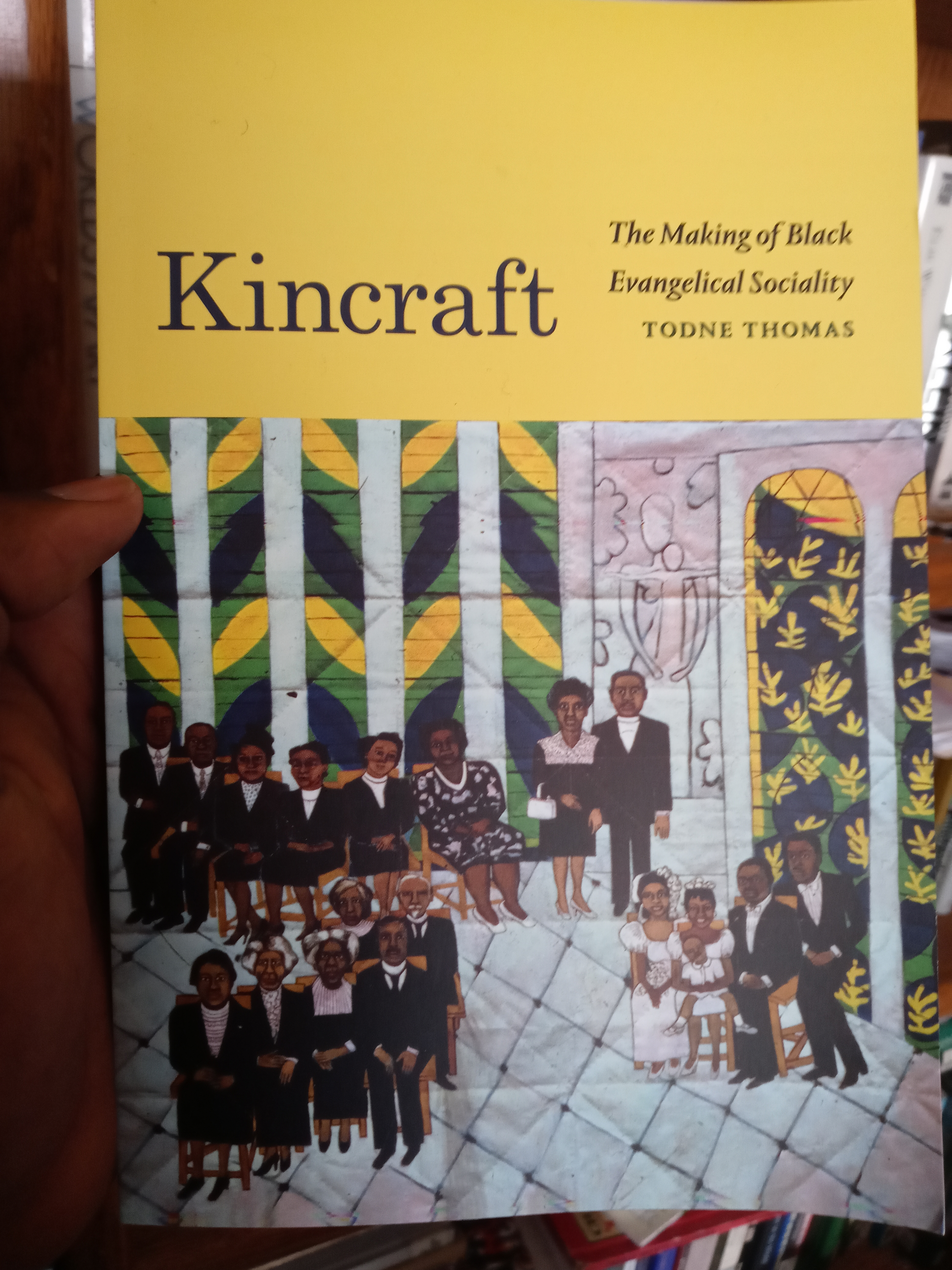
“The Making of Black Evangelical Sociality” by Todne Thomas
My Summer Reading: Book 5
“The Black Church: This Is Our Story, This Is Our Song” by Henry Gates



Recommended Summer (2021) Readings on Haiti, the Haitian Revolution, and Haitian Studies







- Sudhir Hazareesingh, Black Spartacus: The Epic Life of Toussaint Louverture (Farrar, Straus and Giroux, 2020)
- Brandon R. Byrd, The Black Republic: African Americans and the Fate of Haiti (University of Pennsylvania Press, 2020)
- Chelsea, Stieber, Haiti’s Paper War: Post-Independence Writing, Civil War, and the Making of the Republic, 1804–1954 (NYU Press, 2020)
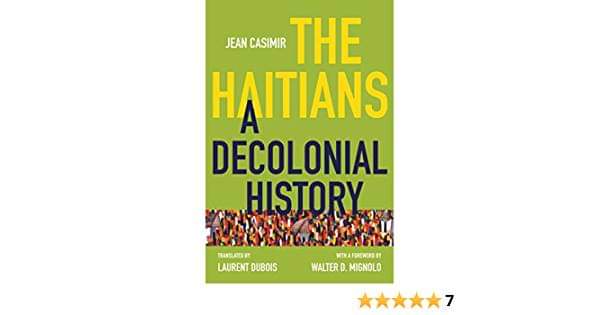
- Jean Casimir, The Haitians: A Decolonial History (The University of North Carolina Press, 2020)
- Celucien L. Joseph, Revolutionary Change and Democratic Religion: Christianity, Vodou, and Secularism (Pickwick Publications, 2020)
- Alyssa Goldstein Sepinwall, Slave Revolt on Screen: The Haitian Revolution in Film and Video Games (University Press of Mississippi, 2021))
- Celucien L. Joseph & Paul Mocombe (eds), Reconstructing the Social Sciences and Humanities: Anténor Firmin, Western Intellectual Tradition, and Black Atlantic Tradition (Routledge, 2021)
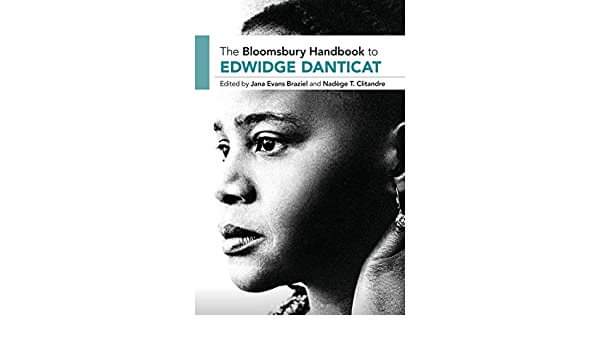
- Jana Evans Braziel & Nadège T. Clitandre (eds) The Bloomsbury Handbook to Edwidge Danticat (Bloomsbury Handbooks, 2021)
- Edwidge Danticat, Everything Inside: Stories (Vintage 2020)
- Makenzy Orcel, The Immortals (SUNY Press, 2020)
 drcelucienjoseph, "Thinking and Meditating"