Paradoxically, the United States might be the richest country in the world and the safest one for some people, but it is a miserable nation when it comes to championing human dignity and preserving human life. This country will never experience internal peace and racial harmony untill every life is deemed valuable and protected. Seriously, police officers need to stop killing young (Black and brown) people, the future of this country. The Commitment to the preservation of personhood (every life) is the first human right and the first act of American democracy for all.
Every human being is a person, and every person is a human being. Every black woman/man is a person. Every brown man/woman is a person. Every brown man/woman is a person. Every yellow woman/man is a person. Every mixed man/woman is a person. Every white woman/man is a person.
The human life is intrinsically connected to the personhood and humanhood. No matter what your race or ethnicity is, you are a human being and you are a person.
Paradoxically, many black and brown people from the Global South immigrate to this country to search for a better life, to dream of a more promising future for themselves and their children, and to escape (political) persecution and death. It is a great loss for one to leave his or her native land for an unknown place and a new experience; yet life in this land of refugee and freedom has become imaginably for some an existential risk, death itself. Nonetheless, I do dream of another country for the people and a more promising human experience and life in the present and future for all, and wherein every human breath and every human soul will experience the joy of living and the delight of bein human.
“The Need for Haitian Biographies in English: The Top Ten”
This is a great era for Haitian studies! The body of scholarship about Haiti and its national history continues to blossom in the Anglophone world, especially in North America (i.e. the United States). In contemporary Haitian studies, there are two major sub-areas that continue to dominate the contemporary academic discourse in the English language: studies on the Haitian Revolution and research on Haitian Vodou. Both areas are valuable as they contribute substantially to our understanding of the colonial system, slavery, the French empire, and the formation of the Haitian postcolonial state, as well as revolutionary Haiti’s contribution to modernity, universal emancipation, and human rights discourse. Second, correspondingly, contemporary studies on Haitian Vodou, what many American scholars simply call, the “Haitian Religion,” is also a significant sub-area that informs us in significant ways about the interesting link and intersection of faith, culture, identity, and politics in the Haitian experience and Haiti’s civil and political societies. The Vodou religion is also important to study because it helps us to establish linkages and parallels between Haiti and continental Africa, Haitians and their African ancestors, African traditional religion and other religious traditions such as ancient Egyptian religion, Christianity, Hinduism, and Islam, etc.
Nonetheless, there exists a profound gap in contemporary Haitian studies and Africana studies to produce more “intellectual biographies” in the English language on Haiti’s major writers and thinkers. For me, this is a pressing academic necessity because Haitian studies as a promising learning field is growing rapidly in the Anglophone world. Allow me to provide two examples relating to this important concern. In 2017, I had the pleasure to publish a detailed intellectual biography on the renowned Haitian Marxist and communist public intellectual Jacques Roumain. The biography, “Thinking in Public: Faith, Secular Humanism, and Development in Jacques Roumain” was published by Pickwick Publications, an imprint of Wipf and Stock Publishers. Currently, I am working on an intellectual biography on Jean Price-Mars for Vanderbilt University Press. About two years ago, I had the immense joy to collaborate with a group of talented writers and thinkers contributing to the publication of a seminal book on Price-Mars entitled “Between Two Worlds: Jean Price-Mars, Haiti, and Africa” (Lexington Books, 2018; I served as the lead editor of the book). A year ago, two senior editors of two different prestigious universities presses approached me to submit a book proposal for an intellectual biography on the prominent Haitian thinker and anti-racist intellectual Joseph Antenor Firmin. A biography on Firmin in English would be a major intellectual achievement!
Further, I have to admit a personal weakness. I love reading intellectual biographies on great men and women who have left their marks on our lives and their rich legacies that continue to inspire and empower us—toward social transformation, the common good, and human flourishing. I also enjoy reading big books that are interdisciplinary in scope and content, and whose focus is on the subject of history of ideas.
Generally, biographies are important for various good reasons I am not even able to name here. In the same line of thought, biographies about Haiti’s major writers and intellectuals are crucial for the following five reasons I outline below:
To help us understand the world that made those thinkers and the context that shaped their life, their actions, and their legacy in the world;
To assist us in making sense about the complexity of human nature and human relations from the perspective of the so-called subalterns and the political trajectories of the developing nation-state of Haiti;
To continue to enrich our intellectual growth and curiosity, as well as to nurture the life of the mind from different sources of knowledge production, and epistemological deconstruction and construction;
To expand the field of Haitian studies and Africana studies, respectively, and to integrate and to be in conversation with other equally important sub-areas of study, which will contribute to the expansion of human knowledge and understanding; and
To invite other role models and circles of influence, that have graced the former world, in our present life so we can learn from their experience, wisdom, and actions as to improve the present human condition—contributing to the common good and human flourishing.
It is from this perspective, I would like to recommend students of Haitian studies and Haitianists to consider researching and eventually writing (intellectual) biographies in the English language on the following major Haitian writers and thinkers; I limit my recommendations to ten writers who have lived through the twentieth-century:
Joseph Auguste Anténor Firmin (1850 –1911)
Suzanne Comhaire-Sylvain (1898-1975)
Madeleine Sylvain-Bouchereau (1905-1970)
Félix-Morisseau-Leroy (1912-1988)
Marie Vieux-Chauvet (1916-1973)
Jacques-Stephen Alexis (1922-1961)
René Depestre (1926-Present)
Paulette Poujol-Oriol (1926 –2011)
Georges Castera (1936 –2020)
Franck Étienne “Frankétienne” (1936-Present)
*** Michel-Rolph Trouillot (1949-2012) needs to be among the top ten!
10 Basic Facts about Religion: A Comparative Approach
Submission is a universal characteristic of all religious faiths. The essence of religion is devotion and submission to a transcendent Being (Beings), the ultimate Reality, or a metaphysical Force (Forces) beyond the natural world.
Organization is basic to all religious traditions. Religion helps us organize our personal and collective lives in the world.
Meaning is fundamental to all religious systems. Religion helps us to make sense of the world and about who we are as human beings and residents of this planet.
All religions promote a pedagogy of human relations and mutuality. Religion offers basic and transcendent principles and instructions to men and women on how to act toward one another.
The essence of all faith traditions leads to a particular way of being in the world as human beings. Religion provides various ways to help people connect to each other and relate to their environment.
Power is a common core of all religion. All religious traditions sustain the idea that power is a regulating force in the world and social relations, and that divine or supernatural power is greater and more authoritative than any political authority or earthly power.
Conformity is the way of integration and membership in all religious traditions. Religious conformity is associated with the tendencies and sensibilities of a particular tradition as they pertain to an agreeable and coherent religious belief, codes of conduct, behaviors, and manners for group membership and association.
The phenomenon of control belongs to all faith systems. The basic goal of religious codes of conduct and belief is to provide a guiding way to influence our rational and irrational behaviors and actions. Control, as a religious propriety, regulates our deficiencies and human/social relations, and is important for achieving human flourishing and the common good in the world.
Devotion is a fundamental characteristic of all faiths. Religion is profoundly about the way of devotion: devotion to a Supreme Being or Transcendent Force, and human beings mutually devoting themselves to one another.
Human flourishing is a universal virtue of all religious traditions. While human flourishing is defined differently in all the major religious traditions (Judaism, Christianity, Islam, Yoruba Religion/Afro-derived religions in the African Diaspora, Confucianism, Hinduism, Buddhism, Taoism) of the world, it is still the basic ethical philosophy of being pious, kind, compassionate, interpersonal, and relational in the world.
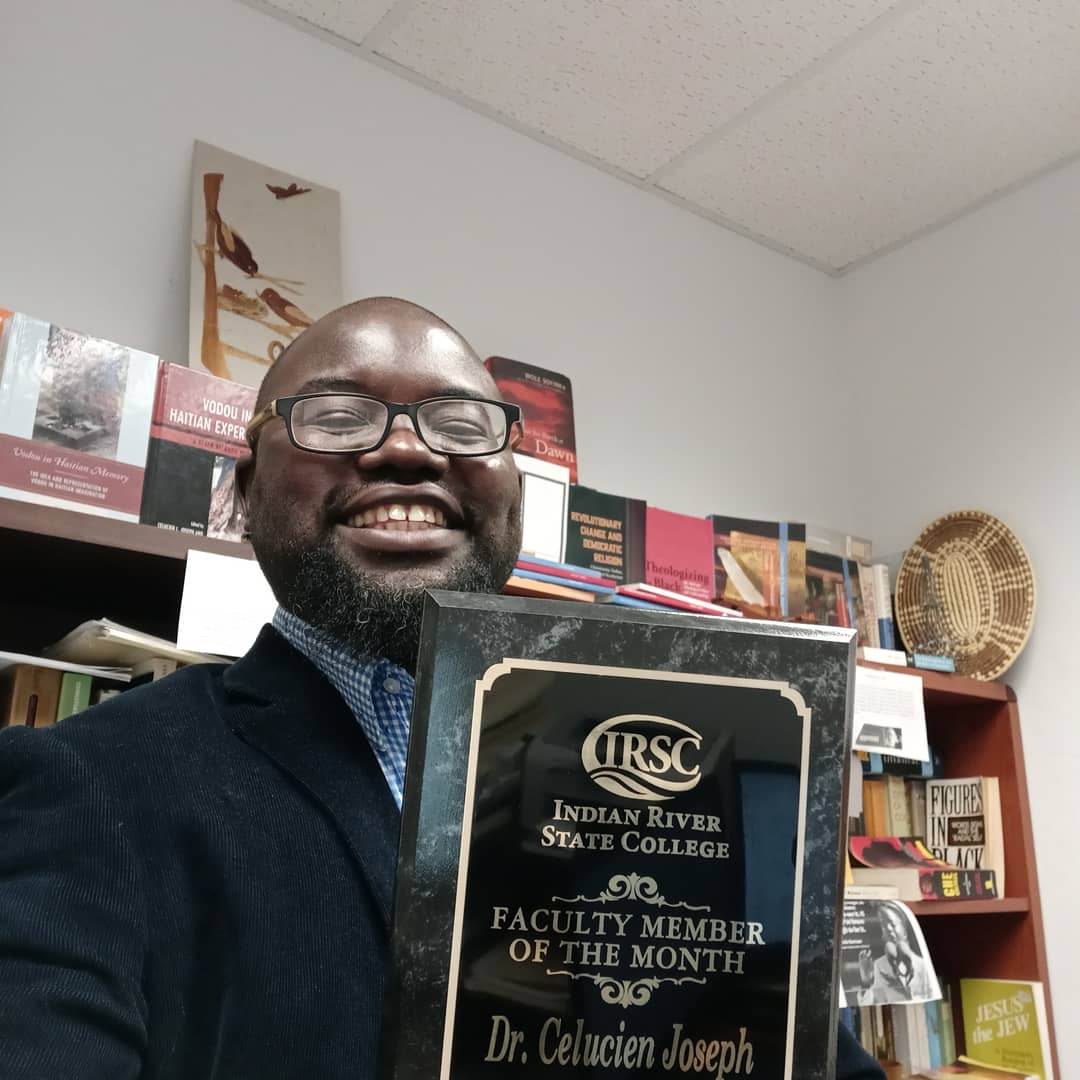
While I was rehearsing my talk (“What’s Good and Relational about the Craft and Art of Writing?”) for tonight’s (4/1) “Creative Writing Awards Ceremony,” two #IRSC Campus Deans and one Provost walked in my office this morning at 11:48 am to surprise me with this award.
I am in tears, but filled with joy.
I want to take the time to thank my colleagues in the English and Communications Department at IRSC, and the school’s administration and the IRSC community for this award. In particular, I would like to thank my students for believing in me. You continue to inspire me to learn, teach, research, and improve myself every day. I am because of you, and We are because We belong together.
“According to Scripture: A Brief History of the Good Friday, and Its Theological Value”
“May Christ’s sacrifice give us the courage to offer our own bodies for justice and peace.” –Oscar Romero (1917 – 1980)
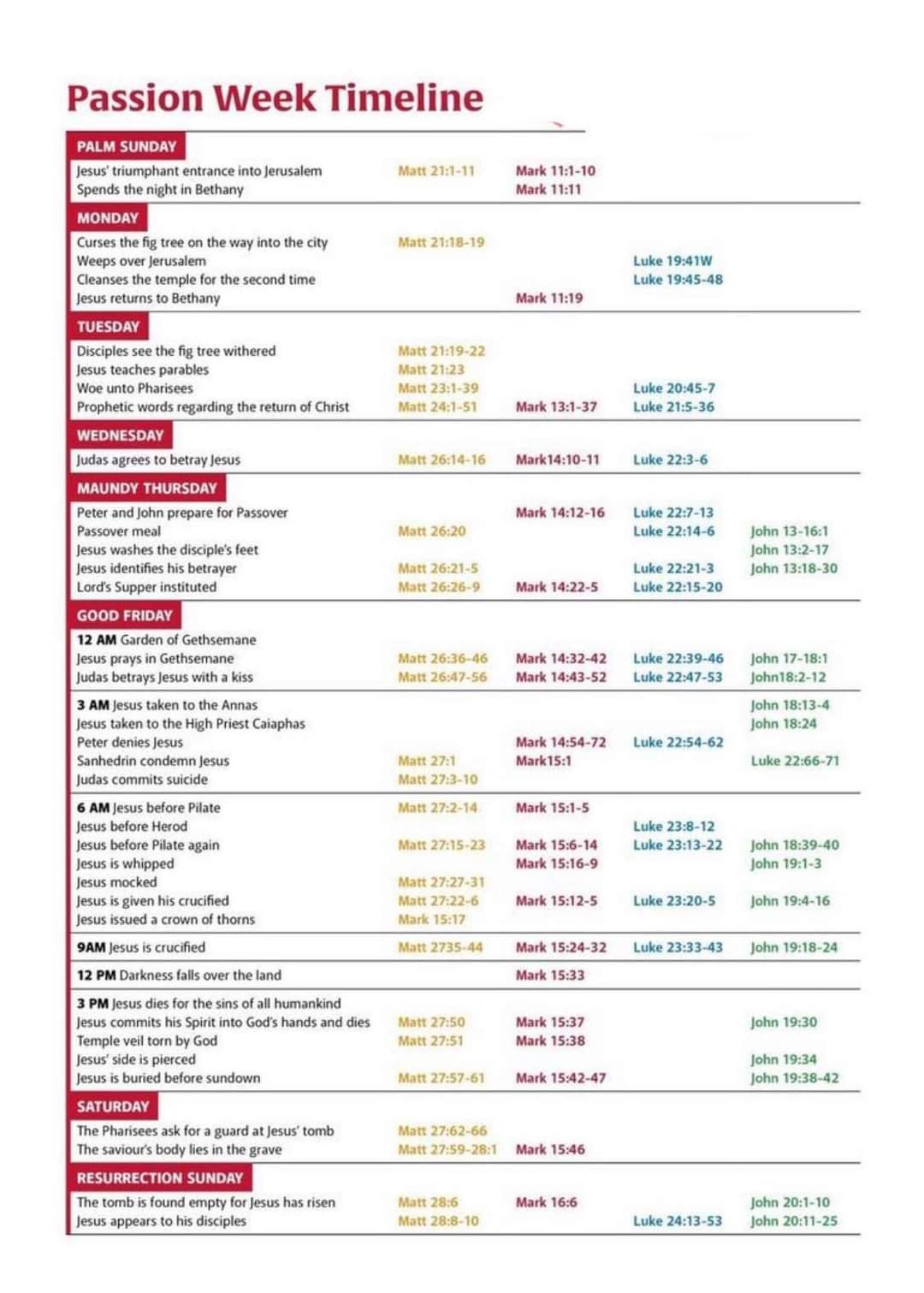
What did happen to Jesus on Good Friday?
Take a look at the chart below for references in the Bible:
I. The Historicity of the Good Friday and the Death of Jesus
Jesus prayed in Gethsemane.
He is betrayed by Judas.
He was put on trial before the Jewish Supreme Court: the Sanhedrin
The Sanhedrin condemned Jesus to death.
Peter, one of Jesus’ famous disciplines, betrayed Jesus.
Jesus was put on trial before Pilate.
Jesus appeared before Herod for a trial.
Jesus appeared before Pilate for a second trial.
Before his death, the Roman soldiers whipped him, beat him, mocked him, and pierced his body (side).
The Roman soldiers crucified Jesus.
While hanging on the cross, Jesus made seven great statements. His last words were “It is finished.”
Jesus is declared dead.
He was buried before sundown.
Haitian art: “Crucifixion” by Seymour E. Bottex
II. The Theological and Practical Significance of Good Friday
A. The writers of the New Testament interpret the death of Jesus as a sacrificial atonement for the sins of God’s human creations. In other words, they attributed a cosmic significance to the death of Jesus and construed it as an act of human courage and determination.
B. All of them argue that Jesus’ death was a substitution for the death of God’s image bearers. In other words, Jesus is a model of true love, human servanthood, and selflessness.
C. The writers of the Christian New Testament contend that on the Good Friday, Jesus died as a remission for the sins of all people and all ethnicity, both Jews and non-Jews, men and women, male and female, and the LGBTQ+ people, to use a contemporary concept.
D. According to these same writers, Jesus’ death not only effectuated divine peace (having peace with God, living in peace and understanding with God); also, it established divine forgiveness and secured reconciliation between God and his image bearers.
E. According to Paul, a famous writer of the New Testament books, the death of Jesus means freedom from dominion of sins, no condemnation, justification before God, and new creation. In other words, Jesus’ death offers a model for struggle against injustice and contemporary conversations on human liberation and rights.
As Father Oscar Romero (1917-1980) wrote: “May Christ’s sacrifice give us the courage to offer our own bodies for justice and peace.”
F. According to Peter, another famous writer of the New Testament Scriptures, the sufferings and death of Jesus on Good Friday are connected to the idea and way of biblical discipleship; in that regard, following Jesus might lead to human suffering, even death.
G. The New Testament writers sustain the idea that Jesus’ death on the Good Friday is a proclamation of a new and quality of life, what they theoretically phrased the “eternal life,” and the birth of a new creation, what they theoretically called the “new people of God.”
H. The authors of the New Testament interpret the events of the Good Friday and the death of Jesus as credible and reliable historical transactions (see # 1-13 above).
I. Finally, because of the historical value and theological implications attributed to the Good Friday and the death of Jesus, the writers of the New Testament make a clarion call to God’s human creations to believe in Jesus, to follow him, and to proclaim the meaning of Jesus’ death as the good news for all people and for the world–as they continue to live on this earth.
Maundy Thursday: Jesus Washes His Disciples’ Feet (John 13:1-17): A Lesson on Humility and Servanthood
“1 It was just before the Passover Festival. Jesus knew that the hour had come for him to leave this world and go to the Father. Having loved his own who were in the world, he loved them to the end.
2 The evening meal was in progress, and the devil had already prompted Judas, the son of Simon Iscariot, to betray Jesus. 3 Jesus knew that the Father had put all things under his power, and that he had come from God and was returning to God; 4 so he got up from the meal, took off his outer clothing, and wrapped a towel around his waist. 5 After that, he poured water into a basin and began to wash his disciples’ feet, drying them with the towel that was wrapped around him.
6 He came to Simon Peter, who said to him, “Lord, are you going to wash my feet?”
7 Jesus replied, “You do not realize now what I am doing, but later you will understand.”
8 “No,” said Peter, “you shall never wash my feet.”
Jesus answered, “Unless I wash you, you have no part with me.”
9 “Then, Lord,” Simon Peter replied, “not just my feet but my hands and my head as well!”
10 Jesus answered, “Those who have had a bath need only to wash their feet; their whole body is clean. And you are clean, though not every one of you.” 11 For he knew who was going to betray him, and that was why he said not every one was clean.
12 When he had finished washing their feet, he put on his clothes and returned to his place. “Do you understand what I have done for you?” he asked them. 13 “You call me ‘Teacher’ and ‘Lord,’ and rightly so, for that is what I am. 14 Now that I, your Lord and Teacher, have washed your feet, you also should wash one another’s feet. 15 I have set you an example that you should do as I have done for you. 16 Very truly I tell you, no servant is greater than his master, nor is a messenger greater than the one who sent him. 17 Now that you know these things, you will be blessed if you do them.”
Here’s the conceptual framework about the book I have always wanted to write; or if I can not write it myself, I will be delighted to serve as the chief editor and make a call for papers. I am interested working with theologians, historians, religious scholars, literary scholars, social scientists, anthropologists, practitioners, peace and justice activists, etc.
“Toward an Interfaith Dialogue and Understanding: Vodou and Christianity in a Conceptual and Practical Framework” by Celucien L. Joseph, PhD
Table of Contents
Introduction: Rethinking the Meaning of Faith, Traditions, and Human Practices: Why Writing this Book on Vodou and Christianity?
Chapter 1: The Genesis of both Religious Traditions
Chapter 2: Creating Meaning and Divine Connection: The Spirituality of Vodou and Christianity
Chapter 3: The God Who Is: The Concept of God in Christianity and Vodou
Chapter 4: My Spirit Shall Guide You: The World of the Lwa and the Spirit of the World
Chapter 5: Master of the Crossroads and Light of the World: Jesus and Legba in Conversation
Chapter 6: How Shall We live? Vodou and Christian Ethics, and Human Relations
Chapter 7: Representation and Identity: Gender, Race, and Class in Christianity and Vodou
Chapter 8: Reconnecting the Present and the Past: Vodou and Christianity in African History and the African Diasporic Experience
Chapter 9: Public Faith: The Cause of Participatory Democracy and Social Change
Chapter 10: Creating a Better World: A Call to Interreligious Dialogue and Understanding
Chapter 11: Common Objections to Vodou and Christianity
Conclusion
***For me, if a (the principles and practices of a religion) religion cannot enhance our democracy, lead to social and political change, & improve human relations, we need to rethink about its relevance and meaning in both civil and political societies.
“For Haiti, for the Ancestors: A Poem for National Renewal and Ecological Rehabilitation”
In 1839, the brilliant Haitian poet and storyteller Ignace Nau (1808-1845), published an impressive lyrical poem that exhibits thick patriotic zeal and affectionate Haitian nationalism. In the poem, “Dessalines, à ce nom, amis, découvrons nous” (“Dessalines! . . . At that name, doff hats, my friends!”), Nau pays homage to the founding father Jean-Jacques Dessalines, whose effective leadership and military genius guided the Indigenist army (the name of the African military that fought the army of the French Empire in 1803) to emancipate the enslaved African population from chattel slavery and the French colonial system toward freedom and independence. In the poem, Ignace Nau, writing with a sense of high optimism toward the new and young nation of Haiti (that was only 35 years old!) and the new citizens of this great land, imagined the possibility of ecological rebirth and national restoration in his native land of Haiti. He foresaw the blossoming of a new ecology and the restoration of the country’s natural resources and beauty. The colonial conquest and wrongful domination of nature in Haiti had deferred the growth of the country’s flora and non-human creations. Chattel slavery and the colonial system had brought a curse on nature. Below, I share this stanza with you:
“—Oh! Demain le soleil se lèvera plus plur Et plus majestueux dans sa courbe d’azur! L’oiseau nous chantera des chants d’amour encore, La voix de nos forêts redeviendra sonore, Et nos fleuves taris jailliront en torrents, Et nos lacs rouleront des flots plus transparents, Et toi, peuple héroïque, et toi, mon beau génie, Demain vous saluerez une ere d’harmonie!”
“Oh! Tomorrow the sun will rise more! And more majestic in its azure curve! The bird will sing us love songs again, The voice of our forests will become sound again, And our rivers will flow out in torrents, And our lakes will roll more transparent streams, And you, heroic people, and you, my beautiful genie, Tomorrow, you will greet an era of harmony!
In 1839, in his patriotic verse, the great Haitian writer Ignace Nau sang loudly “Ayiti pap peri”/”Haiti will not die.”





 drcelucienjoseph, "Thinking and Meditating"