Recently-Acquired Books


This is how You Should Love and Live!
One of the most challenging matters in our life is to love our neighbor as we love ourselves. Love in this sense is a difficult action to undertake, a puzzling thing to practice as some of our neighbors are not nice individuals nor do they intentionally seek our well-being or best interest in life. What makes this matter more paradoxical and urgent is the identity of (some of) our neighbor.
The neighbor could be a poor, an immigrant, an undocumented individual, a prostitute, a murderer, a rapist, a child molester, a stranger, a racist, or someone who has mistreated you or abused someone you love.
In the biblical sense, “to love your neighbor as yourself” is a deliberate commitment, even an imperative. Can you command love? Can you command emotion since love is also an emotion?
To love one’s neighbor means to stand up for the life of one’s neighbor, and to treat him or her (even them) with kindness and justice. To love your neighbor as yourself also means not to mistreat or exploit that individual, but to empower, uplift, and build up that person, and to seek his or her best interest and welfare.
Here’s a more detailed instruction from a biblical perspective on this important matter:
“When you reap the harvest of your land, you shall not reap your field right up to its edge, neither shall you gather the gleanings after your harvest. And you shall not strip your vineyard bare, neither shall you gather the fallen grapes of your vineyard. You shall leave them for the poor and for the sojourner: I am the Lord your God….You shall not steal; you shall not deal falsely; you shall not lie to one another.You shall not swear by my name falsely, and so profane the name of your God: I am the Lord……You shall do no injustice in court. You shall not be partial to the poor or defer to the great, but in righteousness shall you judge your neighbor. You shall not go around as a slanderer among your people, and you shall not stand up against the life of your neighbor: I am the Lord.
You shall not hate your brother in your heart, but you shall reason frankly with your neighbor, lest you incur sin because of him. You shall not take vengeance or bear a grudge against the sons of your own people, but you shall love your neighbor as yourself: I am the Lord.”–Lev. 19:9-18
Admittedly, it is difficult to love intentionally someone who has caused you misfortunes in life. Can you love a rapist or someone who has raped you, your child, a family member, or your friend? Can you love a child molester? Can you love a spouse abuser? Can you love someone who has assaulted you or caused you profound pain and suffering?
It seems to me love as an imperative is not something one can cultivate on his or her own. It requires repetition and a set of practices. To love in the biblical sense requires divine intervention in one’s life and one’s intentional collaboration with God who can and will empower us to love unconditionally and unreservedly. To love in that manner means to live meaningfully in relation to God and in relation to other people.
Love thy neighbor as thyself sometimes may not be an instantaneous act, but a journey in life that involves growth, maturity, patience, forgiveness, and reconciliation. However, in all things, we must strive to love–intentionally, completely, and unconditionally.
“Legacy of 1804 | CNN Vodou Doc | Was it a Hack Job? 🇭🇹Join a manbo, an ordained minister, a philosopher and me for a spirited discussion about CNN’s recent documentary on Haitian vodou.
9-9:30 👉🏽Pawol ak Mizik Opening segment: Paul Beaubrun on being a Beaubrun, on his tour with Lauryn Hill, his latest album and his future plans
9:30 – 11👉🏽Guests for vodou discussion: GwetoDe Manbo Fabiola Abellard | Dr. Celucien Joseph, Pastor and Academic | Dr. Paul Mocombe, author of The Vodou Ethic and the Spirit of Communism
Listen live at kiskeacity.com or http://www.blogtalkradio.com/pancaribbean/2017/05/06/legacy-of-1804-cnn-vodou-documentary-was-it-a-hack-job-lof1804. You can also listen live only on the phone at 714-242-6119.
#haiti #vodou #religion #spirituality #lof1804 #kiskeacity #cnn #rezaaslan #paulbeaubrun @paulbeaubrun”
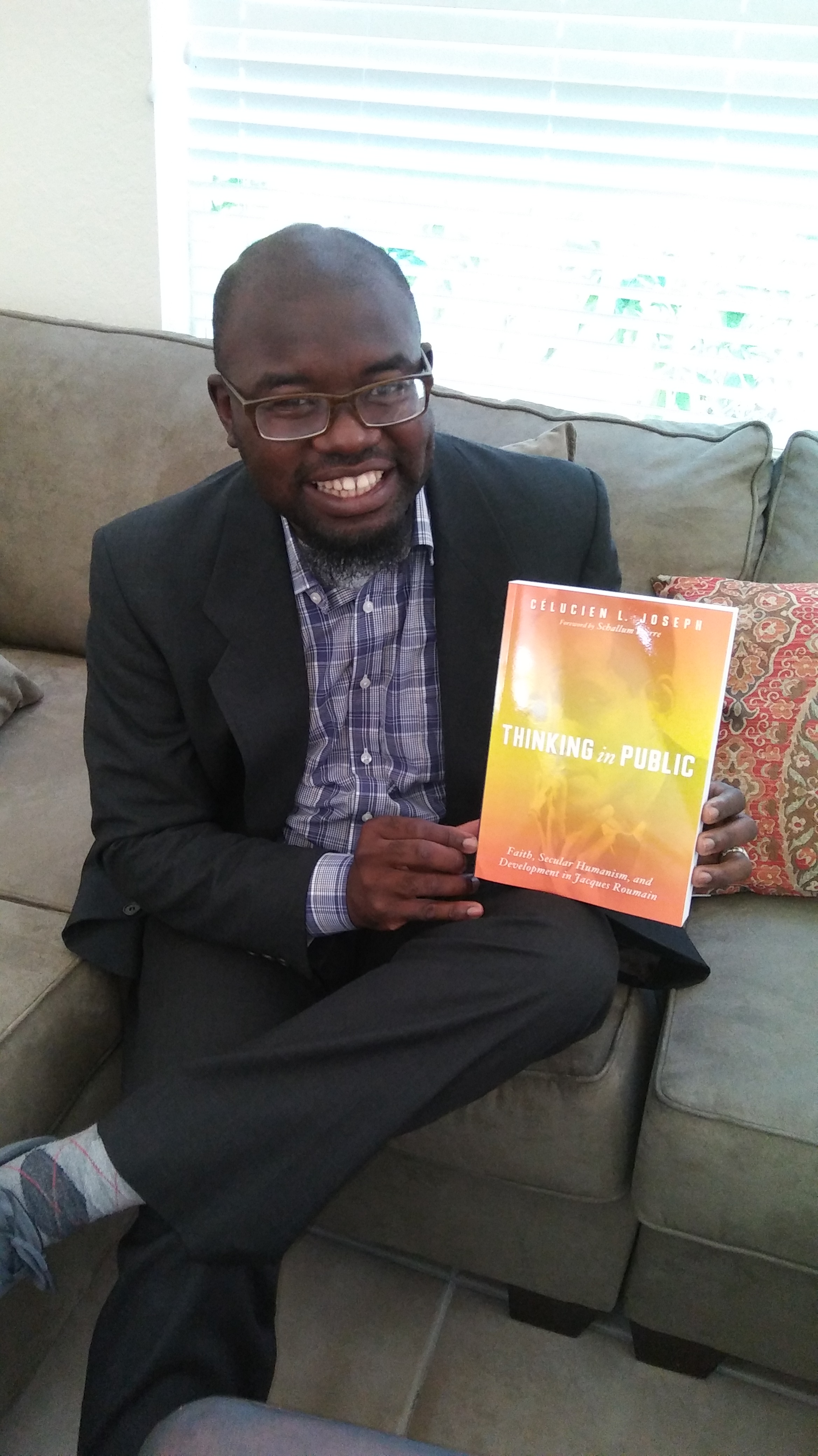
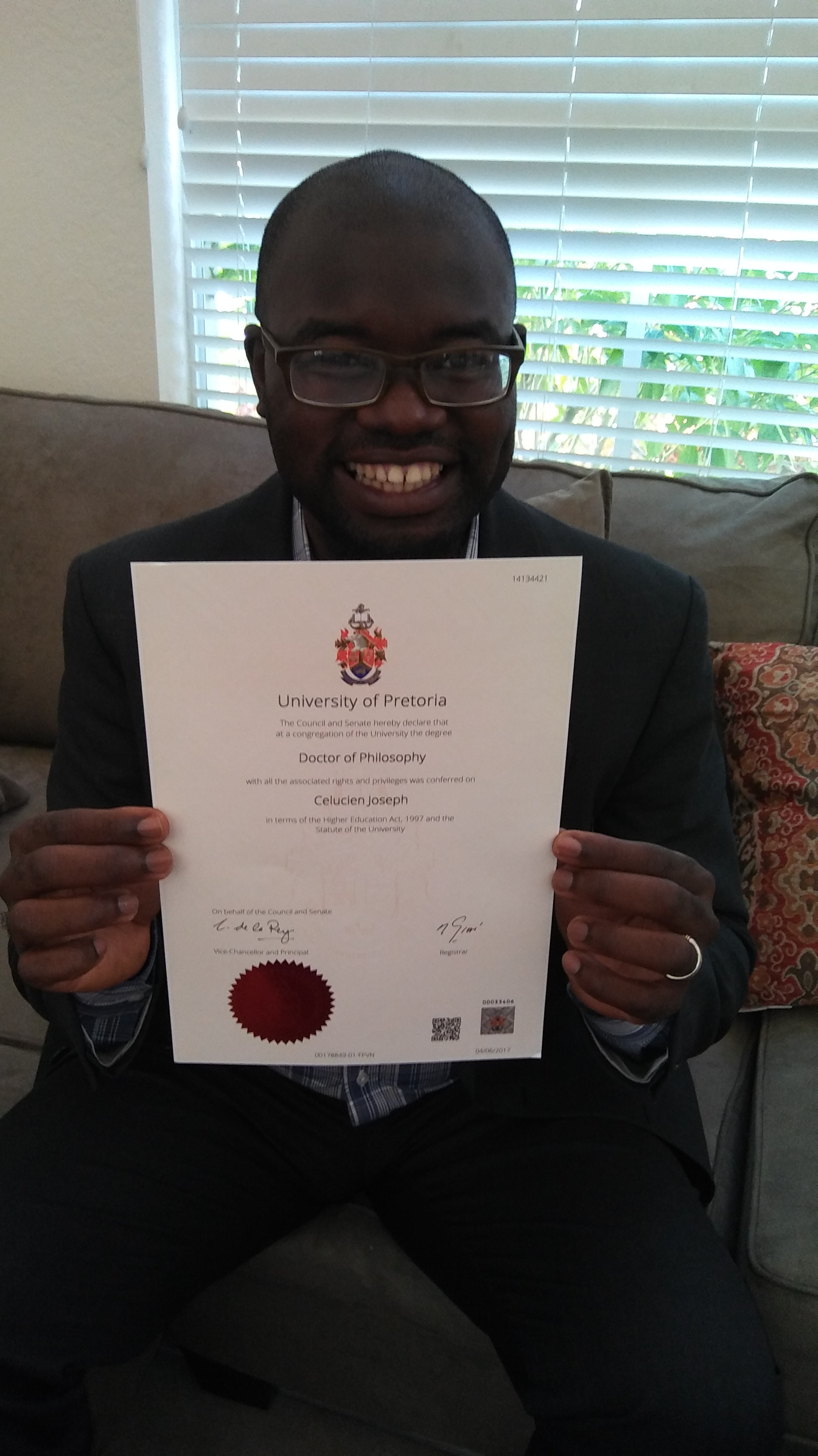
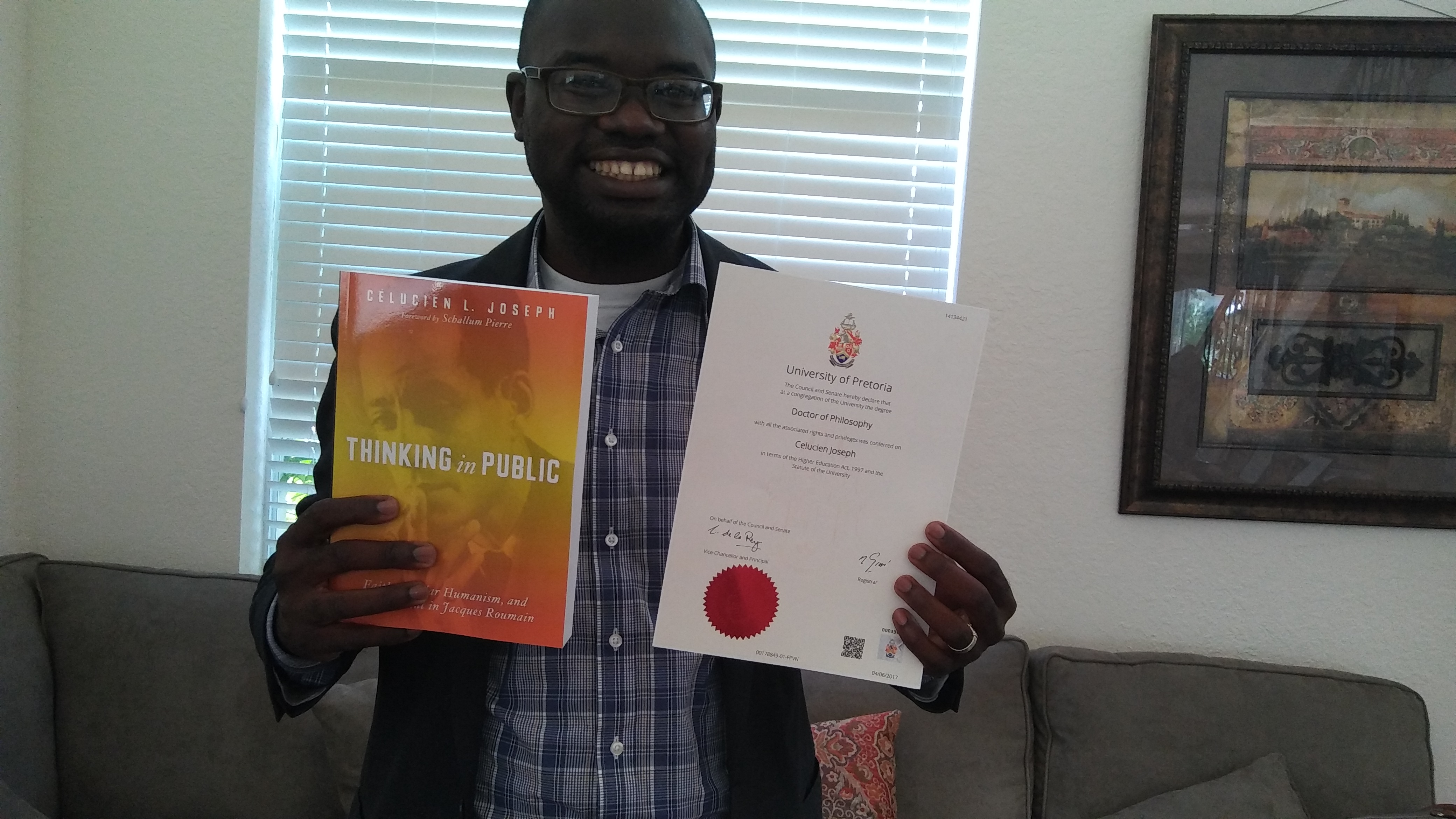
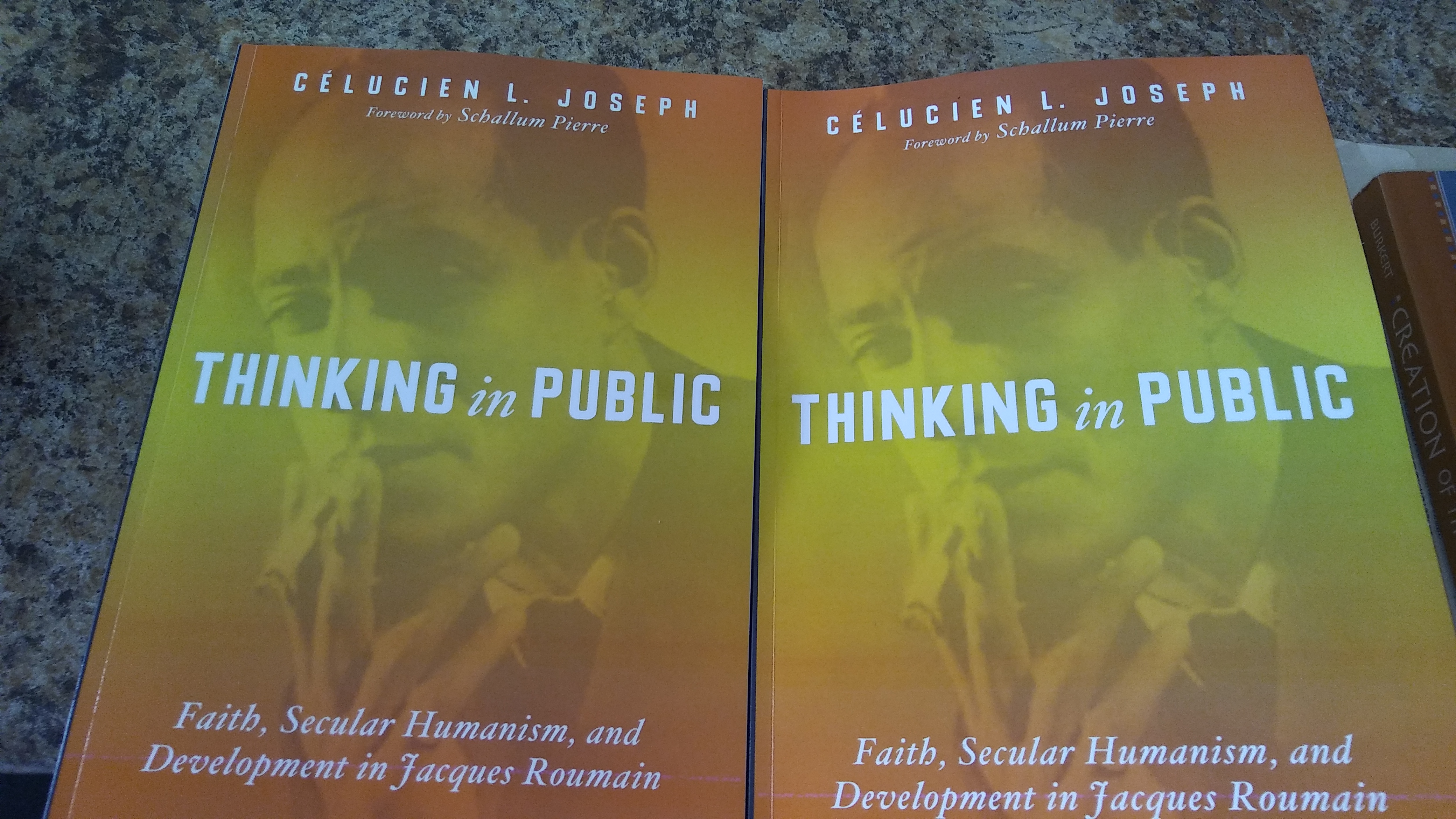
I’m a very blessed man. Today, I received two important gifts: copies of my new book: “Thinking in Public,” and my PhD diploma for the degree in Systematic Theology and Christian Ethics from the University of Pretoria.
Unfortunately, I couldn’t attend the doctoral commencement that was held last month. I was too broke to buy the airplane ticket to Pretoria. LOL
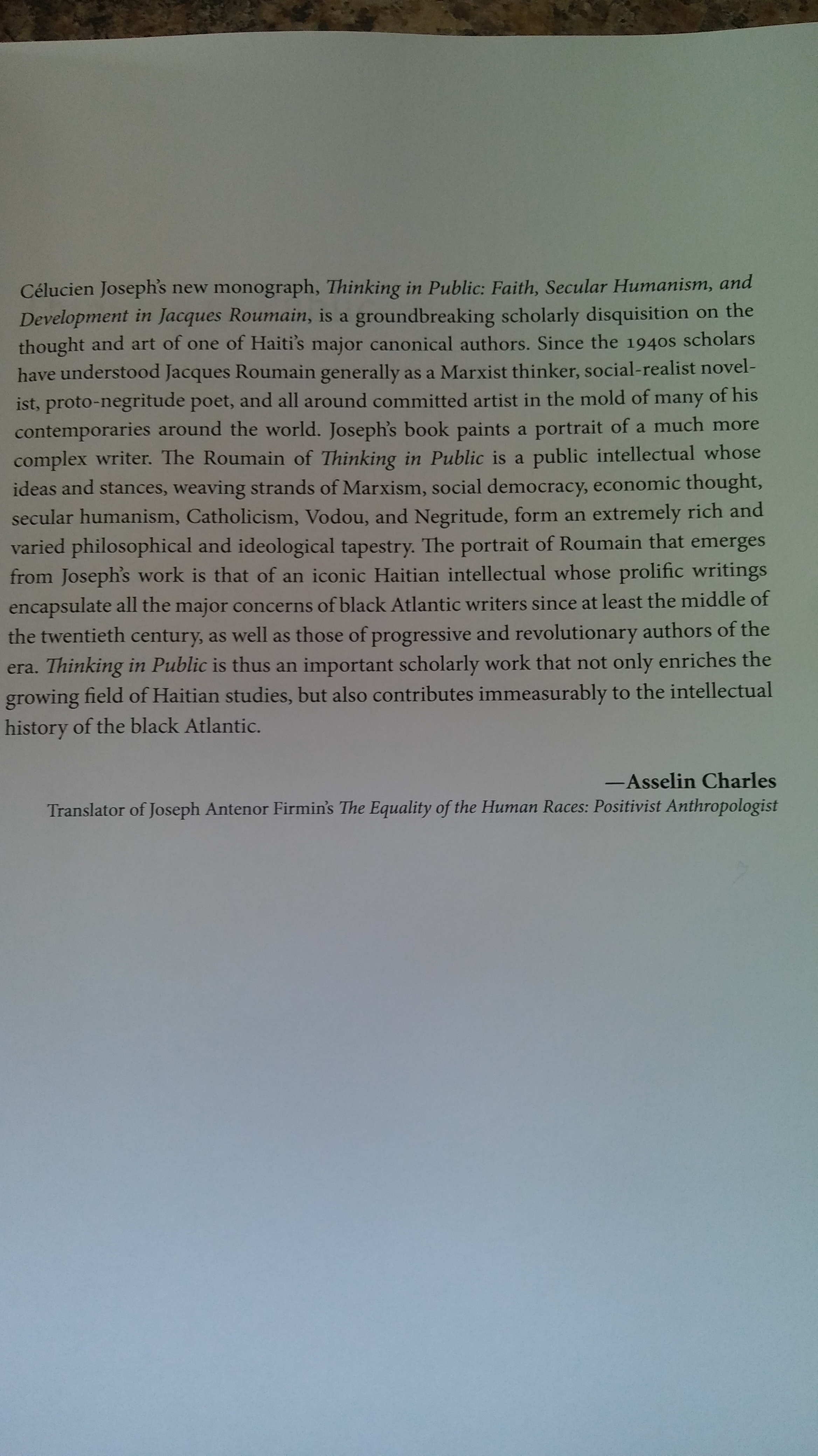
Endorsements of Thinking in Public
By the way, The publisher just reduced the price of my new book (web special).
Don’t forget to order your copy today:
“Thinking in Public: Faith, Secular Humanism, and Development in Jacques Roumain” (Wipf and Stock Publishers, 2016)
Life in a Small College Town Called Graceville!
In the year 1999 or 2000, I was supposed to begin the Pre-medicine program with an emphasis in Biology at Florida Atlantic University (Boca Raton, Florida) as a transfer student, which meant I would have had two years left to complete my Baccalaureate in Biology at FAU. I postponed my admissions for personal reasons, which I will not discuss in this post.
As a result, I attended a small liberal arts Christian College (The Baptist College of Florida) in Graceville, Florida for my undergraduate degree. My graduation class of 2001 was very small.
When I was living there, the population of the town of Graceville was under 2600 people. We had one police officer, one gas station, one fast food restaurant (Hardee’s), and one grocery store: Piggy Wiggly. Although Graceville was a boring place to live and grow, the College environment was pleasant, and the people were quite calm and loving. I have enjoyed it, immensely. Graceville was indeed full of grace!
Here’s the Graduation Photo of my Class of 2001.
Can you see me?

L.O.V.E.
Love is real and mighty.
Hate is depressing.
Hospitality is comforting.
Death brings alienation.
Empathy is relational.
Passion is indefinable.
Jeaslousy demonizes.
Solidarity works miracles.
Unity saves wretched souls.
Love heals.
Love harmonizes.
In Honor of the Legacy of Jacques Roumain
and In Honor of the Haitian Poor

I will not take a dime or any royalty from the publisher (Wipf and Sock) for my new book on Jacques Roumain: “Thinking in Public: Faith, Secular Humanism, and Development in Jacques Roumain” (May 2017).
I would like to honor the legacy of Jacques Roumain in three ways: (1) by writing a book about his life and ideas, which I have already done, (2) by emphasizing the importance of his ideas and legacy for Haitian democracy and Social Uplift programs in Haiti, and (3) to give all the royalties earned from this book to improve the literacy program and build a trade school in Port-Margot, Haiti.
After Jacques Roumain moved back to Haiti from Europe, he would spend the rest of his life fighting and protesting against the forces (both internal and external powers) that exploited Haitian workers and the poor in Haiti, and by working on behalf of Haiti’s underclass, peasants, and the economically-disadvantaged in order that their social and economic conditions could be improved, and their children could have a promising future.
*Hence, when you order my new book on Jacques Roumain, I can assure you your contribution will help accomplish the stated goals or objectives. To me, to honor the legacy of Jacques Roumain is to be sensitive to the plight of the Haitian poor, to walk in solidarity with the peasant class and the disfranchised in the Haitian society, and to serve them and invest our talents, skills and money to improve the life and future of the least among us in the Haitian society.

Gwo Envitasyon pou Asiste First Annual Haitian Heritage Symposium
Ki le: Samdi, 27 Me @ 11 to 5 pm.
Ki Kote Lap Fe: African American Research Library and Museum (Fort Lauderdale, Florida)
Map tan n tout moun.