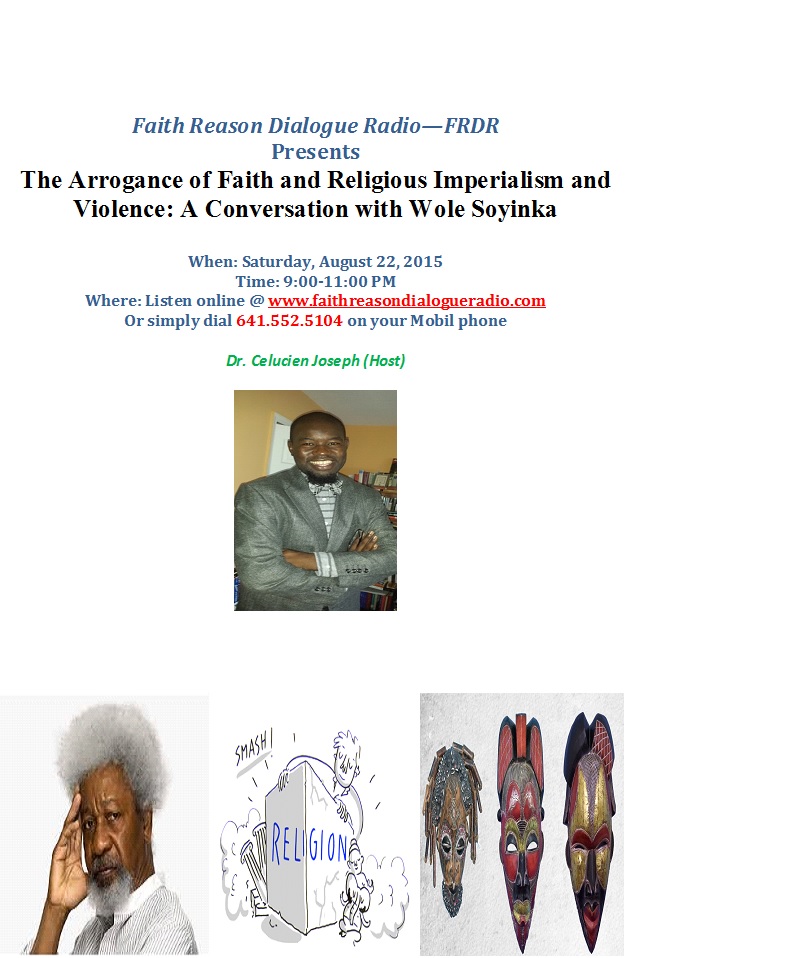
JPAS’ Special Edition on Wole Soyinka: Rethinking Wole Soyinka: 81 Years of Protracted Engagement

I’m pleased to announce that I had the opportunity to serve as the guest editor for JPAS’ special edition (Volume 8 • Number 5 • September 2015) on Wole Soyinka entitled “Rethinking Wole Soyinka: 81 Years of Protracted Engagemented.” We are one of the few academic journals that is honoring Soyinka on his 81st years of life. It was a pleasure to work with a host of prominent Soyinka Scholars–both in continental Africa and African Diaspora–and Dr. Itibari M. Zulu, the chief editor of the Journal, has been very supportive of this project. Now, go read these fine essays online.”

Docteur Lou's photo.
Here are the essays I contributed to this special issue: “Rethinking Wole Soyinka:81 Years of Protracted Engagement:”

We are not Ahmed Mohamed!

We are not Ahmed Mohamed!

I tried very hard not to comment on this awful and unfortunate incident described in the article. However, I couldn’t keep my mouth sealed, and I refuse to go to bed tonight without saying something about this tragedy. After reading this catastrophic news this morning, I was mentally disturbed and couldn’t find the appropriate words to express my discontent and rage about what has happened to this young scientist-in-the making—Ahmed Mohamed, the 14-yr old Muslim and color boy— who was handcuffed and arrested by the Dallas Police for inventing a “homemade alarm clock,” which he brought to class to impress his new teachers and showcase his interest in science. Here’s the headline from  New York Times:

“Ahmed Mohamed, 14, Builds Clock, Is Cuffed for Bomb Hoax, Then Gets Invited to White House”

ahmed

You see, the student’s name (Ahmed Mohamed) is associated with a religion, a culture, a lifestyle, and even a worldview or a system of thought—all of which are marginalized in the American society. Secondly, the crisis of white supremacy and the arrogance of race in our culture have made him paradoxically an “invisible young man” and a “target” in our culture. Yet, the greatest threat to Christianity in America and American freedom is not Islam nor Islamic culture; It is right-wing Christians, and right-wing Christian (-inspired) political movements and politicians.

What if his name were “Dunn Carpenter,” or “Curtis Montgomery,” would he have received the same treatment from the hands of the Dallas Police or his school administration and teachers?

What if Dunn Carpenter or Curtis Montgomery were that fourteen-year old young man who has invented the homemade alarm clock and brought it to his high school teachers to showcase his engineering talent and interest in science?

Ahmed Mohamed and his parents are not “Christians.” They are Muslims by confession of faith. Unfortunately, he was seen by the administration of his school and teachers, and by the Dallas Police community as a possible danger to society, a threat to American freedom, not as a product of American progress in science or interest in technological innovation in the 21st century.
You see, I’m speaking from the perspective of a parent—a black father and black male—who is raising two American black boys, and one of them wants to go to the field of engineering and become a scientist. In fact, he wants to get a PhD in Physics at MIT. Ahmed Mohamed could have been my son, and I could have been his father.

Would this young Muslim and color boy grow up to “love” America?
Would this young Muslim and color boy grow up to “forget” America’s Islamophobia?
Would this young Muslim and color boy grow up to “forget” America’s racist mistreatment toward him?
Could this young Muslim and color boy sing: “I, too, Am America”?

September 2015 Free Resources: God Loves Haiti: A Short Overview of Hope for Today Outreach (Book), and “Remember the Poor: God, the Poor, and Generous Justice” (Audio CD) by Dr. Joseph.

September 2015 Free Resources

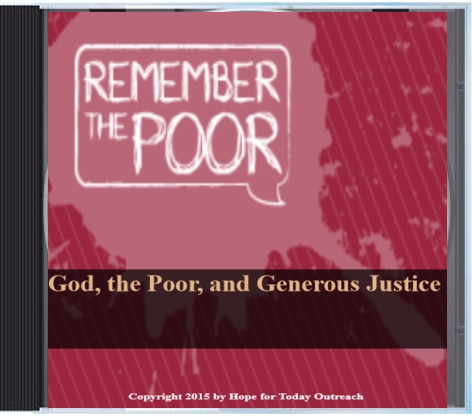
God Loves Haiti: A Short Overview of Hope for Today Outreach (Book), and “Remember the Poor: God, the Poor, and Generous Justice” (Audio CD) by Dr. Joseph.

For the month of September, 2015, Hope for Today Outreach is giving away  two free resources: Dr. Joseph’s new book:God Loves Haiti: A Short Overview of Hope for Today Outreach,  and the audio CD: “Remember the Poor: God, the Poor, and Generous Justice” by Dr. Joseph.   Request your free copy today! 

  1. God Loves Haiti: A Short Overview of Hope for Today Outreach (Book)

God Loves Haiti BookCoverImage

Book Description

God Loves Haiti: A Short Overview of Hope for Today Outreach provides an outline of the philosophy of Hope for Today Outreach and the organization’s work in Haiti among the poor and the needy. Based on biblical principles and theological insights, it articulates a forceful argument for engaging in Christian mission and social outreach in our communities and beyond our geographical borders in overseas—with the goal to empower individuals to reach their full potential and to contribute to their social and spiritual development. More particularly, God Loves Haiti makes a strong statement about the biblical mandate to “remember the poor” (Galatians 2:10), clothe the naked, feed the hungry, visit the prisoner, and care for the oppressed, the sick, homeless, widow, elderly, the orphan, etc.

The book is based on five biblical principles and imperatives that reflect God’s character and active participation in the human drama, and the overarching liberative message of the Bible: (1) God’s righteousness and heart for justice, (2) care for the hungry and afflicted is a public demonstration of living out the justice of God, (3) Jesus’s clarion call to individual Christians, churches, Christian organizations and leaders to do the work of social outreach and justice, (4) care for the poor is a fundamental Christian practice and a public demonstration of the love of Christ, and (5) the imperative of putting faith in action.

Faith-based organizations and humanitarian groups will find this little book helpful as it provides a concise overview of the history, religion, culture, the health and economic conditions of the Haitian people, as well as Haitian migration to the United States. The book also includes selected historical landmarks that would appeal to first-time visitors to Haiti. An appendix of recommended readings is included to inform interested and curious readers about Haitian history, culture, society, politics, religion, women and human rights issues, and health and development concerns.

The love and glory of God revealed in Jesus Christ is the vehicle that motivates us to “remember the poor,” show acts of kindness and compassion, and to walk in solidarity with the hungry, the oppressed, and the disheartened. We help these individuals realize that they are created in God’s image and that they matter to God. By restoring their self-worth and human dignity, Hope for Today Outreach is committed to fostering a life of sustaining hope and holistic development.

2. “Remember the Poor: God, the Poor, and Generous Justice” (Audio CD)
god1

Product Detail

“Do not withhold good from those to whom it is due, when it is in your power to act. Do not say to your neighbor, “Come back tomorrow and I’ll give it to you”—when you already have it with you.” — Proverbs 3:27-28

In Part 1 of the Three-Part series entitled “God, the Poor, and Generous Justice,” Dr. Joseph discusses some biblical texts that reveal God’s heart for the poor and attitude toward justice and economic justice. The same way God remembers the poor and the oppressed, followers of Christ are called to diligently serve the poor and the needy, and to remember the unfortunate and the underprivileged in our churches, communities, and the world at large. Further, Dr. Joseph invites us to consider five biblical and theological principles that encourage and ultimately urge Christians to be engaged in social outreach and social justice ministries, and to empower and care for the poor and the needy; this attitude is a reflection of God’s character and the loving message of the Gospel.

god2

*To request your free book or audio CD, simply send us an email message @  customers@hopefortodayoutreach.org or call us: (239) 349-4981.

We apologize for the inconvenience that at the moment, Hope for Today Outreach does not ship items to international addresses.

My Request to You: School Supplies and Shoes Needed for Underprivileged Haitian Students and Families!

Hello friends: I am writing this note to you to solicit your assistance. I  partner with a Christian organization called “Hope for Today Outreach” (HTO). The organization serves and empower the poor and the needy in Haiti. Currently, we are seeking a way to provide school supplies and shoes to underprivileged  students and families in Haiti for the next academic school year, 2015-2016. HTO is sending a team to  Haiti in August to bring school supplies to these children and their families.

HOW YOU CAN HELP US

Basically, there are three ways to RESPOND to this URGENT request:

1. When you purchase a copy of my new book, “God loves Haiti” (2015), you will help support the social works of Hope for Today Outreach​ (HTO) in Haiti among the poor and the needy. Our goal is to sell 500 copies by the end of July so we can buy the items listed below for these undeserved families and poor children. All proceeds from the book go directly to HTO.  To purchase the book, click on the link below:

God Loves Haiti: A Short Overview of Hope for Today Outreach

2. You can make a donation by clicking on the support tab on Hope for Today Outreach website.

3. You can provide any item on the list below:

SCHOOL SUPPLIES LIST FOR

UNDERPRIVILEGED HAITIAN STUDENTS AND FAMILIES

(June-July 2015)

school supplies 2

  • Backpacks
  • socks
  • tennis shoes (all sizes)
  • pencils and pens (blue or black)
  • crayons
  • colored pencils
  • notebooks
  • composition book
  • Folders (3 pockets)
  • Glue or Glue sticks
  • erasers
  • rulers
  • pencil sharpeners, etc.

Mailing Location

Hope for Today Outreach (HTO)
P.O. Box 7353
Port Saint Lucie, FL 34985

phone: (239) 349-4981

email: hopefortodayoutreach@gmail.com

* Any contribution you make will change a student’s future and enhance his/her education in Haiti.

Thanks for your kindness and generosity!

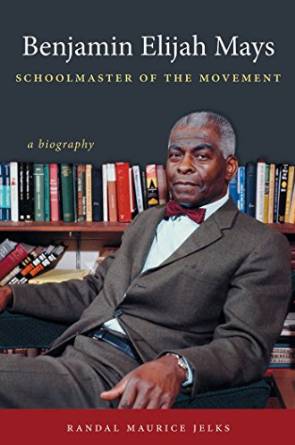
My Review of Benjamin Elijah Mays, Schoolmaster of the Movement: A Biography

My Review of Benjamin Elijah Mays, Schoolmaster of the Movement: A Biography (The University of North Carolina Press, 2012) by Randal Maurice Jelks

hays

Benjamin Elijah Mays, Schoolmaster of the Movement: A Biography by Randal Maurice Jelks (review)
Celucien L. Joseph
From: American Studies
Volume 53, Number 4, 2014
pp. 121-123 | 10.1353/ams.2014.0161
In lieu of an abstract, here is a brief excerpt of the content:

“In this important work, historian Randal Maurice Jelks provides a chronological and intimate account of the person, life, and writings of Benjamin Elijah Mays up until the publication of Mays’s autobiography, Born to Rebel, in 1971. Jelks intelligently investigates the foundations and origins of May’s ideas and worldview. He establishes the connection between Mays’s contributions to the Civil Rights movement and his embrace of Prophetic Christianity and Progressive Protestant Theology, and Ghandi’s nonviolent philosophy and practice and his commitment to peacemaking and racial unity through nonviolent tactics and strategies. These ideas, especially Prophetic Christianity, according to the author, had played a central role in Mays’s activist life to challenge America’s racism, inequality, and racial segregation.
Jelks’s Benjamin Elijah Mays, Schoolmaster of the Movement: A Biography is one of the significant studies on the theologian, activist, and the pioneer of the Civil Rights movement Benjamin Elijah Mays (1894-1984). The author presents Benjamin Elijah Mays as a public servant, an engaging public intellectual-activist and cultural critic, an educator, a theologian, and most importantly the pioneer of the civil rights movement. Yet, Jelks highlights the interconnections between these various roles that Mays played and underscores how each one complemented each other in Mays’s unyielding quest for the idea of a just democratic social order and social justice and equality on behalf of the African American population.
More importantly, Jelks attempts to bridge both the historical and intellectual gaps between Martin Luther King Jr. and Benjamin Elijah Mays, whom King had considered as a father. Current scholarship on the Civil Rights Movement have failed to acknowledge and explore this important dimension. Hence, Jelks’s work filled the gaps by accentuating Mays’ significant role in relationship to this historic event in American history and the black experience. Jelks describes the relationship between Mays and King like father and son (200–211). In many and various ways, he establishes the manifold influence of Mays upon the young King as his spiritual mentor, a leader of the Civil Rights Movement, and King as an intellectual-activist. Jelks remarks, “Mays, as King testified, had been significant in his life and influential in his calling to be a Baptist minister. Mays was also one of the clergy members who listened to his trial sermon and ordained him” (201). In addition, he asserts, “When King decided to attend seminary in 1948, at the age of nineteen, it was Mays who had written a key recommendation on King’s behalf…During King’s doctoral studies at Boston University, his academic inquiry focused on the question of God. King paid homage to Mays by writing a dissertation along similar lines as Mays’s dissertation, comparing the concepts of God in the respective theologies of Edgar Sheffield Brightman and Henry Wieman” (201).
Furthermore, Jelks has brilliantly analyzed the close relationship between Mays’s religious life—his theological training in Liberal theology and Christian progressivism, political theology, and the influence of the Social Gospel of Walter Rauschenbusch at Bates College and then the University of Chicago—and his secular vocation and vision. For the author, Mays was profoundly influenced by “the faith of his mother” (42), which served as a driven force in his understanding of Christian activism and responsibility to society as a whole, the idea of “the just society,” his work on race relations and correspondingly, his relentless fight against anti-black racism, white violence, and public segregation in American society. As the author remarks, “Mays’s formative religious ethics held that everyone was equal in the eyes of God … Mays always held on to his mother’s belief about the equality of persons before God as counter to the racist image he received in the wider society” (44). It is good to inform the reader that previous studies on Mays and the Civil Rights Movement have not made this clear connection between Mays’s religious worldview, social activism, and his fight for racial inclusion, black freedom and civil rights in a country that refuses to affirm black humanity and dignity. From this angle, Jelks’s contribution to Civil Rights scholarship as well as African American religion underscores the significance of faith…”
Source: http://muse.jhu.edu/login?auth=0&type=summary&url=/journals/american_studies/v053/53.4.joseph.html

God Loves Haiti: My New Book

Book Title: God Loves Haiti: A Short Overview of Hope for Today Outreach by Celucien L. Joseph

God Loves Haiti BookCoverImage

Product Detail

Paperback: 92 pages
Publisher: Hope Outreach Productions (June 13, 2015)
Language: English
ISBN-10: 1514350548
ISBN-13: 978-1514350546
Product Dimensions: 5.5 x 0.2 x 8.5 inches

Book Description

God Loves Haiti: A Short Overview of Hope for Today Outreach provides an outline of the philosophy of Hope for Today Outreach and the organization’s work in Haiti among the poor and the needy. Based on biblical principles and theological insights, it articulates a forceful argument for engaging in Christian mission and social outreach in our communities and beyond our geographical borders in overseas—with the goal to empower individuals to reach their full potential and to contribute to their social and spiritual development. More particularly, God Loves Haiti makes a strong statement about the biblical mandate to “remember the poor” (Galatians 2:10), clothe the naked, feed the hungry, visit the prisoner, and care for the oppressed, the sick, homeless, widow, elderly, the orphan, etc.

The book is based on five biblical principles and imperatives that reflect God’s character and active participation in the human drama, and the overarching liberative message of the Bible: (1) God’s righteousness and heart for justice, (2) care for the hungry and afflicted is a public demonstration of living out the justice of God, (3) Jesus’s clarion call to individual Christians, churches, Christian organizations and leaders to do the work of social outreach and justice, (4) care for the poor is a fundamental Christian practice and a public demonstration of the love of Christ, and (5) the imperative of putting faith in action.

Faith-based organizations and humanitarian groups will find this little book helpful as it provides a concise overview of the history, religion, culture, the health and economic conditions of the Haitian people, as well as Haitian migration to the United States. The book also includes selected historical landmarks that would appeal to first-time visitors to Haiti. An appendix of recommended readings is included to inform interested and curious readers about Haitian history, culture, society, politics, religion, women and human rights issues, and health and development concerns.

The love and glory of God revealed in Jesus Christ is the vehicle that motivates us to “remember the poor,” show acts of kindness and compassion, and to walk in solidarity with the hungry, the oppressed, and the disheartened. We help these individuals realize that they are created in God’s image and that they matter to God. By restoring their self-worth and human dignity, Hope for Today Outreach is committed to fostering a life of sustaining hope and holistic development.

To purchase the book on Amazon.com, click on the title below:

God Loves Haiti: A Short Overview of Hope for Today Outreach

The e-book version is also available on amazon.

*All proceeds from this book will support Hope for Today Outreach ministries among the poor and the needy in Haiti.

100 Best Haitian Novels You Must Read Before You Die

100 Best Haitian Novels You Must Read Before You Die

Compiled by Dr. Joseph

masters od the few  jacques-stephen-alexis-general-sun Marie viexu

1. Stella (1859) by Emeric Bergeaud
2. Francesca (1873) by Demesvar Delorme
3. Themistocle-Epaminondas Labasterre (1901) by Frédéric Marcelin
4. La Vengeance de Mama (Zulma’s Revenge, 1902) by Frederic Marcelin
5. Sena (1905) by Fernand Hibbert
6. La Famille des Pitite-Caille (The Pitite-Caille Family, 1905)
7. Zoune chez sa ninnaine (Zoune at her Godmother’s, 1906) by Justin Lherisson
8. Cruelle Destinee (1929) by Virgile Valcin
9. Le Drame de la terre (The Tragedy of the Land) by Jean-Baptiste Cineas
10. La blanche negresse (1934) by Virgile Valcin
11. Les Horizons sans ciel (Skyless Horizons, 1935) by Jean Brierre
12. Masters of the Dew (Gouverneurs de la Rosee, 1944) by Jacques Roumain
13. La Vie incroyable d’Alcius (Alcius’s Incredible Life, 1946)
14. Parias (1949) by Clement Magloire Saint-Aude
15. General Sun, My Brother by Jacques Stephen Alexis
16. Les arbres musiciens by Jacques Stephen Alexis (Paris: Gallimard, 1957)
17. Romancero aux etoiles by Jacques Stephen Alexis (Paris: Gallimard, 1960)
18. Le mal de vivre (1967) by Nadine Magloire
19. Hadrianna dans tous mes reves by Rene Depestre
20. Allelouia pour une femme-jardin: recits by Rene Depestre
21. The Festival of the Greasy Pole by Rene Depestre
22. H’Eros chimères by Franck Etienne (Port-au-Prince: Spirale, 2002)
23. Ultravocal (spirale) by Franck Etienne (Port-au-Prince: Imprimerie Gaston, 1972; Paris: Hoëbeke, 2004)
24. Les Affres d’un Defi by Frank Etienne (Port-au-Prince: Henri Deschamps, 1979)
25. Le corps noir by J.-C. Charles (Paris: Hachette, 1980)
26. Bon Dieu Rit by Edris Saint-Amand
27. Une belle amour humaine by Lyonel Trouillot
28. The Street of Lost Footsteps by Lyonel Trouillot
29. Children of Heroes by Lyonel Trouillot
30. Yanvalou pour Charlie by Lyonel Trouillot
31. Love, Anger, Madness: A Haitian Triptych by Marie Vieux-Chauvet
32. Under the Bone (1994) by Anne-Christine d’Adesky
33. The Pencil of God (Le Crayon de Dieu) by Philippe Thoby-Marcelin and Pierre Marcelin
34. Canape-Vert (Canape-vert) by Philippe Thoby-Marcelin and Pierre Marcelin
35. The Beast of the Haitian Hills (La Bete de Musseau) by Philippe Thoby-Marcelin and Pierre Marcelin
36. The Singing Turtle and Other Tales from Haiti (Contes et legends d’Haiti) by Philippe Thoby-Marcelin
37. All Men Are Mad (Tous les hommes sont fous, 1979) by by Philippe Thoby-Marcelin and Pierre Marcelin
38. The Colour of Dawn by Yanick Lahens
39. Romulus: A Novella from 19th Century Haiti by Fernand Hibbert
40. Les Simulacres (Shamming, 1923) by Fernand Hibbert
41. Searching for Safe Space: Afro-Caribbean Women Writers in Exile by Myriam J.A. Chancy
42. The Loneliness of Angels by Myriam J.A. Chancy
43. How to Make Love with a Black Man Without Getting Tired by Dany Laferriere
44. An Aroma of Coffee (L’Odeur du café) by Dany Laferriere
45. Bamboola Bamboche by Jean-Claude Charles
46. Banal oubli by Gary Victor
47. Ce pays qui m’habite by George Anglade
48. The Bonplezi Family: the adventures of a Haitian family in North America by Maude Heurtelou
49. Le negre masque (Port-au-Prince: Imprimerie de l’Etat, 1933) by Stephen Alexis
50. Le Choc by Leon Laleau (Port-au-Prince: La Presse, 1932)
51. Le Joug by Annie Desroy (Port-au-Prince: Imp. Modele, 1934)
52. Musique negre by Lelon Laleau (Port-au-Prince: Indigene, 1931)
53. Viejo by M. Casseus (Port-au-Prince: La Presse, 1935)
54. Gerbes pour deux amis (Port-au-Prince: Imp. Henri Deschamps, 1945)
55. L’Heritage Sacre by J. B. Cineas (Port-au-Prince: Henri Deschamps, 1945)
56. Le Choc en retour (The Blacklash, 1948) by Jean-Baptiste Cineas
57. La Case de Damballah by Petion Savain
58. Always Comes the Morning by Yolande Degrand
59. Under the Bone by Anne-Christine D’Adesky
60. Exile and Memory by Emile Ollivier
61. Breath, Eyes, Memory by Edwidge Danticat
62. Krik? Krak! By Edwidge Danticat
63. The Farming of Bones by Edwidge Danticat
64. Mother Solitude (Mere Solitude) by Emile Ollivier
65. The Vortex Family by Jean Metellus
66. Les Rapaces by Marie-Chauvet
67. Possedes de la pleine lune by Jean-Claude Fignole
68. Therese en mille morceaux by Lyonel Trouillot
69. Fado by Kettly Mars
70. Le sexe mythique by Nadine Magloire
71. L’enigne du retour by Dany Laferriere
72. Le Mal de vivre (The Pain of living, 1968) by Nadine Magloire
73. Mere Solitude by Emile Olivier
74. Passages by Emile Olivier
75. La piste des sortileges de Gary Victor
76. À l’angle des rues parallèles by Gary Victor
77. Je sais quand Dieu vient se promener dans mon jardin by Gary Victor
78. Les cloches de la Brésilienne by Gary Victor.
79. Le sang et la mer by Garvy Victor
80. L’espace d’un cillement de Jacques S Alexis
81. Cora Geffrard (2011) by Michel Soukar
82. Jacmel au Crépuscule by Jean Metellus (Editions Gallimard: Paris, 1981)
83. La Famille Vortex by Jean Metellus (Editions Gallimard: Paris, 1982)
84. La Dot de Sara by Marie-Célie Agnant (Montréal: Les Éditions du Remue-ménage, 1995)
85. Mémoire d’une amnésique, récit by Jean J. Dominique (Port-au-Prince: Deschamps, 1984; Montréal: CIDIHCA / Éditions du Remue-ménage, 2004)
86. The Farming of Bones by Edwidge Danticat ( New York: Soho Press, 1998; Penguin, 1999)
87. L’heure hybride by Kettly Mars (La Roque d’Anthéron: Vents d’Ailleurs, 2005)
88. Le Testament des solitudes by Emmelie Prophète (Montréal: Mémoire d’encrier, 2007)
89. Le Creuset by Paulette Poujol Oriol (Port-au-Prince: H. Deschamps, 1980)
90. Rosalie l’infâme by Évelyne Trouillot (Paris: Dapper, 2003; Port-au-Prince: Presses Nationales d’Haïti, 2007)
91. La mémoire aux abois by Évelyne Trouillot (Paris: Hoëbeke, 2010)
92. Les dieux voyagent la nuit by Louis-Philippe Dalembert ( Monaco: Du Rocher, 2006; Port-au-Prince: Éditions des Presses Nationales, 2010)
93. Ballade d’un amour inachevé Louis-Philippe Dalembert (Paris: Mercure, 2013)
94. Les terres entourées de larmes by Josaphat-Robert Large (Paris: l’Harmattan, 2002)
95. L’Alphabet des nuits by Jean-Euphèle Milcé (Orbe (Suisse): Campiche, 2004)
96. Manès Descollines by Michel Monnin (Port-au-Prince: Deschamps, 1985)
97. Bicentenaire by Lynoel Trouillot (Arles: Actes Sud, 2004)
98. Aube tranquille by Jean-Claude Fignolé (Paris, Seuil, 1990. – rééd. La Roque d’Anthéron, Éditions Vents d’ailleurs, 2013)
99. Les Possédés de la pleine lune Jean-Claude Fignolé (Paris: Seuil, 1987)
100. Le Peuple des terres mêlées by René Philoctète (Port-au-Prince: Deschamps, 1989)
* The list above is limited to two languages: French and English. in the future, I hope to add the publication date for each individual work listed above.