Ten Things you can still do while socially distancing

Ten Things you can still do while socially distancing:

  1. Eat breakfast, lunch, and dinner with your family
  2. Play with your spouse and children
  3. Call your parents, especially your mother
  4. Call your siblings; do not text them
  5. Call your friends; do not text them
  6. Read the books that have been sitting on your shelf for the past five years.
  7. Go for a walk in your neighborhood or community park
  8. Spend more time in prayer
  9. Spend more time reading your Bible
  10. Care for the poor and show hospitality to the coronavirus victims and the stranger among you.

“Becoming a Community of Care and Empathy in the Age of Coronavirus”

“Becoming a Community of Care and Empathy in the Age of Coronavirus”

If there’s one lesson we can learn about the coronavirus moment is the possibility to become a people of compassion and a community that embodies vulnerability and weakness, and intentional empathy and care toward the weak, the poor, the needy, and the marginalized.

The most daring expression of the human will is not action or participation, but the inaction and silence of the will. This is an act of human resistance, subjectivity, and optimism, too.

The Coronavirus disease (COVID-19) reveals the fragility of human existence and our collective striving to stay healthy and away from physical pain; yet the virus also exposes a dangerous truth about human nature and capitalism: the anxiety of the rich and big corporations to preserve wealth than sustaining life.

A second lesson we can learn from this medical crisis is the opportunity it affords to all of us to alter our attitude toward war victims, refugee and undocumented communities and to ask them how can I serve you today? Do you have any unmet need at the moment?

The coronavirus disease grants us the opportunity to live in community and proximity with each other, and to solidify our interdependence, interrelationality, and common humanity. We are becoming a new people because of this dangerous threat that menaces our common existence and our common future.

In the midst of the Coronavirus disease (COVID-19), let us turn our face toward God for mercy and grace and pray in this manner:

“Teach us to number our days, that we may gain a heart of wisdom. All our days pass away under your wrath; we finish our years with a moan… Our days may come to seventy years, or eighty, if our strength endures; yet the best of them are but trouble and sorrow, for they quickly pass, and we fly away.

May the favor of the Lord our God rest on us; establish the work of our hands for us— yes, establish the work of our hands.”

–Psalm. 90:9, 10, 12

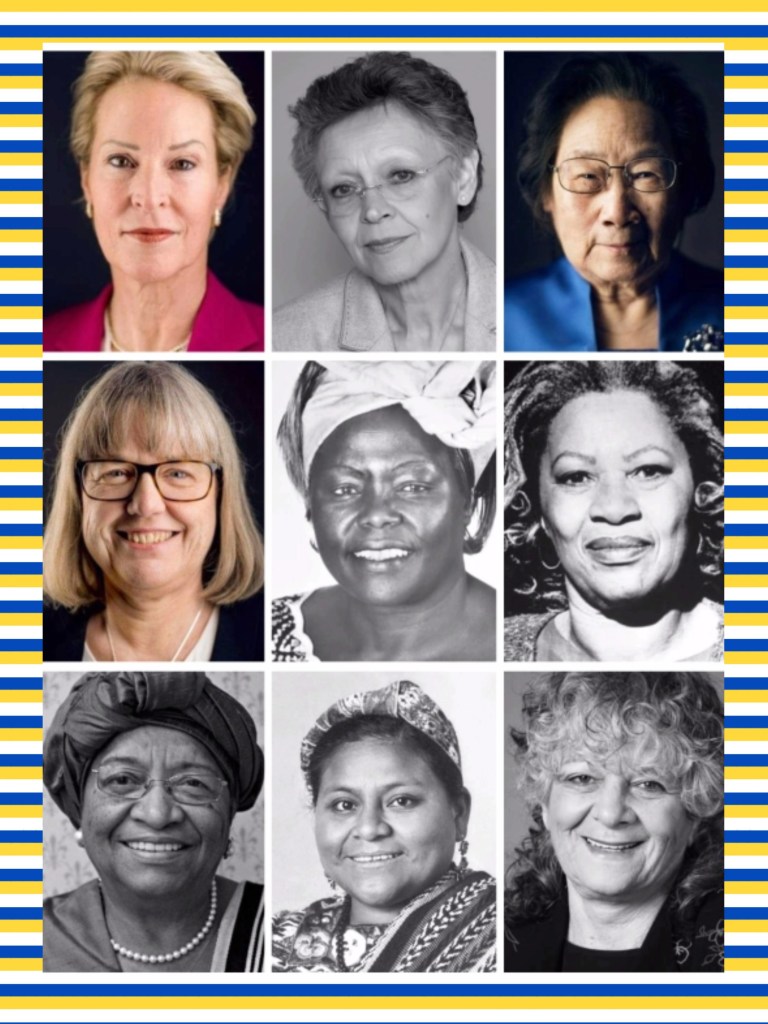
Celebrating Women’s History Month: Women Who Changed the World

Celebrating Women’s History Month:

In honor of Women’s History Month, I would like to highlight the enormous contributions of the following Ten Women Scientists and Thinkers who won the Nobel Prize:

  1. The Nobel Prize in Physics 2018: Donna Strickland

“for groundbreaking inventions in the field of laser physics”
“for their method of generating high-intensity, ultra-short optical pulses.”

  1. The Nobel Prize in Chemistry 2018: Frances H. Arnold

“for the directed evolution of enzymes”

  1. The Nobel Prize in Physiology or Medicine 2015: Tu Youyou

“for her discoveries concerning a novel therapy against Malaria”

  1. The Nobel Prize in Literature 1993: Toni Morrison

“who in novels characterized by visionary force and poetic import, gives life to an essential aspect of American reality”

  1. The Nobel Peace Prize 2004: Wangari Muta Maathai

“for her contribution to sustainable development, democracy and peace”

  1. The Nobel Peace Prize 2014: Malala Yousafzai

“for their struggle against the suppression of children and young people and for the right of all children to education”

  1. The Nobel Prize in Physiology or Medicine 2008: Françoise Barré-Sinoussi

“for their discovery of human immunodeficiency virus”

  1. The Nobel Peace Prize 1992: Rigoberta Menchú Tum

“in recognition of her work for social justice and ethno-cultural reconciliation based on respect for the rights of indigenous peoples”

  1. The Nobel Prize in Literature 1945: Gabriela Mistral

“for her lyric poetry which, inspired by powerful emotions, has made her name a symbol of the idealistic aspirations of the entire Latin American world”

  1. The Nobel Prize in Chemistry 2009: Ada E. Yonath

“for studies of the structure and function of the ribosome”

Source: ” Nobel Prize awarded women and Women Who Changed the World,” https://www.nobelprize.org/prizes/lists/nobel-prize-awarded-women

Haitian American Community Agenda Conference 2020

“After this first session on the family came “Faith based engagement”, which was focused on the role of our faith-based institutions in nurturing a greater sense of civic engagement in the Haitian community. “The Haitian Church is not actively involved in civic engagement and social projects”, opined Dr Celucien Joseph, one of the panelists. “The mindset of Haitian ministers, the theology they were trained in, is that they have to wait for the dominant culture to do something for them. We want to receive, not give”, added the Indian River State College Professor.”

To finish reading the report about the conference, click on the link below:

https://sentinel.ht/post/news/community/11730-haitian-american-community-agenda-conference-2020

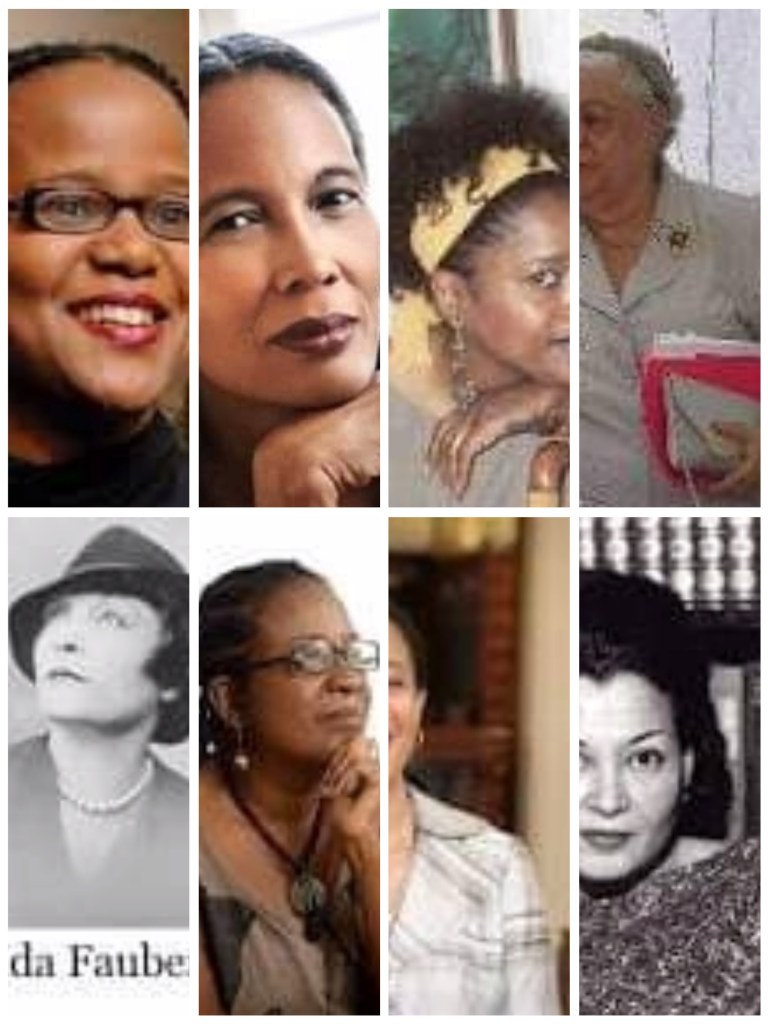
Celebrating Women’s History Month

Celebrating Women’s History Month:

In honor of Women’s History Month, I would like to recommend the following ten texts by Haitian Women writers

  1. “Love, Anger, and Madness: A Haitian Triptych” by Marie Vieux- Chauvet
  2. “Le joug” by Annie Desroy
  3. “La blanche négresse” by Virgile Valcin
  4. “Mémoire d’une affranchie” by Ghislaine Rey Charlier
  5. “Breath, Eyes, Memory: A Novel” by Edwidge Danticat
  6. “The Loneliness of Angels ” by Myriam J. A. Chancy
  7. “Bain de lune” by Yanick Lahens
  8. “Saisons Sauvages” by Kettly Charles
  9. “Rosalie l’infâme” by Evelyne Trouillot
  10. “Le creuset” (The Crucible) by Paulette Poujol-Oriol

Celebrating Women’s History Month

Celebrating Women’s History Month:

In honor of Women’s History Month, I would like to recommend the following ten texts by African American (Womanist) Biblical scholars and theologians:

  1. “White Women’s Christ and Black Women’s Jesus: Feminist Christology and Womanist Response” by Jacquelyn Grant
  2. “Sisters in the Wilderness: The Challenge of Womanist God-Talk” by Delores S. Williams
  3. “Black Womanist Ethics” by Katie Geneva Cannon
  4. ” Battered love : marriage, sex, and violence in the Hebrew prophets” by Renita J. Weems
  5. “The Black Christ” by Kelly Brown Douglas
  6. “Womanist Ethics and the Cultural Production of Evil” by Emilie Townes
  7. “Womanist Midrash: A Reintroduction To The Women Of The Torah And The Throne” by Gafney C. Wilda (“Wil Gafney”)
  8. “Toward Decentering the New Testament: A Reintroduction” by Mitzi J. Smith
  9. “Weary Throats and New Songs: Black Women Proclaiming God’s Word” by Teresa L. Fry Brown
  10. “Mining The Motherlode: Methods in Womanist Ethics” by Stacey M. Floyd-Thomas

Day Twenty: February 28, on Black History Month: “The Bibliography: A Source of Reference”

Day Twenty: February 28, on Black History Month: “The Bibliography: A Source of Reference”

For the past four weeks, from Monday to Friday, I have been posting “recommended readings” to honor and celebrate the Black History Month, as well as to highlight the achievements of the African people and their descendants in the African diaspora—in global history and universal civilization. As I have explained in a previous post, our approach to Black History should be diasporic and pan-Africanist, not just regional and national, but also transcontinental and international, and beyond the North American politics and frontiers. I also stated that while it is crucial to teach Black & African American students and other groups about the Black experience in the United States; it will be a great intellectual injustice if we fail to teach them about the history of the African Diaspora, that is global blackness.

In the past four weeks, the “recommended readings” covered “five major texts or books” in the following five disciplines of study or fields of knowledge: history, religion, theology, literature, and philosophy. In addition to the African people in continental Africa, the emphasis of these various readings was on four major ethnic groups in the African diaspora or global blackness: the African American people, Afro-Caribbean people, and the Afro-Latin American people in the Americas. In addition, I recommended texts covering the academic study called Pan-Africanism.

For today’s post, I will provide an index covering all the recommended readings that I have posted on these five fields of learning and in the past four weeks, in the month of February 2020; I hope the index will continue to be a source of reference to all of us, especially those who have missed our series.

Day One: February 3, on Black History Month: Five texts on African American History:

  1. “Black Reconstruction in America, 1860-1880” by W. E. B. Du Bois
  2. “From Slavery to Freedom: A History of African Americans” by John Hope Franklin
  3. “Up from Slavery” by Booker T. Washington
  4. “The American Negro: Old World Background and New World Experience” by Rayford W, Logan and Irvin S. Cohen
  5. “Black Manhattan” by James Weldon Johnson

Day Two: February 4, on Black History Month: Five texts on African History:

  1. “The African Origin of Civilization: Myth or Reality” by Cheik Anta Diop
  2. “Key Events in African History: A Reference Guide” by Toyin Falola
  3. “The Africans: A Tripple Heritage” by Ali A. Mazrui
  4. “A Thousand Years of West African History” by Jacob Ade Ajayi
  5. “The World and Africa: An Inquiry Into the Part which Africa Has Played in World History” by W. E. B. Du Bois

Day Three: February 5, on Black History Month: Five texts on Pan-African History or Pan-Africanism:

  1. “Pan-Africanism or Communism” by George Padmore
  2. “A History of Pan-African Revolt” by C. L. R. James
  3. “Pan-Africanism: The Idea and the Movement, 1776-1963” by P. Olisanwuche Esedebe
  4. “Pan-African History: Political figures from Africa and the Diaspora since 1787” by Hakim Adi and Marika Sherwood
  5. “Stokeley Speaks: From Black Power to Pan-Africanism” by Stokeley Carmichael

Day Four: February 6, on Black History Month: Five texts on Caribbean History:

  1. “The Black Jacobins: Toussaint L’Ouverture and the San Domingo Revolution” by C. L. R. James
  2. “The Caribbean: The Genesis of a Fragmented Nationalism” by Franklin W. Knight
  3. “From Columbus to Castro: The History of the Caribbean, 1492-1969” by Eric Williams
  4. “Holding Aloft the Banner of Ethiopia: Caribbean Radicalism in Early Twentieth-Century America” by Winston James
  5. “Caribbean Freedom: Economy and Society to the Present” by Hilary Beckles and Verene Shepherd

Day Five: February 7, on Black History Month: Five texts on Afro-Latin American History:

  1. “Slave and Citizen: The Negro in the Americas” by Frank Tannenbaum
  2. “Cuban Counterpoint: Tobacco and Sugar” by Fernando Ortiz
  3. “The African Experience in Spanish America” by Jr. Leslie B. Rout, Jr.
  4. “Afro-Latin America, 1800-2000″ by George Reid Andrews”
  5. “The Afro-Latin@ Reader: History and Culture in the United States” edited by Miriam Jiménez Román and Juan Flores

Day Six: February 10, on Black History Month: Five texts on African American Religion:

  1. “The Black Church in African American Experience” by C. Eric Lincoln and Lawrence H. Mamiya
  2. “African American Religious Thought” edited by Cornell West and Eddie S. Glaude, Jr.
  3. “The Black Muslims in America” by C. Eric Lincoln
  4. “African-American Humanism: An Anthology” edited by Norm R. Allen, Jr.
  5. “The History of Black Catholics in the United States” by Cyprian Davis

Day Seven: February 11, on Black History Month: Five texts on African (Traditional) Religion:

  1. “African Traditional Religion: A Definition” by E. Bolaji Idowu
  2. “Introduction to African Religion” by John S. Mbiti
  3. Olodumare: God in Yoruba Belief by E. Bolaji Idowu
  4. “African Religion: The Moral Traditions of Abundant Life ” by Laurenti Magesa
  5. “African Traditional Religions in Contemporary Society” edited by Jacob K. Olupona

Day Eight: February 12, on Black History Month: Five texts on African Religions in the African Diaspora:

  1. “The African Religions of Brazil: Toward a Sociology of the Interpretation of Civilizations” by Roger Bastide
  2. “The Faces of the Gods: Vodou and Roman Catholicism in Haiti” by Leslie G. Desmangles
  3. “Fragments of Bone: Neo-African Religions in a New World” by Patrick Bellegarde-Smith
  4. “Creole Religions of the Caribbean: An Introduction from Vodou and Santeria to Obeah and Espiritismo” by Margarite Fernandez Olmos and Lizabeth Paravisi-Gebert
  5. “Working the Spirit: Ceremonies of the African DIaspora ” by Joseph M. Murphy

Day Nine: February 13, on Black History Month: Five texts on African American Church History:

  1. “The History of the Negro Church” by Carter G. Woodson
  2. “The Negro’s Church” by Benjamin Elijah Mays & Joseph William Nicholson
  3. “The Negro Church in America” by E. Franklin Frazier
  4. ” The Black Church in the African American Experience ” by C. Eric Lincoln and Lawrence H. Mamiya
  5. “Black Church Studies: An Introduction” by Stacey Floyd-Thomas, Juan Floyd-Thomas, Carol B. Duncan, Stephen C. Ray Jr., and Nancy Lynne Westfield

Day Ten: February 14, on Black History Month: Five texts on African Church History (“African Christianity”) and five texts on Caribbean Church History (“Caribbean Christianity”)

A. African Church History (“African Christianity”)

  1. “A History of Christianity in Africa: From Antiquity to the Present” by Elizabeth Isichei
  2. “West African Christianity: The Religious Impact” by Lamin Sanneh
  3. “Christianity in Africa: The Renewal of a Non-Western Religion” by Kwame Bediako
  4. “Christianity in Independent Africa” edited by Edward Fashole-Luke, Gray, Hastings, and Godwin Tasie
  5. “The Art of Conversion: Christian Visual Culture in the Kingdom of Kongo” by Cecile Fromont

B. Caribbean Church History (“Caribbean Christianity”)

  1. “Christianity in the Caribbean: Essays on Church History” by Armando Lampe
  2. “Come Shouting to Zion: African American Protestantism in the American South and British Caribbean to 1830” by Sylvia R. Frey and Betty Wood
  3. “The Catholic Church in Haiti: Political and Social Change” by Anne Greene
  4. “Troubling of the Waters” edited by Idris Hamid
  5. “With Eyes Wide Open” edited by David I. Mitchell

Day Eleven: February 17, on Black History Month: Five texts on African American Literature:

  1. “Phillis Wheatley: Complete Writings” edited by Vincent Carretta
  2. “The Book of American Negro Poetry” by James Weldon Johnson
  3. “Their Eyes Were Watching God” by Zora Neale Hurston
  4. “Go Tell It on the Mountain” by James Baldwin
  5. “Beloved” by Toni Morrison

Day Twelve: February 18, on Black History Month: Five texts on African Literature:

  1. “Things Fall Apart” by Chinua Achebe
  2. “Death and the King’s Horseman” by Akínwándé Olúwolé Babátúndé Sóyíinká (“Wole Soyinka”)
  3. “Weep Not, Child” by Ngugi wa Thiong’o
  4. “So Long a Letter” by Mariama Bâ
  5. “Half of a Yellow Sun” by Chimamanda Ngozi Adichie

Day Thirteen: February 19, on Black History Month: Five texts on Afro-Caribbean Literature (French Expression):

  1. “Masters of the Dew” by Jacques Roumain
  2. “Notebook of a Return to the Native Land” by Aime Cesaire
  3. “Dance on the Volcano” by Marie Vieux Chauvet
  4. “I, Tituba, Black Witch of Salem” by Maryse Conde
  5. “Texaco” by Patrick Chamoiseau

Day Fourteen: February 20, on Black History Month: Five texts on Afro-Caribbean Literature (English Expression):

  1. “In the Castle of My Skin” by George Lamming
  2. “A House for Mr. Biswas” by Vidiadhar Surajprasad (V.S.) Naipaul
  3. “Omeros” by Derek Alton Walcott
  4. “Krik? Krak!” by Edwidge Danticat
  5. “The Loneliness of Angels” by Myriam J. A. Chancy

Day Fifteen: February 21, on Black History Month: Five texts on Afro-Latin American Literature:

  1. “Man-Making Words: Selected Poems of Nicolas Guillen” by Nicolas Guillen
  2. “Juyungo” by Adalberto Ortiz
  3. “Changó, the Biggest Badasss” by Manuel Zapata Olivella
  4. “Drums under my skin” by Luz Argentina Chiriboga
  5. “Our Lady of the Night” by Mayra Santos Febres

Day Sixteen: February 24, on Black History Month: Five texts on African American (Political & Cultural) Philosophy:

  1. “The Souls of Black Folk” by W.E. B. Du Bois
  2. “The Philosophy of Alain Locke: Harlem Renaissance and Beyond” edited by Leonard Harris.
  3. “The American Evasion of Philosophy: A Genealogy of Pragmatism” by Cornel West
  4. “Women, Race, & Class” by Angela Y. Davis
  5. “On Race and Philosophy” by Lucius T. Outlaw (Jr.)

***Bonus Texts: “Philosophy born of struggle: Anthology of Afro-American philosophy from 1917” edited by Leonard Harris; “Transcending the Talented Tenth: Black Leaders and American Intellectual” by Joy James; “The Philosophical Foundations of Black Solidarity” by Tommie Shelby; “Lines of Descent: W. E. B. Du Bois and the Emergence of Identity” by Kwame Anthony Appiah; and “Bad Faith and Antiblack Racism” by Lewis R. Gordon

Day Seventeen: February 25, on Black History Month: Five texts on African Philosophy:

  1. “Consciencism” by Kwame Nkrumah
  2. “Negritude et Humanisme” by Leopold Sedar Senghor
  3. “Uhuru na Ujamaa: Freedom and Socialism” by Julius Nyerere
  4. “African Religions and Philosophy” by John Mbiti
  5. “The Invention of Africa: Gnosis, Philosophy, and the Order of Knowledge” by V. Y. Mudimbe

***Bonus texts: “On the Absence of Sensation in the Human Mind and its Presence in our Organic and Living Body,” and “Treatise on the Art of Philosophising Soberly and Accurately” by Anton Wilhelm Amo or Anthony William Amo
; “The Akan Conceptual Scheme: An Essay on Philosophical Thought” by Kwame Gyekye; Cultural Universals and Particulars: An African Perspective,” and “Philosophy and An African Culture” by Kwasi Wiredu; “African Philosophy in Search of Identity,” and Self and Community in a Changing World” By D. A. Masolo; “The Hermeneutics of African Philosophy: Horizon and Disclosure” by Tsenay Serequeberhan; “In My Father’s House: Africa in the Philosophy of Culture” by Kwame Anthony Appiah; “Achieving our Humanity: The Idea of the Postracial Future” by Emmanuel Chukwudi Eze; “The Idea of Africa” by V. Y. Mudimbe; “Tradition and Modernity: Philosophical Reflections on the African Experience by Kwame Gyekye; “African Philosophy: Myth and Reality” by Paulin Hountondji; and “The Ink of the Scholars: Reflections on Philosophy in Africa,” “African Art as Philosophy: Senghor, Bergson and the Idea of Negritude,” and “Islam and Open Society Fidelity and Movement in the Philosophy of Muhammad Iqbal” by Souleymane Bachir Diagne

Day Eighteen: February 26, on Black History Month: Five texts on Afro-Caribbean Philosophy:

  1. “Black Skin, White Masks” by Frantz Fanon
  2. “On Being Human as Praxis” by Sylvia Wynter
  3. “Poetics of Relation” by Edouard Glissant
  4. “Caliban’s Reason: Introducing Afro-Caribbean Philosophy” by Paget Henry
  5. “ Caliban’s Freedom: The Early Political Thought of C.L.R. James” by Anthony B. Bogues

***Bonus Texts: “Les Théoriciens au Pouvoir” by Demesvar Delorme; “The Equality of the Human Races” by Joseph Antenor Firmin; “The Philosophy and Opinions of Marcus Garvey or Africa for the Africans Volumes I and II” by Amy Jacques Garvey; “Discourse on Colonialism,” and “Return to My Native Land” by Aimé Césaire; “Negritude Women” by T. Denean Sharpley-Whiting; “Caribbean Discourse” by Edouard Glissant; “Thinking in Public: Faith, Development, and Secularism in Jacques Roumain” by Celucien L. Joseph; “Que signiphie philosopher en Haiti? Un autre Concept du Vodou” by Glodel Mezilas; “L’ere du metissage. Variations sur la Creolisation, Politique, ethique et philosophie de la diversalite” by Edelyn Dorismond; “Main Currents in Caribbean Thought” by Gordon Lewis; “An Introduction to Africana Philosophy” by Lewis Gordon; “Black Heretics, Black Prophets: Radical Political Intellectuals” by Anthony B. Bogues; “C. L. R. James: His Intellectual Legacies” edited by Selwyn R. Cudjoe and William E. Cain; “Rastafari: Roots and Ideology” by Barry Chevannes; “C. L. R. James Rader” edited by Anna Grimshaw; “Hispanic/Latino Identity: A Philosophical Perspective” by Jorge Gracia; “Against War: Views from the Underside of Modernity” by Nelson Maldonado-Torres; “Haitian Epistemology” by Paul C. Mocombe;Caribbean Critique: Antillean Critical Theory: From Toussaint to Glissant” by Nick Nesbitt

Day Nineteen: February 27, on Black History Month: Five texts on Africana Philosophy:

  1. “An Introduction to Africana Philosophy” by Lewis R. Gordon
  2. “Existentia Africana: Understanding Africana Existential Thought” by Lewis Gordon
  3. “Africana Critical Theory: Reconstructing The Black Radical Tradition, From W. E. B. Du Bois and C. L. R. James” by Reiland Rabaka
  4. “I Am Because We Are: Readings in Africana Philosophy” edited by Fred Lee Hord and Jonathan Scott Lee
  5. “African Intellectual Heritage: A Book of Source” edited by Molefi Kete Asante and Abu S. Abarry

***Bonus Texts: “African-American Perspectives and Philosophical Traditions” edited by J. P. Pittman; “The Negritude Movement: W.E.B. Du Bois, Leon Damas, Aime Cesaire, Leopold Senghor, Frantz Fanon, and the Evolution of an Insurgent Idea,” “Forms of Fanonism,” and “Forms of Cabralism” by Reiland Rabaka; “Black Heretics, Black Prophets: Radical Political Intellectuals” by Anthony Bogues; “Black Marxism: The Making of the Black Radical Tradition” by Cedric J. Robinson; “What Fanon Said: A Philosophical Introduction to His Life and Thought” by Lewis R. Gordon; “On Race and Philosophy” by Lucius T. Outlaw (Jr.); “In My Father’s House: Africa in the Philosophy of Culture” by Kwame Anthony Appiah; “Understanding African Philosophy. A Cross-Cultural Approach to Classical and Contemporary Issues in Africa” by R. H. Bell; “Words of Fire: An Anthology of African-American Feminist Thought” by B. Guy-Sheftall; “Listening to Ourselves: A Multilingual Anthology of African Philosophy” edited by Chike Jeffers; “Our Heritage: The Past in the Present of African-American and African Existence” by T. Serequeberhan; “I Write What I Like” by Steve Biko; “The Afrocentric Idea” by Molefi Kete Asante; “The Wretched of the Earth” by Frantz Fanon

*** Every day is Black History Month.

Every day we celebrate human beings created in the image of God.

Every day we celebrate the gift of life and the gift of black life because black people and all people MATTER to God.

#CelebratingBlackHistoryMonth

#CelebratingBlackHistoryDiasporically

#CelebratingBlackHistoryWithaPanAfricanist

Day Nineteen: February 27, on Black History Month

Day Nineteen: February 27, on Black History Month

In honor of Black History Month, I am recommending the following five texts on Africana Philosophy:

  1. “An Introduction to Africana Philosophy” by Lewis R. Gordon
  2. “Existentia Africana: Understanding Africana Existential Thought” by Lewis Gordon
  3. “Africana Critical Theory: Reconstructing The Black Radical Tradition, From W. E. B. Du Bois and C. L. R. James” by Reiland Rabaka
  4. “I Am Because We Are: Readings in Africana Philosophy” edited by Fred Lee Hord and Jonathan Scott Lee
  5. “African Intellectual Heritage: A Book of Source” edited by Molefi Kete Asante and Abu S. Abarry

***Bonus Texts: “African-American Perspectives and Philosophical Traditions” edited by J. P. Pittman; “The Negritude Movement: W.E.B. Du Bois, Leon Damas, Aime Cesaire, Leopold Senghor, Frantz Fanon, and the Evolution of an Insurgent Idea,” “Forms of Fanonism,” and “Forms of Cabralism” by Reiland Rabaka; “Black Heretics, Black Prophets: Radical Political Intellectuals” by Anthony Bogues; “Black Marxism: The Making of the Black Radical Tradition” by Cedric J. Robinson; “What Fanon Said: A Philosophical Introduction to His Life and Thought” by Lewis R. Gordon; “On Race and Philosophy” by Lucius T. Outlaw (Jr.); “In My Father’s House: Africa in the Philosophy of Culture” by Kwame Anthony Appiah; “Understanding African Philosophy. A Cross-Cultural Approach to Classical and Contemporary Issues in Africa” by R. H. Bell; “Words of Fire: An Anthology of African-American Feminist Thought” by B. Guy-Sheftall; “Listening to Ourselves: A Multilingual Anthology of African Philosophy” edited by Chike Jeffers; “Our Heritage: The Past in the Present of African-American and African Existence” by T. Serequeberhan; “I Write What I Like” by Steve Biko; “The Afrocentric Idea” by Molefi Kete Asante; “The Wretched of the Earth” by Frantz Fanon

*** Every day is Black History Month.

Every day we celebrate human beings created in the image of God.

Every day we celebrate the gift of life and the gift of black life because black people and all people MATTER to God.

#CelebratingBlackHistoryMonth

#CelebratingBlackHistoryDiasporically

#CelebratingBlackHistoryWithaPanAfricanistintent

Day Eighteen: February 26, on Black History Month

Day Eighteen: February 26, on Black History Month

In honor of Black History Month, I am recommending the following five texts on Afro-Caribbean Philosophy

  1. “Black Skin, White Masks” by Frantz Fanon
  2. “On Being Human as Praxis” by Sylvia Wynter
  3. “Poetics of Relation” by Edouard Glissant
  4. “Caliban’s Reason: Introducing Afro-Caribbean Philosophy” by Paget Henry
  5. “ Caliban’s Freedom: The Early Political Thought of C.L.R. James” by Anthony B. Bogues

***Bonus Texts: “Les Théoriciens au Pouvoir” by Demesvar Delorme; “The Equality of the Human Races” by Joseph Antenor Firmin; “The Philosophy and Opinions of Marcus Garvey or Africa for the Africans Volumes I and II” by Amy Jacques Garvey; “Discourse on Colonialism,” and “Return to My Native Land” by Aimé Césaire; “Negritude Women” by T. Denean Sharpley-Whiting; “Caribbean Discourse” by Edouard Glissant; “Thinking in Public: Faith, Development, and Secularism in Jacques Roumain” by Celucien L. Joseph; “Que signiphie philosopher en Haiti? Un autre Concept du Vodou” by Glodel Mezilas; “L’ere du metissage. Variations sur la Creolisation, Politique, ethique et philosophie de la diversalite” by Edelyn Dorismond; “Main Currents in Caribbean Thought” by Gordon Lewis; “An Introduction to Africana Philosophy” by Lewis Gordon; “Black Heretics, Black Prophets: Radical Political Intellectuals” by Anthony B. Bogues; “C. L. R. James: His Intellectual Legacies” edited by Selwyn R. Cudjoe and William E. Cain; “Rastafari: Roots and Ideology” by Barry Chevannes; “C. L. R. James Rader” edited by Anna Grimshaw; “Hispanic/Latino Identity: A Philosophical Perspective” by Jorge Gracia; “Against War: Views from the Underside of Modernity” by Nelson Maldonado-Torres; “Haitian Epistemology” by Paul C. Mocombe;Caribbean Critique: Antillean Critical Theory: From Toussaint to Glissant” by Nick Nesbitt

*** Every day is Black History Month.

Every day we celebrate human beings created in the image of God.

Every day we celebrate the gift of life and the gift of black life because black people and all people MATTER to God.

#CelebratingBlackHistoryMonth

#CelebratingBlackHistoryDiasporically

#CelebratingBlackHistoryWithaPanAfricanistintent