“Haiti, the United States, and the ‘Sacredness’ of Human Life”

“Haiti, the United States, and the ‘Sacredness’ of Human Life”

The sacredness of human life has no nationality. We must be more serious and consistent when we speak about the sacredness of human life and the responsibility we share as individuals and citizens to protect it and deploy all various kinds of human power and resources towards that goal. A morally responsible imagination begins with fundamental questions: Who belongs within the circle of humanity? Are certain lives treated as more sacred than others? By what moral measure do we judge the worth, dignity, and protection owed to human beings?

As a nation, we must continue asking these profound moral and existential questions as we continue to understand ourselves and our institutions in the democratic sense. Honestly, we should not have to decide who is included within the circle of humanity. As a civilized people who cherish the inclusive nature of democracy and freedom, we should never have to decide that some lives deserve greater protection, dignity, or recognition than others.

Further, if we believe that a place, a community, or a particular country is considered too dangerous for one group of human beings, then we must acknowledge that the same dangers threaten all human beings who live in or travel to that place. For example, if the U.S. Department of State determines that Haiti is unsafe for American travelers, we must also recognize that such insecurity affects equally Haitians, Canadians, Britons, Jamaicans, and all others who enter or reside there. Haitians do not have a monopoly on suffering, nor do they voluntarily surrender their lives to violence and social and physical death. It seems to be that the dignity, safety, and security of human beings are shared universal concerns and values. We have to be consistent about the way we think about or imagine democracy morally and ethically.

The work of democracy calls us to be accountable, responsible, and ethical as individuals and citizens. The moral imagination of our democracy is intrinsically linked to the continuous process of individual and collective development, moral equality, human dignity, and moral responsibility. In the case of Haiti, I must say that Haiti is not a footnote to the history of the Americas or US history. It is one of the founding chapters. To understand the promise, contradictions, and unfinished work of democracy in the United States and throughout the Western Hemisphere, we must take Haiti seriously, not merely as an object of historical inquiry, but as an indispensable partner in shaping the democratic future of the Americas.

If we agree that all human lives are sacred, then all people deserve the right to security and protection regardless of their place of birth, origin, or the language they speak. If we also agree that a neighborhood in Chicago is considered too dangerous for one American citizen to visit, then the same conditions should concern every person who lives there, regardless of whether they are Black, white, Asian, or any other identity. If you and I hold that human vulnerability is universal, then our commitment to human dignity must be universal as well. Don’t you agree?

As a final note, you and I can agree on another proposition: A danger does not become more real because it threatens a foreigner, nor does it become less serious because it is endured by local residents. If we truly believe in the democratic ideals of this country and that democracy goes beyond the political system, then the right to live in safety, freedom, and dignity is not the privilege of any single nation, culture, religion, or race. Freedom, democracy, and human rights are not the property of any country, and no society possesses a monopoly on these ideals. They are universal principles that transcend borders and belong to the entire human family. I should also add that human rights are not (or should not be) determined by passports, race, geography, or citizenship. The sacredness of life is universal, and it has no frontier.

The pressing question we must then ask is not only whether a place is safe for visitors, but whether it is safe and dignified for the people who call that place home. We belong together. The cardinal belief that American citizens must “secure the Blessings of Liberty to ourselves and our Posterity” also makes a clarion call upon us to represent and expand the moral promise of democracy beyond this nation. This is the moral responsibility of democracy in the United States, and the unfinished work of every American generation is to expand the meaning of both.
Taking Haiti Seriously

Haiti is not a footnote to the history of the Americas. It is one of its founding chapters. To understand the promise, contradictions, and unfinished work of democracy in the United States and throughout the Western Hemisphere, we must take Haiti seriously, not merely as an object of historical inquiry, but as an indispensable partner in shaping the democratic future of the Americas.

To understand the promise, contradictions, and unfinished work of democracy in the Americas, we must take Haiti seriously.

The right to live in safety, freedom, and dignity is not the privilege of any single nation, culture, religion, or race. Freedom, democracy, and human rights are not the property of any country; no society possesses a monopoly on these ideals. They are universal principles that transcend borders and belong to the entire human family.

“A Few Writing Project Updates”

“A Few Writing Project Updates”

Please allow me to brag a little bit about a few recent achievements!!!
I’ve been quite productive this summer. So far, I’m satisfied with the progress I made:

  1. I submitted my review of a manuscript for a University press; the forthcoming book discusses works of fiction about the Haitian Revolution. This is the second phase of the peer review process. The author made all the corrections that I suggested in the first round. I’m pleased with the outcome. Can’t wait to see the publication of this fantastic text in early spring 2027 or late fall 2026.
  2. I am done writing the book chapter for the forthcoming book Bertin Louis, Lewis Clorméus, and I are coediting on Haitian Protestantism for the University Press of Florida. I wrote on the interesting topic constructing a “Christian vision” of Haiti in nineteenth-century Haitian poetry. I still need to work on the corrections suggested by my peers.
  3. I just submitted an academic article to a journal on how twentieth-century Haitian writers, mostly Haitian poets, constructed what I phrase a “Vodouist poetic narrative.” They also developed a poetic theology of Vodou in Haitian literature.
  4. I submitted a book proposal to a university press on the afterlives of Dessalines, particularly how different generations, diverse communities, and various traditions—from the early nineteenth-century to the present—across Haiti, the Caribbean, the United States, France, and Western Europe remembered, characterized, represented, mythologized, and contested Jean-Jacques Dessalines—the founder of the Haitian nation. This is not a historical biography; rather, it’s a book about the global memory of Dessalines after his death.
  5. I submitted the book review I was asked to do for the Journal of Haitian Studies.
  6. I submitted today an opinion piece to a Haitian journal on the recent decision by the U.S. Supreme Court granting the Trump administration the legal right to revoke the temporary status of some 350,000 TPS (Haitian) holders.
  7. Finally, I will get done with my summer class next Thursday: July 2nd.

I need a vacation now. Don’t I deserve to take one, good people? 😊

Democracy in European & American Thought

When I was a doctoral student at UT Dallas in the early 2000s, I took a seminar on American Intellectual History, and one of the books assigned in the course was James T. Kloppenger’s excellent text, “The Virtues of Liberalism” (Oxford University Press, 2000). I remember vividly that my professor who himself an intellectual historian (he received his PhD from Yale) defended American liberalism with passion, enthusiasm, and intellectual energy. I was hooked and persuaded by his brilliant and coherent argument! lol

If I recall correctly other books we read in the course included Joyce Oldham Appleby’s superb text “Liberalism and Republicanism in the Historical Imagination” (we may have read another book she wrote, “Telling the Truth About History”), “The Metaphysical Club : A Story of Ideas in America” by Louis Menand, the two volume texts, “The American Intellectual Tradition,” edited by David A. Hollinger and Charles Capper, and many other texts that I don’t recall at the moment.

Anyway, I was impressed by Kloppenger’s balanced argument in the defense of American Liberalism tradition. I have gained great insights from his series of essay on the subject matter and I always find myself return to that book.

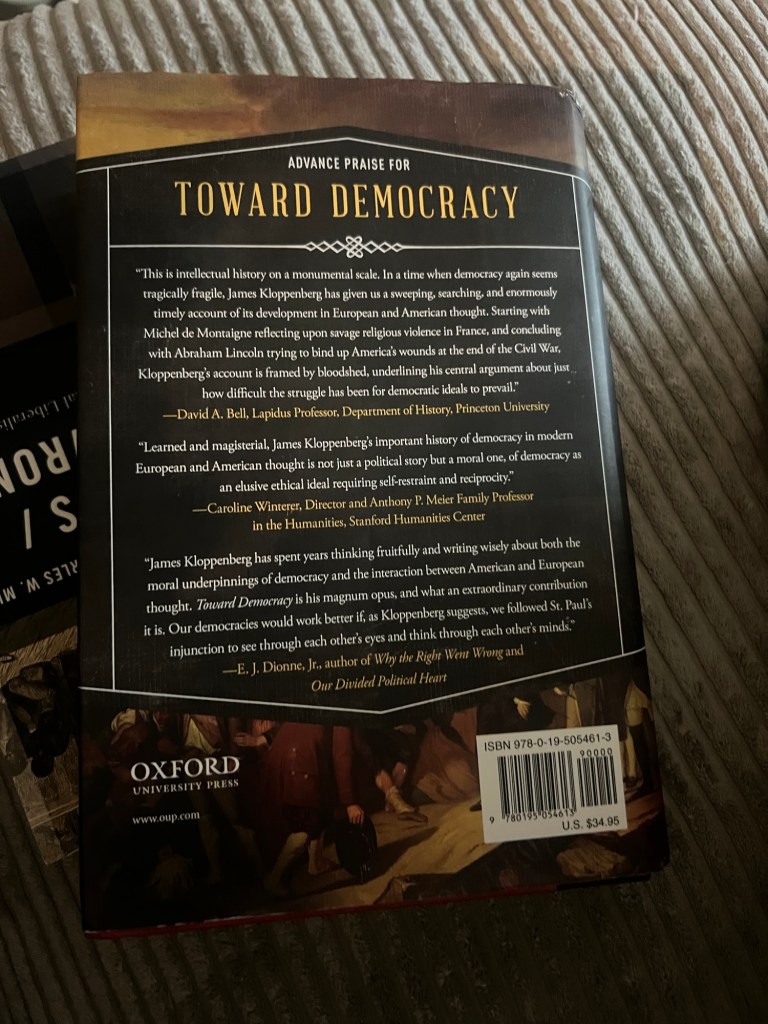
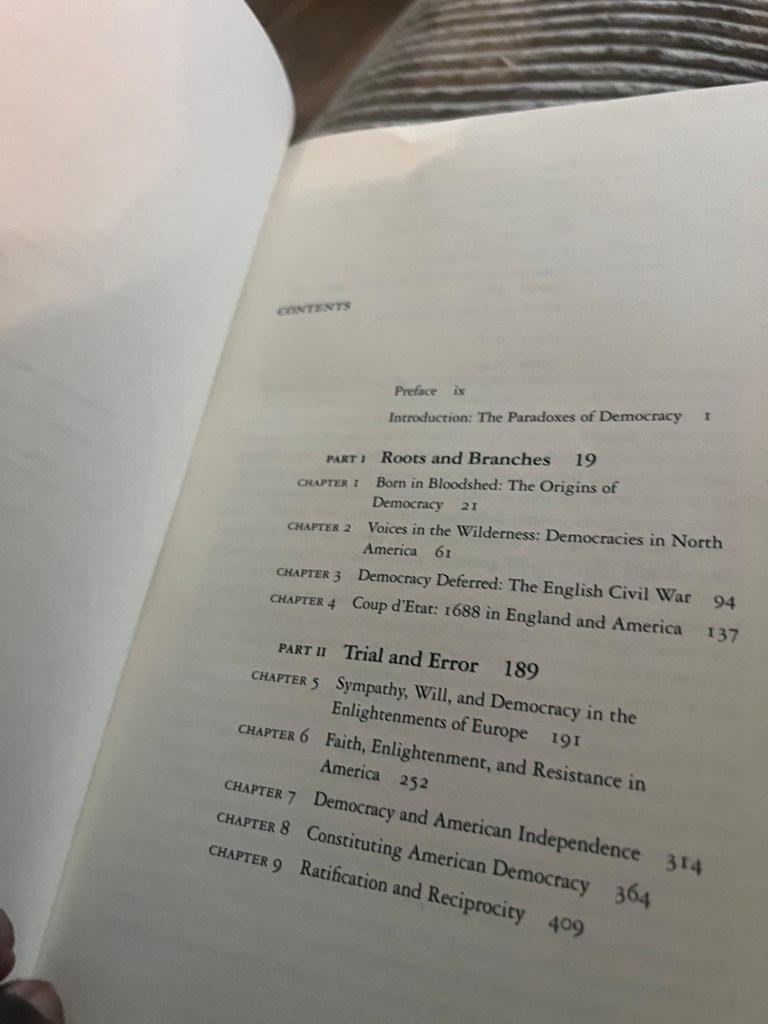
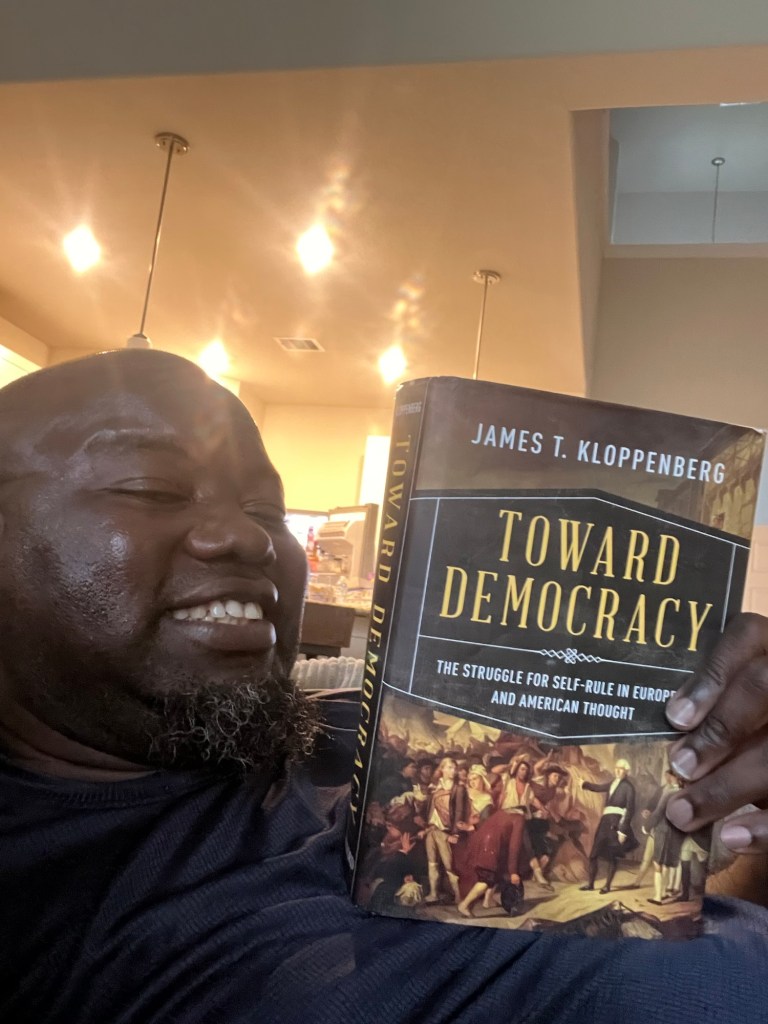
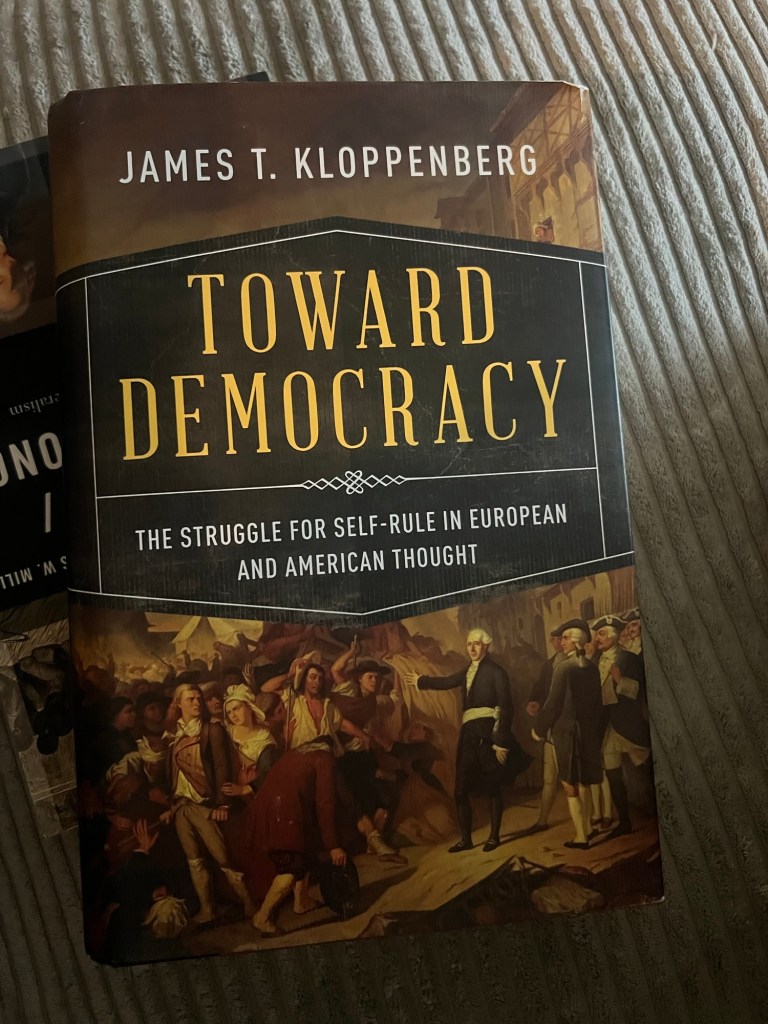
As I begin working on a new writing project, I ordered his magnum opus, the monumental intellectual history of democracy in the United States and Europe entitled “Toward Democracy: The Struggle for Self-Rule in European and American Thought” (2016), also published by Oxford UP.

I received the book today. The book is only 892 pages, and I love reading BIG books 📕 😊

Forthcoming Book: First Endorsement

I am pleased to share the first endorsement of my forthcoming book from Vanderbilt University Press.

“This is a monumental and much-needed intellectual biography that will stand as a major contribution to Haitian studies and Black Atlantic thought.”
—Linsey Sainte-Claire, assistant professor of Francophone Studies at Rice University

I sincerely thank Dr. Saint-Claire for writing this blurb. More endorsements to come….

“Du Bois the ‘Haitian,’ Haiti, and the New Documentary on Du Bois: ‘W. E. B. Du Bois: Rebel With A Cause’”

“Du Bois the ‘Haitian,’ Haiti, and the New Documentary on Du Bois: ‘W. E. B. Du Bois: Rebel With A Cause’”

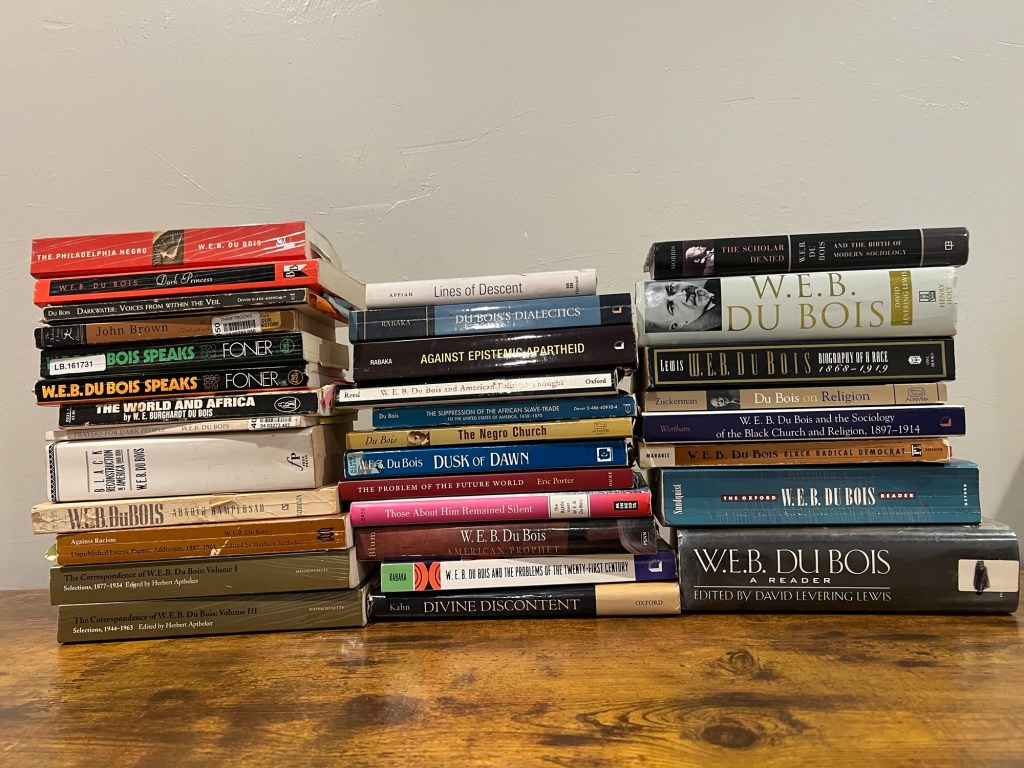
Whenever you see a scholar displays books online, it could mean he’s or she’s working on a research project. Here’s my small collection on W.E. B. Du Bois.

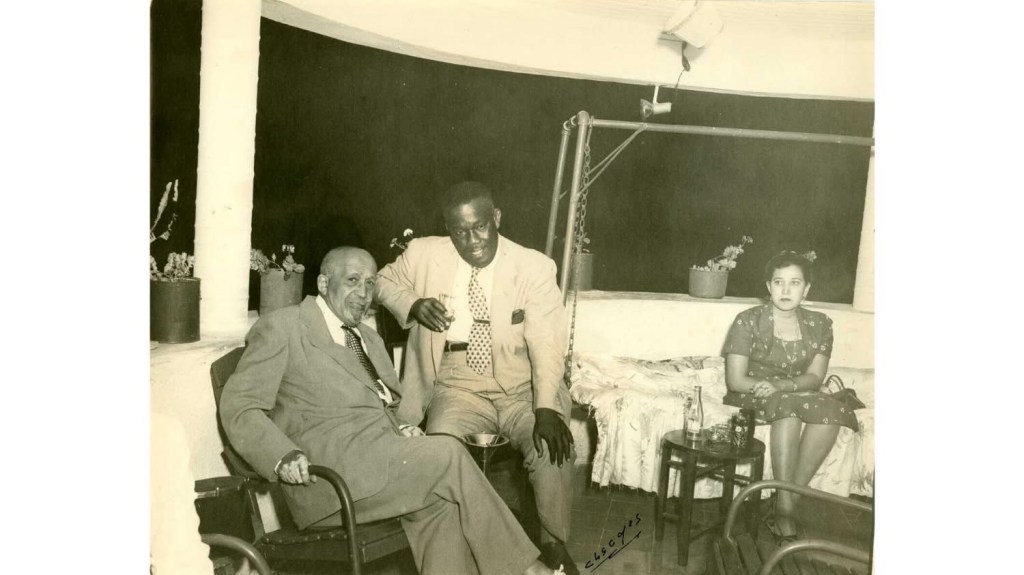
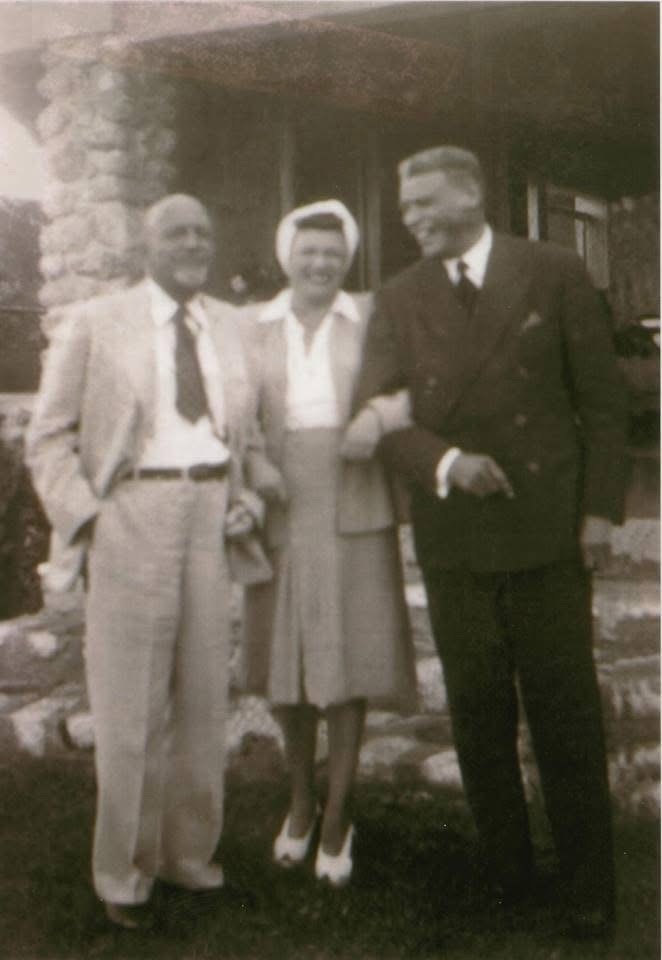
Source: Contemporary Haitian Art: “W. E. B. Du Bois with Senator Emile St. Lot and Mrs. Roussan Camille in Haiti, ca. 1945”
Source : https://credo.library.umass.edu/view/full/mums312-i0473
“Du Bois, Emile St. Lot, and Mrs. Roussan seated on a covered porch in Haiti. Taken at the family home “La Jacquiere”, located in the small rural town of Fermathe. “

By the way, I was a little disappointed about the new PBS documentary on Du Bois: “W.E.B. Du Bois: Rebel With a Cause.” There was no representative scholar in Haitian Studies or no scholar of Haitian descent commenting on Du Bois’s complex life and intellectual itineraries. I am quite aware that one documentary cannot do justice to such a magnitude and influential figure like Du Bois; however, Haiti occupied a major strategic and political role in his rich pan-African career and unapologetic activism, especially Du Bois’s war against capitalism, militarism, and anti-Black racism.

  1. Du Bois’s father was Haitian and born in Haiti. Du Bois discussed his Haitian background in his autobiographies.
  2. Du Bois wrote his doctoral dissertation at Harvard (1895) and discussed the Haitian Revolution (1791-1804) at great length, and he highlighted how the Haitian Revolution led to the abolition of slavery and the transatlantic slave trade, the Louisiana Purchase (1803), and the Southern states, including South Carolina—passed stricter slave codes and laws (1800)— restricting the movement and assembly of enslaved people for religious worship or purposes.
  3. As chief editor of “The Crisis” magazine and public intellectual, Du Bois used his influence and editorial activism to push back against the American military occupation in Haiti(1915-1934), and eventually Du Bois and his team of Black activists played an instrumental role in ending American imperialism in Haiti.
  4. Du Bois visited Haiti a couple of times and discussed his Haitian family and background—including his great cousin, the esteemed Haitian educator and intellectual Élie Du Bois—in his writings
  5. Du Bois was well-versed in Haitian history and talked about his father’s land prolifically in his writings.
  6. As a pan-Africanist, Du Bois planned to hold one of the Pan-African conferences in the 1920s in Haiti and exchanged correspondence with the well-regarded Haitian diplomat and cultural philosopher Dantès Bellegarde to help organize it there.
  7. Throughout the twentieth-century, especially the first half, Du Bois was actively writing to his Haitian friends, including Bellegarde, Jean Price-Mars, Sylvain, etc., and even wrote commentaries and book reviews on books published in Haiti—both in French and English.

Representation is important in scholarship, in the curriculum, in politics, education, and in Black Studies. There’s power and joy in representation, especially if and when it’s done with care, consideration, and collaboration.

Happy Sunday, Good People!!!