“Love and Life in the Time of Coronavirus: Cultivating an Ethic of Care Toward the Aged and the Elderly (Part 1)”
If there is one word that describes the current national attitude toward the coronavirus is fear. Fear has become the collective sentiment toward a peculiar pandemic that comes to humiliate the nations and the peoples of the world—even the most powerful ones, the richest ones, the strongest ones, the most resourceful ones, etc. Correspondingly, this pandemic paralyzes, overwhelms, and undermines our dignity and humanity; it comes to rob us of our joy, entertainment, and life.
The coronavirus knows no boundary, culture, class, race, gender, and sexuality. It is a big event that makes us small and powerless. It is like a thief that knocks on our door unexpectedly to steal, destroy, and even kill. The fear of the coronavirus is the fear of existence. It is also the fear of being exposed and contaminated; fear of getting sick; fear of large gathering and crowd; fear of the middle age group, and those over the age of 50 or more; fear of the elderly; and it is the fear of death itself. In a nutshell, the coronavirus is the greatest violator of the human right to existence and life, and the supreme destroyer of local and global peace.
On one hand, not only this pandemic has forced us to create social distancing from our family, siblings, friends, loved ones, etc. On the other hand, this all-encompassing virus is also fostering progressively a new national psychology, one that could be rightly called “psychological restraint.” The latter is strengthening this peculiar characteristic (and personal behavior) of the American and Western societies, one that we even consider as our most prized virtue: Western individualism—the focus on the self by neglecting the need and value of the community and the welfare of others. In the time of the coronavirus, we are also solidifying our belief and ideology—both on the personal and group level—in the survival of the fittest: the strongest one will survive; the strongest one will make the cut; and the strongest one will live. (this is a false belief and an unscientific way of thinking). The strongest one is somewhat defined as those who are physically suitable and healthy, especially those under the age of 50.
In particular, our collective impulse toward the aged and the elderly in society has become cold, and unfortunately, some of us have become deliberately disinterested in the preservation of their life and well-being in society. Some of us regard our own aged parents, uncles, aunties, and friends as a menace to our life and human flourishing in society. We even see our aged siblings as a threat to our own survival and enjoyment of life. Some of us dare to believe that if this group of individuals (the “old folks” as some have called them) could just die, we will be at peace with this pandemic. Some even say that all will go well in society, and that love and life in the time of coronavirus will be strengthened and constructive toward the common good—if this speck of life could just vanish from us.
Further, please allow me to share some basic ideas that could assist us in cultivating an attitude of care and compassion toward the aged and the elderly in the time of coronavirus.
The continued existence of the aged and the elderly in our society is not an infringement upon our personal and collective rights to democracy, happiness, life, and existence.
We need to celebrate the life of those who dare to live above the age of forty in this life of uncertainty and in these dangerous times. Their existence is a gift to society, and their physical presence among us makes us stronger and more fulfilling as a nation and people.
We should honor our aged parents and friends; this attitude is pleasing to God our Maker and it is also associated with divine blessing and favor.
To die at a good old age is honorable and connected with the persistent gift of life; yet we should not rush death upon the aged and the elderly.
By creating better healthcare infrastructures and medical systems in this nation, we shall strive together to give strength to the medically weary and to increase the power of the physically weak.
In the time of coronavirus, we must not forsake the aged and abandon the physically weak among us.
In the time of coronavirus, individuals in their middle and old age can still contribute to the common good and human flourishing.
Life in the time of coronavirus is not promised to any of us; we should see it as a gift.
Living a life full of physical stamina and aesthetic beauty is not a mark of the good and honorable life.
We celebrate life when we honor the weak and the marginalized in society; we humanize the aged and the elderly when we validate their contributions to human flourishing and correspondingly when we recognize their life as ours is of value, dignity, merit, and honor. That is the individual and collective attitude we should cultivate in the time of coronavirus: our national wound and the global plague.
*** In closing, I would like to direct your attention to a few passages from the Hebrew Bible whose goal is to change our attitude toward the aged and the elderly in society. I would like to suggest fourteen key verses from Scripture.
“Life in the Time of Coronavirus: What the Bible Teaches about Wisdom, Dignity, Care, and the Life of the Aged and the Elderly (Part 2)”
Psalm 90:12, “Teach us to number our days, that we may gain a heart of wisdom.”
Genesis 25:8, “Then Abraham breathed his last and died at a good old age, an old man and full of years; and he was gathered to his people.”
Leviticus 19:32, “‘Stand up in the presence of the aged, show respect for the elderly and revere your God. I am the LORD.”
Proverbs 17:6, “Children’s children are a crown to the aged, and parents are the pride of their children.”
Deuteronomy 32:7, “Remember the days of old; consider the generations long past. Ask your father and he will tell you, your elders, and they will explain to you.”
Deuteronomy 34:7, “Moses was a hundred and twenty years old when he died, yet his eyes were not weak nor his strength gone.”
Exodus 20:12, “Honor your father and your mother, so that you may live long in the land the LORD your God is giving you.”
Proverbs 23:22, “Listen to your father, who gave you life, and do not despise your mother when she is old.”
Isaiah 40:29, “He gives strength to the weary and increases the power of the weak.”
Psalm 71:9, “Do not cast me away when I am old; do not forsake me when my strength is gone.”
Psalm 71:18, “Even when I am old and gray, do not forsake me, my God, till I declare your power to the next generation, your mighty acts to all who are to come.”
Isaiah 46:4, “Even to your old age and gray hairs I am he, I am he who will sustain you. I have made you and I will carry you; I will sustain you and I will rescue you.”
Job 12:12, “Is not wisdom found among the aged? Does not long life bring understanding?”
Psalm 92:12-15, “The righteous will flourish like a palm tree, they will grow like a cedar of Lebanon; planted in the house of the LORD, they will flourish in the courts of our God. They will still bear fruit in old age, they will stay fresh and green, proclaiming, “The LORD is upright; he is my Rock, and there is no wickedness in him.”
There is a big difference between sensationalism and truth, reality and fiction, death and life, the living and the dead. Let us be passionate about truth, zealous about reality, and concerned about human lives. Let us be a people who can discern the signs of the times.
Don’t be afraid, I will always be with you, comfort you, and carry you through dark and dangerous times! There is nothing greater than your God, the Sovereign Lord and King of the universe.
“Becoming a Community of Care and Empathy in the Age of Coronavirus”
If there’s one lesson we can learn about the coronavirus moment is the possibility to become a people of compassion and a community that embodies vulnerability and weakness, and intentional empathy and care toward the weak, the poor, the needy, and the marginalized.
The most daring expression of the human will is not action or participation, but the inaction and silence of the will. This is an act of human resistance, subjectivity, and optimism, too.
The Coronavirus disease (COVID-19) reveals the fragility of human existence and our collective striving to stay healthy and away from physical pain; yet the virus also exposes a dangerous truth about human nature and capitalism: the anxiety of the rich and big corporations to preserve wealth than sustaining life.
A second lesson we can learn from this medical crisis is the opportunity it affords to all of us to alter our attitude toward war victims, refugee and undocumented communities and to ask them how can I serve you today? Do you have any unmet need at the moment?
The coronavirus disease grants us the opportunity to live in community and proximity with each other, and to solidify our interdependence, interrelationality, and common humanity. We are becoming a new people because of this dangerous threat that menaces our common existence and our common future.
In the midst of the Coronavirus disease (COVID-19), let us turn our face toward God for mercy and grace and pray in this manner:
“Teach us to number our days, that we may gain a heart of wisdom. All our days pass away under your wrath; we finish our years with a moan… Our days may come to seventy years, or eighty, if our strength endures; yet the best of them are but trouble and sorrow, for they quickly pass, and we fly away.
May the favor of the Lord our God rest on us; establish the work of our hands for us— yes, establish the work of our hands.”
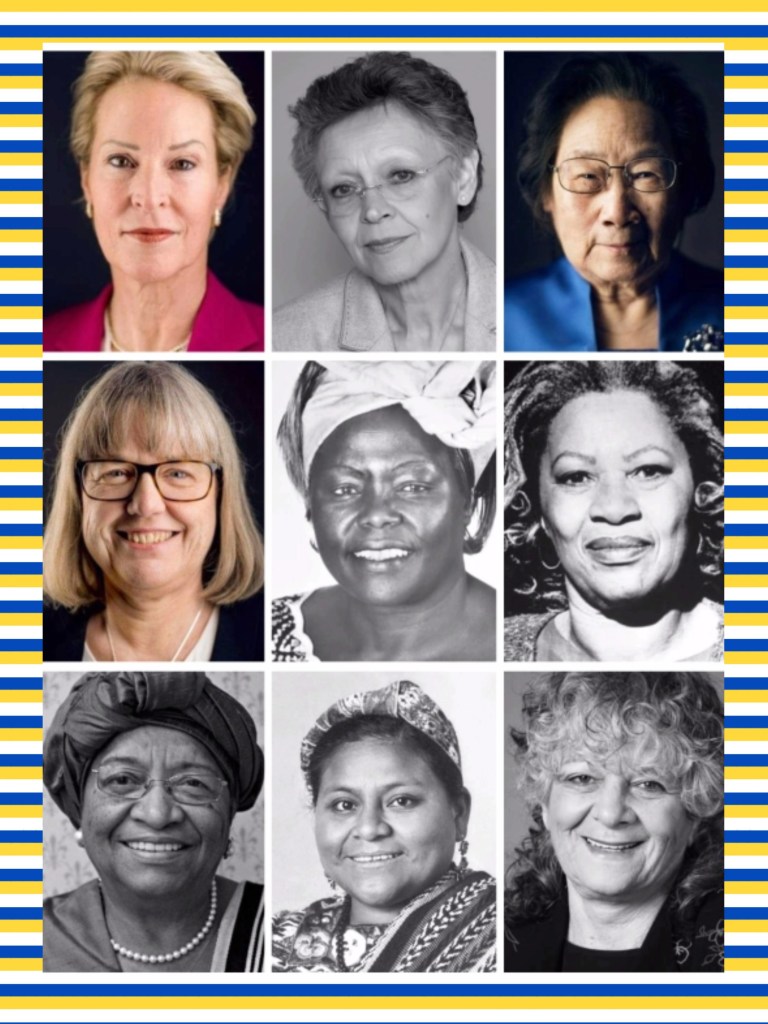
In honor of Women’s History Month, I would like to highlight the enormous contributions of the following Ten Women Scientists and Thinkers who won the Nobel Prize:
The Nobel Prize in Physics 2018: Donna Strickland
“for groundbreaking inventions in the field of laser physics” “for their method of generating high-intensity, ultra-short optical pulses.”
The Nobel Prize in Chemistry 2018: Frances H. Arnold
“for the directed evolution of enzymes”
The Nobel Prize in Physiology or Medicine 2015: Tu Youyou
“for her discoveries concerning a novel therapy against Malaria”
The Nobel Prize in Literature 1993: Toni Morrison
“who in novels characterized by visionary force and poetic import, gives life to an essential aspect of American reality”
The Nobel Peace Prize 2004: Wangari Muta Maathai
“for her contribution to sustainable development, democracy and peace”
The Nobel Peace Prize 2014: Malala Yousafzai
“for their struggle against the suppression of children and young people and for the right of all children to education”
The Nobel Prize in Physiology or Medicine 2008: Françoise Barré-Sinoussi
“for their discovery of human immunodeficiency virus”
The Nobel Peace Prize 1992: Rigoberta Menchú Tum
“in recognition of her work for social justice and ethno-cultural reconciliation based on respect for the rights of indigenous peoples”
The Nobel Prize in Literature 1945: Gabriela Mistral
“for her lyric poetry which, inspired by powerful emotions, has made her name a symbol of the idealistic aspirations of the entire Latin American world”
The Nobel Prize in Chemistry 2009: Ada E. Yonath
“for studies of the structure and function of the ribosome”
My review of this excellent book: “In the Shadow of Powers: Dantès Bellegarde in Haitian Social Thought” by Patrick Bellegarde-Smith has been published by H-Net Reviews.
“After this first session on the family came “Faith based engagement”, which was focused on the role of our faith-based institutions in nurturing a greater sense of civic engagement in the Haitian community. “The Haitian Church is not actively involved in civic engagement and social projects”, opined Dr Celucien Joseph, one of the panelists. “The mindset of Haitian ministers, the theology they were trained in, is that they have to wait for the dominant culture to do something for them. We want to receive, not give”, added the Indian River State College Professor.”
To finish reading the report about the conference, click on the link below:





 drcelucienjoseph, "Thinking and Meditating"