Update about the School: Hope Academy de Bois d’eauUpdate about the School: Hope Academy de Bois d’eau

Update about the School: Hope Academy de Bois d’eau

We would like to thank everyone who made a financial contribution through gofundme to support the opening of the new pre-school “Hope Academy de Bois d’eau,” in Port-Margot, Haiti. The first day of class is Monday, September 16, 2019. 75 parents came to the School’s office to enroll their children to attend the new school. Unfortunately, we had to limit the number of students we can take and support fully to 25.

A Gift for you!

Would you please send us an email (hopefortodayoutreach@gmail.com) & provide us with your mailing address so we can send you a free copy of this new book, “The New Life Catechism for Children: 100 Questions & Answers to teach us how to live peacefully & relationally in the world” (Hope Outreach Productions, 2019) by Celucien Joseph

Please continue to keep these precious 25 young Haitian children and their family in your prayers and thoughts.

***By the way, since this book is published in three editions: The English edition, the Bilingual Kreyol and English Edition, and the Kreyol only edition, please do let us know which edition you would like to receive.

Blessings and Peace!—Docteu Lou

“Hope for Today Outreach’s Six Major Projects for Rural Haiti 🇭🇹: Toward Sustaining Development and Human Flourishing”

“Hope for Today Outreach’s Six Major Projects for Rural Haiti 🇭🇹: Toward Sustaining Development and Human Flourishing”

1. Establish fully funded (and free) schools (Preschool to High School) with arts programs, pre-vocational programs, medical clinics/facilities, and clean and sanitary water projects in Haiti’s poorest rural areas–10 schools per department;

***Haiti is divided in 10 Departments or Provinces, including Artibonite,
Centre, Ouest, Nord, Grand’Anse, Sud
Nippes, Nord-Est, Nord-Ouest, and Sud-Est.

2. Create literacy programs for illiterate Haitian adults in the most empoverished areas in the country: 10 literacy centres per department;

3. Establish vocational/professional schools with programs such as carpentry, plumbing, electricity, refrigeration, masonry, barber, culinary arts, etc., in 10 most needing rural areas in the country;

4. Create religious programs and theological schools to provide decolonial spiritual formation and training and to promote postcolonial hermeneutics and indigenous ecclesiastical practices: we’ll need 10 major centres: one per department;

5. Create Community libraries and community-activity centers: we’ll need 10 of those per department in rural regions in the country;

6. Create Teacher Education Programs & Leadership Schools in rural Haiti: we’ll need 10 centres per department

How to fund these programs and projects:

A. Through the development of Haiti’s agriculture and natural resources;

B. By soliciting assistance from Haitian professionals in the Diaspora to invest in these projects;

C. By establishing scholarship funds and grants;

D. By soliciting Haiti’s wealthy class and rich private sector to invest in these projects;

E. By promoting (and selling) Hope for Today Outreach’s intellectual resources such as books, cds, teaching materials such as seminars and workshops on leadership, health, and education, etc.

F. By encouraging generous and humanitarian individuals and families to add Hope for Today Outreach to their living wills, trusts, and estates.

***We are making the first step in realizing a small portion of our goals. In September 2019, Hope Academy de Bois d’eau, located in the rural area of Bois d’eau, Port Margot, will start running with 25 students. In the next five years, our goal is to start a medical clinic and provide sanitary and clean water to the population there.

Dr. Celucien Joseph is the founder and president of Hope for Today Outreach (HTO).

Our motto is “to remember the poor.”

Rhetoric of Freedom is NOT Freedom!

Creating laws about human rights does not make any country earn the title the “champion of human rights.” It is democratic application of those laws in every segment of society and the extension of those rights to the marginalized and poor population that makes a country great.

The rhetoric of freedom is not the equivalent of practical freedom. Declarations on and Treatises on human rights do not automatically translate into experiential rights to all people and all lives. In the same vein,
equality is not the remedy to democratic bankruptcy; equality is a friend of equity, and the democratic process needs both (an equitable) system and (an equal) structure in order to be fully democratic and to uphold human dignity and rights, as well as the preservation and promotion of life.

A country cannot brag about democracy and freedom if it is unable and unwilling to secure rights and life for all of its citizens. A country is not worthy of the title a “leader in human rights” if it’s not investing in its people toward human flourishing and the common good.

To understand the context of my response, please read this article:

https://www.cnn.com/2018/07/24/politics/jimmy-carter-human-rights/index.html

“On Being a Transdisciplinary Freedom Scholar & Researcher”

“On Being a Transdisciplinary Freedom Scholar & Researcher”

One of the things that I like about being an “interdisciplinary freedom scholar” and a “cross-disciplinary freedom researcher” is that I write what I want and I transgress disciplinary constraints. I do not want anyone to tell me that you have a PhD in English Literary Studies and Intellectual History ; hence, you have to write in your respective discipline(s) of study (Yet I am a literary scholar and an intellectual historian); or I do not want someone to advise me you have a PhD in Systematic Theology and Ethics; therefore, you should contribute distinctively to these two disciplines. (Yet I am a Christian theologian and ethicist.) Also, I do not want somebody to inform me that you are a “black scholar,” you need to write about black issues; or you are a Haitian-American writer, you should be writing distinctively about Haitian matters. (Yet I am both an Africana scholar and a Haitian writer.) I write what I want and do so interdisciplinarily; for me, this is what it means to be an “interdisciplinary freedom scholar” and a “transdisciplinary freedom researcher.” I wouldn’t want anyone to tell me to do otherwise–whether I teach at an English Department, Black/Africana Studies, or even a Religious/Theology Department. I am a discipline transgressor and transdiscipline advocate, especially in the Humanities. Consequently, my academic interests engage the academic fields of history, anthropology, literature, religion, theology, race, and history of ideas.

I am an expert in the disciplines that I was trained in and those that I constantly write about, not in those I want to write about. On the other hand, I do understand this intellectual sentiment or calling is not for everybody, and no one should be forced to write and reseach cross-disciplinarily or intersectionally, but we should acknowledge and value the work of those who do that. When it comes to this particular self-interest and personal ambition, I would like to propose the phrase, “intellectual academic identities,” to describe some of us who follow this interdisciplinary passion and transdisciplinary desire, both as a writer and researcher.

In closing, the structure of the American academia does not promote the interdisciplinary or cross-disciplinary model (i.e. just check out academic posts or job announcements) or scholarship; thus, the traditional model linked to the academic system and structure does not work in the best interest of the transdiciplinary researcher-scholar.

“Stop Saying Racism is a Spiritual Problem!”

“Stop Saying Racism is a Spiritual Problem!”

I believe the problem of racism in the human heart is not just a theological or spiritual issue. Christians need to stop saying that. Racism is a complex reality that needs to be treated holistically and multidimensionally. Christian theology produced in the West is too weak to be the solution to the race problem or our contemporary struggle with white supremacy. In other words, if you tell me that Jesus is the solution to the problem of racism and white supremacy in America and in the world, you would have to tell me whose Jesus are you talking about? Are you referring to the Jesus of the poor and the oppressed and the marginalized? Or are you referring to the Christ of bourgeois theologians and racist Christians?

The poor and marginalized know Jesus is their friend and their only help in the time of sorrow and suffering. The figure of Christ in Western theological discourse is too transcendent and distant to relate to the poor and their living conditions and existential suffering manifest in today’s culture as white supremacy and terrorism.

When Western theologians stop theologizing and theorizing Jesus and his message, they will contribute to the solution of white supremacy and racism in our culture and Christian circles. In other words, if (and when) Western theologians start to believe that racism and white supremacy are more than a theological issue, but are embedded in systems and structures, be it economic, political, cultural, and ideological, they will start making social justice issues part of their larger theological thinking and writing, and intellectual framework and tradition.

Contemporary destructive ideologies and evils such as white supremacy and Christian white nationalism in Christian circles and in this culture are existential realities that destroy lives, demonize and alienate people, and cause more personal despair and collective suffering to our personal and shared experience as Americans and images of God. American (Evangelical) Christianity needs a new theological discourse and a new generation of theologians who can and will write theology differently and offer an intellectual and paradigm shift that is relevant and contemporaneous to our existential troubles and racial wounds.

We need to reject the idea that white supremacy or racism is just a sin or spiritual issue unless we understand sin has a multidimensional aspect. We need to leave behind this thinking that racism is just a theological matter and therefore needs a theological/spiritual solution. The God of the Bible is about cosmic transformation and holistic renewal of his creation; his solution to the human dilemma such as white supremacy and racism goes beyond the realm of the theological and the spiritual. God wants to change systems, ideologies, and structures that produce and sustain white supremacy, internal terrorism, and racism. He’s about comprehensive reparation of his creation and humanity.

Jesus is the God-Man and not just a spiritual and theological Being. He is a social and relational Deity as much as he is spiritual and theological. To say that Jesus is the social God means that he does not disengage with the social issues–such as white supremacy, internal terrorism, and racism– of life that affect and change our theological interactions with him. To say that Jesus is a spiritual Being is to convey the idea that what we think about Jesus theologically change human relationships and interactions.

My New Book, “The New Life Catechism for Children: 100 Questions & Answers to teach us how to live peacefully and relationally”

Folks, here’s the good news. I just published a new book, “The New Life Catechism for Children: 100 Questions & Answers to teach us how to live peacefully and relationally in the world.” If you purchase my new book, 50% ($ 4.56) will go to fund the new pre-school we are starting in Port-Margot, Haiti, in September 2019. The e-book version ($ 8.99) is now available for purchase on amazon, and the paperback ($ 10.99) will be available in two days. Please spread the news for the great cause of educating children for the future and for a new Haiti.

Description

“The New Life Catechism is about spiritual formation and development and so designed to teach children about the great theological truths and ethical practices of the Christian faith. It is written with great theological clarity and precision, and rhetorical eloquence. This gospel-focused guide directs our attention to the relationship between the Christian life, society, and doing good works, and also focuses on how Christian kids should live in society and with others relationally and peacefully. It teaches us about the importance of difference and unity, and the beauty of diversity and multiplicity expressed through God’s creation and the various cultures, races, and ethnic groups God made for his glory. This study can be used in Sunday school classes and small groups on spiritual formation for children. The target audience includes two different age groups: 3-7, and 8-11, respectively. Christian Parents and educators will read the catechism to the first age group; children belonging to the second age group can read it by themselves.

Nonetheless, individuals of any age group will find this summarized statement of the Christian faith informative, insightful, empowering, and doctrinally sound. The overall objective of this book is to lead individuals, especially Christian children, to love God more passionately and affectionately, as well as to grow more in grace and in our knowledge and understanding of the Triune God and to achieve gradual maturity in our relationships and interactions with our neighbor. We also hope that The New Life Catechism will help the church to construct this new radical life we are called to live in this world and to combat and thus solve the crisis of biblical illiteracy among Christian children and adults in our culture, especially in Christian circles. The book is also available in French and Creole.”

Haiti 🇭🇹 Impact Trip: July 2019 (Part 8): Report about the new Preschool 🏫 (“Hope Academy of Bois d’eau”)

Haiti 🇭🇹 Impact Trip: July 2019 (Part 8): Report about the new Preschool 🏫 (“Hope Academy of Bois d’eau”)

Friends and Supporters:

One of the goals of my recent trip to Haiti (July 17-25, 2019) was to plan for the new Preschool we will open in September 2019. After meeting with the school staff, conducting research, I want to give you a brief report about this important educational project.

A. Name: The name we have chosen for the new school is “Hope Academy of Bois d’eau” (“Académie d’Espoir de Bois d’eau”) located in the rural area of Bois d’eau, Port-Margot (Northern Haiti).

B. School Staff: Six individuals make up the staff of the school, including the school’s principal, the kindergarten teacher, the teacher’s aid, the security officer, two cooks or kitchen aids.

C. Curriculum & School’s Philosophy:

1) Kreyòl will be incorporated into the school’s curriculum and pedagogy, beginning with our first preschool class composing of 3-5 yr old;

2) Emphasis on comprehension, not memorization, reasoning, questioning, critical thinking, analyzing data, inferencing/inferences, collaborating learning, etc.;

3) Incorporation of religious education in the curriculum;

4) Emphasis on praxis (practice);

5) No corporal discipline/punishment allowed;

6) Emphasis on personal and corporate responsibility, good citizenship, and civic engagement/participation;

7) Emphasis on the role of (effective) education and (sustaining) development (i.e. the individual, the community, the society, and the nation);

8) Use of technology in the classroom (we need 27 tablets= 24 for the students, 1 for the teacher’s aid, 2 extras);

9) Projected Budget for the academic year 2019-2020: $ 7, 500.00

A) With the help of our donors and supporters, Hope Academy of Bois d’eau will be fully funded and tuition fee for all students;

B) The annual salary for both teachers is
$ 2,000.00;

C) The annual salary for the kitchen aids is
$ 1, 000.00;

D) The annual salary for the principal is
$ 1, 000.00;

E) Food (Lunch) for 24 children: $ 2, 000.00;

F) Miscellaneous (school supplies, sanitary items, security/safety issues): $ 1, 500.00

***We need to raise $ 7, 500.00 for the academic year 2019-2020 to cover all the costs and provide a free education to all our anticipated 24 children.

Support Haiti’s Preschool and Kindergarten Project (2019-2020)

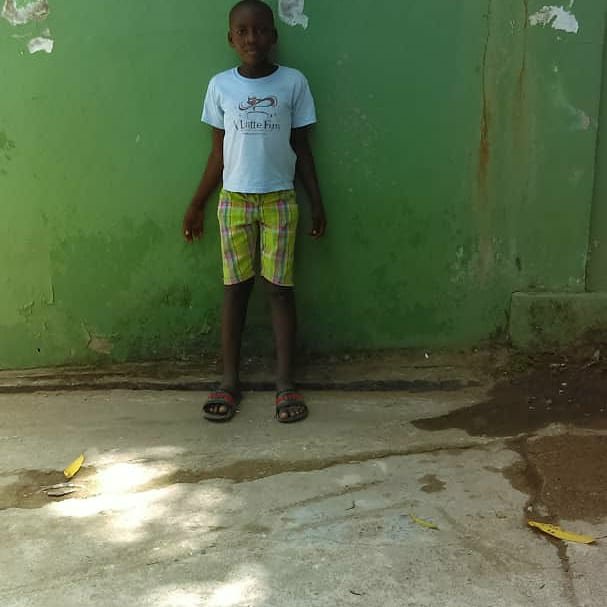
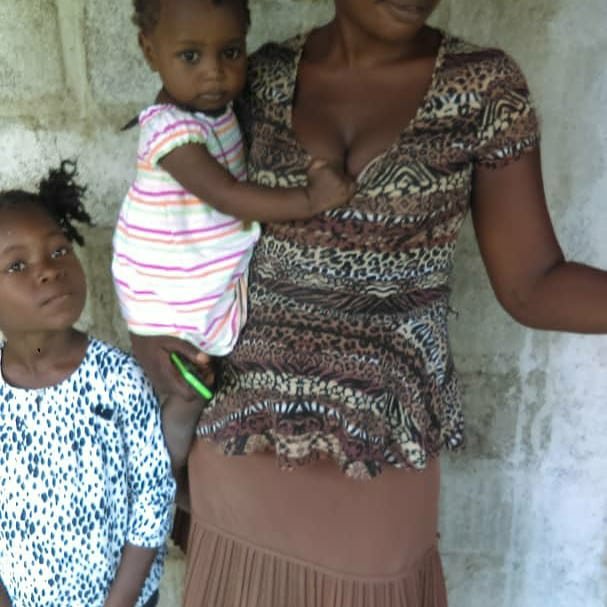
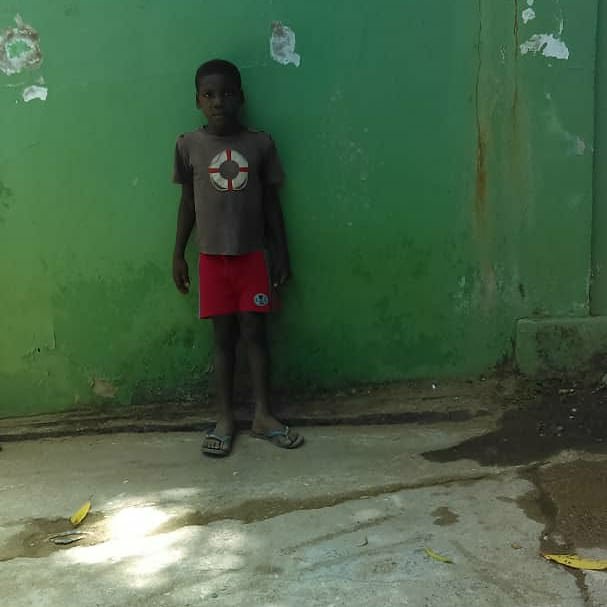
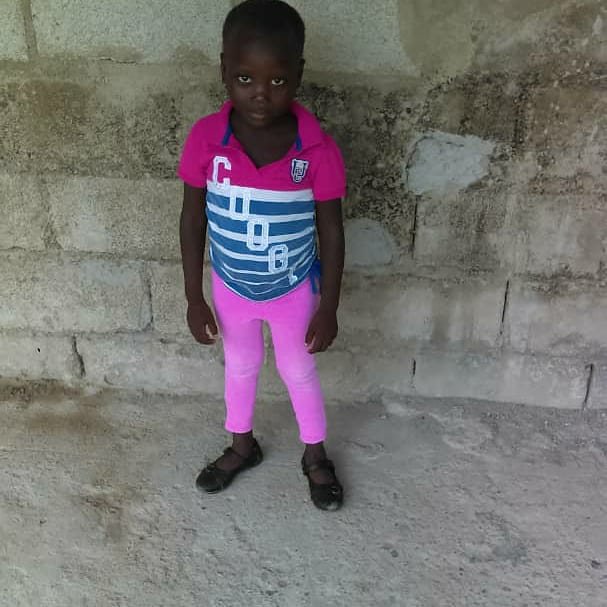
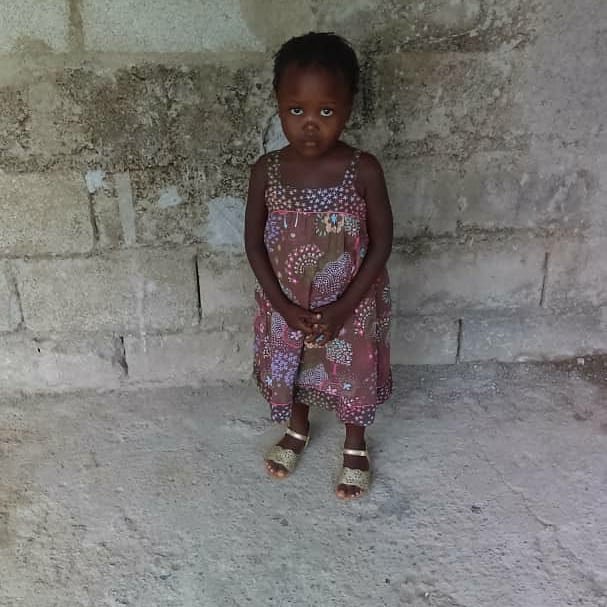
Hello, Friends: Here are some of the children from Haiti who will be attending our Kindergarten in September 2019. I’m asking you to support their education and this is an important cause that will change their future toward sustaining development and human flourishing.

Please click on the link below to support one of those children as part of the Haiti’s Preschool/Kindergarten Project (2019-2020).

Thank you for your generosity and commitment to change a life in Haiti 🇭🇹– Dr. Lou, President of Hope for Today Outreach

https://www.gofundme.com/haiti039s-preschoolkindergarten-project

https://www.gofundme.com/haiti039s-preschoolkindergarten-project

“The Problem of the Theological Curriculum: The Chapter on Theological Education in North America and The West”

“The Problem of the Theological Curriculum: The Chapter on Theological Education in North America and The West”

One of the chapters in my forthcoming book (“Evangelical Paradoxes) discusses the subject of theological education that train Christian pastors and Christian academics in North America and the West to serve in Christian churches and the academic world. I am very much interested in these two groups: Christian pastors and Christian academics for six specific and main reasons I offered in the book—given their substantial influence in the congregational life, human relations, and contemporary Christian thought in the sphere of Higher Learning, which engage both culture and society. (In this important conversation, I do not ignore other Christian professionals or ministers who continue to play important roles in the church and in the secular world, serving in different capacities and roles, including Christian artists and worship leaders, psychologists and therapists, missionaries and educators–who have also been trained in theological schools.)

Initially, I wrote a 35 page chapter on the problems—some are structural, systemic, ideological, and others are practical and traditional; yet all of them are practical issues—I observed and researched in predominantly White Theological schools (that have formed me, and they are mostly theological seminaries and divinity schools in North America and in the West) in the training of minority students and integrating minority faculty members in their midst. As a side note, I have earned six academic degrees: a Bachelor, three Masters, and two PhDs; three of these degrees are from Christian and theological schools, and my other three degrees are from the so-called secular institutions and universities.

Interestingly, the research has taken me places that I never anticipated or imagined of going. I ended up writing two interrelated chapters (85 pages in total) on the subject matter. I proposed some practical steps to deal with the observable problems I discussed, and some of those propositions and tentative solutions are non-traditional in and for theological education. One of the core concerns is to bridge the racial, gender, and ethnic gaps in the theological curriculum and theological schools. Since the majority of pastors/ministers and theological academics in the major Protestant denominations in North America are trained in seminary and divinity schools, not often in School of Religion—yet this is now becoming a trend in religious education in the United States—my main emphasis in writing these two chapters is to explore how theological environments could be more democratic and pluralistic. Theological schools should be the starting point to foster candid and unintimated conversations about inclusion, diversity, and difference in society and Christian circles, especially churches. I strongly believe that the theological curriculum is the most feasible place to tackle the racial/gender/ ethnic conflict in contemporary American society and Christian (Evangelical) churches wherein we train pastors and ministers and Christian scholars. Racial/gender/ethnic tension in this country and in Christian congregations is always and almost theological and religious. Hence, we must begin thinking together about these complex issues and finding practical, theological, and intellectual solutions in the theological classrooms.

Finally, the first chapter on theological schools and education introduced the reader to the problems I observed. The sequel to that chapter offered an alternative way to deconstruct the theological curriculum and reconstruct it toward the general welfare/the common good, especially to benefit students of color and minority faculty members. I used various theories of (multicultural and democratic) pedagogy and methodologies including theories in multicultural education and curriculum, and postcolonial and decolonial studies to recommend that the theological curriculum needs to be decolonized, dewesternized, and make intellectual spaces and more room for a more liberal, democratic, and gender inclusive, as well as race and ethnic sensitive theological education that would consider the history and contributions of people of color to global Christianity as well as to integrate the lived worlds and experiences of minority students into the theological curriculum. Some of my proposals are non-traditional and a little revolutionary, and that is okay with me. 😊

Folks, at least, I tried and am trying to bring a solution to the problems in contemporary theological education in North America and Western countries, that have practical implications on how we do church and relate to each other humanly, racially, and Christianly.