“In the Example of Bonhoeffer and ‘Costly Discipleship'”

“In the Example of Bonhoeffer and ‘Costly Discipleship'”

Oh how much American Evangelical Christians need to learn from the life and social and political activism of Pastor and Political Theologian Dietrich Bonhoeffer who, in the first half of the twentieth-century, stood up against Hitler’s political correctness and Germany’s racial violence and ethnic cleansing against the Jews!

Bonhoeffer was not afraid to denounce the  social evils and the destructive racial ideologies of the Hitler regime and totalitarianism. He was not afraid to declare in public and through his political  sermons the dignity of all people, even the Jews!

Sadly, there were powerful and influential  German Christians and theologians who were Hitler’s allies and who helped him carry out his plan to annihilate the  Jews.

In the same line of thought, sadly, contemporary American evangelicalism has fostered  certain destructive ideologies that are detrimental to the promise of American democracy, equality,  freedom, and pluralism; they’re also detrimental to true Christianity  and  the imperative of Christian love, tolerance,  racial harmony, and “sacrificial discipleship.”

Who among today’s American Evangelicals will speak against Trump’s racist and anti-immigrant rhetoric?

Who among today’s American Evangelicals will speak against Hilary Clinton’s crime against Blacks in America and her exploitation of the Haitian underclass and masses?

Who among today’s American Evangelicals will speak against Ted Cruz’s anti-poor, anti-immigrant, and anti-democracy discourse?

Who among today’s American Evangelicals will speak against Police brutality and racial profiling against Blacks and minority groups?

True Christianity rejects any type of human oppression, exploitation, and violence, and condemns human structures and actions that desecrate life and dehumanize individuals.  Genuine discipleship promotes a life of compassion, sacrificial love, justice, selflessness, human solidarity, and what Bonhoeffer famously called “costly discipleship.”

On April 9,1945, Pastor and Political Theologian Dietrich Bonhoeffer died at a concentration camp in Germany. Bonhoeffer was hung by the Nazi because he refused to yield to the political correctness of the day, and his conviction to remain faithful to the practice of sacrificial and costly discipleship and his commitment to human dignity and solidarity was more important than political correctness and affiliation, and the triumph of German nationalism and the doctrine of racial superiority.
Some Important Quotes by Bonhoeffer:
On Silence: “Silence in the face of evil is itself evil: God will not hold us guiltless. Not to speak is to speak. Not to act is to act.”
On Injustice: “We are not to simply bandage the wounds of victims beneath the wheels of injustice, we are to drive a spoke into the wheel itself.”
On Peace: “There is no way to peace along the way of safety. For peace must be dared, it is itself the great venture and can never be safe. Peace is the opposite of security. To demand guarantees is to want to protect oneself. Peace means giving oneself completely to God’s commandment, wanting no security, but in faith and obedience laying the destiny of the nations in the hand of Almighty God, not trying to direct it for selfish purposes. Battles are won, not with weapons, but with God. They are won when the way leads to the cross.”
To learn more about  Bonhoeffer,  click on the link below


Brief Reflections on the Crisis of the Haitian public intellectual…

Brief Reflections on the Crisis of the Haitian public intellectual…

 The crisis of the Haitian intellectual is that he separates his academic interest from a life of service and activism toward the common good of the Haitian society and the Haitian people. He establishes a great distance and tall fence between himself and the Haitian masses he claims that he is trying to reach and redeem.  The Haitian intellectual has no knowledge about the lived-experiences and lived-worlds of the Haitian masses nor does he have any interest to know or learn from the masses. He is not interested in forging a constructive politics of relationality with those who live in the margins of the Haitian society.

The Haitian intellectual isolates himself from the Haitian masses. He is not a servant to the Haitian people or the masses.  The Haitian intellectual does not perform self-criticism in order to reevaluate his own conduct or action, thinking or ideas about the nature of things and his public role in the Haitian society as a social critic and a servant to the Haitian people.  For him, leadership means an opportunity for one to get rich and be elevated to a position of power and influence—by any means necessary…including the exploitation and dehumanization of the Haitian people.  He is devoid of any sense of servant leadership.

The conundrum of the Haitian public intellectual—both in Haiti and the Diaspora—is also his failure to mentor young Haitian scholars and thinkers. The Haitian intellectual sees the rising young Haitian scholars or thinkers in the academia and public sphere as a threat to his own hegemony, academic success, and sphere of influence; the emerging Haitian thinker is not seen as a collaborative partner or someone who can be mentored toward the common good of the nation of Haiti and the welfare of the Haitian people.

The Haitian public intellectual is devoid of any sense of public responsibility and patriotic zeal and love. Contemporary Haitian society is in deep social, economic, political, and cultural trouble because of the profound crisis and ignorance of the Haitian intellectual to serve and lead sacrificially and responsibly.  He is a selfish individual who cares only about his individual success and his rise to the top of the ladder. He is an individual with no goals or objectives when it pertains to the development of Haiti; however, he criticizes those with a plan for Haiti’s development. He has no sympathy toward the Haitian masses but criticizes those who are trying to love the people and perform acts of kindness and compassion toward them.

The Haitian public intellectual is an individual with dazzling rhetoric, but his words are meaningless and lack of substance because they do not contribute meaningfully to the improvement of the Haitian condition in Haiti or in the Haitian Diaspora. The Haitian intellectual is a man of word only and not of action. He criticizes the Empire in the public sphere; in the private sphere, he is an ally and servant of the Empire and contributes substantially to the suffering and social death of the Haitian masses. He calls himself a humanist, but he made no humanitarian deeds to justify his delusional thinking. He writes prolifically about human solidarity and collective mobilization, but his life and actions contradict his own thinking or ideas.

The Haitian intellectual is not loving, serving, and aiding his own people. In the twenty-first century, Haiti has produced few engaged, responsible, and organic public intellectuals.The Haitian intellectual has failed Haiti and the Haitian people.


Jesus, a Man of Color: Rethinking about the Color of the Historical Jesus and His Redemptive Message of Hope and Reconciliation during the Christian Holy Week

Jesus, a Man of Color: Rethinking about the Color of the Historical Jesus and His Redemptive Message of Hope and Reconciliation during the Christian Holy Week

The color of Jesus does matter in the present time because it could help reshape Christian theology and transform Christian churches in the 21st century, and enhance interfaith dialogue between Abrahamaic and non-Abrahamaic religions. Jesus’ skin color bears tremendous implications on how we should now rethink about theology and race, Christianity and the problem of the color line in the modern world, God’s relationship with the poor, the oppressed, and people of color, and how we should treat those who live in the margins of society.

If one believes that religion can be used as a potential tool to enhance the conundrum of race and ethnicity in the modern world, then Jesus’ non-European flesh matters. If one is persuaded that a non-racialized Christianity and Jesus can help improve racial reconciliation and harmony among Christians of different racial and ethnic background, then Jesus’ skin color is extremely important. If one is convinced that Jesus’ dark body matters, it could potentially be used instrumentally to ameliorate ecumenical conversations between people of different religious persuasions on the planet.

Let’s not spiritualize Jesus’ historical human flesh! Let’s not undermine the important fact that Jesus was a historical person, a Palestinian first-century Jew, and a man of color who chose to live among the oppressed, the poor, and the outcast of the Jewish Diaspora. He was not a white male as traditionally depicted in the American and Western media, and taught in religious, seminary, and divinity schools, and theological textbooks. He certainly did not have any European features nor has he any European ancestors. To affirm these truths is to take seriously the practical and sociological dimensions of Christianity and the Christian message.

To spiritualize the historical Jesus merely as a divine being without taking into account of his true humanity is to undermine his true identity as a person of color. To acknowledge Jesus’ true skin color and ethnicity is the first act of decolonizing Christian theology and an important move forward toward a theology of liberation and a decolonial turn in theological anthropology. Finally, to affirm Jesus’ non-European body is to dewesternize Christianity and Christian theology. Critical theological discourse always involves the process of rethinking about what we believe and practice, and why we believe what we confess and do.

Unfortunately, the Westernized Jesus has been used in the past both in the tragic times of slavery and Western colonization as a tool to make people suffer, to humiliate non-European people, and dehumanize the image of God in humanity. The Christian churches in the twenty-first century cannot continue to stay silent about these pivotal issues that have changed the world, transformed the dynamics and human relations between Western and non-Western people, and continue to have a devastating impact on Christian missions, evangelism, and the message of the Gospel in the world. Followers of Christ are repairers of bridges and light of the world.

The Christian message of Easter affirms that God has raised Jesus from the Dead. The Easter story is a message of repentance and reconciliation, hope and resistance, and love and peace. It is also a profound reflection on the humanity and Jesus’ physical body which God has vindicated. The Easter message is also a message of God’s universal love for humanity: men and women, male and female, the homosexual, the lesbian, the transgender, the disable, the orphan, the widow, the poor, the oppressed, the marginalized, people of all color, people of all ethnic group. Easter speaks loudly about God’s unconditional love for the world and all people!

The Jesus Christians everywhere in the world confess as both Savior and Lord was a real human being who was self-conscious about his own ethnic identity as a person of color of Jewish background. He was also self-conscious about his underrepresented social class in the first-century Jewish Diaspora and Palestine.

The historical Jesus proclaimed a message of reconciliation and love between people of different social classes, of competing religious persuasions, and of individuals of different ethnic identity and background. Through his message of love and acceptance, he was determined to dispel the ideology of ethnic superiority—what we may call in the twenty-first century society racial heritage and racial supremacy. The message of this same Jesus, a person of color who is the Savior and Lord of White, Black, Asian, Middle-Eastern, Native Americans, Latino/a, and male and female Christians, provides meaningful lessons and wisdom to help us rethink critically about our common humanity, can help us break down the high racial, gender, and ethnic walls in contemporary Christianity and churches, and improve the human condition in the world.

Moreover, I believe that there are both creative and strategic ways to diminish the power and influence of structural racism in our society and the modern world. There is nothing “essential” about one’s racial identity, designation, or category; if this logical reasoning is valid or justifiable, then we do not need to wait for the great eschatological moment of the Christ or the future life…to work through our racial conflict or to dismantle the power of structural racism in our society. I believe we can undo race! There are equally important human factors that intersect with human racial identity (or racial identities) and shape the human experience in this world; these things include gender, sexuality, culture, ideological worldviews, economics, even religious and political identification. I would contend further that one of the devastating factors contributing to the conundrum of racism in our culture and the modern world is that we have miserably cultivated a low view of humanity and love. At the moment, our collective view of anthropology and love is defective and “messed up.”

Hence, potentially, a more constructive conversation about race and racism must begin with the fundamental question of what it means to be human and to love one another. We would have to deal honestly and responsibly with the existential dimensions of love, which bears substantial implications on human relations and our shared or common humanity. We can learn from Jesus as a person of color who has modeled for us a positive view of humanity/anthropology by intentionally promoting the dignity of all people including the Jew and the non-Jew (i.e. the Samaritan, for example), male and female, the religious and the non-religious. I would argue that the life of Jesus has provided the most useful resources, and meaningful life lessons and strategic methods to recreate a more inclusive, constructive, redeeming, holistic, and optimistic anthropology.

Jesus’ earthly interactions with people—both Jews and non-Jews—and his compassion toward men and women—the rich, the poor, the widow, the oppressed, the leper, the disable— (Yet, Jesus gave special attention to the outcast, the poor, and the disheartened) also provide effective resources to dismantle the power of race in contemporary world. Jesus’ theological anthropology was rooted in the social (lived-) experiences and lived-worlds of the people, as he was conscious about the socio-economic, and political dimensions that have stained the image of God in humanity. In the example of Jesus, we need to foster a view of humanity that is more dignified, inclusive, tolerant, and egalitarian. I suppose the modern conversation about race and racism in both intellectual and popular circles in the American society are missing these vital elements.

In the same line of thought, Christians and Christian churches have failed to respond appropriately to the crisis of race and its related problems because most of the churches in America are plateaued and are not applying the principles of Jesus to deal with life existential issues and to bring healing and comfort to the poor, the oppressed, the disfranchised individual, etc.

On the other hand, as a theologian, I must acknowledge there is indeed a theological aspect of race and racism, as the latter is a clear reflection of human depravity and our shortcoming to love God and our neighbor unconditionally and unreservedly. Racism is in fact a profound theological crisis; it is also an inevitable demonstration of the dark side of humanity. Nonetheless, the disposition in our hearts to sin and not to love another person as we’re supposed to is not an excuse to be racist, for example. We all need to be responsible for our actions and social sins, and make necessary amends or reparations for them. However, God through the life, death, and resurrection of Christ made it possible for humanity to achieve redemption in Christ.

The Easter message is also a story about God’s (and Christian) victory over sin and death. It gives us a reason to hang on in this life of uncertainty and despair. Easter is about hope, reconciliation, and love. By consequence, what are/should be the implications of the message of Easter for those whose humanity has been disvalued in our society? What are/should be the implications of the Easter message for the tremendous problem of racial reconciliation and harmony in Christian churches and our society? What are/should be the implications of the message of Easter for the problem of pain, suffering, and global terrorism in the modern world? What are/should be the implications of the Easter message for those who have the political, economic, and religious power and influence over people and to change the present and future worlds?

Happy Resurrection Day!

Vodou and Other Religions: Religion, Religious Affiliation, and Haitian National Identity

Vodou and Other Religions:
Religion, Religious Affiliation, and Haitian National Identity
by Celucien L. Joseph, PhD
 

In this brief post, I would like to communicate a few ideas about three important issues that are intertwined and closely related to each other: religion, religious affiliation, and the construction of self and collective national identity based on certain religious tradition or system. The emphasis of this brief reflection will be on Haitian Vodou and Haitian (national) identity. Here are my 13 propositions:

1. Religious experience could be both personal and collective.

2. Religious piety is not spirituality.

3. Religious affiliation is a choice–at least in most Western societies and nation-states. (I understand it may not be a personal choice in certain countries where religious freedom is limited or not prized!) It is also observed that some countries in the Middle East, for example, have adopted a state religion such as Islam.

4. While a person may be born into a particular religious tradition or system–such as Haitian Vodou, Christianity, Judaism, Taoism, Hinduism, Buddhism, Islam, etc.–genuine religious affiliation, however, should be a personal choice of the individual.

As we say in Kreyol, “Yo pa achte Lwa” (“One cannot buy a Lwa/Spirit) (Nonetheless, I do understand that Vodou is also a family religion, and the religious heritage can be passed on from one generation to the next. However, that in itself does not qualify a family member to automatically become a Vodouizan, a Hougan or Mambo. Allow me to share a personal example: my grandmother from my mother’s side was a mambo (Vodou priestess), and my grandfather from my mother’s side served many lwa, even married to several of them (Spiritual marriage in Vodou). Nonetheless, my mother never practiced Vodou nor has she inherited the tradition or passed it on to her children. My father’s parents (my grandparents) were not Vodou practitioners). From this vantage point, religious affiliation is certainly not an entitlement.

5. Hence, to be born into a Haitian family does not automatically make one a Vodouizan or Vodouist.

6. Haiti is a country. Haitian is a national identity. Vodouizan is a religious affiliation. These three things are not the same and certainly not synonymous or interchangeable.

7. Haitians, both in Haiti and the Haitian Diaspora, have embraced various and competing religious affiliations. Haitians are Muslims, Buddhists, Christians, Catholic practitioners, Protestants, Agnostics, Atheists, Secular humanists, Jehovah Witnesses, Mormons, etc. As a result, Haitians are free to embrace any religious worldview or system.

8. Vodou is one among other religions practiced by Haitians both in Haiti and the Diaspora. Our ancestral faith is not monolithic; it is rather pluralistic. (In fact, Vodou itself is not a homogeneous religion.) Our African ancestors who were brought by force to the island of Saint Domingue brought with them various traditions, practices, customs, and competing religious practices and worldviews including Christianity, African Traditional religions, Islam, etc. While living on the island, they also adopted the religions of the Native Americans, and incorporated them into the religion of Vodou; they have also integrated Christian rituals and theology, and Masonic humanist morality and rituals into Vodou. While a large number of the enslaved population practiced what is now labelled as Haitian Vodou, not all of them were Vodou practitioners.

9. To embrace another religion other than Vodou should not be construed as the devalorization of the Haitian culture—since religions and cultures are human inventions and part of the process and theory we call social constructionism. In a true democratic state, the individual is granted the right of religious freedom and preference.

*The ideology in contemporary Haitian scholarship is that to be Haitian is to be a Vodouizan. Many Haitianist scholars have “essentialized Vodou” as the religion of all Haitians, just like certain individuals have “essentialized” race and culture. This tendency among scholars, both in the Anglophone and Francophone worlds, does not do justice to the reality and the lived-experiences of the Haitian people–both in Haiti and the Haitian Diaspora. I would suggest that Vodou, Christianity, and Islam had played a pivotal role in the Haitian Revolution since Vodou itself is a syncretized faith which integrates Christian moral theology and ritual into its own brand of practice. Secondly, Francois Makandal, Dutty Boukman, and other important maroon leaders, and revolutionary leaders embraced Islam; they were also Vodouizan. Thirdly, the founding fathers Toussaint Louverture and Alexandre Petion were devout Roman Catholic by confession. In 1816, President Petion had invited Protestant Christianity in Haiti–what is now called today “Evangelical Christianity—only 12 yrs after the founding of the new nation of Haiti ( I do understand there is a great divide between Evangelical Christianity of the 19th century and that of the 21st century, as to their political affiliation and theological confessions). Fourthly, a large number of the enslaved Africans practiced Vodou as a religion; on the other hand, the enslaved Congolese who were brought to Saint-Domingue at the end of the 18th century were equally Catholic Christians as Catholicism became the state religion of Congo in early 15th century– even before Christopher Columbus visited the Americas. A large number of the enslaved Senegalese who were brought to the island were Muslims–an important point Jean Price-Mars affirms in Chapter 3 (L’Afrique, ses races et sa civilisation”) in “Ainsi parla l’Oncle.”

In summary, in Haiti’s contemporary society, there are three major religious practices: Vodou, Protestant/Evangelical Christianity, Vodou, Roman Catholicism. (Islam is growing rapidly in Protestant Christianity is practiced by 45% of the Haitian population. It is probably more in 2016–giving the wide spread of Evangelical Christianity in post-earthquake Haitian society.). While Vodou is among the most practiced religions by Haitians in Haiti, Haiti doe not have “one single religious tradition.” Our ancestral faith is also Vodou, Christianity, and Islam.

10. To be a Haitian Muslim or Christian does not make one an inferior Haitian Patriot.

11. In the same line of thought, the Vodouizan is not a superior Haitian than the Haitian atheist or agnostic.

12. Freedom of religion means the opportunity one has to choose or reject a certain faith among others. Religious freedom means a person who is affiliated with a certain religious tradition is free to share his or faith with another individual of a different religious persuasion or to someone who has no religious affiliation.

13. Since religion like culture is a social construction or human invention, no religion or culture has the monopoly.

A brief note on Nationality, Religion, and the Question of the Muslim Immigrant

A brief note on Nationality, Religion, and the Question of the Muslim Immigrant
 
Abraham, the founding father of ancient Israel, was not a Jew by birth. He was an” immigrant,” a Chaldean from the land of Ur/Babylon (Modern Iraq). Abraham became a Jew and the fountainhead of the Abrahamaic faiths: Judaism, Islam, and Christianity. Jews, Christians, and Muslims claim him as both their spiritual and physical father.
 
Abraham, the immigrant from what is known today as the modern Iraq and the Hero of the Jews, Muslims, and Christians, just like the founding fathers of the United States of America were illegal aliens and undocumented workers. Yet, Abraham would become the greatest immigrant who has ever graced human history. He would also become the model of religious piety and faithfulness.
 
This message is for my Evangelical Christian brothers and sisters, those who call themselves children of Abraham and Abraham their father, and those who claim this country as their own–and no one else’s– should love all children of Abraham. The Muslims are also the seed of Abraham, and they are your brothers and sisters! Love them, care for them, and extend kindness and hospitality to them!

Holy Discontent: These Things Make Me Sad!

Earlier in a post today on Facebook, I wrote that “sometimes words fail to communicate what we want to articulate.” Although words still fail me, here are the things I have been contemplating about today (Language will always remain a fallible vehicle to clarify effectively the human mind, communicate adequately the human thought, and action):

Holy Discontent: These Things Make Me Sad!

There are many things in this world that are very depressing to me, but the following fifteen issues are notorious:
1. The depressing living condition of the Haitian people in Haiti.
2. Politics in Haiti.
3. Politics in the United States.
4. The Race Problem in America.
5. The failure of Evangelical Christianity in America to care for the poor, the needy, and underprivileged families.
6. The unholy alliance between Evangelical Christianity and the Bourgeoisie class in America.
7. The failure of Evangelical Christianity to practice justice and be in solidarity with the oppressed and disheartened.
8. The disastrous effects of globalization and free market capitalism.
9.  The end of (spiritual) piety and the triumph of secularism and atheism.
10. The end of compassion and love.
11. The end of human hospitality and community.
12. The triumph of (social) evil in our society and the world.
13. The fear of the stranger and difference.
14. The desecration of life and dehumanization of people.
15. The continuous battle of people of color–black people in particular-in this country to acknowledge their humanity and show that they too count in America.

Hope for Today Education Fund

Hope for Today Education Fund

Click here to support this project via Gofundme

https://www.gofundme.com/vujgzc58


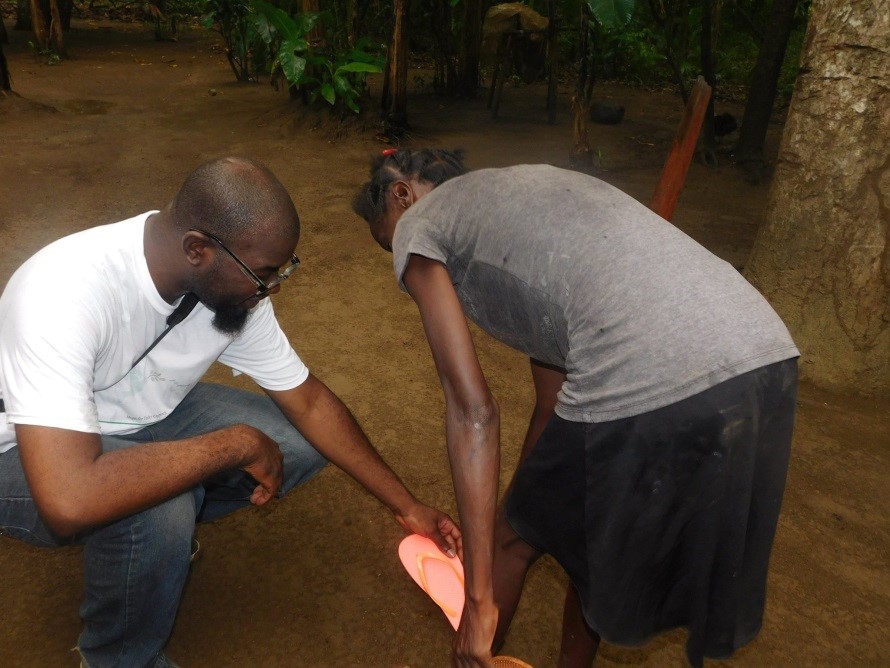
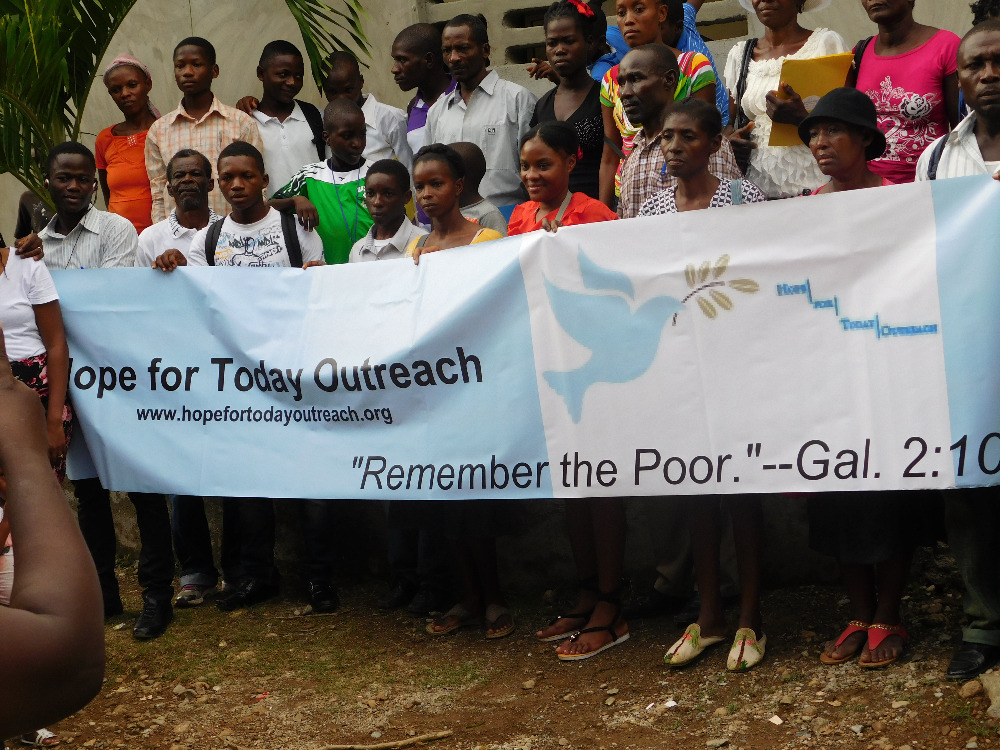
In our September trip to Corail, Port-Margot (before school opens), we distributed school supplies to underprivileged families and students. We were able to pass out 122 backpacks and a school kit containing notebooks, color crayons, pencils, pens, rulers, erasers, etc. Unfortunately, because of our limited resources, we were unable to serve and reach out to all the 450 students at the local school, and other children and families in need in the community.

Call for Papers: “Between Two Worlds: Jean Price-Mars, Haiti, and Africa”

Call for Papers: “Between Two Worlds: Jean Price-Mars, Haiti, and Africa” Edited by Drs. Celucien L. Joseph, Glodel Mezilas, Jean Eddy Saint Paul, and Jhon Byron

Extended Deadline: Thursday, March 31
Price-Mars


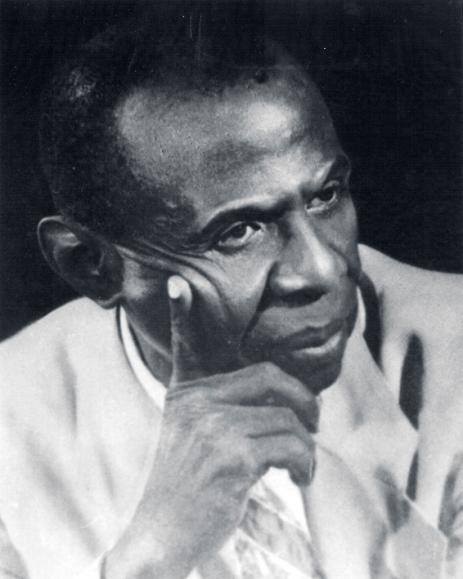
Jean Price-Mars (1876 – 1969), Haitian physician, ethnographer, diplomat, educator, historian, politician, was a towering intellectual in Haitian history and cultural studies, and a Pan Africanist who called to reevaluate the contributions of Africa in universal civilizations and to revalorize African retentions and cultural practices in the Black diaspora, especially on Haitian soil. Through his writings, Price-Mars, whom Leopold Sedar Senghor called “the Father of Negritude,” sought to establish connecting links between Africa and the Black Diaspora, and the shared history and struggle between people of African descent in the Diaspora.

For many scholars, Price-Mars is the father of Haitian ethnology and Dean of Haitian Studies in the twentieth-century, and arguably, the most influential Haitian thinker that has graced the “Black Republic” since the death of Joseph Auguste Anténor Firmin in 1911. In Haitian thought, Price-Mars has exercised an enduring intellectual and ideological influence on the young Haitian intellectuals and writers of the generation of the American Occupation in Haiti (1915-1934) and the post-Occupation culture from the 1930s to 1970s. He is especially known for launching a cultural nationalism and an anti-imperial movement against the brutal American military forces in Haiti.

The writings of Price-Mars were instrumental in challenging the Haitian intellectual of his leadership role in the Haitian society, and in promoting national consciousness and unity among Haitians of all social classes and against their American oppressor. Comparatively, his work was a catalyst in the process of shaping and reshaping Haitian cultural identity and reconsidering the viability of the Afro-Haitian faith of Vodou as religion among the so-called World religions. His thought anticipated what is known today as postcolonialism and decolonization.

Moreover, scholars have also identified Price-Mars as the Francophone counterpart of W.E.B. Du Bois for his activism, scholarly rigor, leadership efficiency, and his unremitting efforts to challenge Western racial history, ideology, and white supremacy in the modern world. Unapologetically, Price-Mars challenged the doctrine of white supremacy and the ideological construction of Western history by demonstrating the equality and dignity of the races and all people, and their achievements in the human historical narrative. As Du Bois, he was a transdisciplinary scholar, boundary-crosser, and cross-cultural theorist; in an unorthodox way, he had brought in conversation various disciplines including anthropology, ethnography, geography, sociology, history, religion, philosophy, race theory, and literature to study the human condition and the most pressing issues facing the nations and peoples of the world, as well as the possible implications they may bear upon us in the postcolonial moment.

“Between Two Worlds: Jean Price-Mars, Haiti, and Africa” is a special volume on Jean Price-Mars that reassesses the importance of his thought and legacy, and the implications of his ideas in the twenty-first century’s culture of political correctness, the continuing challenge of race and racism, and imperial hegemony in the modern world. Price-Mars’s thought is also significant for the renewed scholarly interests in Haiti and Haitian Studies in North America, and the meaning of contemporary Africa in the world today. This volume explores various dimensions in Price-Mars’ thought and his role as medical doctor, historian, anthropologist, cultural critic, public intellectual, politician, pan-Africanist, and humanist.

Hence, the goal of this book is fourfold: 1) The book will explore the contributions of Price-Mars to Haitian history, thought, culture, literature, politics, education, health, etc., 2) This volume will investigate the complex relationships between Haiti and the Dominican Republic in Price-Mars’ historical writings, 3) It studies Price-Mars’ engagement with Western history and the problem of the “racist narrative,” and 4) Finally, the book will highlight Price-Mars’ contributions to Postcolonialism, Africana Studies, and Pan-Africanism.

If you would like to contribute a book chapter to this important volume, along with your CV, please submit a 300 word abstract by Thursday, March 31, to Dr. Celucien Joseph @ celucienjoseph@gmail.com

Successful applicants will be notified of acceptance in the first week of April, 2016. We are looking for original and unpublished essays for this book. Translations of Price-Mars’ works in the English language are also welcome. Potential topics to be addressed include (but are not limited to) the following:

I. Price-Mars as Historian
• Price-Mars as Historian
• Price-Mars’ engagement with Western history
• Price-Mars’ interpretation of Haitian history
• The function of Haitian heroes and heroines in Price-Mars historical writings
• The Origin (s) and History of Haiti and Dominican Republic in Price-Mars’ works
• Particularism and Universalism in Price-Mars’ historical writings

II. Price-Mars as Cultural Critic and Public Intellectual in Haitian Society
• Price-Mars as cultural theorist and literary critic
• The role of Price-Mars’ thought in the Haitian Renaissance in the first half of the twentieth-century
• Price-Mars and the Crisis of Haitian Intellectuals
• Price-Mars and the Crisis of Haitian bourgeoisie-elite
• Price-Mars, Vodou, and the Haitian culture
• The Haitian peasant in the writings of Price-Mars
• The Education of the Haitian masses in the writings of Price-Mars
• The problem of Race in Price-Mars’ writings
• Haitian Women in the thought of Price-Mars
• Price-Mars’ contributions as Medical doctor in Haitian society.

III. Price-Mars as Politician
• The Political career and goals of Jean Price-Mars
• Price-Mars, Haiti’s Ambassador to the nations
• Price-Mars and the American occupation and American imperialism
• The political philosophy and democratic ideas of Price-Mars
• Nationalism and Patriotism in Price-Mars’ thought

IV. Price-Mars as Pan-Africanist
• African history or the meaning of Africa in the writings of Price-Mars
• The Black Diaspora in the thought of Price-Mars
• Price-Mars’ Postcolonial Rhetoric and Linguistic Strategy
• The Vindication and Rehabilitation of the Black Race
• The Role and Contributions of Pre-African civilizations to world civilizations
• Price-Marsian Negritude or Blackness

About the editors

Jean Price-Mars (1876 – 1969), Haitian physician, ethnographer, diplomat, educator, historian, politician, was a towering intellectual in Haitian history and cultural studies, and a Pan Africanist who called to reevaluate the contributions of Africa in universal civilizations and to revalorize African retentions and cultural practices in the Black diaspora, especially on Haitian soil. Through his writings, Price-Mars, whom Leopold Sedar Senghor called “the Father of Negritude,” sought to establish connecting links between Africa and the Black Diaspora, and the shared history and struggle between people of African descent in the Diaspora.

For many scholars, Price-Mars is the father of Haitian ethnology and Dean of Haitian Studies in the twentieth-century, and arguably, the most influential Haitian thinker that has graced the “Black Republic” since the death of Joseph Auguste Anténor Firmin in 1911. In Haitian thought, Price-Mars has exercised an enduring intellectual and ideological influence on the young Haitian intellectuals and writers of the generation of the American Occupation in Haiti (1915-1934) and the post-Occupation culture from the 1930s to 1970s. He is especially known for launching a cultural nationalism and an anti-imperial movement against the brutal American military forces in Haiti.

The writings of Price-Mars were instrumental in challenging the Haitian intellectual of his leadership role in the Haitian society, and in promoting national consciousness and unity among Haitians of all social classes and against their American oppressor. Comparatively, his work was a catalyst in the process of shaping and reshaping Haitian cultural identity and reconsidering the viability of the Afro-Haitian faith of Vodou as religion among the so-called World religions. His thought anticipated what is known today as postcolonialism and decolonization.

Moreover, scholars have also identified Price-Mars as the Francophone counterpart of W.E.B. Du Bois for his activism, scholarly rigor, leadership efficiency, and his unremitting efforts to challenge Western racial history, ideology, and white supremacy in the modern world. Unapologetically, Price-Mars challenged the doctrine of white supremacy and the ideological construction of Western history by demonstrating the equality and dignity of the races and all people, and their achievements in the human historical narrative. As Du Bois, he was a transdisciplinary scholar, boundary-crosser, and cross-cultural theorist; in an unorthodox way, he had brought in conversation various disciplines including anthropology, ethnography, geography, sociology, history, religion, philosophy, race theory, and literature to study the human condition and the most pressing issues facing the nations and peoples of the world, as well as the possible implications they may bear upon us in the postcolonial moment.

Between Two Worlds: Jean Price-Mars, Haiti, and Africa is a special volume on Jean Price-Mars that reassesses the importance of his thought and legacy, and the implications of his ideas in the twenty-first century’s culture of political correctness, the continuing challenge of race and racism, and imperial hegemony in the modern world. Price-Mars’ thought is also significant for the renewed scholarly interests in Haiti and Haitian Studies in North America, and the meaning of contemporary Africa in the world today. This volume explores various dimensions in Price-Mars’ thought and his role as medical doctor, historian, anthropologist, cultural critic, public intellectual, politician, pan-Africanist, and humanist.

Hence, the goal of this book is fourfold: 1) The book will explore the contributions of Price-Mars to Haitian history, thought, culture, literature, politics, education, health, etc., 2) This volume will investigate the complex relationships between Haiti and the Dominican Republic in Price-Mars’ historical writings, 3) It studies Price-Mars’ engagement with Western history and the problem of the “racist narrative,” and 4) Finally, the book will highlight Price-Mars’ contributions to Postcolonialism, Africana Studies, and Pan-Africanism.

If you would like to contribute a book chapter to this important volume, along with your CV, please submit a 300 word abstract by Monday, February 29, 2016, to Dr. Celucien Joseph @ celucienjoseph@gmail.com, and Dr. Jean Eddy Saint Paul @ jsaintpaul@yahoo.fr
Successful applicants will be notified of acceptance in the first week of April, 2016. We are looking for original and unpublished essays for this book. Translations of Price-Mars’ works in the English language are also welcome. Potential topics to be addressed include (but are not limited to) the following:

I. Price-Mars as Historian
• Price-Mars as Historian
• Price-Mars’ engagement with Western history
• Price-Mars’ interpretation of Haitian history
• The function of Haitian heroes and heroines in Price-Mars historical writings
• The Origin (s) and History of Haiti and Dominican Republic in Price-Mars’ works
• Particularism and Universalism in Price-Mars’ historical writings

II. Price-Mars as Cultural Critic and Public Intellectual in Haitian Society
• Price-Mars as cultural theorist and literary critic
• The role of Price-Mars’ thought in the Haitian Renaissance in the first half of the twentieth-century
• Price-Mars and the Crisis of Haitian Intellectuals
• Price-Mars and the Crisis of Haitian bourgeoisie-elite
• Price-Mars, Vodou, and the Haitian culture
• The Haitian peasant in the writings of Price-Mars
• The Education of the Haitian masses in the writings of Price-Mars
• The problem of Race in Price-Mars’ writings
• Haitian Women in the thought of Price-Mars
• Price-Mars’ contributions as Medical doctor in Haitian society.

III. Price-Mars as Politician
• The Political career and goals of Jean Price-Mars
• Price-Mars, Haiti’s Ambassador to the nations
• Price-Mars and the American occupation and American imperialism
• The political philosophy and democratic ideas of Price-Mars
• Nationalism and Patriotism in Price-Mars’ thought

IV. Price-Mars as Pan-Africanist
• African history or the meaning of Africa in the writings of Price-Mars
• The Black Diaspora in the thought of Price-Mars
• Price-Mars’ Postcolonial Rhetoric and Linguistic Strategy
• The Vindication and Rehabilitation of the Black Race
• The Role and Contributions of Pre-colonial African civilizations to world civilizations
• Price-Marsian Negritude or Blackness

About the Editors

Dr. Celucien L. Joseph is currently an Assistant Professor of English at Indian River State College. He received his Doctor of Philosophy from the University of Texas at Dallas, where he studied Literary Studies and Intellectual History. Professor Joseph also holds an M.A. in French language and literature from the University of Louisville. In addition, he holds degrees in theological and religious studies. He serves in the editorial board and Chair of The Journal of Pan African Studies Regional Advisory Board; he also the curator of “Haiti: Then and Now.” He edited JPAS special issue on Wole Soyinka entitled “Rethinking Wole Soyinka: 80 Years of Protracted Engagement” (2015). Dr. Joseph is interested in the intersections of literature, history, race, religion, theology, and history of ideas.

Professor Joseph is the author of several books including Race, Religion, and the Haitian Revolution: Essays on Faith, Freedom, and Decolonization (2012), From Toussaint to Price-Mars: Rhetoric, Race, and Religion in Haitian Thought (2013), Haitian Modernity and Liberative Interruptions: Discourse on Race, Religion, and Freedom (2013), God Loves Haiti (2015). He has also contributed several encyclopedia entries and scholarly articles in various journals. His forthcoming book is entitled Thinking in Public: Faith, Secular Humanism, and Development in Jacques Roumain (Wipf and Stock Publishers, 2016). He is the lead editor of a forthcoming two volume anthology entitled Vodou in Haitian Memory: The Idea and Representation of Vodou in Haitian Imagination (Collection 1), and Vodou in the Haitian Experience: A Black Atlantic Perspective (Collection 2)—to be published by Lexington Books in 2016. He is currently working on a volume on Jean-Bertrand Aristide, former President of Haiti and Catholic-Priest Liberation Theology entitled Aristide: A Theological and Political Introduction (under contract with Fortress Press).

Academic Bio of Jean Eddy Saint Paul, PhD, Sociologist,
Professor of Sociology and Politics
Universidad of Guanajuato (Guanajuato, Mexico).

Jean Eddy Saint Paul is a Haitian scholar and social scientist. He received his Ph.D. in Sociology from El Colegio de México (2008), an M.A. in Latin American Studies from Pontificia Universidad Javeriana, Bogotá (2002) and a B.A. in Social Work from the State University of Haiti. Dr. Saint Paul is a Professor of Politics and Sociology whose specializations include Religions, Citizenship, and Democracy, and Elites, Political Discourse and Ideologies. He currently works as a Professor for the Division of Law, Politics and Government at the Universidad of Guanajuato (Guanajuato, Mexico). He is also a regular Professor at the Inter-Institutional Doctorate (Ph.D.) Program in Law. Dr. Saint Paul is one of the founders of the Doctorate Program in Law, Politics and Government, and the Master Program in Political Analysis at the Universidad de Guanajuato. He usually teaches in the undergraduate and graduate programs and offers courses such as “Political Science”, “Sociological Theory”, “Politics and Religions”, “Political Theory” and “Qualitative Research Methods.” Before joining the University of Guanajuato, Dr. Saint Paul was a visiting professor of “Comparative Politics” and “Political Theory” at the Ph.D. Program in Political Science and Master Program in Sociology at the Universidad Iberoamericana in Mexico City.

Prof. Saint Paul’s work covers an unusually broad spectrum of topic including Historical Sociology of Politics, Politics and Religions (Secular State for Civil Liberties and Human Rights), Civil Society, Politics of Memory and Citizenship, Civil Society and Democratization from a Political & Sociological Perspective, Sociology of Violence, Patrimonialism, Neopatrimonialism, and Politics of the Belly. A Member of the National System of Scholars-CONACyT, level 1, Professor Jean Eddy Saint Paul was in 2013 a “Visiting Scholar” at the Carter G. Woodson Institute for African-American and African Studies at the University of Virginia (Charlottesville, Va. United States of America) and previously in 2011 was a “Visiting Fellow” at the Centre d’études et de recherches internationales (Centre for International Studies and Research (CERI), SciencesPo, CNRS, Paris.

Dr. Saint Paul conducts research on Latin America and the Caribbean, and has published his works in prestigious national and international press, like Karthala (Paris), Maison des sciences de l’homme (Paris) and El Colegio de México (Mexico). Among his recent publications on Haiti, it is important to mention: Chimè et Tontons Macoutes comme milices armées en Haïti. Essai sociologique, published in 2015 by the Cidihca press in Montreal (Québec), Canada; “La laïcité en Haïti. Approche sociologique des erreurs épistémologiques et théoriques dans les débats récents,” published in the international Peer Review Journal: Histoire, Monde et Cultures Religieuses (HMC), Thematic Number: Etat, Religions et Politique en Haïti (XVIII-XXI siècles), # 29, April 15, 2014, Paris: Karthala, pp. 83-100. ISBN: 9782811111540. Currently, he is working on two new books: Duvalierism, Rhetoric and Political Practices, and Civil Society and Politics of Memory in Haiti”.
Prof. Saint Paul is fluent in Haitian Creole, French, English and Spanish.
https://ugto.academia.edu/JeanEddySaintPaul.

Email address: jsaintpaul@yahoo.fr or jsaint@colmex.mx
Professional link: https://ugto.academia.edu/JeanEddy
His new book: Chimè et Tontons Macoutes comme milices armées en Haïti. Essai Sociologique. Montreal, Ca.: Cidihca, 2015.

http://lenouvelliste.com/…/Chime-et-tontons-macoutes-la-log…

http://lenouvelliste.com/…/Chime-et-tontons-macoutes-la-log…

Skype: Jean Eddy Saint Paul (Charlottesville)

Bio for Glodel Mezillas, PhD

Glodel Mezillas is a political scientist, diplomat,
theorist, philosopher, and a scholar of Caribbean and Latin American Studies. He received his PhD in Latin American Studies from the Universidad Nacional Autónoma de Mexico (UNAM), a Master’s degree in International Studies from Universidad Complutense de Madrid, 2001-2002. He also studied at the Ecole Normale Supérieure (ENS) of the Université d’Etat d’Haïti, UEH), from which he received a Bachelor’s degree in Modern Letters, and at the Université Toussaint Louverture a B.A. in Political Sciences He has also done special studies in Diplomacy and International Politics at Escuela Diplomática de Madrid, and in International Public Administration (ONU) at the École Nationale d’Administration de Paris, Institut des Relations Internationales du Cameroun (IRIC),and at the Institut des Nations Unies de la Recherche et la Formation (UNITAR), he specialized in the field of United Nations System.

Dr. Mezillas has served as Professor of Genealogy of Postcolonialism at Instituto de Estudios Críticos, of International Relations and the Caribbean Studies at the Institut d’Études et Recherches Africaines (IERAH) de l’Université d’État d’Haiti, of International Relations at Université Polyvalente (Haiti), and Professor of Political Sciences and Epistemology of Social Sciences at the Université Toussaint Louverture. His teaching and scholarly research interests include Black Diaspora, Cultural, Political Theory and Epistemology of Social Sciences in Latin America and the Caribbean.

Dr. Mezillas is a prolific writer and has published in three languages English, Spanish, and French. His books including Que signifie philosopher en Haïti? Un nouveau concept du Vodou (L’Harmattan, 2015), El trauma colonial, entre la memoria y el discurso. Pensar (desde) el Caribe (EDUCAVISION, 2015), Qu’est-ce qu’une crise. Eléments d’une théorie critique (L’Harmattan, 2014), Civilisation et discours d’altérité. Enquête sur l’Islam, l’Occident et le Vodou (EDUCAVISION, 2014), Généalogie de la théorie sociale en Amérique Latine (Editions de l’Université d’Etat d’Haïti, 2013), and Haití más allá del espejo (Editorial Praxis, 2011).

E-mail address: glodelmezilas@hotmail.com

Bio for Jhon Picard Byron, PhD

Dr Byron is a Professor and Researcher at the Faculté d’Ethnologie at the State University of Haiti (UEH). His research interests are centered around Jean Price Mars’s work and legacy as well as the Construction of culture and citizenry in Haiti and the Caribbean. He is the Chair of a Research Unit working on Language, Discourses and Representations (LADIREP) and the Coordinator of the Masters Programme in Social Anthropology at the Faculté d’Ethnologie. His most recent publication is “La pensée de Jean Price-Mars : entre construction politique de la nation et affirmation de l’identité culturelle haïtienne.” In Production du savoir et construction sociale. L’ethnologie en Haïti. He has two forthcoming publications: one on the influence of Haitian Anthropology at the origin of François Duvalier’s discourse and the other on Jean Price Mars and the transformation of Haitian Anthropology: challenges and stakes.

E-mail: jpicard.byron@gmail.com

Sincerely,
Celucien L. Joseph, PhD
Assistant Professor of English
Indian River State College
Curator of “Haiti: Then and Now”
http://www.haitithenandnowhtn.com/

Jean Eddy Saint Paul, PhD
Professor of Sociology and Politics
Universidad of Guanajuato (Guanajuato, Mexico)

Email address: jsaintpaul@yahoo.fr or jsaint@colmex.mx
Professional link: https://ugto.academia.edu/JeanEddy

Glodel Mezilas, PhD
Counselor and Diplomat
Haitian Embassy in Spain

Jhon Picard Byron, PhD
Professor and Researcher at Faculté d’Ethnologie
State University of Haiti (UEH).


 

Poetic Lament!

In “Choruses from the Rock,” eminent poet T. S. Eliot laments over the lack of a sense of community in Western societies:

“What life have you if you have no life together?
There is no life that is not in community,
And no community not lived in praise of God…

And now you live dispersed on ribbon roads,
And no man knows or cares who is his neighbour
Unless his neighbour makes too much disturbance
But all dash to and fro in motor cars,
Familiar with the roads but settled nowhere.
Nor does the family even move about together,
But every one would have his motorcycle,
And daughters ride away on casual pillions.”

Marchons Unis!

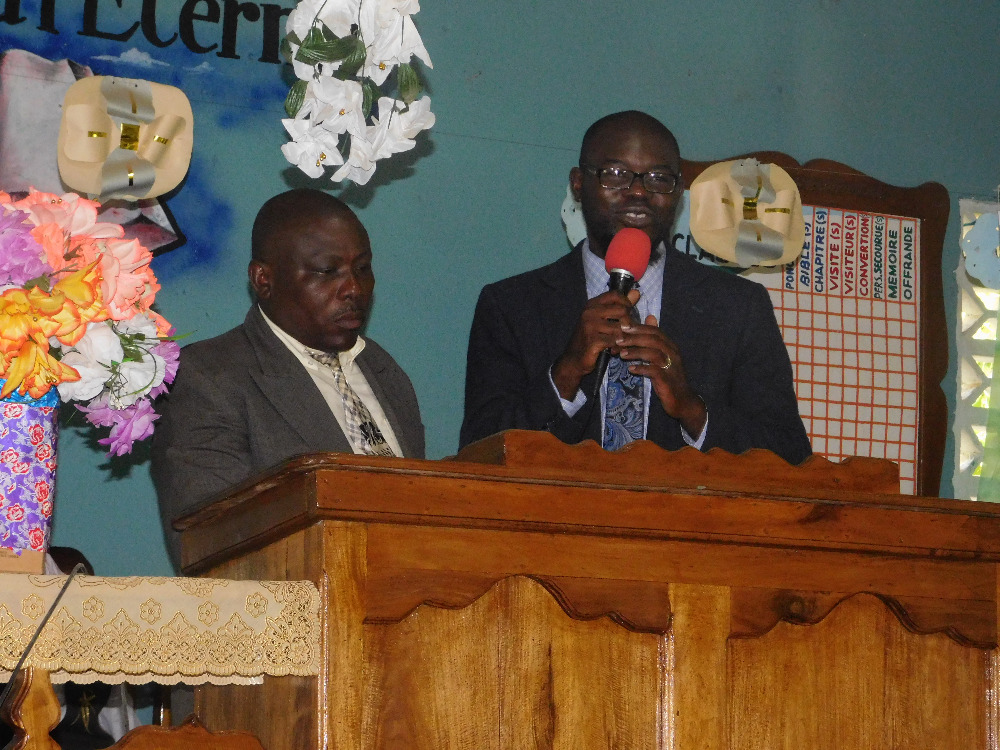
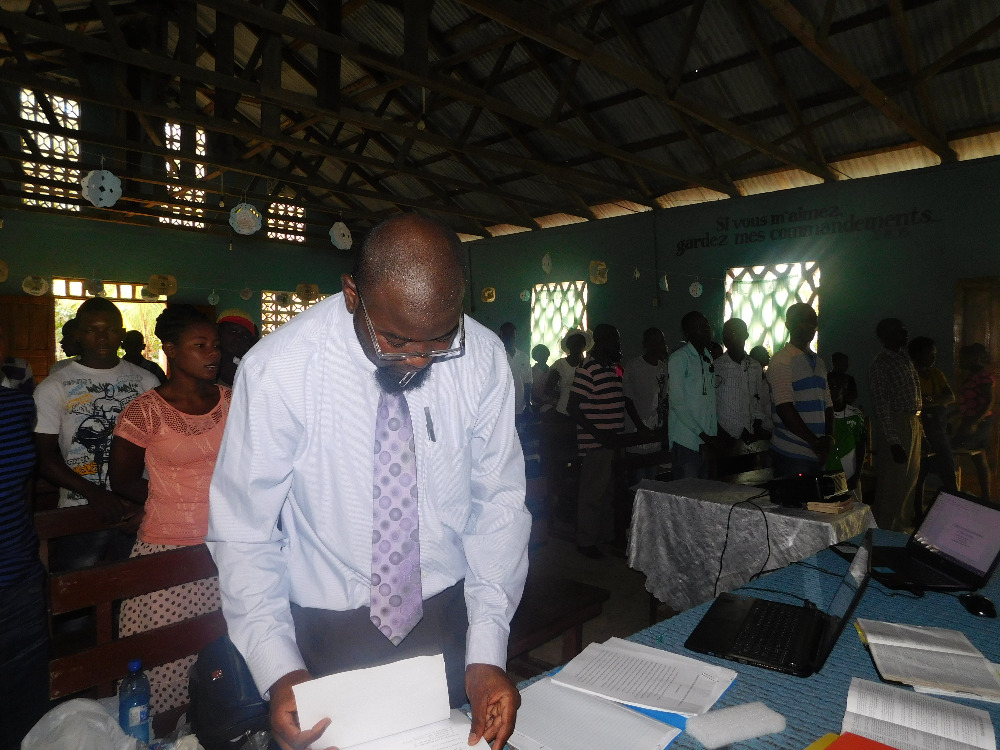
It brings great joy when other people recognize your work and contributions to society, hoping that they’re potentially transforming people’s lives and enhancing human relations. I just found out today that the Haitian magazine named Marchons Unis has published an article about me and the work of Hope for Today Outreach  in Haiti.  They even have me on the front cover of the magazine for the October-December 2015 issue.  I’m humble by this great act of public recognition.  Let’s continue to serve, give, love, and collaborate together to alleviate human suffering and poverty in Haiti and contribute to sustaining and long-lasting development.  Marchons Unis!


Marchons Unis