Check out my newly-published article (it is very brief) in Reformed African American Network (RAAN)
“The Message of Jesus vs. Political-Bourgeois American Christianity”
Brief Thought on Steps toward Racial Unity and Reconciliation in Contemporary American Churches and society
A lot of people in the Church want to talk about racial unity and reconciliation in American (Evangelical) Churches, but they do not want to talk about the sins of racism and racial injustice and the historical causes leading to racial disunity and ethnic division in contemporary American churches and society.
How could American Churches and Christians be cured from the racial wound if they avoid the diagnosis and the painful history of race?
How could American Churches and Christians be healed from the great legacy of racial rift if they avoid discussing the historical pain and effects of racism?
Racial unity and reconciliation in contemporary American Churches and Evangelicalism is a critical and urgent project that requires a thorough investigation on how the historical causes and sins of racial injustice have pervaded every aspect of the Christian life and altered social dynamics and human relationships in the American society.
The Christian ministry of racial reconciliation and unity acknowledges how the practice of racism in our churches and society has contributed to human death, suffering, social alienation, dissociation, xenophobia, and the degradation of human dignity and the image of God in man and woman in our society and churches.
Genuine racial reconciliation ministry also looks at how race and racism in America and American churches have impacted the spheres of family, romance, economics, market, education, employment, leadership in society, leadership in the church, pastoral ministry, seminary education, residential zone, friendship, etc.
If contemporary American churches and Christians truly desire racial unity in their midst, they must embody and live the Gospel and should be ready to address these sensitive matters and the most challenging issues of our historical past. The Christian church in America will be healed from the poison of racism if American Christians are willing (1) to confront their own contribution to the problem of race and (2) to acknowledge the pain of the victims of racial oppression and violence, make reparations for historical wrongdoings, repent of their sins, and finally, genuinely seek and practice racial unity and reconciliation in their churches and in society.
We sons and daughters of Refugees and Immigrants fear for our Life, Friends, and Children!
On Wednesday, February 8, 2017, The CBC reported a tragic story that a “Canadian woman denied entry to U.S. after Muslim prayers found on her phone.” This is a devastating encounter. No one should be treated in this manner. Folks, please take the time to read the article highlighted above. After reading the story, I had to think critically about some possible implications and consequences about this unfortunate and unacceptable incident, which I share below.
First of all, under this present administration, it seems to me if you’re not a natural-born citizen of the United States, somewhat you are forced to live in constant fear under the possible threat of revocation of your (naturalized) citizenship, deportation, forced exile, etc.
Secondly, the entire situation (see article above) implies that you don’t have to have a previous criminal record/ history or did anything unlawful to be considered a potential problem to this administration. Your race, religion, language, and culture can get you in trouble.
Thirdly, under this current administration, it seems to me non–European descent naturalized American citizens and people of color are not safe in this country–not that this land has always been a haven for us. America has failed in many accounts to extend justice, equality, dignity, and human rights to all and for all. For example, the history of black people and people of color in America is a painful human narrative, which includes death (i.e. social, existential, physical), alienation, and dissociation.
Fourthly, for those of us who are sons and daughters of refugees, immigrants, and people of color, America continues to be a land of many contradictions and paradoxes to us.
*On a personal note, I spend more time living in America than in my birth country. I am 39 yrs old (will be in March 6); I immigrated to the United States of America when I was 15 yrs old. Hence, I have lived here for 24 yrs of my life (It’s not that I’m afraid of returning to my homeland, as Langston Hughes has said, “America was never America to me.” Yet, America also has contributed enormously to my successes, life-achievements, and multifaceted identity: I’m a husband to a wonderful wife and father of four beautiful children; I own a beautiful home; I have a PhD from a top university in the nation; I have a good job; I am a professor at an amazing institution, which provides me the resources and opportunities to invest in people’s lives and educate and mentor young and older people; and countless opportunities I have to serve my community and participate in progressive causes.) In spite of all these things as a privileged middle class son of an immigrant, as a naturalized-American black citizen, I must confess that I live in a state of fear and know my boundaries in the American society. The possible inhuman threats of this current administration is aggressive, immediate, and heartless. I have never felt like that before in my 24 yrs of living in this country.)
We sons and daughters of refugees and immigrants, and people of color are deeply concerned about the practice of democracy, human dignity, hospitality, and respect for human life in America.
We sons and daughters of refugees and immigrants, and people of color had/continue to struggle to claim our humanity and personhood, defend our dignity and rights to exist as “the other people,” and live constantly under the oppression of America’s structural racism, social inequality, and the fear of whiteness.We love this country, and like any other group of people, we support and will defend America’s democratic ideals and cosmopolitan virtues.
In the Trump moment, America has become “safer for white Americans,” and unfortunately, some of them do enjoy that level of white security and white comfort inevitably associated with white supremacy and America’s radical hegemony in the world. All we want as sons and daughters of refugees and immigrants, and people of color is to be treated with respect, dignity, and as humans in America. We do not want anyone to validate our humanity; we already know that we are beautiful made in the image of God–even though sometimes, we are treated lesser than that. We do not want to live in a state of (existential) fear–the fear for our life, our friends, and our children!
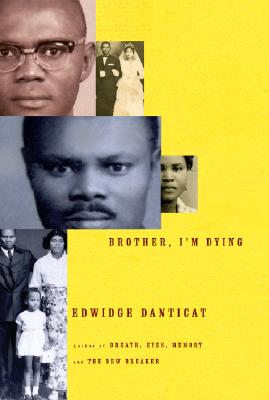
An Invitation to the Kick off of the IRSC NEA Big Read: “Brother, I’m Dying” by Edwidge Danticat


If you live in the Treasure Coast area in Florida, you are cordially invited to the #IRSC NEA Big Read to examine the writings of the award winning novelist Edwidge Danticat
Event: Kick off of the NEA Big Read:
Faculty-Driven Panel Discussion on Edwidge Danticat’s book, “Brother, I’m Dying.” Dr. Celucien L. Joseph (“Docteur Lou”), Professor of English at Indian River State College and Co-Advisor to the Haitian Cultural Club at IRSC, will provide an overview of the book.
Where: Indian River State College
(Main Campus in Fort Pierce, Florida)
When: Wednesday, February 1, 2017
Time: 2:30 PM- 3:30 PM
Room #: N 135
*The Faculty-driven panel will provide an introduction to “Brother, I’m Dying” by Edwidge Danticat and a lively discussion on the importance of telling your own stories through creative means and empathizing with the stories of others. Student and community members will also sit on the panel and provide the opportunity for further discussion.
** The first 50 attendees will also receive a free copy of “Brother, I’m Dying.”
President Trump’s Ban on Muslim Refugees in the United States and the Evangelical Response
The major crises of American Evangelicalism in the twenty-first century in regard to the American-Islamic relations can be summarized succinctly in three ways: (1) the Evangelical turn to political idolatry, (2) the crisis of (Evangelical) conscience, and (3) Evangelical resistance to express genuine biblical empathy and generous caring hospitality toward those who are suffering and oppressed. These three important factors are vital to get a better understanding of the Evangelical response to President Trump’s Ban on Muslim Refugees. How have American Evangelicals reacted to this this executive order? Below, we have identified three ways that articulate the attitude of American Evangelicals toward possible Muslim Refugees in the United States and their response to President Trump’s recent executive order of The Ban.
La Pensée du Jour: Following Jesus
Do not follow Jesus at a distance; walk near him and never let go. Cling to Christ!
*What I wrote above should not be taken literally. It is a rhetoric of christian spirituality and devoted or genuine discipleship. Nonetheless, being a follower or disciple of Christ entails living a radically transformative life that woes people to Jesus to do the same. Following Jesus in this violent and uncertain world is an alternative living that also involves a high level of active self-denial, sacrifice, serving and loving people unconditionally, and treating them with respect and dignity.
Effective evangelization begins with fervent prayer for the lost. We have to tell our friends about Jesus. Jesus only!

