Brief Thought 0n Steps toward Racial Unity and Reconciliation in Contemporary American Churches and society

Brief Thought on Steps toward Racial Unity and Reconciliation in Contemporary American Churches and society

A lot of people in the Church want to talk about racial unity and reconciliation in American (Evangelical) Churches, but they do not want to talk about the sins of racism and racial injustice and the historical causes leading to racial disunity and ethnic division in contemporary American churches and society.

How could American Churches and Christians be cured from the racial wound if they avoid the diagnosis and the painful history of race?

How could American Churches and Christians be healed from the great legacy of racial rift if they avoid discussing the historical pain and effects of racism?

Racial unity and reconciliation in contemporary American Churches and Evangelicalism is a critical and urgent project that requires a thorough investigation on how the historical causes and sins of racial injustice have pervaded every aspect of the Christian life and altered social dynamics and human relationships in the American society.

The Christian ministry of racial reconciliation and unity acknowledges how the practice of racism in our churches and society has contributed to human death, suffering, social alienation, dissociation, xenophobia, and the degradation of human dignity and the image of God in man and woman in our society and churches.

Genuine racial reconciliation ministry also looks at how race and racism in America and American churches have impacted the spheres of family, romance, economics, market, education, employment, leadership in society, leadership in the church, pastoral ministry, seminary education, residential zone, friendship, etc.

If contemporary American churches and Christians truly desire racial unity in their midst, they must embody and live the Gospel and should be ready to address these sensitive matters and the most challenging issues of our historical past. The Christian church in America will be healed from the poison of racism if American Christians are willing (1) to confront their own contribution to the problem of race and (2) to acknowledge the pain of the victims of racial oppression and violence, make reparations for historical wrongdoings, repent of their sins, and finally, genuinely seek and practice racial unity and reconciliation in their churches and in society.


We sons and daughters of Refugees and Immigrants fear for our Life, Friends, and Children!

We sons and daughters of Refugees and Immigrants fear for our Life, Friends, and Children!

On Wednesday, February 8, 2017, The CBC reported a tragic story that a “Canadian woman denied entry to U.S. after Muslim prayers found on her phone.” This is a devastating encounter. No one should be treated in this manner. Folks, please take the time to read the article highlighted above. After reading the story, I had to think critically about some possible implications and consequences about this unfortunate and unacceptable incident, which I share below.

First of all, under this present administration, it seems to me if you’re not a natural-born citizen of the United States, somewhat you are forced to live in constant fear under the possible threat of revocation of your (naturalized) citizenship, deportation, forced exile, etc.

Secondly, the entire situation (see article above) implies that you don’t have to have a previous criminal record/ history or did anything unlawful to be considered a potential problem to this administration. Your race, religion, language, and culture can get you in trouble.

Thirdly, under this current administration, it seems to me non–European descent naturalized American citizens and people of color are not safe in this country–not that this land has always been a haven for us. America has failed in many accounts to extend justice, equality, dignity, and human rights to all and for all. For example, the history of black people and people of color in America is a painful human narrative, which includes death (i.e. social, existential, physical), alienation, and dissociation.

Fourthly, for those of us who are sons and daughters of refugees, immigrants, and people of color, America continues to be a land of many contradictions and paradoxes to us.

*On a personal note, I spend more time living in America than in my birth country. I am 39 yrs old (will be in March 6); I immigrated to the United States of America when I was 15 yrs old. Hence, I have lived here for 24 yrs of my life (It’s not that I’m afraid of returning to my homeland, as Langston Hughes has said, “America was never America to me.” Yet, America also has contributed enormously to my successes, life-achievements, and multifaceted identity: I’m a husband to a wonderful wife and father of four beautiful children; I own a beautiful home; I have a PhD from a top university in the nation; I have a good job; I am a professor at an amazing institution, which provides me the resources and opportunities to invest in people’s lives and educate and mentor young and older people; and countless opportunities I have to serve my community and participate in progressive causes.) In spite of all these things as a privileged middle class son of an immigrant, as a naturalized-American black citizen, I must confess that I live in a state of fear and know my boundaries in the American society. The possible inhuman  threats of this current administration is aggressive, immediate, and heartless. I have never felt like that before in my 24 yrs of living in this country.)

We sons and daughters of refugees and immigrants, and people of color are deeply concerned about the practice of democracy, human dignity, hospitality, and respect for human life in America.

We sons and daughters of refugees and immigrants, and people of color had/continue to struggle to claim our humanity and personhood, defend our dignity and rights to exist as “the other people,” and live constantly under the oppression of America’s structural racism, social inequality, and the fear of whiteness.We love this country, and like any other group of people, we support and will defend America’s democratic ideals and cosmopolitan virtues.

In the Trump moment, America has become “safer for white Americans,” and unfortunately, some of them do enjoy that level of white security and white comfort inevitably associated with white supremacy and America’s radical hegemony in the world. All we want as sons and daughters of refugees and immigrants, and people of color is to be treated with respect, dignity, and as humans in America. We do not want anyone to validate our humanity; we already know that we are beautiful made in the image of God–even though sometimes, we are treated lesser than that. We do not want to live in a state of (existential) fear–the fear for our life, our friends, and our children!

“Why I Love Paul’s Letter to the Romans”

“Why I Love Paul’s Letter to the Romans”
I love books. I have read many great authors and books throughout my 38th years of existence. In fact, I have a home library of 4,000 books–in addition to the books I have in my work office. For me, life is incomplete without the access to (good) books that could challenge our worldview, ideas, attitude toward life and people, and books that could force us to reevaluate ourselves toward radical transformation, friendship, and radical interdependence and relationality.
Arguably, the most influential book and perhaps the most important book that has ever graced our world is the Letter of Paul to the Romans, written by Paul, the premier (Diasporic) Jewish religious thinker in the first century Palestine.
I challenge anyone to read this revolutionary book and be left unchallenged and unreformed.
*Disclaimer: Yes, I’m biased:-)

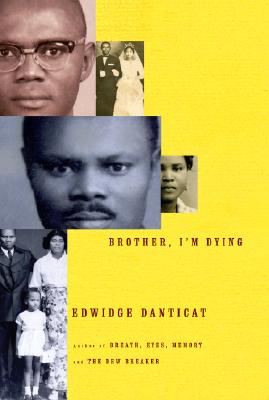
An Invitation to the Kick off of the IRSC NEA Big Read: “Brother, I’m Dying” by Edwidge Danticat

An Invitation to the Kick off of the IRSC NEA Big Read: “Brother, I’m Dying” by Edwidge Danticat

If you live in the Treasure Coast area in Florida, you are cordially invited to the #IRSC NEA Big Read to examine the writings of the award winning novelist Edwidge Danticat

Event: Kick off of the NEA Big Read:

Faculty-Driven Panel Discussion on Edwidge Danticat’s book, “Brother, I’m Dying.” Dr. Celucien L. Joseph (“Docteur Lou”), Professor of English at Indian River State College and Co-Advisor to the  Haitian Cultural Club at IRSC, will provide an overview of the book.

Where: Indian River State College
(Main Campus in Fort Pierce, Florida)

When: Wednesday, February 1, 2017

Time: 2:30 PM- 3:30 PM

Room #: N 135

*The Faculty-driven panel will provide an introduction to “Brother, I’m Dying” by Edwidge Danticat and a lively discussion on the importance of telling your own stories through creative means and empathizing with the stories of others. Student and community members will also sit on the panel and provide the opportunity for further discussion.

** The first 50 attendees will also receive a free copy of “Brother, I’m Dying.”

#BIGREADBROTHERIMDYING
#EDWIDGEDANTICATATIRSC

bid

President Trump’s Ban on Muslim Refugees in the United States and the Evangelical Response

President Trump’s Ban on Muslim Refugees in the United States and the Evangelical Response

The major crises of American Evangelicalism in the twenty-first century in regard to the American-Islamic relations can be summarized succinctly in three ways: (1) the Evangelical turn to political idolatry, (2) the crisis of (Evangelical) conscience, and (3) Evangelical resistance to express genuine biblical empathy and generous caring hospitality toward those who are suffering and oppressed.  These three important factors are vital to get a better understanding of the Evangelical response to President Trump’s Ban on Muslim Refugees. How have American Evangelicals reacted to this this executive order? Below, we have identified three ways that articulate the attitude of American Evangelicals toward possible Muslim Refugees in the United States and their response to President Trump’s recent executive order of The Ban.

  1. Evangelicals for The Ban (Political American Evangelicalism): This group of American evangelicals is obsessed with political power and dominance. They believe in the expansion of the kingdom of God through active engagement in politics, and therefore cultural and political hegemony is a necessary means to achieve this Evangelical objective. Because Islam is the second largest and growing religion in the world, it is therefore perceived as a threat to the growth and expansion of Christianity in the world, especially in American and Western societies.  This group also fears the possible loss of religious and political power, the inevitable long-range impact of Islam in the American society, and correspondingly, the wide range of effects of Islamic ideals on American ideals and American way of life. In other words, the rapid spread of Islam and Islamic culture in American and Western societies and beyond has become a crucial alarming moment for the evangelicals belonging to this category. This Evangelical group supports President Trump’s Ban on Muslim Refugees in the United States because the members of this group categorically equate these potential Muslims refugees as prospective Muslim terrorist groups who will harm America and alter the American way of life through their religion, cultural traditions and practices, and language.
  1. Evangelicals for Muslim Evangelization: This group of American Evangelicals categorically rejects President Trump’s Ban on Muslim Refugees in the United States. They interpret Trump’s executive order as a precarious threat to Christian evangelization to Muslims and as a disastrous hindrance to Christian mission in Muslim countries. This group of American Evangelicals holds that Muslims are heathens who need to be saved from their devilish religion and detrimental Islamic civilization. The evangelistic zeal of this group is not prompted by the biblical imperative to love the stranger and the non-Christian or is it motivated by the scriptural mandate to exercise sincere empathy and caring hospitality toward the Muslims; rather, their evangelistic outreach is without the challenging demands of the cross of Christ and devoid of the rigorous ethical teachings and practices of the Gospel.
  1. Evangelicals for Muslim Friendship: This group of American Evangelicals interprets President Trump’s Ban on Muslim Refugees in the United States as unwarranted,unconstitutional, discriminatory, and as a human rights violation. While their support of Muslim refugees to immigrate to the United States, they still desire to maintain the hegemony of religion (Christianity) in the public sphere and strongly encourage Muslim assimilation into Western values and American way of life.  This group of individuals do not see potential Muslim Refugees as a possible menace to American democracy and progress nor do they place all Muslims in the same basket—such as radical religious zealots under the influence of radical Islam; however, they do fear that the ensuing full integration of Islam and Islamic culture in the American life and experience will eventually lead to the fragmentation of Christianity and Christian values in the American society.


La Pensée du Jour: Cling to Christ!

La Pensée du Jour: Following Jesus

Do not follow Jesus at a distance; walk near him and never let go. Cling to Christ!

*What I wrote above should not be taken literally. It is a rhetoric of christian spirituality and devoted or genuine discipleship. Nonetheless, being a follower or disciple of Christ entails living a radically transformative life that woes people to Jesus to do the same. Following Jesus in this violent and uncertain world is an alternative living that also involves a high level of active self-denial, sacrifice, serving and loving people unconditionally, and treating them with respect and dignity.

The Message of Jesus and Political-Bourgeois American Christianity

The Message of Jesus and Political-Bourgeois American Christianity

If the Gospel of Jesus Christ is Good News for all and indeed Good news for the poor, it must also be Good News for all refugees and for all people in the world, not just for Christian refugees and the Christian poor. The message of the Gospel transcends religion, ethnicity, class, race, and gender. American bourgeois Christianity is a dead and soulless religion; it is the antithesis of true and biblical Christianity. Lifeless Christianity (American political-bourgeois Christianity) is not sacrificial, loving, empathetic, compassionate, relational, and Jesus-centered.

A Christianity that turns itself from the poor, the immigrant, the homeless, the orphan, the widows, and the refugee is a dead faith.

A Christianity that chooses to close its eyes to the most crucial problems of the modern world and the most critical problems– global poverty, immigration crisis, refugees crisis, women’s rights, labor exploitation, political corruption, local and global oppression, local and global racism, hunger, etc. — in the society in which it is lived and practiced is a religion that is not worth practicing and saving.

A Christianity that ignores the message and Gospel of Jesus Christ is an anti-Christ faith.

A Christianity that evangelizes strategically in order to (neo) colonize, rule, and exploit the weak betrays the Gospel of Jesus Christ.

A Christianity that exploits its principles for deceit and ruse is a soulless religion.

Contemporary (political-bourgeois) American Christianity is unable to transform the human condition and solve its most crucial problems in modern times. It is a religious enterprise that is rooted in collective hypocrisy, ethnocentrism, egocentrism, and deceitful philanthropy.

*We need to decenter political Christianity not Jesus Christ. The Biblical Jesus is a different figure than the cultural, political, and white (American & Western) Jesus. He is certainly not the Jesus of the colonizer, slave master, oppressor, and capitalist. He is certainly not the white savior. The real Jesus existed in real history and real time. He is not a fabrication or a myth. In many aspects, Western Christianity has perverted real and biblical Christianity. Contemporary American Christianity has abandoned the message and ethics of Jesus for political gain and cultural influence. Interestingly, American Christianity entrenched in American politics and culture is a joke and mockery of biblical Christianity.

 The author of Proverbs gives a fair warning that “Whoever oppresses a poor man insults his Maker, but he who is generous to the needy honors him” (Proverbs 14:1). To humiliate the poor and exploit the labor and resources of those with dire material needs is to scorn God himself; to act in such an ungodly manner toward the poor is to ignore the biblical mandate to treat all people with dignity and respect and to care for the poor and the oppressed.  When one honors the poor, God is honored; when one mistreats the needy, the immigrant, the orphan, and the widow, God is mistreated.  This verse in Proverb prioritizes the material needs of the poor, while not undermining their spiritual needs. To give preference to the poor and the needy is to  have a God-entranced worldview and to celebrate the supremacy of God in all things.

Elsewhere, the same author of Proverbs insists that “Whoever has a bountiful eye will be blessed, for he shares his bread with the poor” (Proverbs 22:9). From a biblical perspective, one is counted “blessed” and “happy” because he prioritizes the material needs of the poor and does not withhold his goods from him. Comparatively, the author of Leviticus draws a parallel between the poor and the stranger/immigrant, “When a stranger sojourns with you in your land, you shall not do him wrong” (Lev. 19:33). The idea here is to treat both the poor and the immigrant with dignity because it is simply the will of God. The love for the immigrant and the needy is predicated upon one’s love, and affection for God: “You shall treat the stranger who sojourns with you as the native among you, and you shall love him as yourself… I am the LORD your God” (Lev. 19:34). One’s spiritual devotion to God is materialized in one’s treatment of the poor, the needy, and the stranger/immigrant among us. Living the (message of the Christian) Gospel means to stand in solidarity with refugees and immigrants. 

True spirituality is practical spirituality, and Christ-centered discipleship. The concept of caring hospitality and generous relationality, and exceptional love toward the immigrant, the needy, and the poor is rooted in God’s idea of inclusive justice and God’s generous lovingkindness toward all people; it is more pronounced in Deuteronomy, ” For the Lord your God is God of gods and Lord of lords, the great, the mighty, and the awesome God, who is not partial and takes no bribe.  He executes justice for the fatherless and the widow, and loves the sojourner, giving him food and clothing. Love the sojourner, therefore…(Deut. 10:18-19).  To do otherwise and contrary is to “follow Jesus at a distance” with a politically-culturally driven worldview.Christ must be the “center” of our politics, and biblical ethics must be the “catalyst” of our life choices, as well as our political decisions and cultural preferences. The Biblical Jesus is  above culture, ideology, and politics; He is not subservient to cultural traditions, political ideologies, and national and ethnic identity.

As followers of Christ and Children of light, let us not politicize the message and gospel of Jesus Christ. We need to divorce biblical Christianity from American Political Christianity. We need to treat our neighbor and the stranger among us with love, compassion, and dignity. We need to tell our friends and neighbor about Jesus. Jesus only!

A Morning Prayer:

A Morning Prayer
 
I praise Thee Adonai, the Maker of Heavens and the Earth. I praise Thee Sovereign God of the universe for your providence, salvation, and protection. I praise Thee Almighty God for your loving-kindness and compassion. I praise Thee Omniscient God for your faithfulness and remembering all your promises.
 
Let the Nations and Peoples of all the Earth Praise Thee. Let Thy Glory and Fame be known in all the earth!
 
Amen!