7 Things You should not Say to Your Christian Friends this Easter Season!
1. Jesus never existed; therefore, it is impossible for a non-existent person to die and raise from the dead.
2. The resurrection of Jesus is not a historical event/reality because it’s not based on historical evidence and fact; in addition, non-biblical writers of the period of the resurrection never mentioned Jesus or the empty tomb in their writings.
3. Ancient myths in the Mediterranean world or Ancient Near-Eastern civilizations report several mythical figures who died and rose from the dead on the third day; thus, the writers of the New Testament who wrote about the death and resurrection of Jesus plagiarized these ancient mythical narratives. By consequence, Jesus is a mythical figure just like those recorded in ancient mythical literature.
4. Christians worldwide celebrate a pagan holiday they call Easter and incorporate pagan rituals (such as the Easter eggs and Bunny) into their practice and the commemoration of their risen Lord.
5. Even if Jesus had risen from the dead, it was not on the day modern Christians celebrate Easter today.
6. There is no proof that Roman soldiers crucified the Christian Jesus on a cross. No Roman writers of the period of Jesus’ death and resurrection testified about these two related accounts or events. New Testament Christian writers invented and constructed both accounts– the death of Jesus and the resurrection of Jesus–and present them to the world as if they are/were true, reliable, and historical events.
7. The four New Testament Gospels that report what Christians affectionately call the “Easter Sunday” (or the physical and historical resurrection of Jesus) are works of fiction and are not reliable historical accounts.
To be candid, while the resurrection of Jesus can be explained from a historical and literary point of view, the phenomenon of raising a dead person from the tomb is not a common practice in both ancient and modern times. In fact, the idea of raising one from the dead is a rare occurrence in human history. How much more for an individual who spent three days in the belly of death and claim to be resurrected on the third day?
On the other hand, the practice of zombification through magical power in some Afro-religious traditions is the belief that a dead person can be raised from the dead. In fact, practitioners of such magical art, a form of religious sorcery, often claim that they can bring people to life on the same day they die through supernatural power, which many consider demonic or devilish. For many, the phenomenon of zombification is a contradiction and an impossibility for what we know about the complexity of human nature, the law of science, and the fragility of human existence in the world. It is also a form of theodicy. This is another topic that requires further exposition and explanation.
Observably, the seven counter-claims against the Christian Easter or the resurrection of Jesus has been vigorously challenged and rebuked by Biblical scholars, Christian apologists, and Christian theologians through careful exegesis of historical documents (both ancient Christian and non-Christian texts) and analytical reasoning of source materials.The literature on the subject matter is rich and substantial. Any educated Christian is aware of these counter claims in contemporary literature; yet they continue to celebrate their risen Lord and Savior of the world on Easter Sunday.
As a final word, in a world that is becoming more pluralistic religiously every day as well as more open or tolerant to religious inclusivism, do your Christian friend a favor this Easter season: celebrate with them, if you can even go to church with them if they invite you, and be empathetic toward their faith, especially the sustaining hope they place in the resurrected Christ!
Year: 2023
“10 Symbolic Meanings and Impacts of the Death of Jesus the Divine Messiah”
“10 Symbolic Meanings and Impacts of the Death of Jesus the Divine Messiah “
Some of the Christian ideas and beliefs about the various meanings and effects of the death of Jesus make no sense to many people today, even to the people who had witnessed his death and crucifixion in the Greco-Roman society. Interestingly, it is these very complex ideas that make the Christian theology of the atonement unique and paradoxical as compared to other world religions or belief systems.
To be candid, there are many things in Christian theology that are hard to believe from a human perspective or from the use of philosophical reasoning, including the following ten symbolic meanings and contributive effects of the death and cross of Christ, what Christian theologians labelled “Theories of the Atonement”:
- Jesus died to reverse the curse of Adam.
- Jesus died as a ransom or atoning sacrifice for the sins of all people.
- The death of Jesus offers liberation and freedom to those who trust in him for salvation.
- The death of Jesus is both redemptive and salvific; in other words, there’s power and victory in the blood of Jesus.
- Jesus died so all people could have access to God, have peace with God, be reconciled with God, and to fulfill the justice of God in the world against sinners and sins.
- The death of Jesus brings about divine purification and spiritual cleansing to those who sin morally and transgress ethically.
- Jesus died for sins because God loves all people and gave Jesus as a gift for all people.
- The crucifixion of Jesus is a symbolic act of divine solidarity with “The Crucified People” or The Oppressed” of the world.
- The death of Jesus was an existential act against the phenomenon of death itself.
- Jesus died to destroy the work of the Devil in the world and to defeat the power and dominance of Satan and Demons in the cosmos.
These various ideas about the multiple meanings and impacts of the death of Jesus can be grasped and accepted by means of faith only, a liberating and transformative faith that is given to us freely as a gift from God. All ten points above are connected with the Christian understanding of the character of God, the meaning and identity of Jesus, the problem of sin in the world, and the need for a new creation and transformed humanity. For Christians, the death and cross of Jesus the Divine Messiah not only carries transformative value in the present and in the future; it has liberative, redemptive, salvific, existential, and eschatological meaning. In other words, it was a cosmic phenomenon that changed human history and confirmed that God is for us and he is never against his people.
Happy Good Friday, Good People!
May the love, mercy, and kindness of God in Jesus the Messiah continue to sustain you and prompt you to be compassionate, good, and empathetic toward those who are being oppressed, mistreated, and dehumanized in the world today!
What I think about the Academia!
Based on personal experience, some people in academia have no interest in you as an individual and human being; rather, they value your work because for them your scholarship is what affirms your humanity and dignity. Once you’re unable to produce, your personhood is erased.
There has to be a way to humanize the academia and not to treat people as commodities. People are not mere objects or machines. They have intrinsic human values that are not comparable with the system of production and the institutions that maintain their dehumanization.
Interestingly, the same individuals (professors, administrators, etc) who complain about the inhumane character of academia have no interest in transforming it nor do they have any guts to say NO to the unethical structures that make people feel like objects to be exploited.
Power is a central reason why some people are resistant to change as they continue to maintain the status. Suffice it to say such power is hierarchical and sovereign and is often linked to knowledge and the circulation and production of knowledge (Rolph-Trouillot).
Untamed power creates alienation and isolation in the workplace and intellectual violence in academic circles and professional societies.
Untamed power also creates a network of aggressive and selfish individuals and educators whose influence is exercised through various networks, what Foucault termed regimes of power, to maintain control, dominance, and power over one group.
Is this the kind of life and human relations we as professors, educators, and administrators want?
Moral leadership urges all of us to think critically about how some of us have been silent on those unfortunate practices and damaged relationships in academic institutions and societies. They redefined our friendship, our values, and shared humanity.
The most damaging effect (on us) is both mental and psychological, which actively influences our thought-process, practices, and production and circulation of knowledge.
What most academics do not do well or simply do not know how to do is to take their stock of knowledge and rich theoretical mind and transfer them into practical reality to change their respective community and create another world toward human flourishing and the good life.
If an idea is good, it must be good enough to help us breathe anew and improve our politics, leadership governance, economy, human relations, philosophy of life, and our living conditions.
“Know Your Strength: I have NO Political Aspirations”
“Know Your Strength: I have NO Political Aspirations”
I am friends with a very influential Haitian gentleman. One day, he called me on the phone to talk about the human experience in Haiti and Haitian politics, and to think about ways to change human life in Haiti.
Him: I am looking for good people like you and those with patriotic zeal for Haiti to form a political party in Haiti.
Him: Well, I have identified some key individuals in the Haitian Diaspora and in Haiti to be council members of my new political party for the future presidential election in Haiti. I want you to help me create it, and you will be my right-hand man.
Me: Please tell me more about it.
Me: I appreciate the invitation and for you to think highly of me. My contribution to improve the human condition is especially through my writing and education. After all, I am foremost an educator and a writer, and I do not have any political aspirations and any interest to participate in Haitian politics. I write about Haitian politics, but want no political role or function in Haiti.
Me: I have been sending Haitian students (especially those from poor families) to school for the past six years and organizing leadership seminars and conferences for teachers, educators, ministers, and leaders in Haiti for the past eight years. I want to continue doing that. That is my passion.
Him: Well, it’s not something that I want to start immediately. It will be in four years.
Me: I want to continue being an educator and a writer. That’s my strength. This is how I believe that I can best contribute to human flourishing in Haiti and in the world.
**This conversation took place while Jovenel Moïse was still President of Haiti.
On “Vodouphobia” and the “Haitian Turn”
On “Vodouphobia” and the “Haitian Turn”
So, in various publications I have been acknowledged that I coined the terms “Vodouphobia” & “Vodouphobic discourse.” I never paid attention if someone has previously used both concepts prior to the publication of my article on the subject. Yet many individuals have claimed that I coined both terms. Oh well, I will take the credit if it is true and academically justified 🙂
Joseph, Celucien L. “The problem and impossibility of Vodou religion in the writings of Dantes Bellegarde.” Journal of Pan African Studies, vol. 6, no. 8, Mar. 2014, pp. 204+. Gale Academic OneFile, link.gale.com/apps/doc/A367197632/AONE?u=anon~ab2db3dc&sid=googleScholar&xid=28660033. Accessed 30 Mar. 2023.
In the same line of thought, in various academic works, it is true that I coined the phrase “The Haitian Turn” in my doctoral dissertation (UT Dallas: PhD, 2012) 🙂
Well, I am bragging again. lol
Joseph, Celucien L. “‘The Haitian turn’: An Appraisal of Recent Literary and Historiographical Works on the Haitian Revolution.” Journal of Pan African Studies, vol. 5, no. 6, Sept. 2012, pp. 37+. Gale Literature Resource Center, link.gale.com/apps/doc/A306357775/LitRC?u=anon~868b4fc1&sid=googleScholar&xid=b8c35058. Accessed 30 Mar. 2023.
“Haiti, God, and Tradition”
“Haiti, God, and Tradition”
Haiti has a long humanist tradition, whose origin can be traced to the first half of the nineteenth century. This particular Haitian humanist tradition affirms both theism and agnosticism; while the former dominates Haitian intellectual production at that period, evidence for the latter is best observed in the various ways Haitian writers and thinkers discuss the Haitian predicament, what many have called “la crise haitienne,” in Haitian literature and sociology. We see the continuity of this way of thinking about human life in general and theism in specific in the works of young Haitian intellectuals of the American occupation, and Jacques Stephen Alexis reinforces the Haitian humanist tradition in his writing.
However, the Vodouist tradition in Haiti as an intellectual tradition began to blossom in the second half of the twentieth-century. While the intellectuals of the American occupation reimagined the importance of Haitian Vodou in the Haitian experience, they did not lay the foundation for the Vodouist tradition.
Interestingly, the robust Marxist tradition that began in the first half of the twentieth century in Haiti is not against theism or anti-religion, but it challenges vodouphobic discourse and anti-Haitianism.
Finally, Haiti does not have a strong theological tradition (“written texts”) that looks at big theological concerns of modern times from a Haitian perspective. However, Haiti has a rich religious tradition that takes into account the Haitianization of religious practices and Christianity in the Haitian context. Yet the rich folkloric (especially folktales, songs, orature) tradition (“non-written texts”) haitianize theology and the big questions of theology, including God and the problem of evil in the world, the problem of sin in the world, the presence of God in the world, God and the kingdom of darkness, the nature of human beings, the church as the people of God, eschatology, etc. As a practice, it’s good to note in passing that those who “theologize in Haitian” are not professional theologians with academic degrees in the discipline of theology or Biblical Studies. Haitian novelists, poets, and anthropologists represent a distinctive voice in theological discourse through the creative domain and ethnological reports.
45 is here!
45 has arrived in this young man’s dwelling place. If you can’t see my eyes in those pictures, it is simply 45 brings me an alternative vision of life and a different way of being in the world with a double sight 😊😂 😁
“Lord, you have been our dwelling place throughout all generations. Before the mountains were born or you brought forth the whole world, from everlasting to everlasting you are God. A thousand years in your sight are like a day that has just gone by, or like a watch in the night. Teach us to number our days, that we may gain a heart of wisdom.”
— Moses, Psalm 90




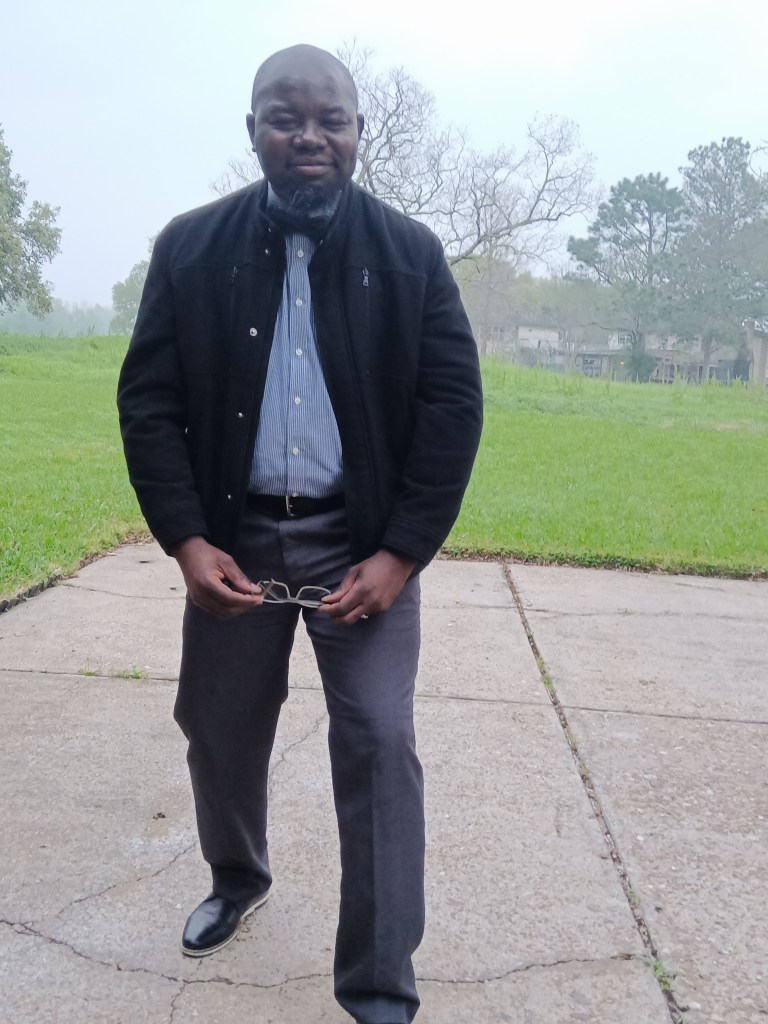





“A Man of God”
Somebody wrote a message to me and greeted me as “Man of God.” This is a terrifying and quite intimidating title for me or for anyone to bear. It carries a certain moral imperative, even an ethical responsibility in the world, which I am unworthy to fulfill.
In the Judeo-Christian Tradition and words of Prophet Ezekiel, the man of God is a “watchman” who lives in-between the world of the sacred and the world of the profane, the sphere of the Holy One and the unholy ones, and one who carries out the divine message to human beings, and the concerns of human beings and cares of this world to God.
“On Haiti and Intellectual Biography”
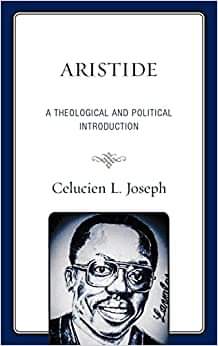
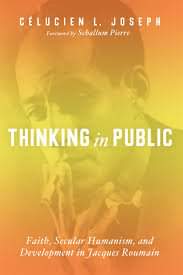
I wrote two intellectual biographies on two influential Haitian political activists and thinkers: Jacques Roumain and Jean-Bertrand Aristide.
I am currently completing the third one on my all-time-favorite Haitian thinker: Jean Price-Mars (under contract with Vanderbilt University Press). I hope to get it done by the end of the year. I have been working on this biography on Price-Mars for the past 10 years. I published my first academic article on Price-Mars in 2012: “The Religious Philosophy of Jean Price-Mars” (Journal of Black Studies, 43(6), 620–645.)
Good People: I am pleased to inform you that I just submitted two completed manuscripts to the publishers for two important volumes on the complex relationships between Christianity and Vodou in Haiti, which I had the pleasure to serve as the general and co-editor; they are titled “Vodou and Christianity in Interreligious Dialogue” (Wipf and Stock Publishers), and “Evangelicals, Catholics, and Vodouyizan in Haiti” (Bloomsbury Publishing).
Yet the book I really want to write is a history of Protestant Christianity in Haiti. I will turn 45 years old in two days: March 6 and I pray earnestly for the good and sovereign Lord to continue guiding me and granting me strength, clarity, wisdom, and favor to do the research and writing for this important project.
“Me and my Favorite Women Novelists”
“Me and My Favorite Women Novelists”
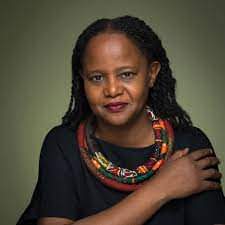
There are four women novelists that I would like to take a creative writing class with or a writing workshop: Toni Morrison (if she were alive), Edwidge Danticat, Myriam J.A. Chancy, and Alice Walker. If anybody is going to train me in the art of writing a novel, I want it to be them 😅😄🥰
In more than one occasion, I had the pleasure to teach their work in my literature classes. There are four central themes which bring all these four women writers in conversation: (1) the way they humanize the life of ordinary women and the marginalized groups in society in their fiction; (2) their work is grounded on an ethic of care, empathy, and human compassion; (3) their writing exalts human dignity and the triumph of hope in the midst of despair and chaos; and (4) the significance of religion and spirituality in shaping the human experience and guiding human relationships.



 drcelucienjoseph, "Thinking and Meditating"