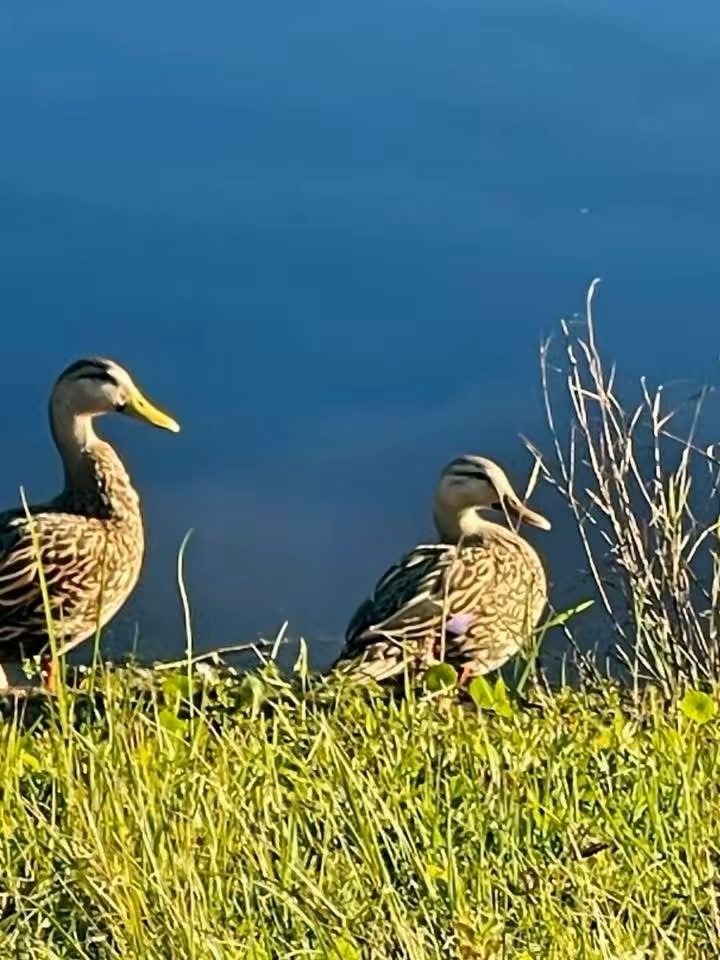
“A Love Letter to My Ex”

“A Love Letter to My Ex”

My Love,

It has been five years since life carried us in different directions, and I know you’ve moved on, found someone new, and built a world without me. Please tell me when the nights are quiet and you lie in bed alone, do your thoughts ever wander back to us? When the morning sun finds you at the kitchen table, tea in hand, do you ever taste the sweetness of what we once shared?

Do you think of me on the lonely drives to work, when the road stretches endlessly ahead? Do you remember how I used to rise early just to take you to work, to steal those sacred fifteen minutes together? Do you remember sitting beside me, your hand in mine, your smile lighting up the car as if the world belonged only to us?

Do you remember the little things that brought our hearts closer? Do you remember our first kiss in the middle of the road?
Do you remember our first hug at the park?
Do you remember these small gestures….?
The way I waited outside your job just to see you, the bike rides through warm breezes, the walks along the shore where the ocean spoke our language? Do you ever pass by our favorite restaurant and feel that ache of memory?

And when the night closes in and you find yourself alone, does my absence whisper to you? Do you remember the gifts—the lingerie, the silk nightgowns—chosen not just for beauty, but because I saw you as art, as desire itself? When you slip them on, do you feel the echo of my touch?

Tell me… in your silence, do I still live somewhere inside you? Do you miss me, even now?

Always,
Your forever man

“Awakened by Your Light”

“Awakened by Your Light”

Before I met you, my world was gray.
No colors shone to light my way.
No one spoke of the story untold
Of two birds in love, so brave, so bold.
I had no heart to share, no smiles to spare,
No one to hold, no one to care.

Before I met you, my songs went unheard.
My words existed, yet felt absurd.
Love and passion seemed worlds away,
A distant dream I could not sway.

Before I met you, I walked alone and lived alone.
I built my life on streets of stone.
I had no home, no joy, no peace to find,
No gentle hand to ease my mind.
The sky turned cold, the stars looked down on me.
And darkness reigned heavy in my heart.

Then came your eyes, your tender light, your gentle smile.
Awakening my world, banishing night.
Heaven smiled on me, and I felt free.
You met my soul, unashamed, with me.

You held me close, made me your own,
And rewrote my story.
Your love now shines in every bone.
Before you, I was broken, incomplete;
Now life is full, my heart beats sweet.

“A Heart That Still Bleeds for You”

“A Heart That Still Bleeds for You”

It is not that love is gone,
only that you could not stay.
You closed the door,
not because the heart grew cold,
but because the path was too heavy to walk.

You turned away,
while the one who loved you
remained,
wanting to hold you,
to guide you,
to protect you,
to carry your pain like a fragile bird
in trembling hands.

Now,
a heart that still bleeds for you
breaks in silence,
watching you suffer,
while knowing
it was willing to bleed forever
just to see you whole.

I like the Way You Loved Me

“I Like the Way You Loved Me”

I like the way you loved me,

As if tomorrow would never come,

As if the stars had named me your only one.

You loved me in ways the world can’t see:

Endless, fearless, unconditionally.

You taught me that love is not a race,

But a quiet smile, a warm embrace.

You touched my soul before my skin.

With you, love was not a fleeting art.

It was a kingdom you built inside my heart.

You loved me until the night forgot the day,

Until every shadow chose to fade away.

In that embrace, I came to see.

Heaven was never above; it was here with me.

Now, my soul wears your name like skin,

For love like yours begins and never ends.

Your love was hunger and gentle grace,

A storm of passion in a sacred space.

You turned my life into a quiet song,

Made the broken places feel strong.

And now, if this world should ever fade,

Your love is the dream where I’ll always stay.

“How Love Works”

“How Love Works”

Love is more than just an emotion or a fleeting feeling.
Love is an identity.
Love is a person.
You are love.
You are that identity.
Because of this, you carry within you the capacity to love others and to share that love freely.

Love is not measured by wealth, fame, or status. Instead, it is rooted in the qualities that make us truly human. These qualities are not fixed; they allow us to be better humans, friends, partners, peers, brothers, sisters, uncles, aunts, and neighbors. They can be learned, nurtured, and strengthened as we grow and navigate life.

Kindness, empathy, respect, gentleness, forgiveness, grace, gratitude, and friendship all of these flow from love, and all of them, when cultivated, deepen our ability to love and be loved.

“From Admiration to Disassociation: A Reflection on John MacArthur’s Legacy”

“From Admiration to Disassociation: A Reflection on John MacArthur’s Legacy”

For a number of personal reasons, I hesitated to write and share this post publicly, but I realized that I needed to find the courage to speak. I invite you to read the following reflection with thoughtfulness and care.

I began listening to John MacArthur nearly 30 years ago, tuning in to Grace to You as a high school junior or senior. Over time, I grew to admire him as a gifted expositor of Scripture and even considered him a kind of distant mentor. His commitment to biblical teaching left a strong impression on me during my formative years.

Years ago, when I was dating Katia, the first gift I gave her after she became a Christian was the “MacArthur Study Bible.” At the time, I was a seminary student, and I had also invested in the complete “MacArthur Commentary” series on both the Old and New Testaments. I owned nearly every book he had written and many of his sermon series on cassette and CD recordings. In fact, I was so committed to his ministry that I became a financial partner with Grace to You, contributing monthly to support his work and global ministry.

However, as I matured spiritually, theologically, and intellectually, I began to listen to him and read his books more critically, even with growing intellectual skepticism. I took notes on his views about women in ministry, pastoral authority, speaking in tongues, dispensationalism, and his positions on pressing social and political issues such as the Civil Rights movement, Christian nationalism, white supremacy, race, gender, immigration, social justice, the Black Lives Movement, police brutality, Liberation Theology, Black Theology, etc. (In my book, “Theological Education and Christian Scholarship for Human Flourishing,” I engage some of these issues). What once felt like conviction or a sort of (Christian) piety to me began to sound like rigidity and intolerance. Not only did I find myself disagreeing with him on many of these matters, but I was also troubled by the way he spoke about those who held different political and theological views and how in his own church, he advised certain women in abusive marriages to stay with their abusive husbands. MacArthur often demonstrated little grace or compassion to those he disagreed with theologically and politically. Further, his tone toward fellow Christians and the vulnerable was frequently dismissive, even combative.

Over time, I began to disassociate from his teaching. The final break came with his recent passing. For me, it was not just the event itself, but the silence that followed in Christian circles in this country. It struck me how little warmth or mourning came from the broader evangelical world, even some of his well-known Christian friends and followers. John MacArthur’s complex and ambiguous legacy in the Christian world and wider evangelical communities made me reflect deeply: perhaps, in the end, it’s more honorable to live with humility and compassion than to spend a life proving you’re always right and making enemies along the way. Gaining wisdom is the ultimate prize, and being a peacemaker or peace-builder is a lifelong commitment for the follower of Christ.

In closing, as a follower of Christ, I remain convinced that in the end, what matters most is not how much theology we master or how many debates we win, but whether our lives reflect the heart of Christ and embody his character.
True biblical discipleship is not measured by fame, knowledge, but by love, humility, and a deep concern for justice and for the vulnerable and the poor among us. Jesus consistently defended the poor, welcomed the outcast, and extended grace to the broken and the strangers. Followers of Christ are called to do the same, that is, to live with compassion, to speak with gentleness, to advocate for the marginalized, and to stand boldly for justice—especially fo the victims and the underrepresented populations and communities in society.

A faith that does not defend the vulnerable or uplift the oppressed is a faith that has lost sight of the gospel’s core. In a world marked by division, brokenness, and suffering, may followers of Christ be known not by their certainties, but by their Christ-likeness. May we become active peace makers and ambassadors of reconciliation in the world!

“Pastoral Care in Difficult Times: Hope and Action for Immigrant families”

“Soins Pastoraux en Temps de Crise: Espoir et Action pour les familles immigrants”/“Pastoral Care in Difficult Times: Hope and Action for Immigrant families,” led by Dr. Celucien L. Joseph and Rev. Sadrack Nelson (moderators)

This conversation, “Soins Pastoraux en Temps de Crise: Espoir et Action pour les Familles Immigrantes /”Pastoral Care in Difficult Times: Hope and Action for Immigrant Families,” led by Dr. Celucien L. Joseph and Rev. Sadrack Nelson, explores the vital role of pastoral leaders in supporting immigrant and undocumented families during periods of social and political instability. The conversation highlights theological reflections on lament, hope, justice, and compassionate action, drawing from biblical principles and Afro-diasporic perspectives. Participants will gain practical tools to provide spiritual care, advocacy, and community engagement in times of crisis–for undocumented immigrant families and individuals. The session aims to equip faith leaders to respond ethically and effectively to the challenges facing immigrant communities today.

Cette conversation, intitulée « Soins Pastoraux en Temps de Crise : Espoir et Action pour les Familles Immigrantes », animée par le Dr Celucien L. Joseph et le Rév. Sadrack Nelson, explore le rôle essentiel des responsables pastoraux dans le soutien aux familles immigrantes et sans papiers durant les périodes d’instabilité sociale et politique. La discussion mettra en lumière des réflexions théologiques sur le deuil, l’espoir, la justice et l’action compatissante, en s’appuyant sur les principes bibliques et les perspectives de la diaspora africaine. Les participants acquerront des outils pratiques pour offrir un accompagnement spirituel, mener des actions de plaidoyer et s’engager dans leur communauté en temps de crise—en particulier pour les familles et individus sans papiers. Cette session vise à outiller les leaders religieux afin qu’ils puissent répondre de manière éthique et efficace aux défis auxquels sont confrontées les communautés immigrantes aujourd’hui.