Poetry Reading Part 3: from “Poems of the Heart”
https://youtu.be/xD3UMCnKdLo?si=wVknTKFfYxVLmDX9
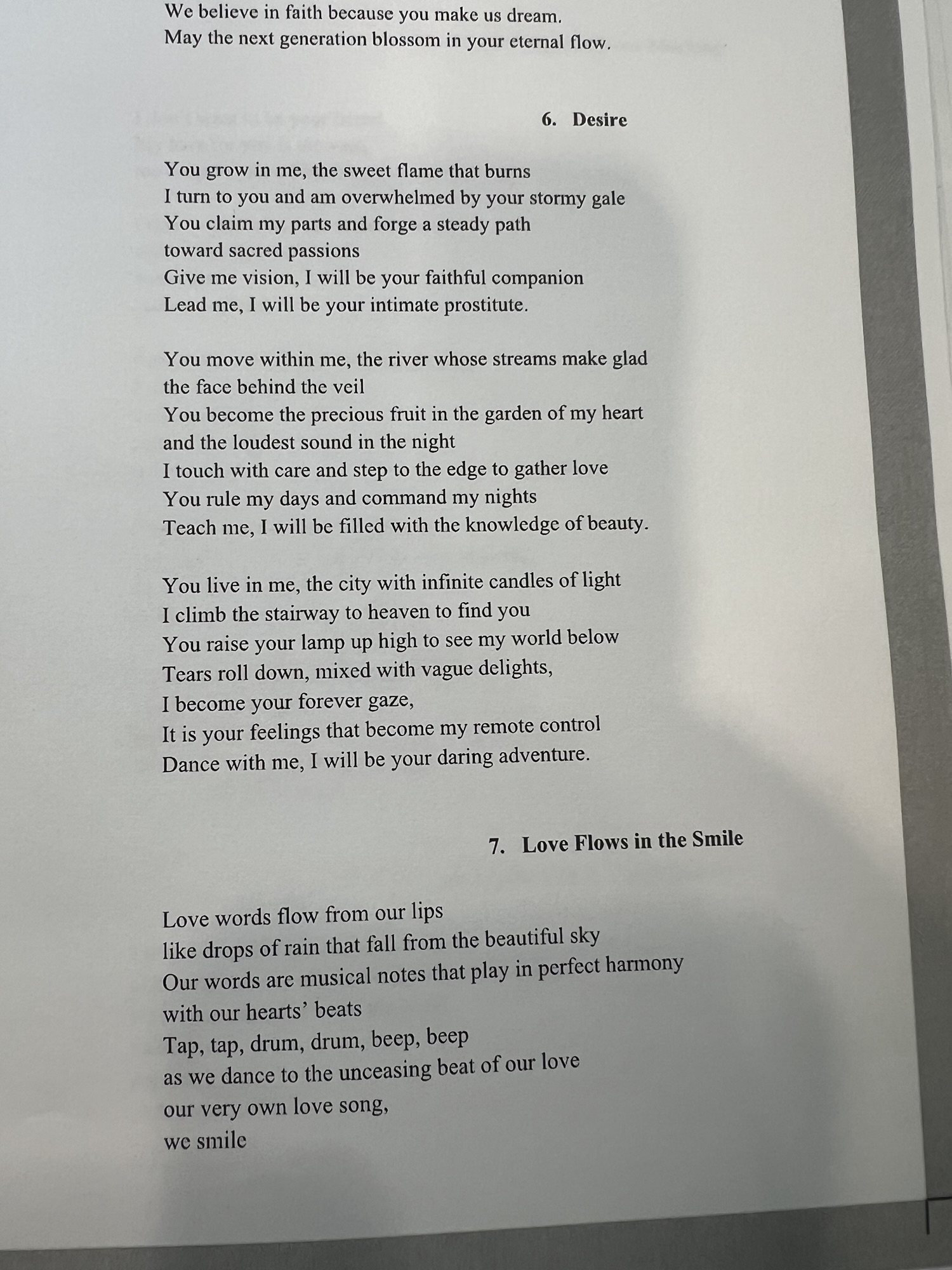
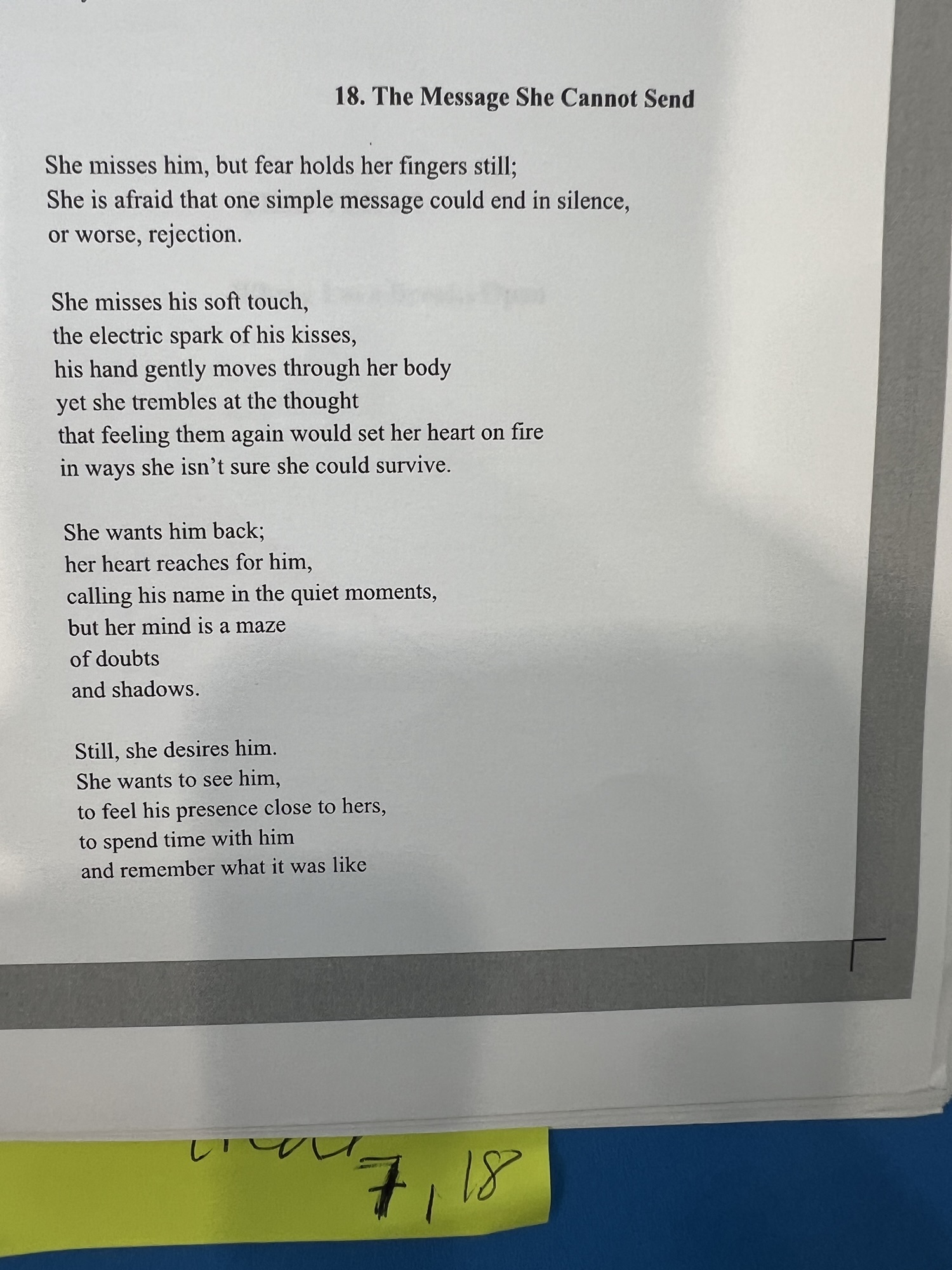
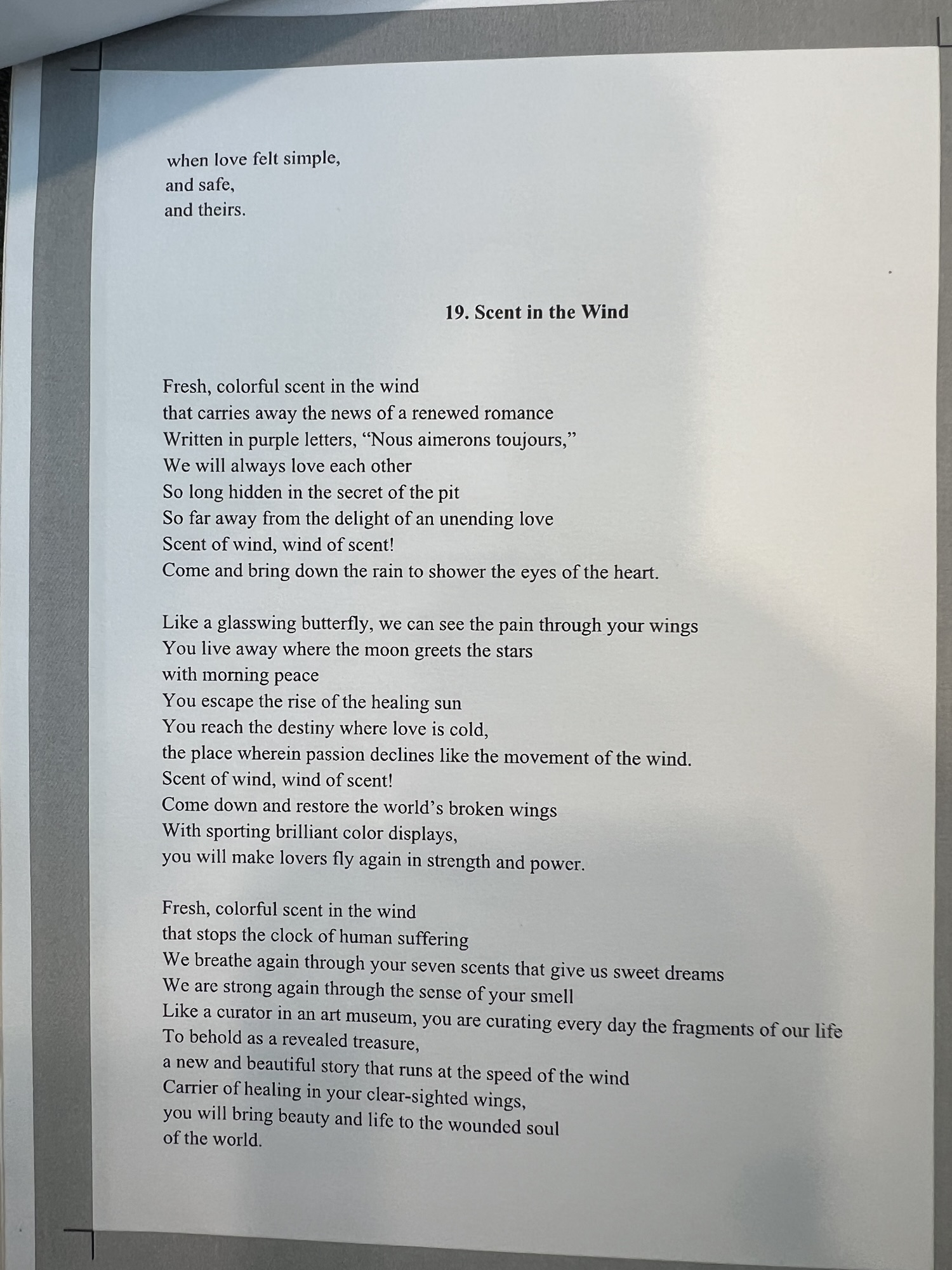
“When Trust Fades”
She enters his life not to love,
but to wound,
to misuse his heart,
to teach him the ache of regret.
He gives everything:
his loyalty,
his strength,
his sacrifice,
loving without conditions,
without limits.
Yet in return for devotion,
he receives betrayal.
In place of gratitude,
he meets only disrespect.
His kindness,
once offered as a gift,
is mistaken for weakness.
Slowly, trust fades.
Love turns cold,
not because it was ever false,
but because it was broken
in careless hands.
Now he stands, unsure
whether his heart
will ever dare to love again.
Poetry Reading Part 2: From “Poems of the Heart”


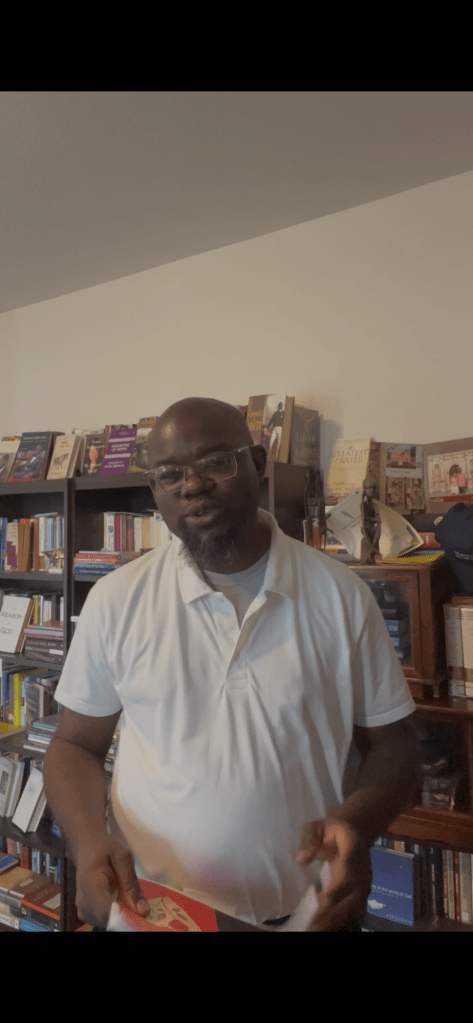

You can preorder your copy now on amazon. You’ll get it before Christmas.
Update: Jean Price-Mars Biography

I heard from Vanderbilt University Press two days ago that “the faculty board unanimously approved your project for publication,” that is, my forthcoming intellectual biography on Jean Price-Mars, entitled “For the Sake of Black People and the Common Good: A Biography of Jean Price-Mars.” We are looking tentatively to a late 2026 publication date.
I have until January 15, 2026 to send a fully- revised and clean manuscript to my editor. Honestly, I don’t have a lot of work to do; I’ve been asked to do some minor changes.
Translation: Doctor Lou will not have a Winter break this year because he will be focusing on this manuscript. I am soooooo ready to get done with Price-Mars after working on this “dead man” for more than a decade. lol 😂 😂

Poetry Reading from “Poems of the Heart”
“Poems of the Heart: A Journey Through Love, Longing, and the Soul’s Memory”
It should be evident to many of you that I (“Doctor Lou”) enjoy writing, reading, and sharing my ideas in public. Writing is one of the personal and intimate activities that energizes my thinking-process, and I often take refuge in writing and researching. For me, the art of writing is a safe place, a mental sanctuary.
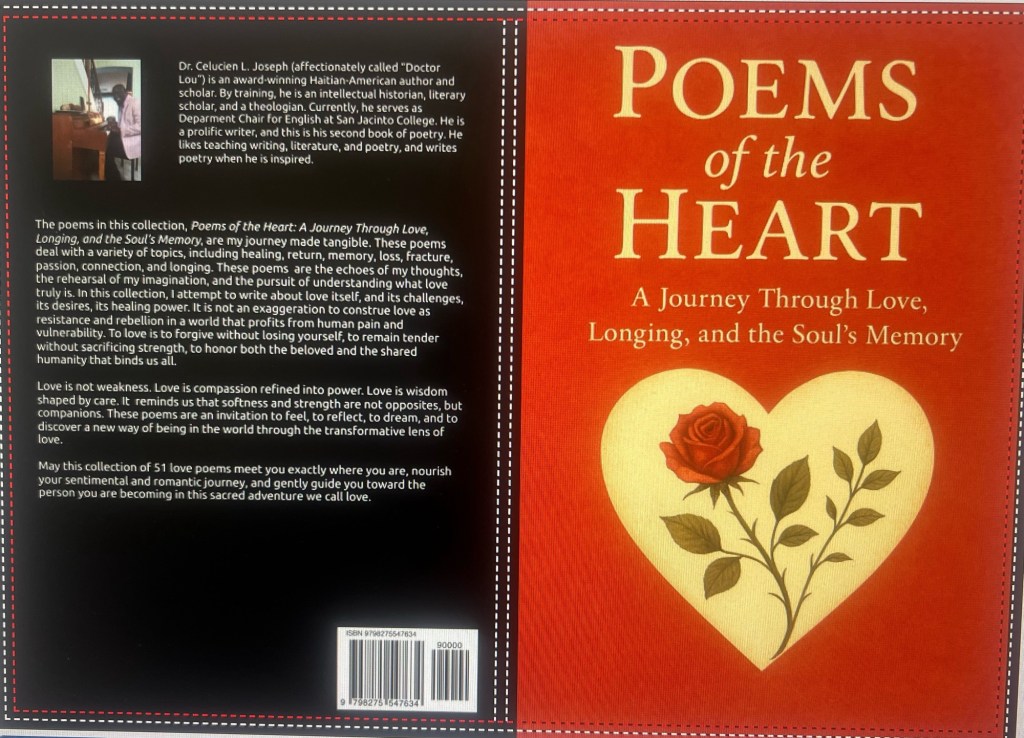
I am pleased to share that my second poetry book is about to be dropped in December. In the past three years, I have written a series of “love poems,” which I occasionally shared on here, my personal page. Now, I have collected a series of 51 poems in a book form for my personal enjoyment and yours as well—if you have any interest in literature, especially in poetry.
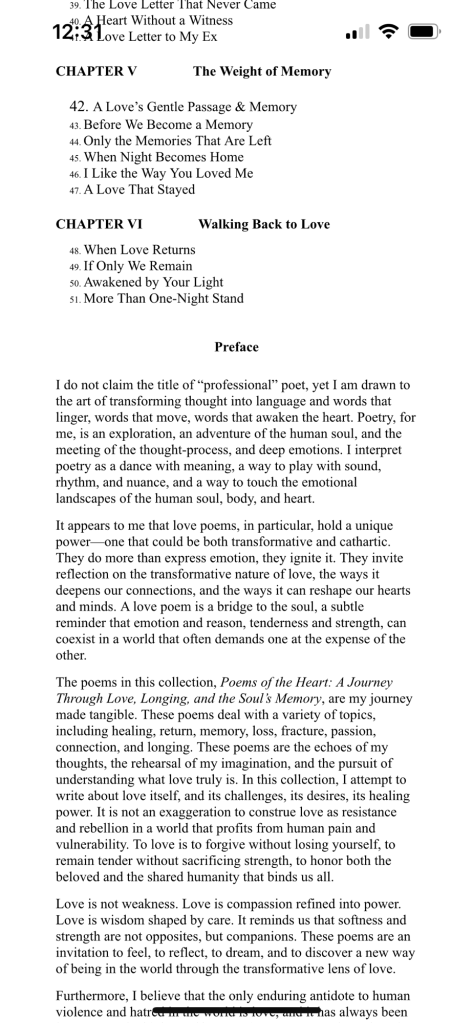
The title of this collection is “Poems of the Heart: A Journey Through Love, Longing, and the Soul’s Memory,” and I’d like to share furthermore three items with you from this coming book: the book cover, the preface, the table of contents. At the moment, the book can be ordered on Amazon, and soon it will be available on any online bookstore.
Take up and read! 📕 🖊️ ✍️
Preface
I do not claim the title of “professional” poet, yet I am drawn to the art of transforming thought into language and words that linger, words that move, words that awaken the heart. Poetry, for me, is an exploration, an adventure of the human soul, and the meeting of the thought-process, and deep emotions. I interpret poetry as a dance with meaning, a way to play with sound, rhythm, and nuance, and a way to touch the emotional landscapes of the human soul, body, and heart.
It appears to me that love poems, in particular, hold a unique power—one that could be both transformative and cathartic. They do more than express emotion, they ignite it. They invite reflection on the transformative nature of love, the ways it deepens our connections, and the ways it can reshape our hearts and minds. A love poem is a bridge to the soul, a subtle reminder that emotion and reason, tenderness and strength, can coexist in a world that often demands one at the expense of the other.
The poems in this collection, “Poems of the Heart: A Journey Through Love, Longing, and the Soul’s Memory,” are my journey made tangible. These poems deal with a variety of topics, including healing, return, memory, loss, fracture, passion, connection, and longing. These poems are the echoes of my thoughts, the rehearsal of my imagination, and the pursuit of understanding what love truly is. In this collection, I attempt to write about love itself, and its challenges, its desires, its healing power. It is not an exaggeration to construe love as resistance and rebellion in a world that profits from human pain and vulnerability. To love is to forgive without losing yourself, to remain tender without sacrificing strength, to honor both the beloved and the shared humanity that binds us all.
Love is not weakness. Love is compassion refined into power. Love is wisdom shaped by care. It reminds us that softness and strength are not opposites, but companions. These poems are an invitation to feel, to reflect, to dream, and to discover a new way of being in the world through the transformative lens of love.
Furthermore, I believe that the only enduring antidote to human violence and hatred in the world is love, and it has always been love. Love, the highest of human virtues, transcends cycles of violence, isolation, oppression, and human degradation. For this reason, if the laws and policies of nations are not framed within an ethic of care and love, they cannot serve the common good nor foster human flourishing in society. True peace demands not only the absence of war, but the active presence of justice, empathy, compassion, and love embedded in both personal relations and national institutions.
The command to love one’s enemy remains the purest expression of peace, friendship, and reconciliation. To treat one’s enemy as oneself is to embrace the very possibility of living harmoniously and peacefully within community and society. When we become stewards of love, we are transformed into peacemakers and builders of a more just and compassionate world.
Our society has scorned the power of love and its significance for human and political relationships. Too often, love (even romantic or sentimental love) is mocked as weakness, stripped of courage, and dismissed as lacking the strength to confront injustice and oppression. In reality, this is the very opposite of love’s true nature and purpose in the human experience, especially between lovers and friends. Love requires profound strength and moral courage. In other words, love is the greatest courage, the fiercest strength, and the truest power.
Others regard love merely as an abstract idea, rather than a lived practice that should guide our relationships, interactions, and engagements. Romantic love has this very meaning; it is a way of being in the world, and it is way of being with someone you care, support, inspire, and empower. Love is more than human sentiment. What we need is to reclaim love as a habit (not as a theory), as truth (not as weakness), a daily discipline, and moral conscience shaping all human activity and practice. Love is a way of life and guiding force of every relationship and human encounter.
Love alone causes human relations to flourish. Love alone upholds human dignity, making it the foundation of any lasting peace and communal living. Love alone is the healing path to restore broken relationships and to set people free. Love alone is the conscience of our world and the true light of democracy and politics.
May this collection of 51 love poems meet you exactly where you are, nourish your sentimental and romantic journey, and gently guide you toward the person you are becoming in this sacred adventure we call love.

In this short talk, I discuss the forthcoming of my second poetry book, which I entitled “Poems from the Heart: Journey through love, longing, and soul’s memory.”
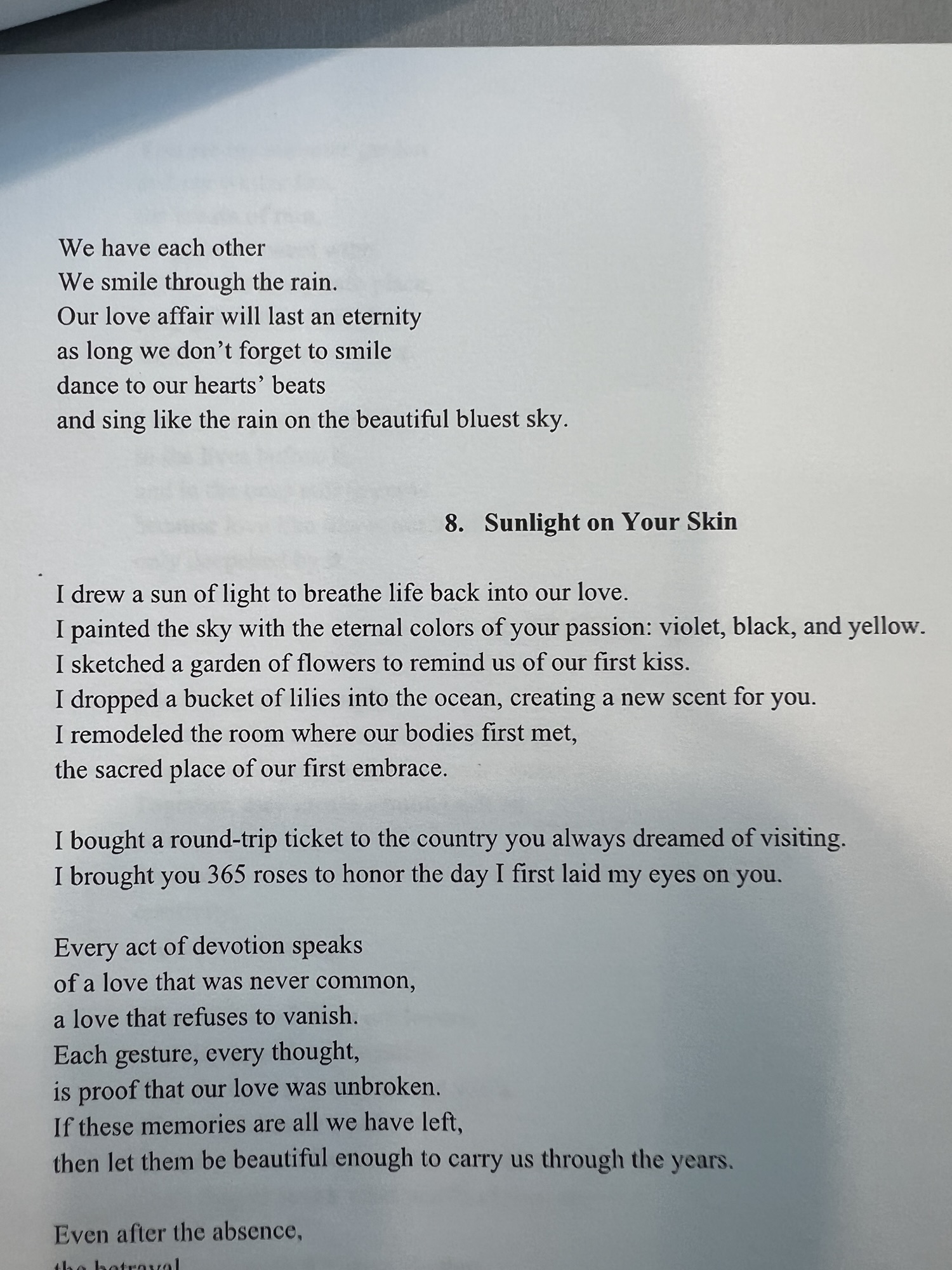
“Sunlight on Your Skin”
I drew a sun of light to breathe life back into our love.
I painted the sky with the eternal colors of your passion: violet, black, and yellow.
I sketched a garden of flowers to remind us of our first kiss.
I dropped a bucket of lilies into the ocean, creating a new scent for you.
I remodeled the room where our bodies first met,
the sacred place of our first embrace.
I bought a round-trip ticket to the country you always dreamed of visiting.
I brought you 365 roses to honor the day I first laid my eyes on you.
Every act of devotion speaks
of a love that was never common,
a love that refuses to vanish.
Each gesture, every thought,
is proof that our love was unbroken.
If these memories are all we have left,
then let them be beautiful enough to carry us through the years.
Even after the absence,
the betrayal,
the silence,
my heart still chooses you,
hoping our love could find its way back home,
to the place where you and I first learned how to dream.
“The Hours You Left Behind”
Another night collapsed beneath me without rest.
I wandered through the landscape of a dream,
searching for you,
but you drifted from my reach,
my touch,
a warm presence fading
like heat slipping from a pillow at dawn.
I woke in the dark,
my fingers already reaching for the phone.
A poem spilled out of me,
a map of my insomnia,
and for a moment
I thought of sending it to you.
Then I laid the phone down,
and let the message die quietly in my hands.
Your silence has grown its own shape:
a distance wide enough
to swallow my affection,
my voice,
my longing,
my presence.
You stepped away from the man
who promised you peace,
who admired the softness of your smile,
who cherished the simple grace
of holding your hand
and sitting beside you
just to be near.
These sleepless nights don’t disappear;
they multiply,
echoing through the hours,
turning into dark memories,
gathering like shadows
that refuse to be still.
They are nights without your warmth,
moments emptied of you,
hours hollow as winter rooms,
waiting for the sound
of your voice
that never comes.
*Last night, I went to bed with a terrible headache, couldn’t sleep through the night. Still fighting my insomnia.
It never leaves me alone even for a moment.
When I woke up in the morning, my head was still pounding. A poem was born out of me at dawn, and I named it “The Hours You Left Behind.”
 drcelucienjoseph, "Thinking and Meditating"