Poetry Reading Part 3: from “Poems of the Heart”
https://youtu.be/xD3UMCnKdLo?si=wVknTKFfYxVLmDX9
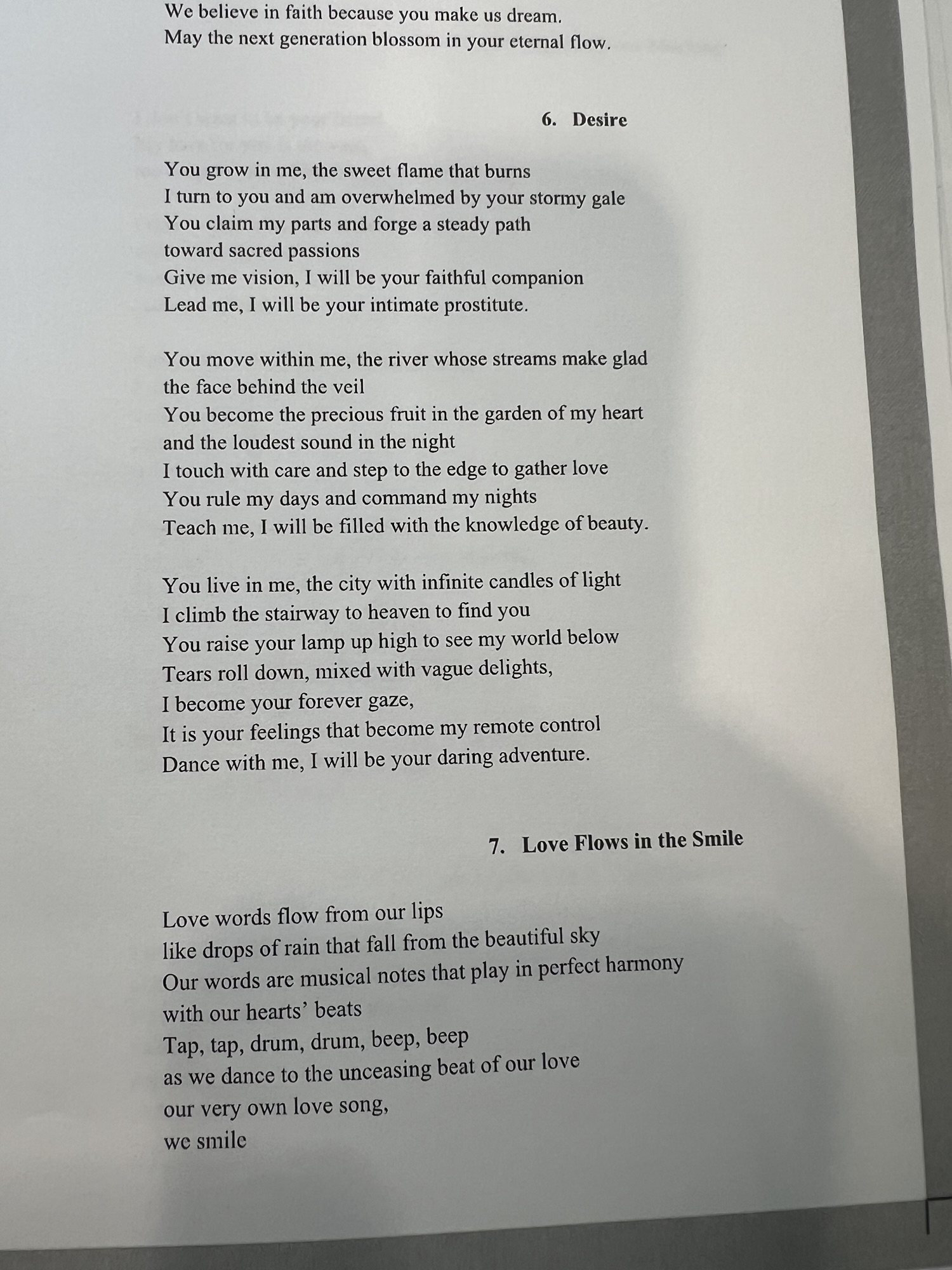
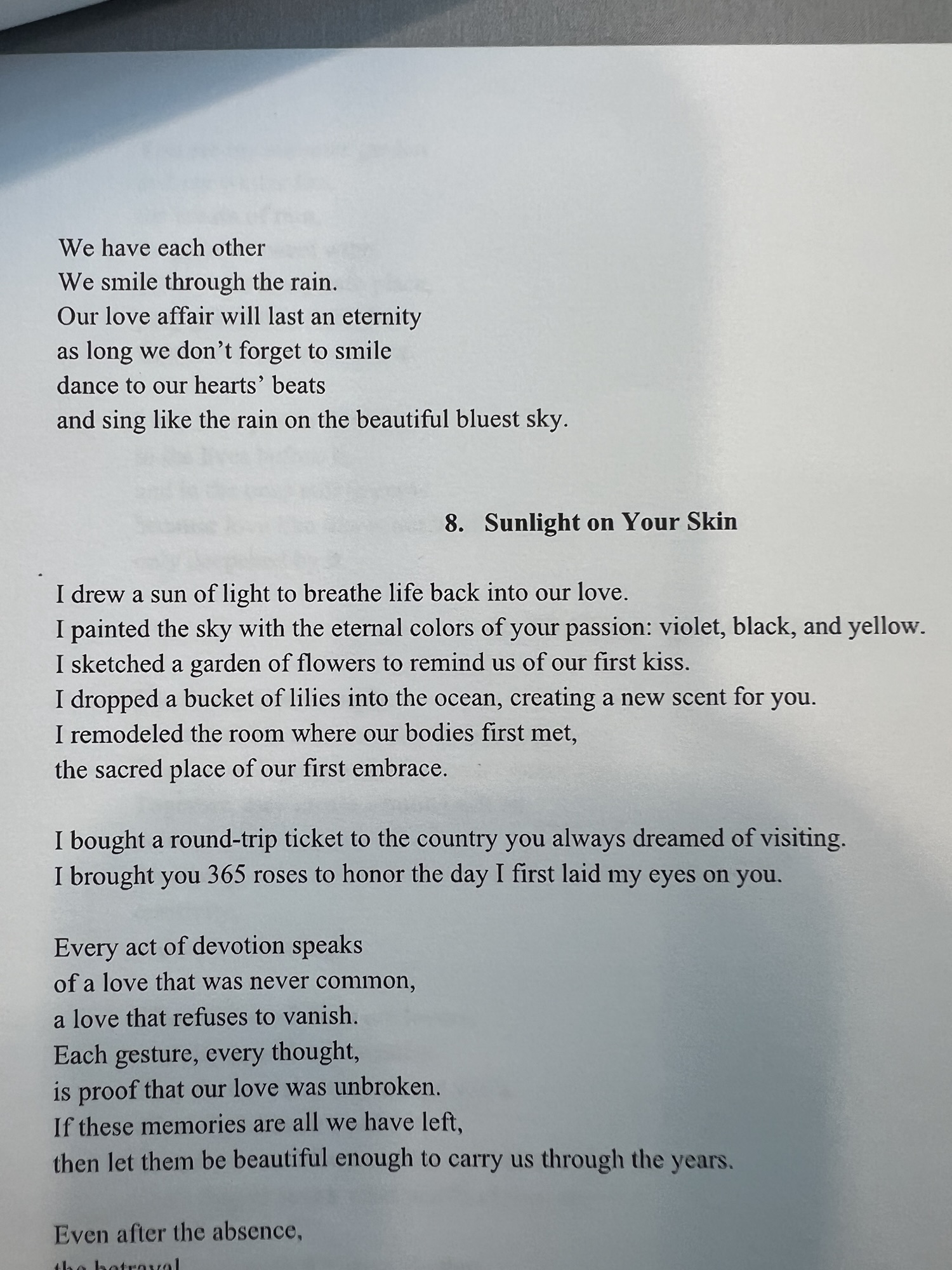
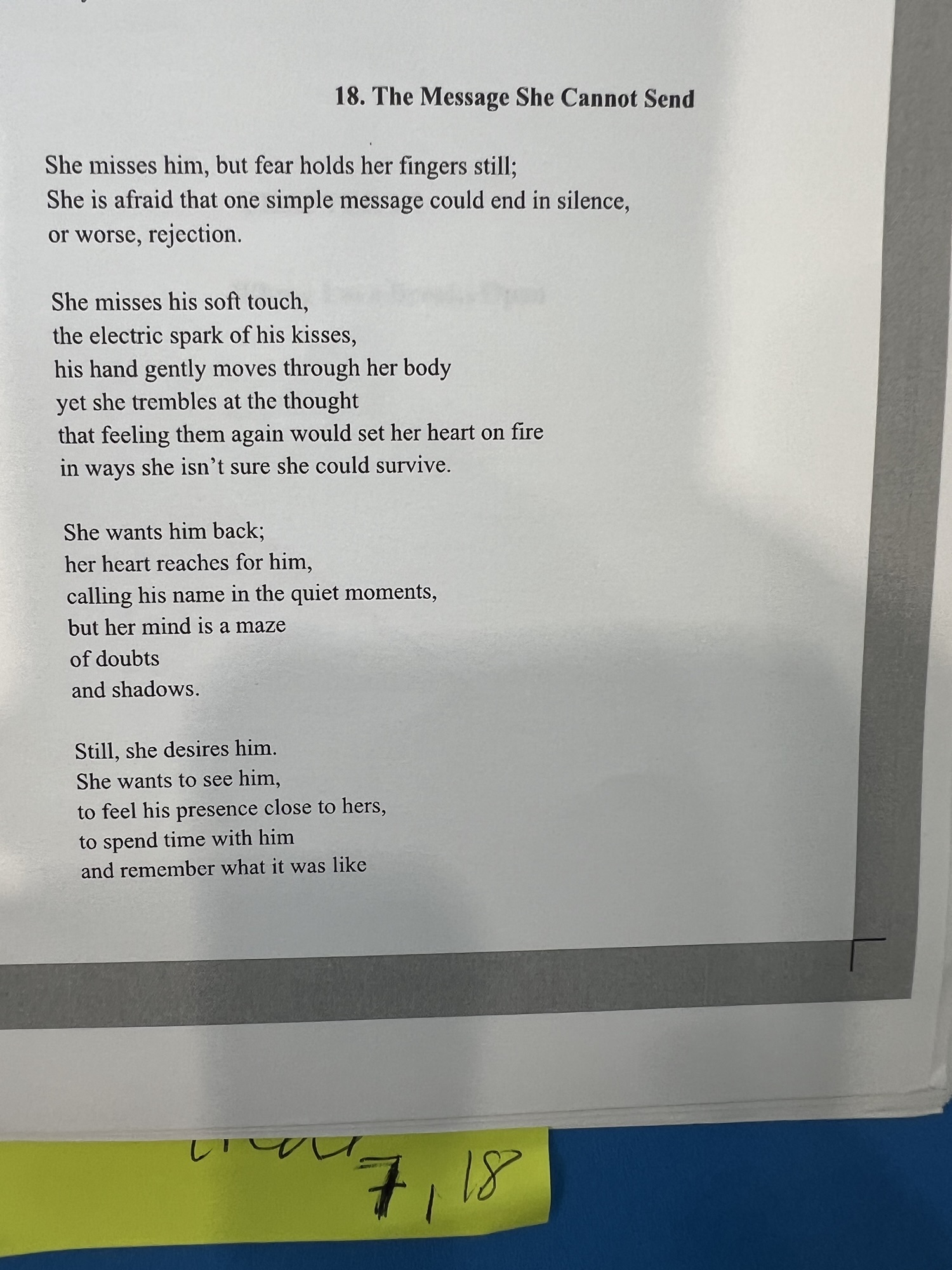
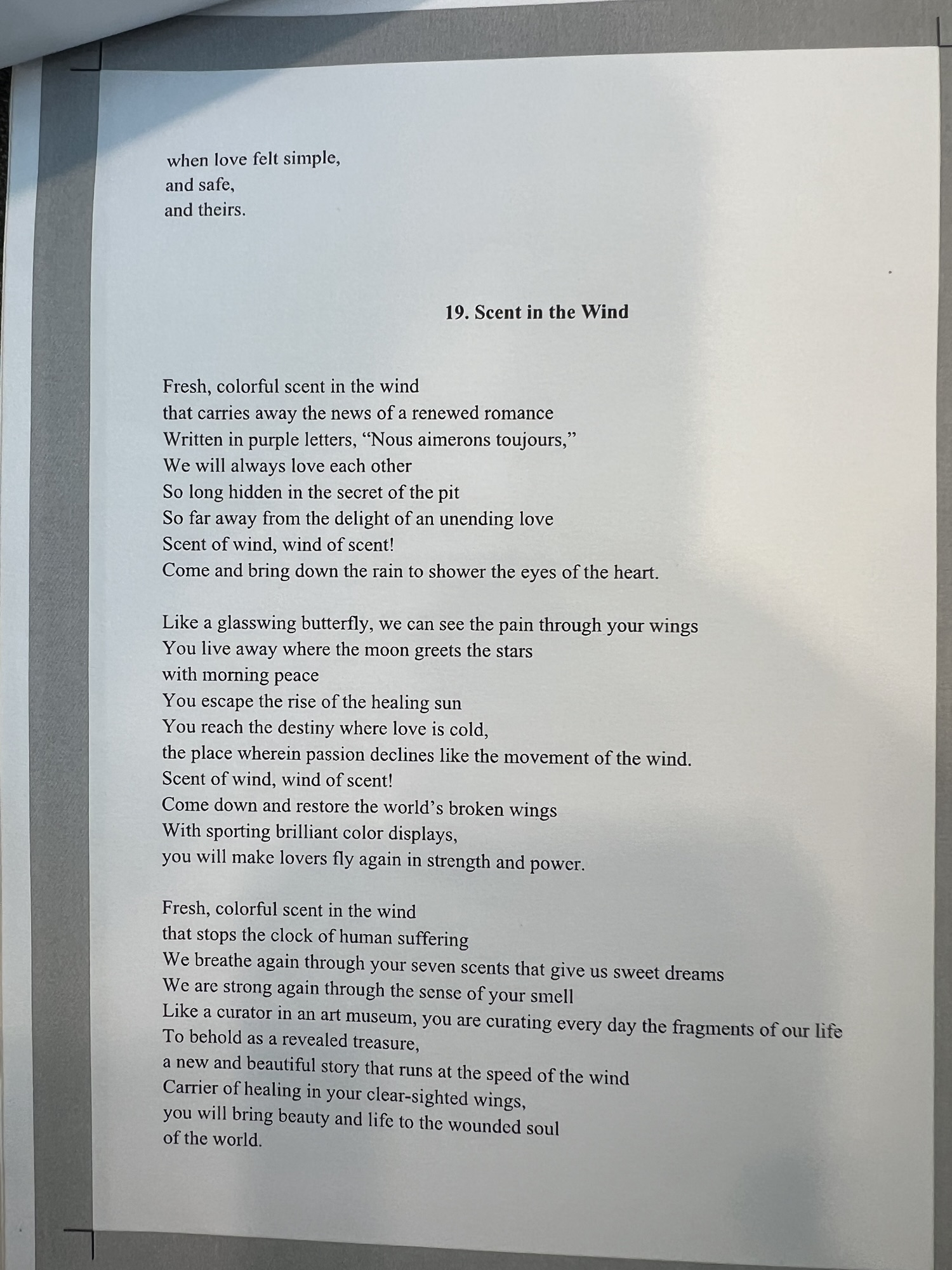
You can preorder your copy now on amazon. You’ll get it before Christmas.
Update: Jean Price-Mars Biography

I heard from Vanderbilt University Press two days ago that “the faculty board unanimously approved your project for publication,” that is, my forthcoming intellectual biography on Jean Price-Mars, entitled “For the Sake of Black People and the Common Good: A Biography of Jean Price-Mars.” We are looking tentatively to a late 2026 publication date.
I have until January 15, 2026 to send a fully- revised and clean manuscript to my editor. Honestly, I don’t have a lot of work to do; I’ve been asked to do some minor changes.
Translation: Doctor Lou will not have a Winter break this year because he will be focusing on this manuscript. I am soooooo ready to get done with Price-Mars after working on this “dead man” for more than a decade. lol 😂 😂

In this short talk, I discuss the forthcoming of my second poetry book, which I entitled “Poems from the Heart: Journey through love, longing, and soul’s memory.”
“Christian Faith and African Diasporic Religions in Dialogue: Theology Across the Atlantic”
I am pleased to inform you that I just signed a new book contract with Bloomsbury Academic. The title of the new book is “Christian Faith and African Diasporic Religions in Dialogue: Theology Across the Atlantic.” Here’s a summary of what I hope to do through this project:
“This book project critically examines the African diasporic religions of Vodou, Rastafarianism, Candomblé, and Santería (Regla de Ocha), exploring their theological dimensions through the lens of selected Christian theological concepts and ideas. It aims to clarify seemingly conflicting beliefs between these traditions and Christianity, which are practiced worldwide and within the African Diaspora. Contemporary studies on these religions often emphasize their anthropological, cultural, performative-aesthetic, literary, and sociological aspects, neglecting their theological vision and worldview. Theology across the Atlantic provides a pioneering theological exploration of these African diasporic faiths, comparing them to the core doctrines of Christianity.
The primary aim of this book is to bridge beliefs through the theory of cross-cultural connections and intersections, emphasizing theological inquiry. This text delves into the contextualization of faith and sheds light on the theological visions of Vodou, Rastafarianism, Candomblé, and Santería—crucial yet often neglected aspects of these religious systems in both contemporary Christian and African diasporic religious scholarship. The book aims to dispel misconceptions that these traditions lack coherent theological beliefs and ethical guidelines. Instead, it illustrates their strong theological foundations and moral principles, which influence their worldviews, practices, and rituals. Additionally, the book explores the theological possibility of coexistence in terms of piety and dedication for both Christians and practitioners of these African diasporic religions.”
I have previously published a book with this remarkable press. It was a joy working with this incredible team!
Pursuing God: Reflection on my Spiritual Journey (Part 1)
“Let your passion be single” by John Piper
I first listened to this sermon twenty-five years ago. I was a 22 year-old College student. My old College friend Nathan, who was completely sold out for God, gave me a Piper cassette tape that had the recording. It was this sermon that radically transformed my spiritual journey with God in three various ways:
This sermon remains my favorite of all time.


The most important relational emotion that Jesus demonstrates toward the people he meets is compassion, and the message of Jesus is a message of compassion toward the poor and the marginalized in society.
All the four Gospel writers highlight the compassion of Jesus as a key characteristic of the good news he announces, especially to desperate women and children, the economically-poor, the hungry, the sick, and the spiritually-blind individuals.
Compassion is a central virtue of biblical discipleship and serves as a model for all who follow Jesus and call him Lord and Savior.
To call Jesus one’s “Lord” is to pledge an uncompromising allegiance that transcends the spiritual realm and encompasses all political and powerful spheres in the modern world. The title itself is a bold rejection of all ethnocentric nationalisms, cultural idols, and all contemporary (political) “Caesars.”
“On the Theological Significance of Earthly Marriage and the Eternal Spiritual Union with God”
Part A
Marriage in Time and the Eternal Union with God
Recently, I have been reflecting on the temporality and theological significance of the marital covenant between two individuals in contrast with the permanence of our eternal union with God and the people of God in the age to come, what might be called “the eschatological heaven.” Specifically, I have been trying to make sense of Jesus’s teaching in response to the Sadducees’ question concerning marriage after the resurrection (Matthew 22:23–33; cf. Mark 12:18–27; Luke 20:27–40).
Based on Jesus’s response to the theological teachers, the Sadducees, it appears to me that Jesus assigns primacy to humans’ ultimate longing: the (eschatological) spiritual union with God in the time to come, as compared to the marital union between two individuals—a temporary bond. For Jesus, the spiritual union with God in the post-resurrection time is an eternal, unbreakable bond, and this relational fusion between humans and the divine carries more weight and exceeds in significance the earthly marriage itself—a temporary union between two individuals.
By inference, in Jesus’s teaching, the post-resurrection experience will inaugurate a new category of reality or change the nature of reality drastically. For example, the human marriage is set in sharp contrast to the spiritual union between humans and God, and that marriage will no longer be operative, but union will God will replace the reality of the earthly marriage since God will be the ultimate reality and fulfill all human needs, desires, and quests.
These observations raise important theological questions:
Part B
Sex, Procreation, and Post-Resurrection Existence
Christian tradition has asserted that both sexual intimacy and procreation belong within the marital covenant, and that sexual activity outside of marriage falls outside divine intent , and correspondingly, the church has also taught that childbearing outside of marriage is a deviation of the divine will.
This question concerning the purpose of sex and biological reproduction invites a reconsideration of how certain sins are understood within the framework of the divine will and the resurrected life. If both sex and procreation will cease to function in the post-resurrection existence, then by implication, these two realities, when experienced outside the marital covenant, do not possess eternal consequences. The resurrection life introduces a transformed mode of existence—that is, a new and distinct form of reality—and a distinct eschatological dispensation within future human history, which reshapes how such matters should be evaluated. To put this succinctly, the post-resurrection experience will change the nature and temporality of sin, and how we should think about sin both theologically and ethically in the present.
Furthermore, based on Jesus’s reasoning in the above passages, since human beings will be like the angels in heaven in the post-resurrection existence suggests that marriage, sexual activity, and childbirth will no longer characterize human existence in the life to come.
In other words marriage, sex, and children should be regarded as temporary gifts for the present age, and they should not be elevated to the transcendent human (spiritual) connection with God. When all these realities pass away, God is, will be, and will always be.
This perspective invites further inquiry:
***Although the body may desire sexual intimacy and the soul may long for spiritual intimacy with the divine, how can these two dimensions of human experience, the physical and the spiritual, be reconciled?
C. Partial Conclusion
The resurrected life will inaugurate a new mode of existence (“a new way of being in the world”) within the future world and will redefine what it means to be human within an entirely transformed reality and dispensation. Interestingly, within the Christian vision of the future world, the experience of resurrection life will exceed all present expectations and take humanity by surprise. This future world remains unknowable, and all forthcoming realities and human experiences will have to be encountered and understood only as they unfold.
“On Being a Good Writer and Reader”
A student asked me the following question, “How do I become a better reader and understand what I read and be able to apply it to logical questions?”
Here’s my response to the student’s question:
Below, I provide osome basic ideas to help you become a stronger writer:
“How to Read a Book”
“On Writing Well”
“Writing with Power”
“When Love Returns”
When love returns…
it won’t rush in.
it won’t make you feel small.
It’ll walk quietly,
like peace that’s been waiting for you.
It won’t remind you of what broke you,
of your mistakes.
love will show you why it had to happen.
This love won’t compete with your past.
It will honor it.
It will energize your soul.
The new love will understand that your scars
aren’t signs of weakness,
of your brokenness.
they’re proof you have been renewed,
& healed.
When love returns,
you won’t question its worth,
its permanence.
You’ll just recognize its calm,
its comfort
its connection,
and you’ll whisper to yourself,
“I’m ready now.”
“I want to love again.”
 drcelucienjoseph, "Thinking and Meditating"