“Viv Manno Charlemagne, Long Live the Haitian Poor”

My tribute to Emmanuel “Manno” Charlemagne is published in L’ union Suite.

“Viv Manno Charlemagne, Long Live the Haitian Poor”
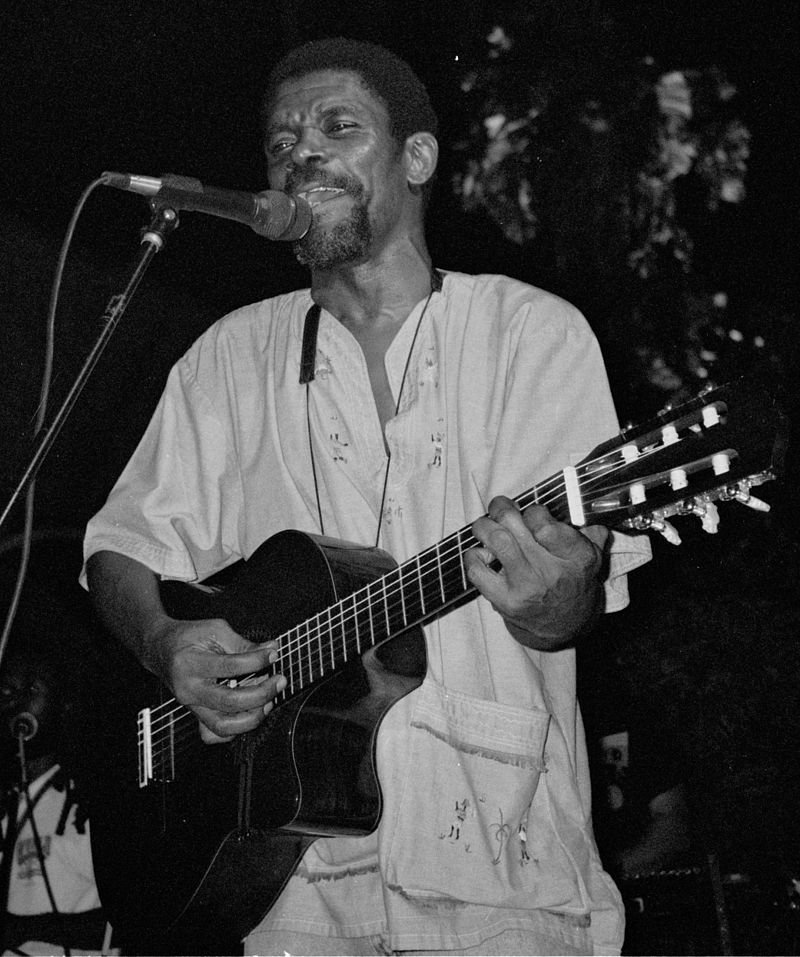
Haiti has lost one of the most important human rights advocates, freedom fighters, public intellectuals, and anti-dictator and American Empire thinkers in the second half of the twentieth-century. Emmanuel Charlemagne (1948-2017) was a political activist and gifted musician who sang boldly the resilience and hope of the Haitian people in the midst of political tragedy and despair, cultural alienation, and imperial interruptions.

As a young man growing up in Haiti, it was through Manno’s musical lyrics that I learned about America’s hegemony in the world and the danger of the American empire, and global capitalism. I learned about the corruption, abuses, and false promises of Haitian government. Manno also taught me about the long-suffering and courage of the Haitian people; through his lyrics, I became aware of the importance of democracy and justice, and the ethics of individual responsibility and collective mobilization toward human flourishing and the common good in the Haitian society. Consider the following verse from the album “La Fimen” (The Smoke) (1994), in which Manno laments about the state of the Haitian society and failure of the Haitian state after 200 years of independence:

Dwa de lòm se konsa l rele

Lamayòt pou ti moun fronte

Apre 200 zan sa n regle

Nèg vle fè n konnen ke solèy se Bondye

Men dyab la ap vini pa pale

Labib son w bagay ki sakre

Yon patay ki pa byen regle

Blan yo pran tè ya

Yo bann bib la n aksepte tande


Correspondingly, as an anticolonial thinker, Manno confronts white supremacy and colonization with poetic rigor and aggressiveness: “Blan yo pran tè ya /Yo bann bib la n aksepte tande.” The white man took the land and gave us the Bible, and he forced it upon us.

In his revolutionary song, “Oganizasyon Mondyal,” Manno denounces the global class systems and the dominant class that exploits the underclass and mistreats the wretched of the earth. Not only, Manno makes a clarion call to the people (“Lè pèp anba zam tout peyi tout kote”) revolt against the various groups, forces, and institutions that oppress the poor and common people, he informs us the goal of the dominant class is to destroy and kill.


Laklas dominant entelijan ke l ye

An prensip konnen ke l an minorite

L konn ki jan pou l jwe

Pozisyon de klas li se sa ki konte

La fè lenposib la kraze la brize

Pou l elimine ti moun ki lan ze

Nap goumen jouk mayi mi jouk tan nou libere

Pran konfyans lan lit lòt pèp yo ki pa pè tonbe

Delivrans yo se jefò yo lan san ki ap koule

Grenn doktè ta vle preskri yo voye sa jete

For Manno, the Haitian people must continue to fight until they all become free, yet their freedom is in their shed blood. Freedom is costly, and liberty demands the collective sacrifice of the people. Through his revolutionary songs, Manno spoke about the predicament of the Haitian poor and working class and defended their right of existence and freedom, and correspondingly, their right to work and harvest the fruit of their own labor.  He awakened the consciousness of the Haitian Youth in the second half of the twentieth-century. I was young (perhaps 9 or 10 yrs. old) and did not understand fully all you were singing about, but somewhat I understood that you were speaking truth, beauty, justice, and love, and the power to the Haitian people and self-agency for the Haitian poor and oppressed class. In “Banm Yon Ti Limyè” (1990), Manno’s cri de coeur for justice, equality, and a better life for all Haitians challenge the powers and political authorities that sustain the suffering and domination of the Haitian people:

Ban m yon ti limyè mèt

Ban m yon ti limyè pou m wè sa k’ap pase

Ban m yon ti limyè mèt

Ban m yon ti limyè souple pou m ka wè


Poukisa se nèg yo fè soufri

Poukisa se nèg yo fè sòt

Poukisa nèg paka manje

Poukisa yo mande lanmò

In this lyric, Manno is in the search to find light (limyè) or to be enlightened about the living conditions of black people in the world. He articulates the international suffering and plight of black people in a series of provocative questions:

Why are the black people suffering?

Why can they find food?

Why are they asking for death?

Manno: You championed the cause of the Haitian poor and oppressed, and the victims of the Duvalier regime and Haitian bourgeoisie and political elite class. You advocated total justice in the Haitian civil and political society. You portrayed yourself as the voice for the voiceless and through your songs, you raised the Haitian consciousness about the plight of the Haitian people and underrepresented Haitian families, and the miscarriage of justice in our society and in the world.

Manno: You were also my historian; from you, I became acquainted with a host of Haitian freedom fighters, both Haitian men and women, and was aware of the infinite worth of our glorious Haitian revolution and national heroes and heroines, and the imperative for us to plan collaboratively our future and destiny, and to live together as a people and as a nation.

May You never die in the hearts of the Haitian people!
May the Haitian soul never forget your revolutionary songs of freedom and justice you wrote on their behalf!

Ban m yon ti limyè souple

Ban m yon ti limye tonè

Ban m yon ti limyè


Big News: “Worship that Pleases God”

“Worship that pleases God”

Our worship facility at the Orange Blossom Business Center was flooded during the hurricane Irma. Therefore, the people of God at Jesus Center Community Church did not have a location to meet for corporate worship on Sunday.  Through God’s providence, my friend Tim O’Carroll, Pastor of Discovery Church of PSL and Director of the Treasure Coast Baptist Association (TCBA), was very gracious and kind to allow us to use the TCBA facility for two months while our church facility (Jesus Center)  was going through renovation and repair.  Isn’t God amazing?  We are thankful to Pastor Tim, the people of God at Discovery Church for hosting us a couple of Sundays, and of course, the Treasure Coast Baptist Association and all the churches that support the Association. The people of God at Jesus Center want to thank you for all your support and prayers. 

From a pastoral perspective, I also want to thank the people and leadership team, and the wonderful and fine young men and women of our Tuesday night Discipleship Small group at Jesus Center for their patience, perseverance, and amazing love during the past two months. I believe we have gotten stronger as a church and body of Christ. I love you!!!

The big news is this: the innovation job is over, and we are back to our location. We will be holding corporate worship tomorrow morning (Sunday, December 3) at 10:00 am. We will begin a new series of conversations called “Worship that pleases God.” 

You and your family are cordially invited to join us in the morning for our worship celebration encounter at Jesus Center.
Here’s our location:

Jesus Center Community Church

4146 Okeechobee Rd. Unit 72

Ft. Pierce, FL 34947

jesuscentercc@gmail.com

772-302- 3118

Bring a friend with you tomorrow morning!

To God be all the glory and honor!

Pastor Joseph

A Response to Glodel Mezilas’ Article on Christianity in Haiti

My good friend and brilliant Haitian thinker Dr. Glodel Mezilas wrote a terrific critique of Protestant Christianity in Haiti.He asked me to respond to it. Glodel: you already know that I am not a good public debator; in fact, I don’t like to engage in debates via social media. I would rather call you and express my perspective 🙂

Nonetheless, allow me to say the following succinctly:

 For Glodel,  Evangelical Christianity ( in Haiti, the phrase is not commonly used in public opinions or intellectual debates. When Haitian thinkers discuss Christianity, they differentiate the two major branches of Christianity in the West: Catholic Christianity and Protestant Christianity.) is a major contributor of cultural and existential alienation in Haiti; somewhat, Haitian Protestants or Evangelicals have urged the new Christian convert to abandon or even renounce the cultural traditions and practices he or she once practiced before embracing Christianity as the new faith. Glodel construes the practices and ideologies  of Protestant Christianity in Haiti as dangerous, unhealthy, and ineffective to the progress of the Haitian people and the advancement  of democracy in Haiti.

Second,  Glodel contends that Protestant Christianity not only leads to more cultural alienation in the Haitian society, it fosters national strife or division among the Haitian people. In essence, any religious tradition has the potential to unite and divide people. By the virtue of specific teachings or doctrines of a particular religion, the division is somewhat inevitable. While many religious traditions have many points of parallel and connection,  all religions do not share the same teachings; they’re different over their particularities and distinctives.

Third, Glodel also argues that Protestant Christianity has not contributed to the alleviation of poverty and suffering in Haiti; somewhat, it supports by the theology and way of life it confesses and promotes. By contrary, there are other equally important factors that have contributed to poverty and suffering in the Haitian society such as the problems and effects of globalization in a small country like Haiti. The bourgeoisie class in Haiti has used different means to oppress and exploit those in the lower stratum in the Haitian society. In addition, in the past 50 yrs or so, Haiti’s political system has not contributed much to positive social change and human flourishing in Haiti. Haiti’s infrastructure deficits and low employment rate are other impactual factors leading to the depressing human condition in Haiti. While Protestant Christianity is among the leading factors of Haitian alienation, it is not the only one.

***

Below is the link to Mezilas’ Article:

http://lenouvelliste.com/article/178081/eglises-protestantes-misere-et-alienation-en-haiti

“In Praise of Vertieres, and  In Praise of Freedom and the Haitian Revolution”

“In Praise of Vertieres, and  In Praise of Freedom and the Haitian Revolution”

O Vertieres, how could we forget Thee!

You remind us that God created  men and women to be free and not to be enchained and enslaved by men.

O Glorious Vertieres, where we wrought our freedom and independence through our shed blood, You will always be a scar on our hearts and the path of freedom and inspiration for today’s troubles.

Today, the Haitian people are celebrating the Battle of Vertieres (November 18, 1803) which gave birth to two significant events in world history: the end of slavery and the founding of the first postcolonial state  and the first slave-free Republic of Haiti in the Western world. It was in Vertieres African revolutionarries and men and women who dared to die free and independent conquered the greatest military and imperial power in the world: France

To remember Vertieres  is to never forget the danger and threat of the unholy trinity of institutional slavery, colonization, and White supremacy in the world.

 To remember Vertieres also means to continue the fight against the vestiges of slavery (modern day slavery), colonization (neocolonization), imperialism, and any form of human oppression that engenders human suffering, dehumanizes people, defers human dignity, and challenges the image of God in humanity.

“Preaching for Exaltation and Change: Starting the New Year 2018 in Ephesians”

“Preaching for Exaltation and Change: Starting the New Year 2018 in Ephesians”

As God continues to lead and shape my preaching and teaching ministry at Jesus Center Community Church, beginning in January 2018, I will begin a new series on Paul’s beloved letter to the Ephesians. Ephesians is a fascinating book full of deep theological insights and practical lessons for the Christian life and biblical discipleship.

The content of Ephesians is rich as  it addresses the important issues of God’s mediating grace in salvation and the practical consequences of the Christian life, the imperative of (Christian) unity and reconciliation, the relationship between Christ’s followers and the social order, instructions on how to live together in love and understanding, instructions concerning the Christian family  and about the relationships between the Christian husband and the Christian wife, etc.

We will walk through this Pauline book verse by verse and chapter by chapter. My estimation is that it will take me three to four months to preach through this book, exegetically and expositorily. 

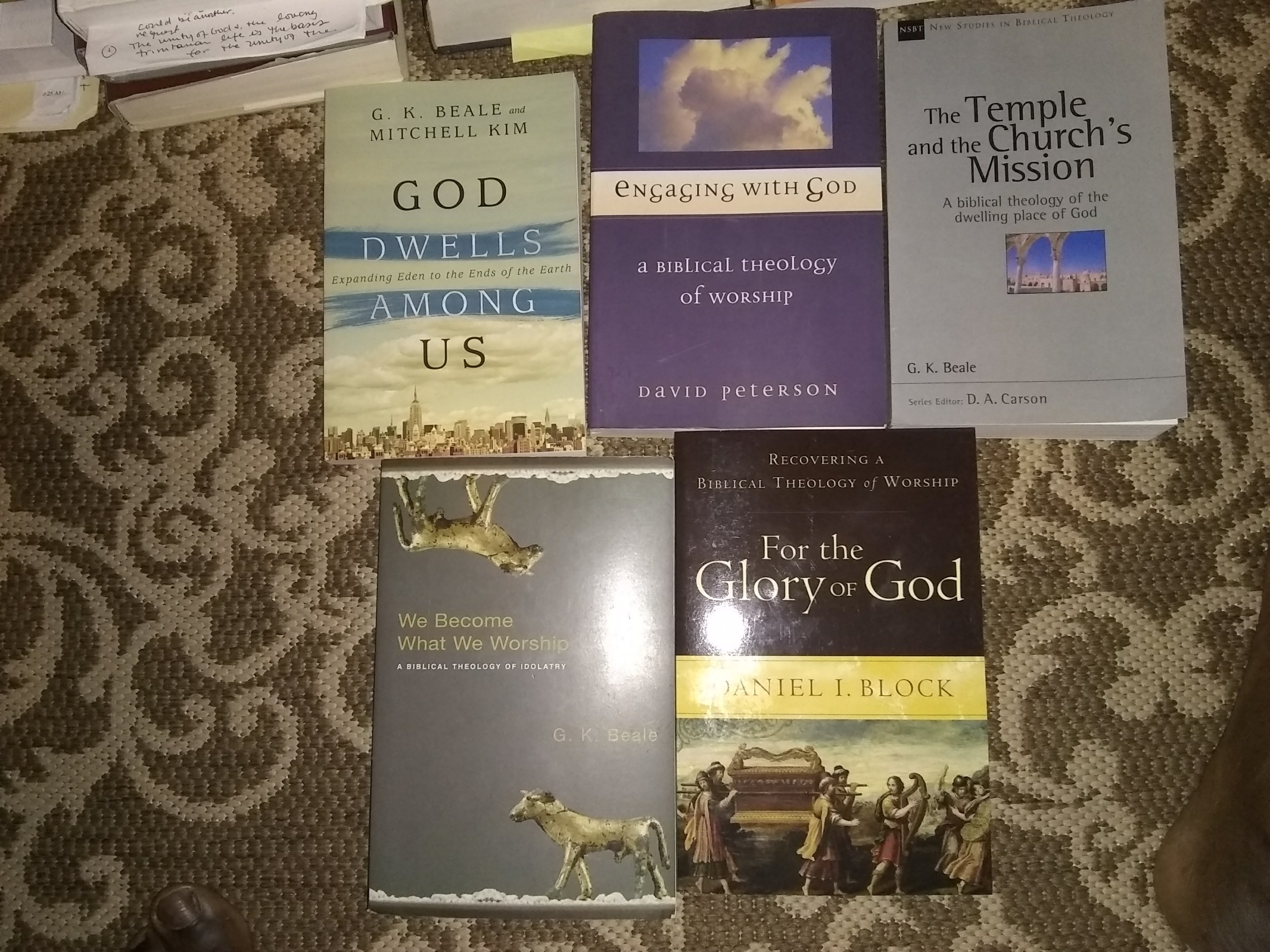
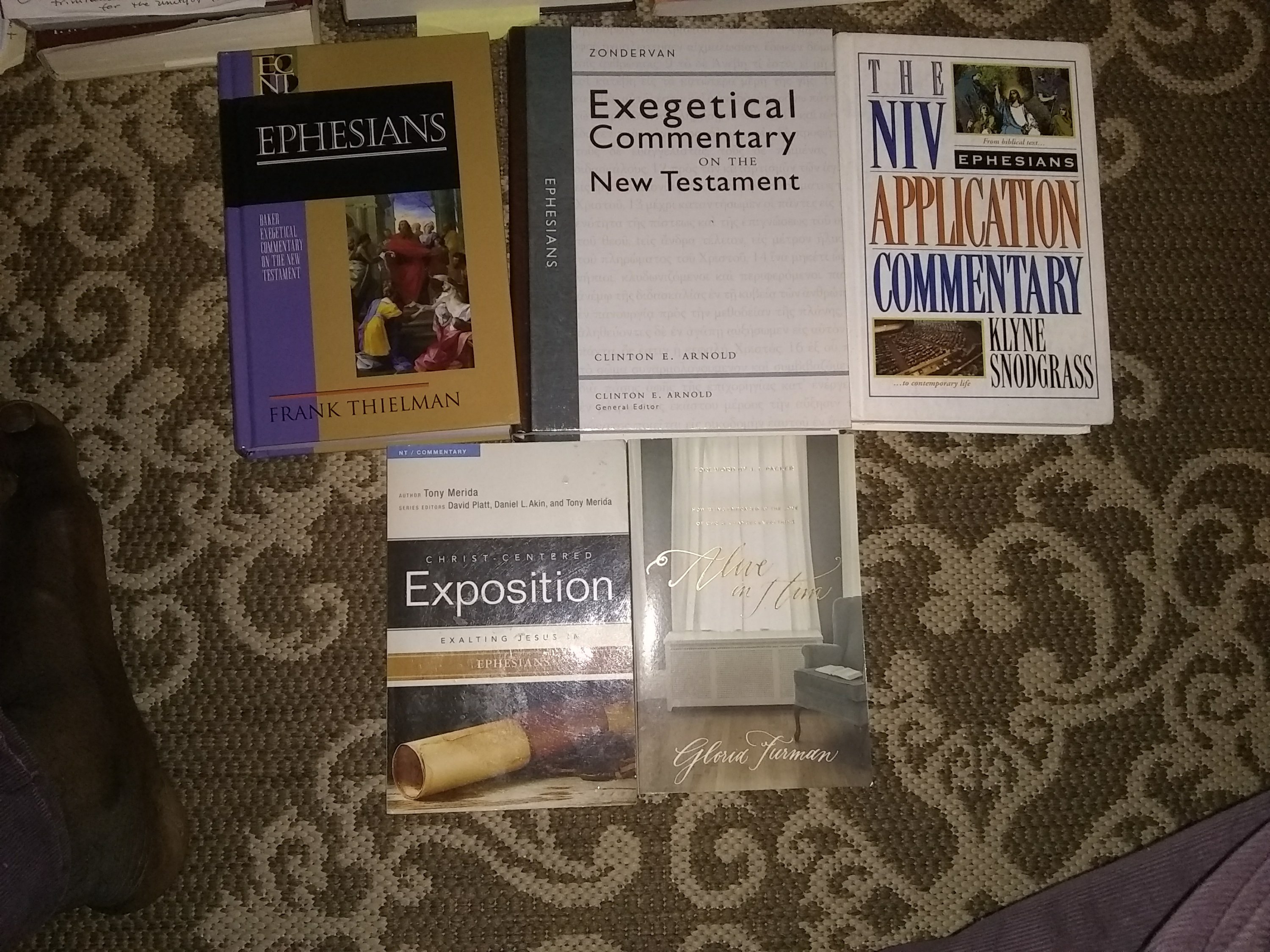
As a result, I have acquired some additional texts and commentaries on  Ephesians to help me get a better understanding of the Book. 

I covet your prayers before the Lord.

#PREACHINGCHRISTINEPHESIANS

#PREACHINGEPHESIANSFORCHANGE

Grace and Peace, 

Pastor  Joseph

How to Save American Christianity!

American Evangelicalism is not the guardian of Christianity and Christian Orthodoxy, and being an Evangelical does not necessarily mean one is a follower of Christ. Christendom transcends the politics and practices of American tribal Christianity.

I distinguish two branches of American Evangelicalism: one is cultural, the other is theological. For example, cultural evangelicalism is an ideological group that interprets the Christian faith through the lens of American patriotism and politics, American exceptionalism and American supremacy, and American  hegemony in the world. Cultural Evangelicalism is quite a political phenomenon which sustains American  Christianity and the American way of life and through the American dream ideology.

 On the other, for many critics, American Evangelicalism is race-oriented and conscious; generally, it is linked to whiteness or White Christianity—whether it is cultural evangelicalism or theological evangelicalism–, which is very problematic for American Christianity and the public witness of Christianity in the American society. A possible solution to the crisis of American  Evangelicalism is to deculturalize, depoliticize, and deracialize the Christian faith in the American culture.

Let me add one more note. Some genuine Christians do not identify themeselves as evangelicals; being outside of the Evangelical spectrum does not make one less a Christian. (It’s like a Christian who embraces Calvinism versus another who subscribes to the tenets of Arminianism. Maybe, that’s not the best example to give.) Honestly, I don’t do well with theological and political labels.

A Nation in Profound Crisis….but, there’s hope…

A Nation in Profound Crisis….but, there’s hope…

In the midst of today’s tragedy and mass shooting at the First Baptist Church in Sutherland Springs, Texas, resulting in the death of 26 people, I refuse to believe that we are a hopeless nation and a people without a promising future. Although we continue to experience major crisis at a frequent rate, which has both divided and united us as a people, and that which could potentially lead to a life of pessimism about our future, the Savior-God can still heal this land and restore us if we turn to him in repentance and practice justice.

Nonetheless, before we can pray for national healing and hope for spiritual restoration from the God of all Comfort and Peace, we have to first acknowledge the peck in our own eyes and that we have inflicted suffering and pain upon one another. We are not an innocent people. Collectively, we have turned away from justice and compassion. We refuse to believe we are in crisis, and live in a time of tremendous human insanity and national turmoil. Also, we refuse to believe that we need help from God. We have said to ourselves everything will be okay, and that there’s ongoing human flourishing in our society.

The problem is that we are a sick people who need emergency rescue and divine intervention. We have defiled God’s name and glorious fame in our society whenever we fail to love one another and treat one another with justice, dignity, and love as those who are also created in the Image of God. We have a broken system. We attain success through oppression and exploitation of one another. We must acknowledge our collective sins and wrongdoings, and that indeed, we are a broken people who are in desperate need of the Savior-GOD.

The brutal world we have created could be transformed. The broken society we have made and maintained could be renewed. The broken lives we have crafted and sustained could be redeemed.

We all could be artisans of hope in the midst of despair, and candles of light in the labyinth of human darkness and death. You followers of Christ are the light of the world and must shine in the spheres of darkness and hopelessness. That is what followers of Christ do and the goal of the Christian life.

Finally, the American people were never and are not God’s chosen people, but God is raising up a distinctive people in America and a new race for Himself who will be the Hope and Healing of this nation.

Lamentations 3:22-24:

“22 The steadfast love of the Lord never ceases;

his mercies never come to an end;

23 they are new every morning;

great is your faithfulness.

24 “The Lord is my portion,” says my soul,

“therefore I will hope in him.”

​Brief Writing Updates on Price-Mars:

Brief Writing Updates on Price-Mars:

I have decided to reframe the structure and content of my forthcoming book on Jean Price-Mars as an intellectual biography (Tentatively, I will title it: “Jean Price-Mars: An Intellectual Biography”). My desire is to make it the definite study on Price-Mars in the English language. (The reader should know that this is a different text than the forthcoming book Jean Eddy Saint Paul, Glodel Mezilas, and I edited on Price-Mars, which we have entitled “Between Two Worlds: Price-Mars, Haiti, and Africa”) The implications of this intellectual shift and project are many:

1) I would have to add two new chapters to the book:

a) On the intellectual circles and transnational circuits that influenced the ideas and writings of Price-Mars, following a similar strategy and methodology as I have done for Jacques Roumain in my recently-published book, “Thinking in Public,” and my forthcoming book on Jean-Bertrand Aristide: “Aristide: A Theological and Political Introduction to His Life and Thought.”

b) A new chapter on Price-Mars as a public intellectual in the Haitian public sphere and as a transnational cultural critic of the Black Atlantic culture and thought, which may involve my interactions with his commentaries and critiques (1) on the intellectual life (i.e. politics, literature, Haitian intellectual history, i.e.) of his native land, (2) the role and education of women in the Haitian society, (3) public education system in Haiti, and 4) Key figures (i.e. W. E.B. Du Bois, Booker T. Washington, Frederick Douglass, George Washington Carver, William Wadé Harris (affectionately called “The ‘Black Elijah’ of West Africa”), and James Emman Kwegyir Aggrey) in Black Thought. I will synthesize his ideas in this particular chapter.

2) It will take me another year to complete the book. Sorry folks if you have been patiently waiting for this work to come out. I will ask the publisher to give me another year so that I could produce this ambitious project. 

*** So far, I have completed five chapters: two chapters on the Pan-Africanist vision of Price-Mars, one chapter on Price-Mars’ philosophy of religion, one chapter on Price-Mars’ interpretation of the concept of God in African traditional religion, and another chapter on Price-Mars’ perspectives on African traditional religion, Islam, and Christianity. This one takes the comparative method to examine the subject matter. I’m half way completing two more drafts on Price-Mars’ writings on race, and the Haitian Revolution as a humanistic and global event. 

Say a word of prayer for me to the great Lord to give me both physical and intellectual strength, as well as to confer upon me greater clarity of thought and precision in expression. 

Happy Day!!!

You are my Rest and dwelling Place, O Lord!

Jesus, You’re my Rest!

 You are the reason I have my being, Oh Lord. You are the air that I breathe. You are my Rest and my dwelling Place, my God and my Redeemer. 

On the cross, you paid the price for my sins so you can give me rest. You gave me rest, and your rest is mine. In the midst of the storm, you gave me rest, abundant joy and unspeakable peace.

On the cross, you made me whole. You made me your own, and gave me your own. Now, I rest.

I’ve been meditating on the words of this song (see below) every day because of the significant meaning of Jesus in my life and for all He has done for me.  When I die, please sing this song to King Jesus as a testimony of his life in me and my life in His.

Have you found your rest? Is Christ Your Resting Place?

Matthew 11:28-30:

28 “Come to me, all you who are weary and burdened, and I will give you rest. 29 Take my yoke upon you and learn from me, for I am gentle and humble in heart, and you will find rest for your souls. 30 For my yoke is easy and my burden is light.”— Jesus

Preaching for Hope and Shalom!

“God is not done with you. He will give you a future”

I feel like preaching this morning 🙂

Even those who are incarcerated to a life sentence behind the mighty prison bars need to hear a message of hope & love from the Almighty God.

The young lady or the single mother who has been/is a victim of physical abuse and rape needs to hear a message of restoration and freedom from the God of Hope who is the Repairer of broken branches and lives. 

The individuals who are victims of racial humiliation and discrimination should set their hope in God their Maker. 

The worker who has been exploited at work needs to know God will give you justice. 

The immigrant who has been abused  and humiliated at the workplace and other public spaces need to hear it loudly that  God is not done with you. He will give you a future.