“Harriet Tubman as the Black Moses”

“Harriet Tubman as the Black Moses”

“Harriet Tubman” is one of the best movies about Black agency and freedom and the role of faith in the struggle for justice and emancipation in the United States. Harriet Tubman, the great abolitionist, listened to the voice of God and she acted and followed the road toward freedom, as planned by God himself. Slavery is the antithesis of freedom, and chattel slavery is also the antithesis of the will of God for human beings. Tubman grasped both truths and understood that it was the will of God for people to be born and live free; as a result, she acted on behalf of God and in the best interest of enslaved Africans. She was committed to their freedom because she knew God was also committed to the liberation of the oppressed and the enslaved.

There are two revolutionary stories of freedom in the Bible. One is supernatural; the other is natural. Both are equally important and necessary for human beings to live in peace and harmony with God and each other. One is not more important than the other; supernatural freedom is as indispensable as existential freedom. Existential freedom does not have more value than spiritual freedom. Human beings need both freedoms in order to live according to what God has purposed for them and reach their full potential in life.

Both supernatural and natural freedom are the collaborative work of God and human beings. In the Christian understanding of supernatural or spiritual freedom, in and through Jesus Christ, God the Greatest Freedom Fighter, rescues people from both the dominion of sin and the consequences of sin. Christians call this act of God “salvation” or “liberation.”

The second great story of freedom in the Bible is the Exodus, in which God radically intervened in human history and through a Hebrew freedom fighter called Moses to deliver the Hebrews out of the Egyptian slavery and pharaonic imperialism. In the Hebrew Bible, the story of the Exodus is the dominant theme and most important narrative in God’s intervention in global history for the sake of human liberation and to crush down human oppression and abuse.

Everywhere slavery exists, human beings are not free; where slavery triumphs, the image of God in human beings is challenged and human dignity is depreciated. God is the Greatest Abolitionist in human history who has willed that nobody shall live in bondage and oppression. Human liberation is a divine commitment.

———————————————————–

“Letter from Frederick Douglass to Harriet Tubman, 1868

Rochester, August 29, 1868

Dear Harriet: I am glad to know that the story of your eventful life has been written by a kind lady, and that the same is soon to be published. You ask for what you do not need when you call upon me for a word of commendation. I need such words from you far more than you can need them from me, especially where your superior labors and devotion to the cause of the lately enslaved of our land are known as I know them. The difference between us is very marked. Most that I have done and suffered in the service of our cause has been in public, and I have received much encouragement at every step of the way. You, on the other hand, have labored in a private way. I have wrought in the day – you in the night. I have had the applause of the crowd and the satisfaction that comes of being approved by the multitude, while the most that you have done has been witnessed by a few trembling, scarred, and foot-sore bondmen and women, whom you have led out of the house of bondage, and whose heartfelt, “God bless you,” has been your only reward. The midnight sky and the silent stars have been the witnesses of your devotion to freedom and of your heroism. Excepting John Brown – of sacred memory – I know of no one who has willingly encountered more perils and hardships to serve our enslaved people than you have. Much that you have done would seem improbable to those who do not know you as I know you. It is to me a great pleasure and a great privilege to bear testimony for your character and your works, and to say to those to whom you may come, that I regard you in every way truthful and trustworthy.

Your friend,

Frederick Douglass.”

Source: Scenes in the Life of Harriet Tubman by Sarah Hopkins Bradford.

Letter from Frederick Douglass to Harriet Tubman, 1868

“On Writing Book Reviews and the Ethic of Academic Kindness”

“On Writing Book Reviews and the Ethic of Academic Kindness”

When I was a doctoral student, I used to write three to four book reviews annually. Not only did I get to receive a free book, I had an amazing opportunity to learn more about my academic fields of interest from experts and specialists. When it was time for me to write my own dissertation, I stopped doing book reviews because of the pressure and the anxiety associated with the writing process ✍.

As a result, I made a commitment to myself to be a positive reviewer and not to denigrate any book or undermine somebody’s efforts to write an academic book (unless the book promotes violence and hate and dehumanize people)

Folks: writing a (good) book is already hard work and a HUGE commitment and responsibility; writing a terrible, harsh, and heartless review of somebody’s book is not a mark of rigorous and careful scholarship.

Let’s extend some kindness, hospitality, and tolerance to our academic peers!
With your pen 🖊, you can humanize the academia and make the world a better place.

“The World is Black: Harlem on my Mind and in Their Soul”

“The World is Black: Harlem on my Mind and in Their Soul”

It is very encouraging to read the students’ abstracts for my Harlem Renaissance course.

1. Some students are researching on the significance of black films in the era of the Harlem Renaissance–in negating racial stereotypes, on one hand, and on the other hand, showing how black producers (film-makers) were using their films to depict a positive black image and express black agency and subjectivity in the American society.

2. Some students are exploring black sculpture and painting to find out how it was used to tell an alternative historical narrative of the black experience in America; they view black sculpture and painting as chronicling a counter narrative to the white gaze and the demands of white publishers.

3. I have two students who are creating a play based on the social life of Black people living in Harlem: the Harlemites.

4. A student is creating a portfolio that analyzes the artistic work and (visual aesthetic) achievements of Aaron Douglas and Jacob Lawrence.

5. Another student is investigating how the works of W. E. B. Du Bois contributed to American democracy and the black quest for equality and justice in America.

Folks: this group of students in my Harlem Renaissance class is quite dynamic, bold, passionate, talented, and inquisitive.

#theworldisblack
#harlemonmymind
#harlemintheirheart
#whosaysstudentsarenotinterestedinblackhistory?

“On Xenophobia and Hope, and the Meaning of the Incarnation”

“On Xenophobia and Hope, and the Meaning of the Incarnation”

Theologian Jürgen Moltmann remarks that “Christian hope cannot cling rigidly to the past and the given and ally itself with the utopia of the status quo. Creative action springing from faith is impossible without new thinking and planning that springs from hope” (“Theology of Hope”). Henri Nouwen connects Christian hope with value and meaning and interpersonal relationship. He informs us that “Without hope, we will never be able to see value and meaning the encounter with a decaying human being and become personally concerned” (“The Wounded Healer”).

For Him, Christian hope is not abstract or theoretical, but practical, existential, and incarnational. Accordingly, “This hope stretches far beyond the limitations of one’s own psychological strength, for it is anchored not just in the soul of an individual, but in God’s self-disclosure in history” in the person of Jesus Christ, our Lord. Christian hope “is grounded in the historic Christ-event, which is understood as a definitive breach in the deterministic chain of human trial and error, and as a dramatic affirmation that there is light on the other side of darkness.” The drama of the incarnation fosters practical hope for our every day’s troubles and challenges. It compels us toward kindness and generosity for the greatest act of kindness in human history was the incarnation of God in the person of Jesus Christ. Hence, hope is something that Christians know and hope is also a person Christians experience. God is kind and hope.

To be generous and kind to everyone is to act like God in Christ. Generosity and hospitality are human virtues to be praised and coveted. By contrast, xenophobia or the fear of the “other” or even the immigrant is the antithesis of human kindness, generosity, and hospitality. “So then, as we have opportunity, let us do good to everyone, and especially to those who are of the household of faith” (James 6:10). Xenophobia is the antithesis of the incarnation; it refuses the presence of God in the world and in our community. The presence of God is manifested through our interaction with the stranger, the immigrant, and the poor. Xenophobia not only kills kindness; it murders God in the flesh and it is certainly the greatest enemy of divine hospitality, presence, and compassion. May we become the Gospel we proclaim!

“The Moral Significance of Black Folk in America”

“The Moral Significance of Black Folk in America”

Black people are the ones who always remind and warn America about the importance and practice of justice, truth, and righteousness.

They are also the ones to diagnose America’s bankrupt institutions, ungodly systems, and unjust structures.

They are also the first to complain about the bankruptcy of America’s legal system and political organizations.

They are the same people to remind America that racism and white supremacy are two great social and spiritual demons and evils in the American society.

They are also the first to tell America chattel slavery, (Jim Crow laws) racial segregation, and lynching are/were antidemocratic, unchristian, and anti-human flourishing.

They are the same group to urge America that injustice and oppression have consequences and may lead to national decline and ultimately the destruction of a civilization and of a nation.

They are also the same people to remind America about the humanity and dignity of black and brown people and the precariousness of life and the sanctity of black and brown lives.

They are also the same people to remind America that God’s children actually live in the ghetto and their life matters, and not to undermine their collective suffering and poor living conditions.

They are the ones to compel America to change its character; to remove the stain of antiblack racism from its laws and public policies; to call America to repentance and justice; and to create an atmosphere for the possibility of racial healing and unity, shalom and reconciliation.

Black people are America’s redeemer and soul. Without Black people, America will not have a soul and a conscience. Black people are the ethical light and moral conscience of this nation.

***Have you ever wondered about the reasons (the economic and historical trajectories and the cultural and political conditions as well as the moral issues and ethical matters) that have led Black people to play these various roles and functions in American history and in the American society?

“Rethinking Life and Grace: Forgiveness and Repentance, Justice and Peace in the Amber Guyger-Botham Jean Case”

“Rethinking Life and Grace: Forgiveness and Repentance, Justice and Peace in the Amber Guyger-Botham Jean Case”

It is important that we also pay close attention to the aching heart and fragmented soul of this brave mother (Botham Jean’s) who is grieving and mourning the death of her precious son. She does not sing “cheap grace” and pronounce “quick forgiveness” without demanding true repentance and sincere change of the heart; rather, to those in the seat of power and position of influence in the city of Dallas, she is demanding justice and asking them to address the systemic corruption in the judicial process/system in the Amber Guyger-Botham Jean case. Forgiveness is a gift and should never be abused or taken for granted. To repent of a wrongdoing simply means that I will not do it again and will change my way of life no matter what the circumstance is, could, would, or will be. Some Christians in this country have a low view of forgiveness, grace, and repentance. Their passion for justice and righteousness is too weak and not revolutionary. It is a distraction to the biblical call to practice robust justice and reconciliation in society. In fact, their understanding of justice and grace is a nuisance to the biblical notion of forgiveness and repentance, and correspondingly a direct departure from the biblical vision of radical justice and reconciliation.

As a society, if we want to maintain a judicial system in this country that is reasonably fair and just to every American citizen regardless of his or her race, gender, class, or economic status, the members of the jury that reviewed the Amber Guyger-Botham Jean case should have never pronounced their final verdict based on what they thought the person (the victim who is now dead), as some of them have claimed publicly, would have liked to happen (this is carelessness judgment and it is not within the boundary of the rule of law!). The judicial system or the rule of law should be and always be the catalyst to assist the jury to decide responsibly and ethically the outcome of the trial and thus pronounce the verdict accordingly.

Let me repeat that again: The final judgement of this trial should never be based on the emotional sensibility or some preconceived notions or ideas of certain members of the jury of what they believed the victim would have wished. Yet it is always good for the jurors to also consider the spirit of the law and the claim of justice and the prospect of restorative justice to bring holistic (national) healing and communal reconciliation and peace.

Judge Tammy Kemp made a terrible mistake by not leading this trial justly and righteously. The city of Dallas took too long to process this urgent case and call Officer Guyger to trial. The 10 yr. verdict giving to Officer Guyger is not enough. She is eligible for parole after five years? This verdict minimizes the life of the victim who is now gone and undermines the importance of true justice as well as the legal implication of innocent people who could intentionally be murdered by reckless cops.

Further, the “ public officials” in the courthouse, including the Judge who hugged the murderer and handed her her personal Bible and the female Police officer who was fixing Officer Guyger’s hair, clearly sent a comforting message to Guyger that the system was against her and that she was wrongly put on trial. On the other hand, correspondingly, their calculated gesture also sent a negative message to Jean’s family that the life of their son does not have equal value and weight as compared to that of Officer Amber Guyger. When a person commits a crime such as removing someone’s life from the world, it is the role of the judge and juror to ascertain that the criminal or murder is cognizant that crimes have severe (and existential) consequences or that he or she has committed a crime against another individual, against the loved ones, the community, and God.

In Christian theology, the atonement of Christ for the sins of the world reminds us that grace is never cheap. The sacrificial death of Christ, which produces forgiveness upon true repentance, is a demonstration of God’s justice against sin. Justice & grace walk hand in hand. Forgiveness is the result, not the starting point.

Judge Kemp has failed the Jean family, the vulnerable people of Dallas, and to an extent all of us and the nation—including the vulnerable and marginalized population in this country. She had an opportunity to re-review the case more carefully and do a critical re-assessment of the jury’s conclusion and presupposition. She failed. She failed. She failed. She certainly failed to lead accordingly to truth and justice and to uphold the rule of law. Judge Kemp had the opportunity to recommend a higher sentence to Officer Guyger for her reckless and intentional crime toward Botham Jean. Judge Kemp’s decisive role in this trial will not bring greater peace and reconciliation to the existing hostility between Police Officers and the Brown and Black community in the city of Dallas and by extension in this country. Her act is consciously political and strategic, but not mediatory and reconciliatory. Based on her public and legal actions, she and her allies have taken a side, and it is certainly not the side of the victim and those who are grieving after the dance!

Finally, one thing that is obvious in the American society is that certain individuals (and a class of people, to say the least) who have the power to safeguard human life often fail to do so simply because they do not value the sanctity of life and do not consider the future possibilities and promises of life itself. Some of them believe that not all lives are equal and worth preserving equally; others hold that some lives have more dignity and value than others. This nation must come to this fundamental truth that human life (i.e. black life, the life of the poor, the life of the economically-disadvantaged) is a gift from God and is precious and should never be taken for granted nor should it ever be undermined in the judicial process or system.

ALL LIVES MATTER! YET SOME LIVES ARE MORE FRAGILE THAN OTHERS!

“The Problem of ‘Cheap Grace’ in American Christianity and America’s Legal System”

“The Problem of ‘Cheap Grace’ in American Christianity and America’s Legal System”

The action of Judge Kemp and the statement of Brother Botham Jean that he does not even want the killer cop Amber Guyger to go to prison falls under the category of “cheap grace.” Cheap grace is the most destructive force to biblical Christianity; yet it is a fundamental characteristic of American cultural Christianity, the “civil religion.”

Cheap grace is a false gospel that is silent on the structural injustice embedded in this country’s legal system and the hidden unethical motives of public policies. It is silent on pressing issues such as xenophobia, sexism, homophobia, (antiblack) racism, white supremacy, racial violence, systemic injustice and oppression against the weak and the disadvantaged population–in this society. It defers human flourishing and the common good in the world.

Cheap grace is not a liberative faith; it undermines the importance of God’s justice in society and the value of redemptive justice in interpersonal and legal matters. Cheap grace in the manner of Judge Kemp’s gesture toward the murderer and Jean’s brother’s powerful and careless statement (“I don’t even want you to go to prison”) word undermines the sanctity of (Black) life and the dignity of the (Black) victim.

This kind of grace prolongs human (black) suffering and delays (interpersonal) redemption and (racial) reconciliation. Cheap grace does not liberate; it condemns, shortens, and cheapens life. We must reject cheap grace to save Christianity in this culture and repair the legal system in this nation.

***In Christian theology, the atonement of Christ for the sins of the world reminds us that grace is never cheap. The sacrificial death of Christ, which produces forgiveness upon true repentance, is a demonstration of God’s justice against sin. Justice & grace walk hand in hand. Forgiveness is the result, not the starting point.

A Free Book for Pastors & Ministers!!!

A Free Book for Pastors!!!

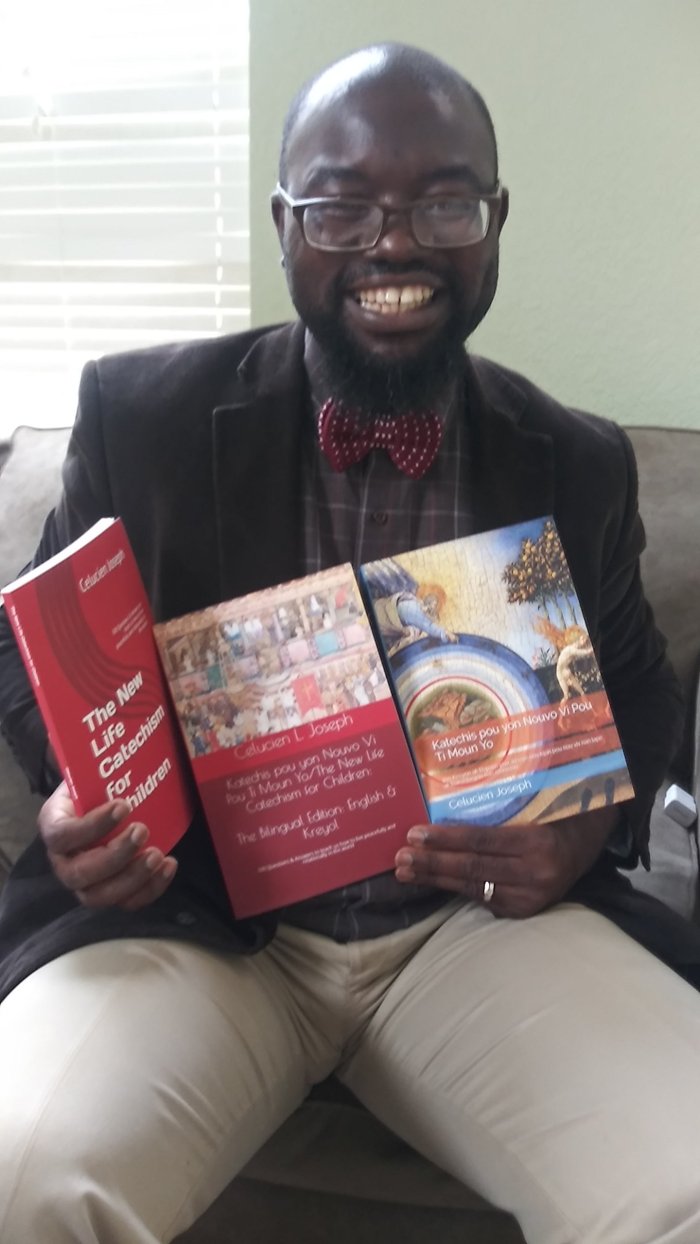
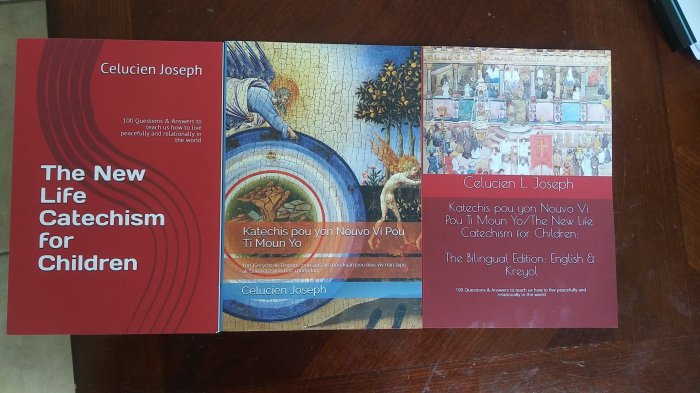
Hope for Today Outreach (HTO) is giving away a free copy of Dr. Joseph’s new book, “The New Life Catechism” (Hope Outreach Productions, 2019) to the first 15 pastors who make the request by this Friday, September 27, 2019.

To receive the free book, just send us an email at hopefortodayoutreach@gmail.com and tell us that you would like to receive a free copy of Dr. Joseph’s new book, “The New Life Catechism.” Do mention which version you would like to receive:

1) The English only version or
2) The Kreyòl only version or
3) The English-Kreyòl bilingual version

*

**Don’t forget to provide us with your mailing address!

Kind regards,

HTO Team

10 Positive Attitudes and Characteristics Haitians in the Diaspora Need to Cultivate to Contribute to Positive Change and Human Flourishing in Haiti

10 Positive Attitudes and Characteristics Haitians in the Diaspora Need to Cultivate to Contribute to Positive Change and Human Flourishing in Haiti

1. Commit yourself to a cause in Haiti—such as in the area of education, healthcare, community development, children’s rights, sanitary water projects, business, etc.—and maintain consistency in carrying out this cause;

2. Because commitment is associated with service, responsibility, and sacrifice, you need to keep your promise to the cause in # 1, that is, you would need to invest your time and resources (i.e. knowledge, money, goods) to realize that dream or objective;

3. Find a location, a place, or a zone in Haiti to contribute to that change; it could be a neighborhood in a rural area in Haiti or a metropolitan area (i.e. Port-au-Prince, Les Cayes, Cap-Haitien, Port-de-Paix, Jacmel, Jeremie, Govaives, La Gonave, Saint-Louis Du Nord, etc) in the country;

4. Do not focus on the negativities about Haiti or stereotypes about the Haitian people; rather, focus on that vision of yours and make it happen;

5. Be genuine to the people you are serving and empowering and be truthful about your service and dedication to that cause;

6. Love the Haitian people you are aiding and do not dehumanize or humiliate them; not only you are committing yourself to a cause, you are dedicating yourself to helping the Haitian people grow, flourish, and be independent;

7. Remember that people are not objects or things, but subjects of your affection and zeal;

8. Do not wait on strangers or another country to make a difference in Haiti and transform Haiti’s civil and political societies; be that difference and that change you envision for your country and the hope you want to be for the Haitian people;

9. Get rid of the victim mentality and stop blaming individuals, institutions, entities, or other countries for Haiti’s woes and the plight of the Haitian people; rather, take up your cross by assuming your own responsibility so you can contribute to meaningful and transformative changes in the Haitian society;

10. Remember that committing yourself to a cause in Haiti is not an individual project; rather, it is a teamwork and collaborative endeavor. Find yourself some good people to work with and some credible organizations to partner with to bring that cause or dream of yours to fruition.

Update: First Day of Class at Hope Academy de Bois d’eau (Port Margot, Haiti)

Update: First Day of Class at Hope Academy de Bois d’eau (Port Margot, Haiti)Hello, Friends: Today (Monday, September 16, 2019) was the first day of class for these amazing and talented Haitian boys and girls at Hope Academy de Bois d’eau. It’s both a joy and delight to see this collective dream of ours is being realized. I truly believe that education is one of the important vehicles to transform a country (Haiti) and help prepare the Haitian youth to become engaged and responsible citizens who will contribute to the common good and human flourishing in the Haitian society. In the context of Haiti, an engaged pedagogy is the most promising tool of decolonization and reconstitution of the (Haitian) mind toward a sustaining community and an effective and strong nation. Investing in education is to foster hope in life and impute optimism in human interactions and relationships; correspondingly, to invest in people and their future is to lead to the good life and the good community we all envision and covet.That is what we hope to accomplish at Hope Academy de Bois d’eau.The photos below of these haitian boys and girls attending their very first day of class brought tears to my eyes. I just can’t believe what’s happening today. The staff of Hope Academy de Bois d’eau and Hope for Today Outreach (HTO) and the parents of these little ones would like to thank you for all the support you have provided to make this dream a reality.We continue to count on your collective support and the cooperating efforts of various communities so that the students and (their) families at Hope Academy de Bois d’eau could fulfill their their dreams and goals in Haiti 🇭🇹 as well as the mission of HTO: (1) holistic and sustainable development, (2) improved and better human conditions (i.e. economic, political, cultural), and (3) strong civil and political societies in Haiti.Peace and Blessings,
Celucien Louis Joseph, PhD
President and Founder
Hope for Today Outreach