What does it mean to be free?

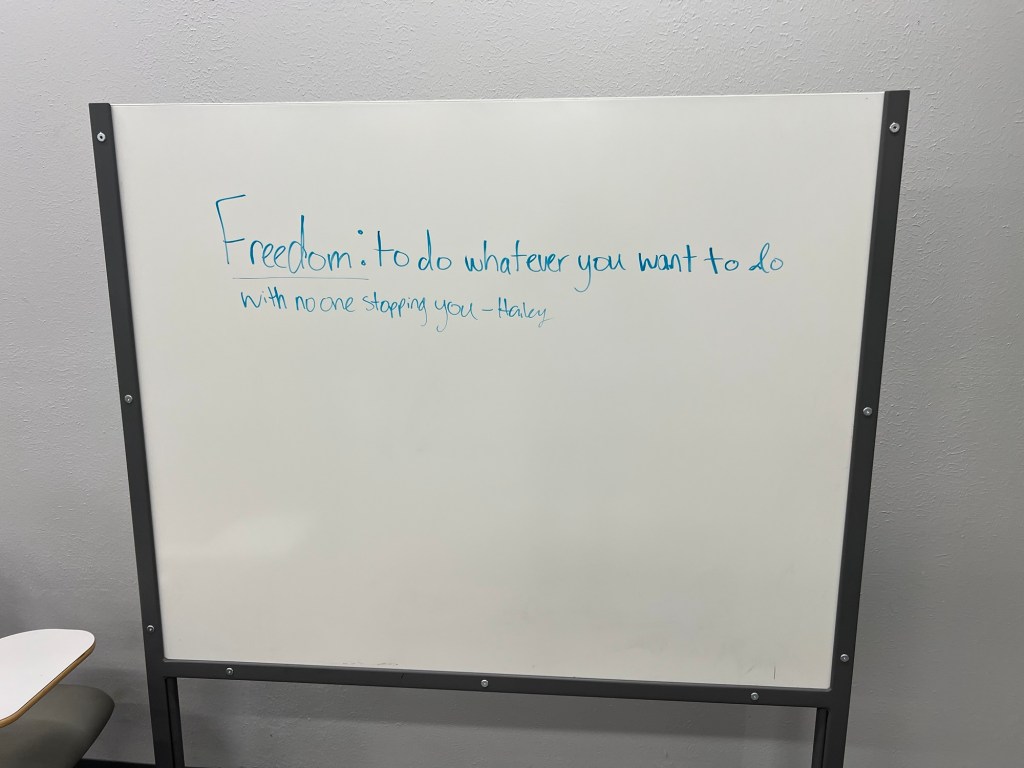
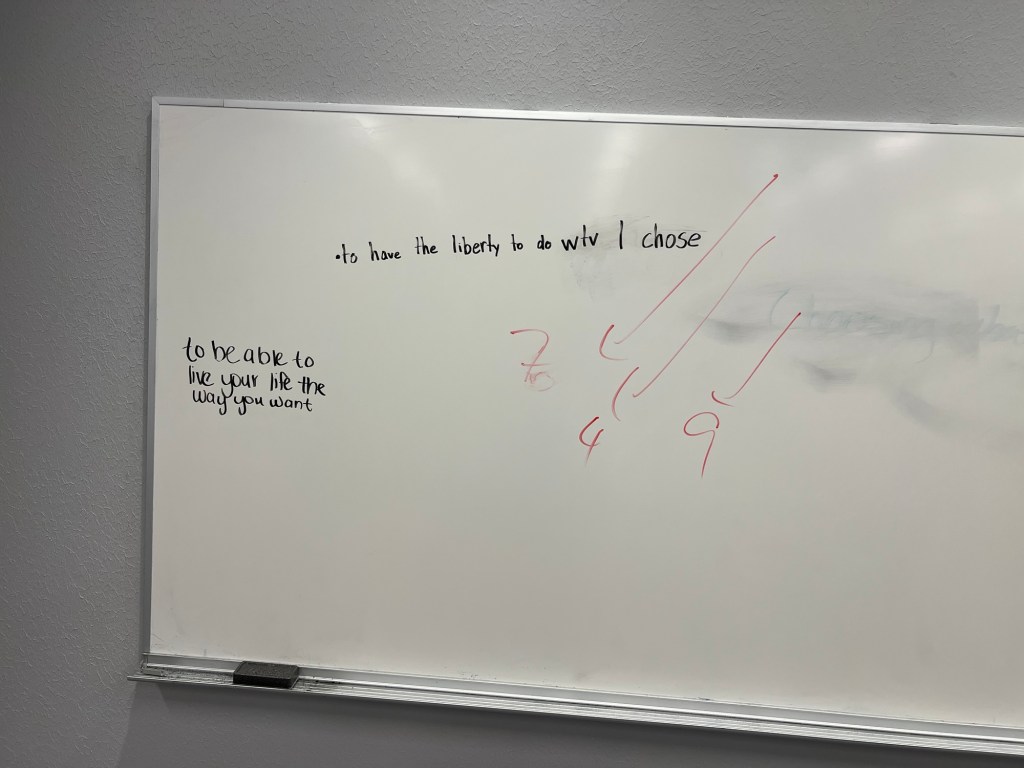
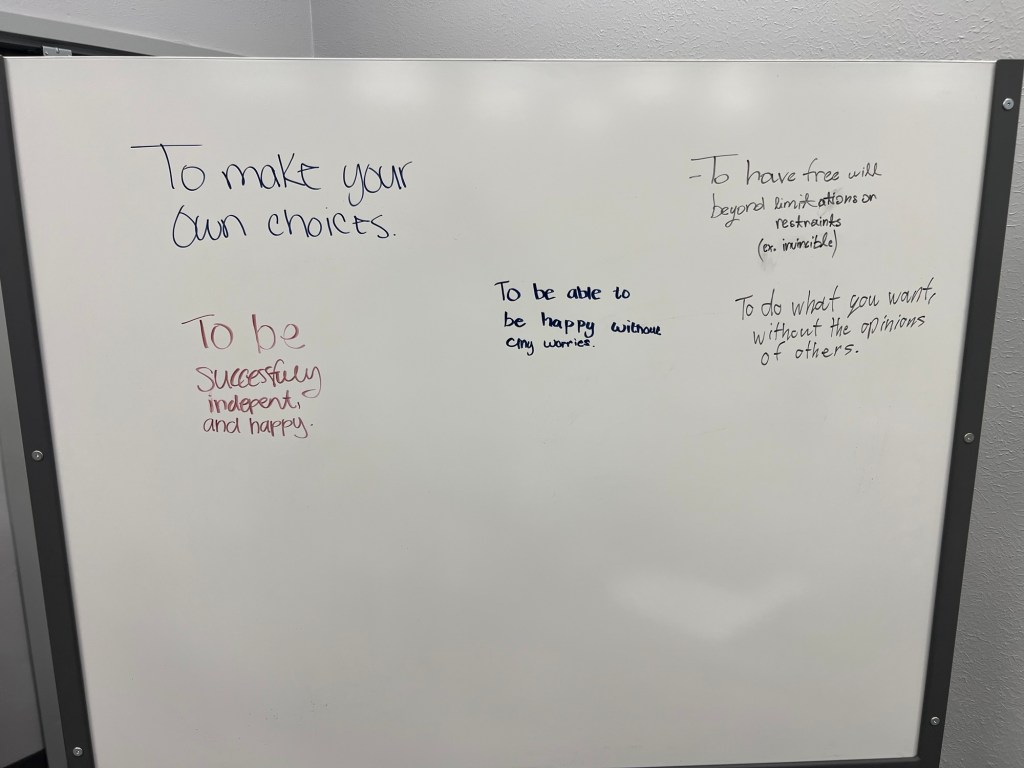
Last week, I did a workshop for Dual Enrollment students (mostly 12th graders/seniors) and prospective students to LSUS on the topic of freedom. Here’s the question I wrote on the board: “What does it mean to be free”?

I asked some volunteers to share their understanding of freedom. Below are some of the students’ answers of what it means to be free:

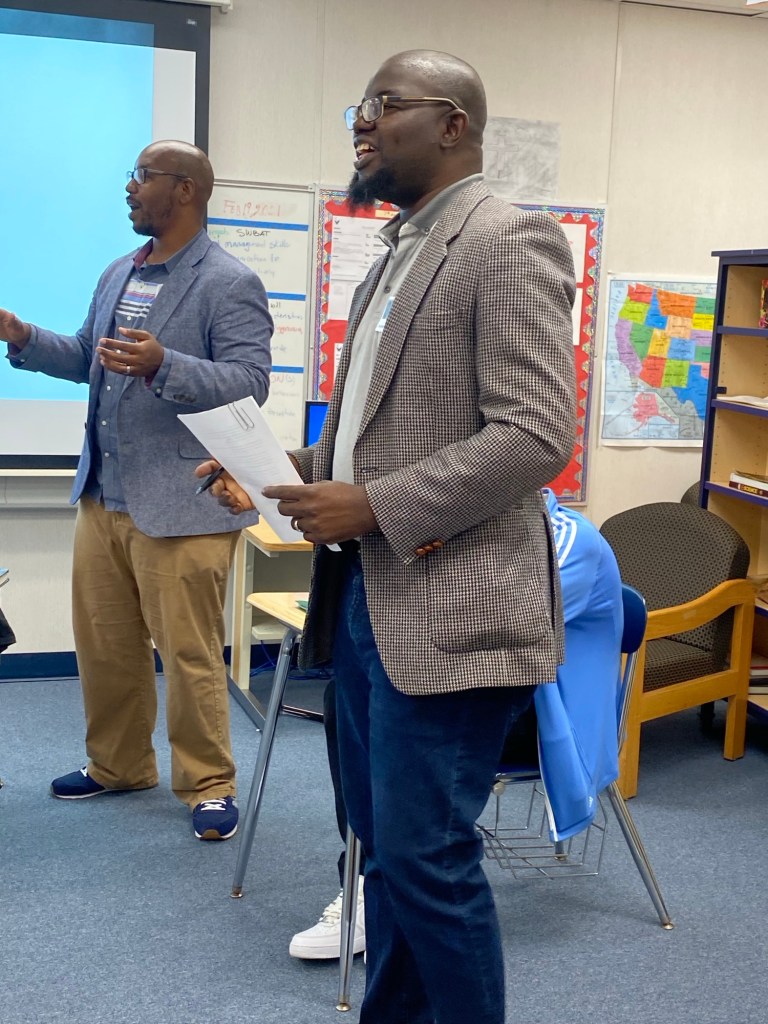
I enjoy teaching High School students, and this group of students came from different local high schools. They were engaged, intellectually curious, and worked well in teams.

“The Vulnerability of the Haitian People and Continuous Collapse of the Haitian state”

“The Vulnerability of the Haitian People and Continuous Collapse of the Haitian state”

Haiti might be culturally strong, and Haitians and historians often celebrate the miracle of 1804, that is, the Haitian Revolution (1791-1804) that gave birth to two transformative events in World history(1) the abolition of slavery and the destruction of colonial slavery system, and (2) the establishment of the first Black Republic in the world.

However, Haiti has become the most vulnerable and the weakest (economically and politically) state in the Western hemisphere. Any country can easily invade its territory, and there won’t be any consequences after military intervention. The Haitian state has been weak since the fall of Duvalier, and its borders have been open for any potential foreign invasion and occupation.

“Haiti as a Beacon of Black Freedom: Thomas Paul, African American Emigration, and Christian Missionary Endeavors in the Nineteenth Century”

“Haiti as a Beacon of Black Freedom: Thomas Paul, African American Emigration, and Christian Missionary Endeavors in the Nineteenth Century”

On November 2, 2026, I had the pleasure of joining Kids Talk Church History, a podcast of the Alliance of Confessing Evangelicals, as a guest to discuss Haiti’s historical significance as a beacon of Black freedom and a land of Black sovereignty for African Americans in the nineteenth century.

During the conversation, I explored the African American Emigration Movement, the appeal of Haiti as a destination for Black Americans seeking freedom, dignity, and self-determination, and the role of African American Christian missionary engagement in Haiti during the nineteenth century.

Toward the end of the interview, I also reflected on the complex relationship between religion and politics and the continued growth and development of Protestant Christianity in Haiti during the twentieth century.

It was a wonderful opportunity to revisit an important chapter in the history of Haiti, African American religious thought, Black internationalism, and the enduring connections between Haiti and the African American experience.

Here’s the link below to listen to the podcast:

https://kidstalkchurchhistory.podbean.com/

It was a fun conversation!
Let me know what you think!!!

“Political Power, Moral Responsibility, and the Interests of the American People”

“Political Power, Moral Responsibility, and the Interests of the American People”

Now, you have won significant political seats and offices across the states. The American people have voted for you because they believed in your political vision, public policies, and the values you embodied during your political campaigns—not just your mere rhetorical gestures and strategies.

We will watch you closely with this enormous power and control we have given you, and that you now have across various political offices and diversities in this country. We would like to remind you about the following:

1. Power comes with moral responsibility.

2. Power comes with ethical accountability.

3. Power comes with access and privileges.

4. Political power can be used strategically to unite a country that’s profoundly wounded, a nation deeply divided, and a people longing for healing, harmony, peace, and dignity.

5. Political power means participatory solidarity with the American people and active companionship in various difficult times and situations, especially during moments of shared adversity and shared vulnerability.

6. Political power and servant leadership is a good marriage to make things work in public and cultivate a sense of national belonging, mutual understanding, and an ethic of care and interdependence.

7. Political power and influence can be used strategically and democratically to restore public trust and confident leadership.

Most importantly, political power can be used to improve the living conditions of those without healthcare and the individuals who have lost healthcare benefits; to strengthen employment and higher education opportunities; to restore faith in our public education, especially k-12; to advocate through human-centered policies and politics the shared interests of the economically-marginalized groups, the socially-underrepresented populations—the poor, the sick, the widow, the orphan, the single mother, the refugee, the asylum seeker, etc.—within our democratic system and institutions.

Finally, your political office provides you with an incredible opportunity to represent the best interests of and serve the American people, and to be their committed cheerleaders and fiercest advocates in all circumstances—both in public and when you’re making political deals behind closed doors.

Use the power the American people have entrusted to you to transform our society, restore trust and moral leadership—both nationally and internationally—and to make democracy work as an everyday experience for all people in society and the world toward human flourishing.