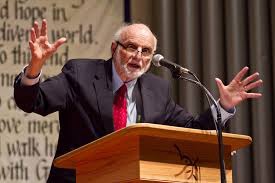
“Engaging and Citing Brueggemann: The Task of Prophetic Ministry ” (Day 3)

“Engaging and Citing Brueggemann: The Task of Prophetic Ministry ” (Day 3)

In the introductory chapter of “The Prophetic Imagination,” Walter Brueggemann does not hesitate to provide his understanding of the task of prophetic ministry. In other words, he highlights the fundamental function of the prophet in relation to Yahweh and the cultural tradition and social milieu of the prophet, as well as the message of Yahweh and the recipient of the divine communication. Brueggemann explains the following:

“It is the task of prophetic ministry to bring the claims of the tradition and the situation of enculturation into an effective interface. That is, the prophet is called to be a child of the tradition, one who has taken it seriously in the shaping of his or her own field of perception and system of language, who is so at home in that memory that the points of contact and incongruity with the situation of the church in culture can be discerned and articulated with proper urgency.…

The task of prophetic ministry is to nurture, nourish, and evoke a consciousness and perception alternative to the consciousness and perception of the dominant culture around us. Thus I suggest that prophetic ministry has to do not primarily with addressing specific public crises but with addressing, in season and out of season, the dominant crisis that is enduring and resilient, of having our alternative vocation co‑opted and domesticated.”
—Bruegermman, The Prophetic Imagination, pp. 12-13

Brief Commentary

In this passage, Brueggemann underscores the vital relationship between tradition and memory in shaping the vocation and responsibility of the biblical prophet. Drawing on the anthropological concept of enculturation meaning “the process by which individuals internalize the values, norms, and practices of their society,” he highlights how deeply embedded cultural understanding influences a prophet’s worldview, ministry, and his message.

The prophet, therefore, is not merely a spiritual mouthpiece or agent of Yahweh who delivers divine messages to the people of God—the people of the covenant-God’s human creation—the people outside of the covenant. He or she is also a product of the very culture and traditions in which they live. This cultural embeddedness informs the prophet’s perception of present realities and future possibilities while grounding their task in faithfulness to the divine word and the promises of Yahweh.

For a prophet to carry out an effective and meaningful ministry, Brueggemann argues that they must possess “cultural knowledge” and a deep awareness of the social and cultural dynamics shaping their audience. This social consciousness enables the prophet to interpret and critique the prevailing culture with insight and care. The prophet is not just a bearer of Yahweh’s word anjudgment, he is an agent of (Yahweh’s) compassion and healing.

Ultimately, the prophet’s role includes helping both the covenant community and the broader public imagine alternative futures rooted in the promises and vision of Yahweh. Through cultural exegesis, the prophet leads people to confront their existential crises, navigate through them, and move toward liberation and hope—always oriented by Yahweh’s vision for a just and transformed society.

History of Christianity in Africa: Selected Texts (Part 1)

History of Christianity in Africa: Selected Texts (Part 1)

This instructional video offers an introduction to key texts that illuminate the rich and complex history of Christianity in Africa. From early North African Church Fathers to modern African theologians, we explore foundational writings that trace the development, adaptation, and resilience of the Christian faith across the continent. Ideal for students, educators, and anyone interested in African religious history, theology, and postcolonial studies.

“Haiti and the West: Key Texts in the History of Diplomatic Relations (Part 1)”

“Haiti and the West: Key Texts in the History of Diplomatic Relations (Part 1)”

This video provides an overview of the key texts that have shaped our understanding of Haiti’s diplomatic relations with the United States and the broader Western world. Focusing on historical milestones, political dynamics, and foundational writings, we explore how Haiti has navigated global power structures from independence to modern times. This is Part 1 of a series designed for students, researchers, and anyone interested in Caribbean history, postcolonial diplomacy, and international relations.

“Haiti and the West: Key Texts in the History of Diplomatic Relations (Part 2)”

“Haiti and the West: Key Texts in the History of Diplomatic Relations (Part 2)”

This video provides an overview of the key texts that have shaped our understanding of Haiti’s diplomatic relations with the United States and the broader Western world. Focusing on historical milestones, political dynamics, and foundational writings, we explore how Haiti has navigated global power structures from independence to modern times. This is Part 2 of a series designed for students, researchers, and anyone interested in Caribbean history, postcolonial diplomacy, and international relations.

“Engaging and Citing Brueggemann: Hope and Prophetic Hope” (Day 2)

“Engaging and Citing Brueggemann: Hope and Prophetic Hope” (Day 2)

For Day 2, I an interested to bring your attention to the relationship between prophetic imagination and (prophetic) hope:

“The task of prophetic imagination and ministry is to bring to public expression those very hopes and yearnings that have been deniedso long and suppressed so deeply that we no longer know they are there. Hope, on the one hand, is an absurdity too embarrassing to speak about, for it flies in the face of all those claims we have been told are facts. Hope is the refusal to accept the reading of reality which is the majority of opinion; and one does that only at great political and existential risk. On the other hand, hope is subversive, for it limits the grandiose pretension of the present, daring to announce that the present to which we have all made commitments is now called into question. Thus the exilic community lacked the tools of hope. The language of hope and the ethos of amazement have partially been forfeited because they are an embarrassment. The language of hope and the ethos of amazement have been partly squelched because they are a threat.”

—Brueggemann, The Prophetic Imagination, p. 67​

Brief Commentary

The goal of the prophet of God is to help the people of God and society at large recover something vital that has been stripped from them and experience: hope. This hope acts as a life-sustaining force that empowers them to endure the trials and upheavals of existence. This hope is both existential and prophetic. Prophetic hope confronts the political structures that obscure the transformative power of reality—an awakening that holds the potential to ignite political change. To the political order, such hope is dangerous, for it threatens the very foundations of domination and control.

On one hand, prophetic hope confronts the dehumanizing forces that have come to define the human condition in our present age. On the other hand, it is deeply rooted in the character and promises of God—the source, sustainer, and future of all genuine hope. Prophetic hope says NO to the reduction of human beings as disposable objects; instead, it reclaims human futures and the dignity and joy that oppressive socioeconomic and political systems have stolen.

Finally, the biblical prophet understands prophetic hope as a vital human incentive for the human experience and flourishing in the world. It is also an essential ingredient that belongs not only to the sacred community, the people of God, but also serves as a theocentric foundation essential to the art of governance and politics. Such hope contributes to the holistic flourishing of all people within society. Prophetic hope must be embedded in the spirit and the language of the people (of God) for it to be both emancipative and restorative.

Things I Have Realized and Accepted as a 47-Year-Old Black Haitian Male and Educator

Things I Have Realized and Accepted as a 47-Year-Old Black Haitian Male and Educator

  1. My identity is not a burden—it is a blessing and an opportunity to explore both current and future possibilities.
    Being Black, Haitian, and male in this world comes with challenges, but also with deep beauty, resilience, and strength.
  2. I don’t need to explain my worth.
    I have nothing to prove to those who question my value based on race, ethnicity, or background.
  3. Silence can be powerful, but speaking truth is necessary.
    I’ve learned when to stay quiet and when to use my voice and privilege—especially for justice, truth, dignity, peace, and the marginalized.
  4. Education is liberation and contributes to meaning, not just information.
    As an educator, my role is to awaken minds and open hearts—not just transfer knowledge—toward the common good and human flourishing.
  5. You can lead with both strength and softness.
    Vulnerability and compassion are not weaknesses; they are tools of true and trusted leadership.
  6. Injustice and discrimination are real—but so is my ability to rise above them.
    I live with the tension of injustice while refusing to be defined by it.
  7. Haiti is more than poverty and pain—it is poetry, resistance, and spiritual depth.
    I carry my Haitian heritage with pride and purpose. Haiti is about real people.
  8. I don’t have to carry everything.
    Learning to release what isn’t mine to fix has brought peace while holding myself accountable forever my actions and the things I can control in life.
  9. Being a father/mentor/guide matters more than titles and awards.
    Legacy is built in moments, not positions or prestige.
  10. Healing is a journey, not a destination.
    I’ve accepted my wounds and pain, my growth and curiosity, and my need for rest.
  11. I am still becoming.
    Age doesn’t mark the end of transformation—it deepens it and gives one with a greater vision of life and the human experience.
  12. Faith, culture, and critical thought can coexist.
    I don’t have to abandon my faith to be intellectually honest or culturally conscious and relevant.
  13. Love doesn’t always come easy; it’s always worth the work and means intentional commitment. Self-love is also commitment to self-growth and discovery.
  14. It’s okay to outgrow people, places, and even dreams.
    Evolution requires shedding and curiosity.
  15. Joy is an act of resistance and beauty.
    Celebrating my identity and Haitian heritage is revolutionary and poetic.

#47AndWiser #BlackEducator #HaitianPride #HealingAndBecoming #BlackManReflects #WisdomInLeadership #EducatorLife #FaithCultureWisdom #ManhoodAndMeaning

“Engaging and Citing Walter Brueggemann” (Day 1)

“Engaging and Citing Walter Brueggemann”

Starting today (June 18) and for the next thirty days (July 18), l will be posting excerpts from two influential works by Walter Brueggemann in celebration of his life, ideas, and work, especially his enormous influence on my life as a theologian and Old Testament scholarship. The great Professor passed away on June 5, 2025; he was 92 years old.

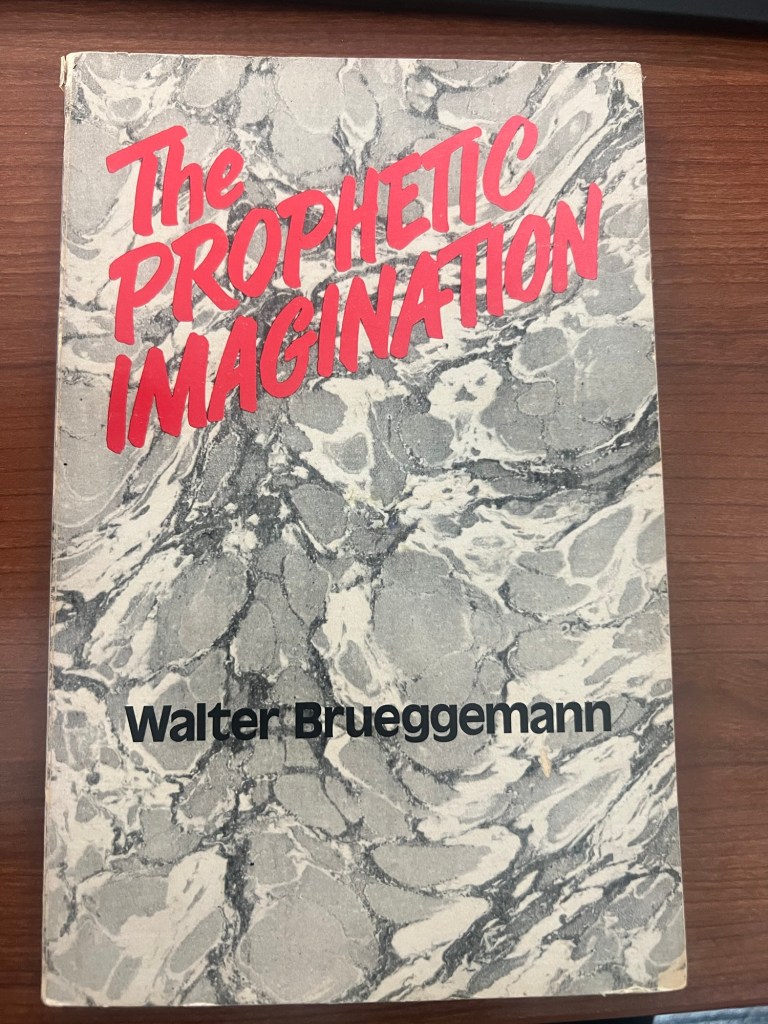
The two favorite books of mine that I will be quoting from are “The Prophetic Imagination,” first published in 1978 by Fortress Press, and “Theology of the Old Testament: Testimony, Dispute, Advocacy,” originally published in 1997-the year I graduated from High School—by Fortress Press. I call this series of posts “Engaging and Citing Walter Brueggemann.”

Let’s begin with our first statement:

“Here it is argued that they were concerned with most elemental changes in human society and that they understood a great deal about how change is effected. The prophets understood the possibility of change as linked to emotional extremities of life. They understood the strange incongruence between public conviction and personal yearning. Most of all, they understood the distinctive power of language, the capacity to speak in ways that evoke newness ‘fresh from the word.’ It is argued here that a prophetic understanding of reality is based in the notion that all social reality does spring fresh from the word. It is the aim of every totalitarian effort to stop the language of newness, and we are now learning that where such language stops we find our humanness diminished.”

—Brueggemann, “The Prophetic Imagination,” p. 9

“Vwa Papa m”(“Voice of My Father”)

“Vwa Papa m”
(“Voice of My Father”)

Pawòl Papa redrese yon pitit kite nan move chemen.
Li pèdi espwa lè papa pa la.
Vwa Papa swiv pitit la tout kote li ye.
Li se yon repozwa lè li nan soufrans.
Papa pote ampil kè kontan ke n paka mezire.
Li se prezans ki toujou la lè tout lòt moun ale.

Lè silans lavi vin pi fò,
se fòs Papa a ki kalme nanm yon pitit ki boulvèse.
Sa plis ke lanmou
Papa a remonte kouraj pitit li ki te kraze.
Vwa Papa a fò epi klè
Li proteje pitit lan lè gro vag lanmè vin pou ranmase l.
Papa se espwa lavi.
Non li se pwomès ki pap jan m fayi.
tankou yon gwo limyè ki klere pi lwen pase zetwal k ap leve.

Sajès papa trase chemen lavi.
Li gide pitit li lè li nan dout ak krent.
Nan limyè fòs papa, li vin tounen yon gason jan papa l te reve l.
Nan mitan tanpèt ak silans,
vwa papa a kontinye sonnen,
li rafrechi nanm pitit gason an jiskaske tout bagay fini.

“Voice of My Father”: A Father’s Day Poem

As we celebrate Father’s Day tomorrow, I wrote this new poem to salute all the fathers and sing their praise. This poem is about the meaning and legacy of a father.

“Voice of My Father”

The father’s words reclaim a wandering son.
Hope is far when he is not near.
The father’s voice follows the runaway son.
He stepped into his pain,
bringing him joy too deep to be measured.
He is the presence that lingers when the world walks away.

When silence grows louder, the father’s strength calms his troubled soul.
Beyond the limits of love,
he rebuilds the broken courage of his son.
The father’s voice, powerful and loud,
turned his steps away from raging storms.
He carried the promise of hope
like a lighthouse beyond the rising star.

The father’s wisdom paves the pathway of life,
guiding a son through fear and doubt.
Mirroring the father’s strength, he becomes a man of his father dreamed.
Through storms and silence, the father’s voice echoes,
refreshing his soul until the end of all things.

#FathersLove

#VoiceOfMyFather

#FatherhoodLegacy

#SaluteToFathers

#PoetryForDad

#HonorYourFather

#FatherAndSon

#MenOfCourage

#DadWisdom

#StrongFathers

#HealingWords

#LighthouseDad

#FatherhoodMatters

#SpokenWordPoetry

#PoeticTribute

#LegacyOfLove

#CelebrateDads

#FatherStrength