“Engaging and Citing Brueggemann: Yahweh against the god/s of the Empire” (Day 6)
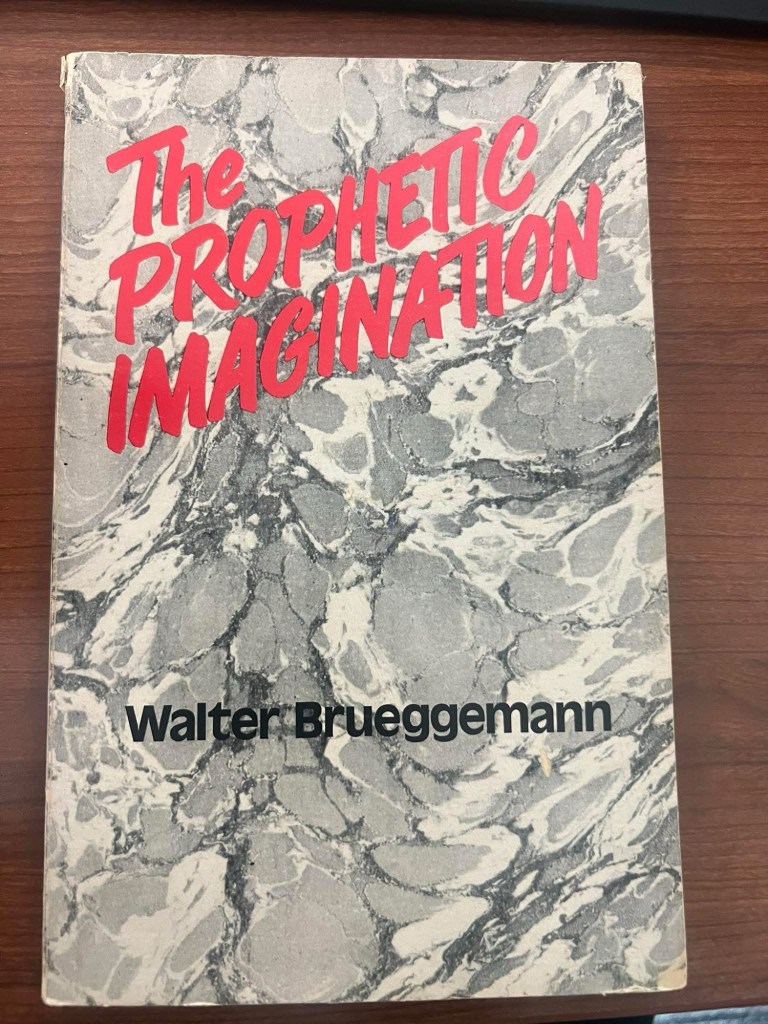
“The God who will decide is not the comfortable god of the empire, so far and well fed as to be neutral and inattentive. Rather, it is the God who is alert to the realities, who does not flinch from taking sides, who sits in the divine council on the edge of his seat and is attentive to his special interests. It is the way of the unifying gods of the empire not to take sides and by being tolerant to cast eternal votes for the way things are…
It is the gospel; God is for us. In an empire no god is for anyone. They are old gods who don’t care anymore and have tried everything once and have a committee studying all other issues…And so the urging I make to those who would be prophets is that we do not neglect to do our work about who God is and that we know our discernment of God is at the breaking points in human community.
Thus, a truly free God is essential to marginal people if they are to have a legitimate standing ground against the oppressive orders of the day. But then it follows that for those who regulate and benefit from the order of the day a truly free God is not necessary, desirable, or perhaps even possible.“
—Brueggemann, The Prophetic Imagination, pp. 24-5, 30
Brief Commentary
In the above text, Brueggemann establishes a clear distinction between Yahweh and the god/s of the Empire. The contrast between these two entities is best articulated in the way God acts in the world as compared to the way the god of the Empire behaves toward the people. Second, Brueggemann also establishes a remarkable contrast in respect to Yahweh’s nature and intervention in human affairs with those of the deity of the Empire.
It is natural for Yahweh to take sides with “marginalized communities” in order to set them free from the “oppressive orders of the day,” including the socioeconomic and political structures and policies of the Empire. In fact, the freedom of Yahweh is linked to his disposition to intervene in the political sphere so he could give the oppressed “a legitimate standing” against their collective experience, that is, the inflicted inhumane treatments and conditions under the Empire. Yahweh is not silent, but he is active in the world and understands the social realities of those who are suffering and being dehumanized by both oppressive systems and violent regimes/governments. Yahweh’s awareness of the human experience is also connected to his power and sovereignty, as well as his care for and compassion toward marginal people and the powerless.
By contrast, the god of the empire is neutral in decision-making and inattentive to systems of oppression that cause suffering and violence in the world. It is the inaction of the imperial god that fuels both human violence and destruction in human communities. The imperial deity is not concerned about the common good and human flourishing in society. Yahweh is the compassionate deity who cares, loves, hears, and acts. He reconstitutes his people and comforts the weak by being an ally.
Therefore, Brueggemann could argue that it is necessary for the prophetic message to articulate correctly the true character of God and for contemporary prophets to properly instruct the people that Yahweh does indeed take sides in decision-making and is committed to a “preferential option” for the oppressive and marginalized communities and people. Within this divine logic, those who are called to be “prophets” in such a time as this need to imitate both the character and attitude of Yahweh. They should be like God in the way they also should take sides in decision-making and walk in solidarity with suffering communities—for their liberation and dignity.
 drcelucienjoseph, "Thinking and Meditating"