“Engaging and Citing Brueggemann: Hope and Prophetic Hope” (Day 2)
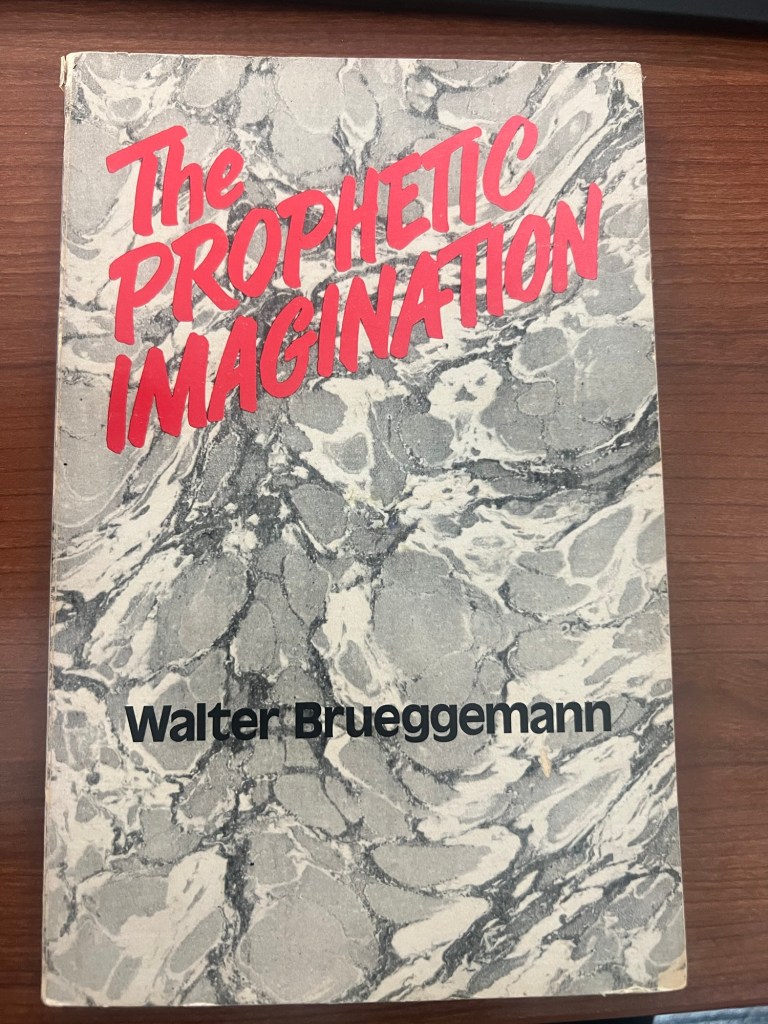
For Day 2, I an interested to bring your attention to the relationship between prophetic imagination and (prophetic) hope:
“The task of prophetic imagination and ministry is to bring to public expression those very hopes and yearnings that have been deniedso long and suppressed so deeply that we no longer know they are there. Hope, on the one hand, is an absurdity too embarrassing to speak about, for it flies in the face of all those claims we have been told are facts. Hope is the refusal to accept the reading of reality which is the majority of opinion; and one does that only at great political and existential risk. On the other hand, hope is subversive, for it limits the grandiose pretension of the present, daring to announce that the present to which we have all made commitments is now called into question. Thus the exilic community lacked the tools of hope. The language of hope and the ethos of amazement have partially been forfeited because they are an embarrassment. The language of hope and the ethos of amazement have been partly squelched because they are a threat.”
—Brueggemann, The Prophetic Imagination, p. 67
Brief Commentary
The goal of the prophet of God is to help the people of God and society at large recover something vital that has been stripped from them and experience: hope. This hope acts as a life-sustaining force that empowers them to endure the trials and upheavals of existence. This hope is both existential and prophetic. Prophetic hope confronts the political structures that obscure the transformative power of reality—an awakening that holds the potential to ignite political change. To the political order, such hope is dangerous, for it threatens the very foundations of domination and control.
On one hand, prophetic hope confronts the dehumanizing forces that have come to define the human condition in our present age. On the other hand, it is deeply rooted in the character and promises of God—the source, sustainer, and future of all genuine hope. Prophetic hope says NO to the reduction of human beings as disposable objects; instead, it reclaims human futures and the dignity and joy that oppressive socioeconomic and political systems have stolen.
Finally, the biblical prophet understands prophetic hope as a vital human incentive for the human experience and flourishing in the world. It is also an essential ingredient that belongs not only to the sacred community, the people of God, but also serves as a theocentric foundation essential to the art of governance and politics. Such hope contributes to the holistic flourishing of all people within society. Prophetic hope must be embedded in the spirit and the language of the people (of God) for it to be both emancipative and restorative.
 drcelucienjoseph, "Thinking and Meditating"