“Jesus: An Old Story for a Dying American Christianity, Desperate Humanity, and Disoriented World”

“Jesus: An Old Story for a Dying American Christianity, Desperate Humanity, and Disoriented World”

The most important Person in Christianity and Christian history was an Immigrant Refugee and a Person of Color

1. Who challenged the Capitalist banking system of the Roman Empire.
2. Was an anti-imperial fighter.

3. Challenged the structures, forces, powers, and the government (and the class system and the individuals that support them) that oppressed the Poor, the underclass, and the Outcast.
4. Who fed the poor and the hungry.
5. Who provided free healthcare to the uninsured.
6. Who tablefellowshipped with the homeless, and the street prostitutes and gangsters.
7. Who told all of these people and groups named above that he was sent to serve them, to improve their lives, to love them, and to die sacrificially and willingly so they could be free spiritually from both social and spiritual oppressions and sins.

*This Jesus is absent in most conservative-evangelical Theology books, ministerial-seminary training schools, preaching, churches, and Sunday school lessons. The problem is that this Jesus is not a power-seeking-and-hungry Lord and Savior. His teaching, leadership style, and ethics–that is his cultural, economic, moral, and political preferences and choices– contradict those of the contemporary Christian churches and American Evangelicalism. His moral vision is the antithesis of the contemporary economic model, globalization, world-systems, and worldviews, which contemporary American Christianity supports.

Most Contemporary Christians in America prefer the majestic and glorious Jesus as God and not the Jesus as Man, the lover of the poor, the homeless, the refugee, the immigrant and the friend of the underclass, the wage worker, the exploited, and the colonized.

This Jesus was committed wholeheartedly to the practice and promotion of justice, equality, human dignity, and godliness. This Jesus who was/is a social reformer and “The Way” to God was God-incarnate in the human flesh.


“Covenant Faithfulness and God’s Very Good Purposes for Marriage”

“Covenant Faithfulness and God’s Very Good Purposes for Marriage”

Tomorrow morning (December 2) at Jesus Center, I will be teaching about faithfulness and sexual purity in marriage and the main objectives of (Christian) marriage. I invite you to be part of this conversation.

Worship service at Jesus Center Community Church begins at 10:00 am; however, we come half and hour early ( about 930 am) for coffee☕, fellowship, and conversation before the service.

You are our special guest. Please bring a friend with you.

“The Word Became Flesh: The Reason I write”

“The Word Became Flesh: The Reason I write”

The most fundamental reason I love writing and publishing my thoughts on certain issues and share them with the world is this: I love words and believe that ideas communicated through words can change the world, transform the course of society, heal and restore broken lives and friendships, and orient us to an alternative future and more promising way of life. This is the reason I write and the most important thing about me as a writer and citizen of the world.

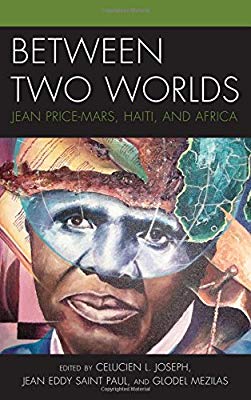
“Between Two Worlds: Price-Mars, Haiti, and Africa”

“Understanding Price-Mars: Africa First not Haiti” (Part 2)

The single passion of Jean Price-Mars was to become “a great man for his nation (Haiti) and race (black people).” In his (45-page) controversial response to René Piquion (“Lettre ouverte au Dr. René Piquion, directeur de l’École normale supérieure, sur son Manuel de la négritude”: Le préjugé de couleur est-il la question sociale?” 1967), he informed us that was his mother’s driven vision for him: to be an exemplary man of valor to the Haitian people, the people of Africa, and those of African ancestry in the Black Diaspora. Because of this obsessive childhood dream (or a dream driven by a passion for Haiti and Africa), in his scholarship and public intellectual activism, Price-Mars resisted the separation of Africa, Haiti, and the black diaspora.

Unlike other Haitian intellectuals (i.e. Baron de Vastey, Joseph Antenor Firmin, Hannibal Price, Louis Joseph Janvier, etc.) who portrayed Haiti and interpreted the history of Haiti, by the virtue of its existence as the first postcolonial state and Black Republic, and its successful revolution and tremendous contributions to universal emancipation, human rights, and the end of slavery (as the rehabilitation of the black race in modernity), Price-Mars constructed an alternative narrative of Haitian history and Haitian society premised on the history of Africa and the Old Continent’s contributions to universal civilization in human history.

On one hand, Price-Mars would not use African traditional society and life, or the culture of Haitian peasants, which is African in content and practice, as a model to “build” the contemporary Haitian society. On the other hand, he would urge Haitian intellectuals and the country’s elite-minority to reconsider the African retentions on Haitian soil and Haiti’s indebtedness to Africa. The Price-Marsian clarion call to affirm the African presence in Haiti does not mean that Price-Mars has undermined Haiti’s triple heritage: Africa, Native American, and Western. It does convey, however, Africa is first, and that the “Black Continent” should shape and occupy the Haitian imagination.