10 Basic Facts about Religion: A Comparative Approach

10 Basic Facts about Religion: A Comparative Approach

  1. Submission is a universal characteristic of all religious faiths. The essence of religion is devotion and submission to a transcendent Being (Beings), the ultimate Reality, or a metaphysical Force (Forces) beyond the natural world.
  2. Organization is basic to all religious traditions. Religion helps us organize our personal and collective lives in the world.
  3. Meaning is fundamental to all religious systems. Religion helps us to make sense of the world and about who we are as human beings and residents of this planet.
  4. All religions promote a pedagogy of human relations and mutuality. Religion offers basic and transcendent principles and instructions to men and women on how to act toward one another.
  5. The essence of all faith traditions leads to a particular way of being in the world as human beings. Religion provides various ways to help people connect to each other and relate to their environment.
  6. Power is a common core of all religion. All religious traditions sustain the idea that power is a regulating force in the world and social relations, and that divine or supernatural power is greater and more authoritative than any political authority or earthly power.
  7. Conformity is the way of integration and membership in all religious traditions. Religious conformity is associated with the tendencies and sensibilities of a particular tradition as they pertain to an agreeable and coherent religious belief, codes of conduct, behaviors, and manners for group membership and association.
  8. The phenomenon of control belongs to all faith systems. The basic goal of religious codes of conduct and belief is to provide a guiding way to influence our rational and irrational behaviors and actions. Control, as a religious propriety, regulates our deficiencies and human/social relations, and is important for achieving human flourishing and the common good in the world.
  9. Devotion is a fundamental characteristic of all faiths. Religion is profoundly about the way of devotion: devotion to a Supreme Being or Transcendent Force, and human beings mutually devoting themselves to one another.
  10. Human flourishing is a universal virtue of all religious traditions. While human flourishing is defined differently in all the major religious traditions (Judaism, Christianity, Islam, Yoruba Religion/Afro-derived religions in the African Diaspora, Confucianism, Hinduism, Buddhism, Taoism) of the world, it is still the basic ethical philosophy of being pious, kind, compassionate, interpersonal, and relational in the world.
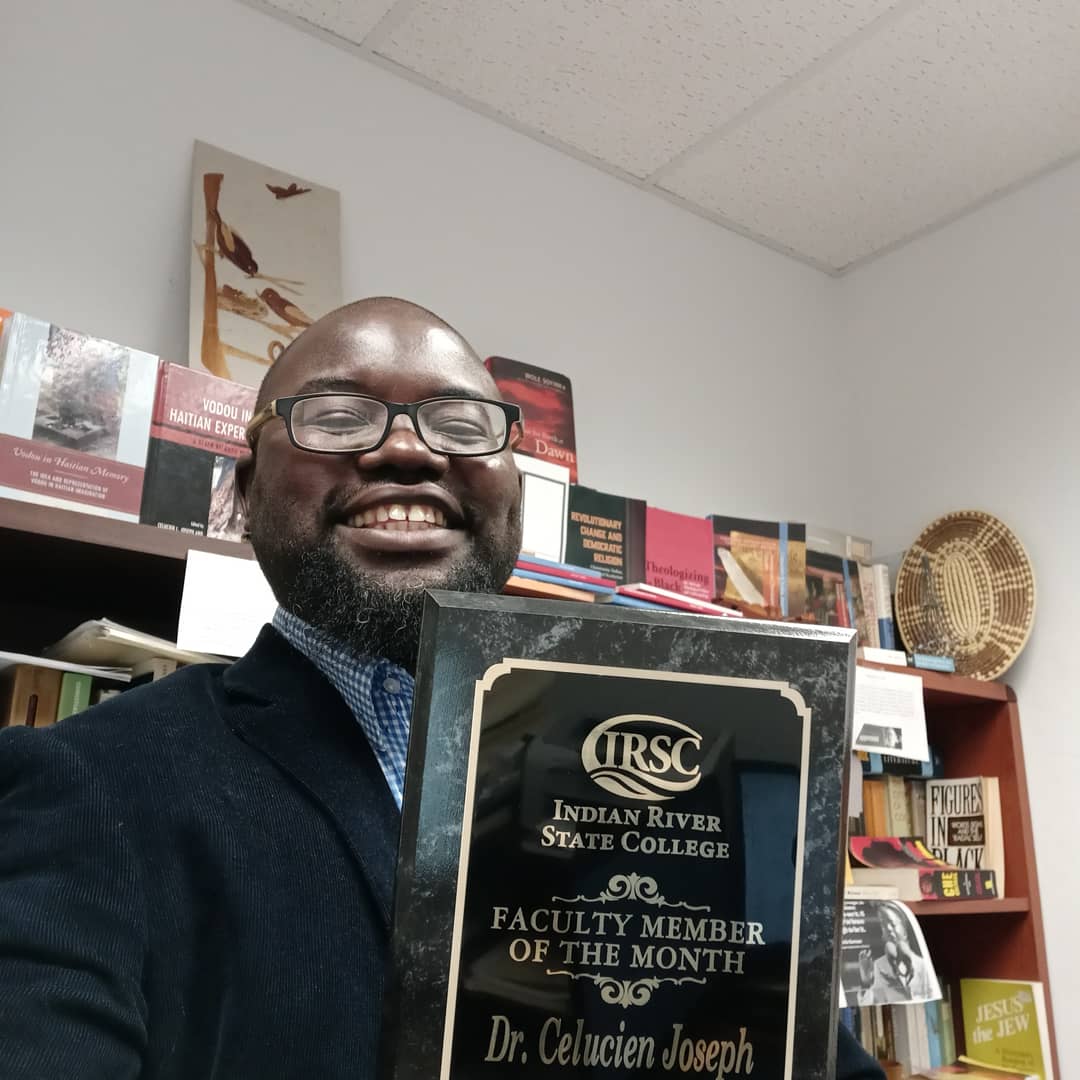
I Won An Educational Award: The Faculty of the Month at IRSC!

While I was rehearsing my talk (“What’s Good and Relational about the Craft and Art of Writing?”) for tonight’s (4/1) “Creative Writing Awards Ceremony,” two #IRSC Campus Deans and one Provost walked in my office this morning at 11:48 am to surprise me with this award.

I am in tears, but filled with joy.

I want to take the time to thank my colleagues in the English and Communications Department at IRSC, and the school’s administration and the IRSC community for this award. In particular, I would like to thank my students for believing in me. You continue to inspire me to learn, teach, research, and improve myself every day. I am because of you, and We are because We belong together.

“According to Scripture: A Brief History of the Good Friday, and Its Theological Value”

“According to Scripture: A Brief History of the Good Friday, and Its Theological Value”

“May Christ’s sacrifice give us the courage to offer our own bodies for justice and peace.”
–Oscar Romero (1917 – 1980)

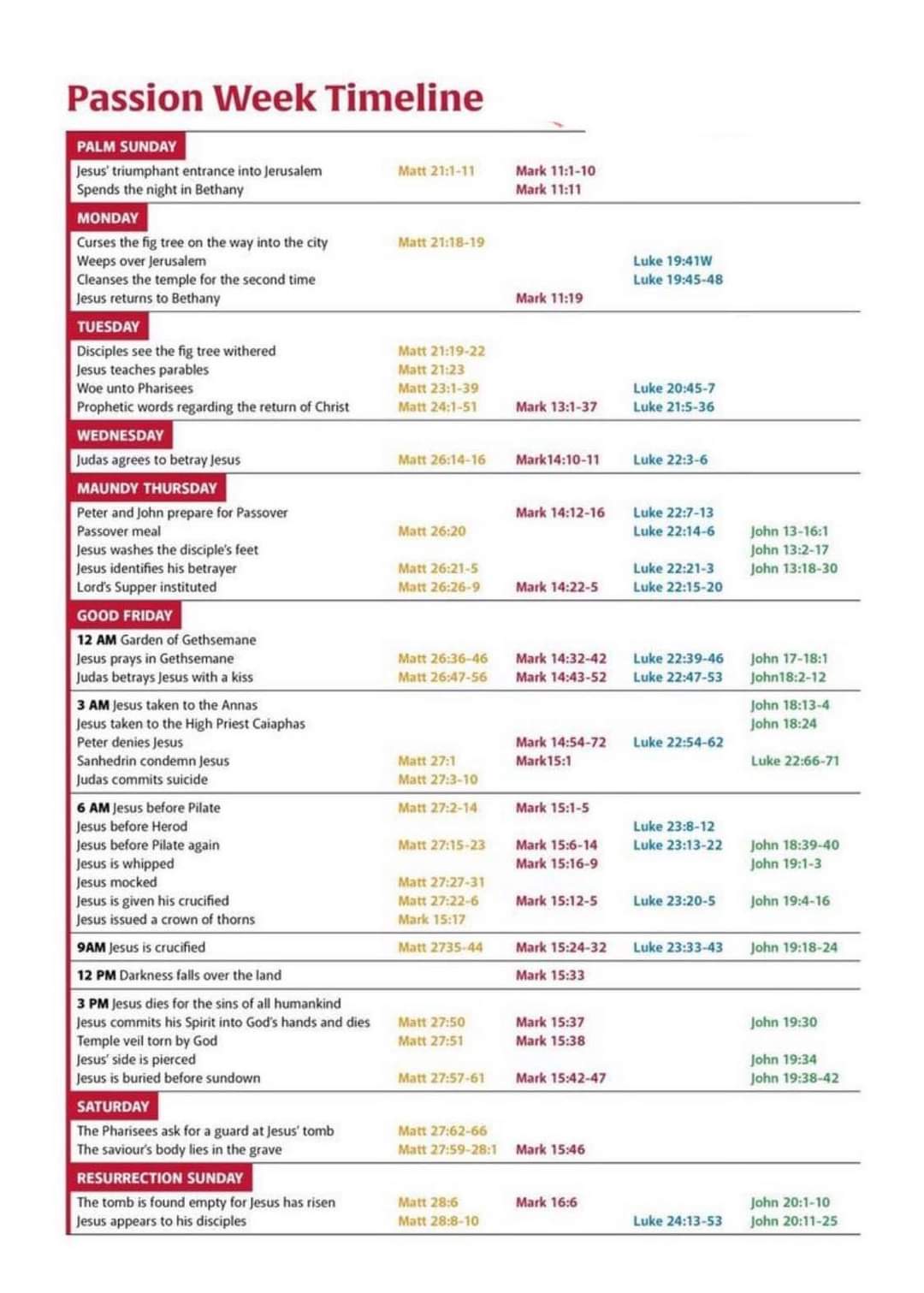
What did happen to Jesus on Good Friday?

Take a look at the chart below for references in the Bible:

I. The Historicity of the Good Friday and the Death of Jesus

  1. Jesus prayed in Gethsemane.
  2. He is betrayed by Judas.
  3. He was put on trial before the Jewish Supreme Court: the Sanhedrin
  4. The Sanhedrin condemned Jesus to death.
  5. Peter, one of Jesus’ famous disciplines, betrayed Jesus.
  6. Jesus was put on trial before Pilate.
  7. Jesus appeared before Herod for a trial.
  8. Jesus appeared before Pilate for a second trial.
  9. Before his death, the Roman soldiers whipped him, beat him, mocked him, and pierced his body (side).
  10. The Roman soldiers crucified Jesus.
  11. While hanging on the cross, Jesus made seven great statements. His last words were “It is finished.”
  12. Jesus is declared dead.
  13. He was buried before sundown.

II. The Theological and Practical Significance of Good Friday

A. The writers of the New Testament interpret the death of Jesus as a sacrificial atonement for the sins of God’s human creations. In other words, they attributed a cosmic significance to the death of Jesus and construed it as an act of human courage and determination.

B. All of them argue that Jesus’ death was a substitution for the death of God’s image bearers. In other words, Jesus is a model of true love, human servanthood, and selflessness.

C. The writers of the Christian New Testament contend that on the Good Friday, Jesus died as a remission for the sins of all people and all ethnicity, both Jews and non-Jews, men and women, male and female, and the LGBTQ+ people, to use a contemporary concept.

D. According to these same writers, Jesus’ death not only effectuated divine peace (having peace with God, living in peace and understanding with God); also, it established divine forgiveness and secured reconciliation between God and his image bearers.

E. According to Paul, a famous writer of the New Testament books, the death of Jesus means freedom from dominion of sins, no condemnation, justification before God, and new creation. In other words, Jesus’ death offers a model for struggle against injustice and contemporary conversations on human liberation and rights.

As Father Oscar Romero (1917-1980) wrote: “May Christ’s sacrifice give us the courage to offer our own bodies for justice and peace.”

F. According to Peter, another famous writer of the New Testament Scriptures, the sufferings and death of Jesus on Good Friday are connected to the idea and way of biblical discipleship; in that regard, following Jesus might lead to human suffering, even death.

G. The New Testament writers sustain the idea that Jesus’ death on the Good Friday is a proclamation of a new and quality of life, what they theoretically phrased the “eternal life,” and the birth of a new creation, what they theoretically called the “new people of God.”

H. The authors of the New Testament interpret the events of the Good Friday and the death of Jesus as credible and reliable historical transactions (see # 1-13 above).

I. Finally, because of the historical value and theological implications attributed to the Good Friday and the death of Jesus, the writers of the New Testament make a clarion call to God’s human creations to believe in Jesus, to follow him, and to proclaim the meaning of Jesus’ death as the good news for all people and for the world–as they continue to live on this earth.

Happy Good Friday!

Maundy Thursday: Jesus Washes His Disciples’ Feet (John 13:1-17): A Lesson on Humility and Servanthood

Maundy Thursday: Jesus Washes His Disciples’ Feet (John 13:1-17): A Lesson on Humility and Servanthood

“1 It was just before the Passover Festival. Jesus knew that the hour had come for him to leave this world and go to the Father. Having loved his own who were in the world, he loved them to the end.

2 The evening meal was in progress, and the devil had already prompted Judas, the son of Simon Iscariot, to betray Jesus. 3 Jesus knew that the Father had put all things under his power, and that he had come from God and was returning to God; 4 so he got up from the meal, took off his outer clothing, and wrapped a towel around his waist. 5 After that, he poured water into a basin and began to wash his disciples’ feet, drying them with the towel that was wrapped around him.

6 He came to Simon Peter, who said to him, “Lord, are you going to wash my feet?”

7 Jesus replied, “You do not realize now what I am doing, but later you will understand.”

8 “No,” said Peter, “you shall never wash my feet.”

Jesus answered, “Unless I wash you, you have no part with me.”

9 “Then, Lord,” Simon Peter replied, “not just my feet but my hands and my head as well!”

10 Jesus answered, “Those who have had a bath need only to wash their feet; their whole body is clean. And you are clean, though not every one of you.” 11 For he knew who was going to betray him, and that was why he said not every one was clean.

12 When he had finished washing their feet, he put on his clothes and returned to his place. “Do you understand what I have done for you?” he asked them. 13 “You call me ‘Teacher’ and ‘Lord,’ and rightly so, for that is what I am. 14 Now that I, your Lord and Teacher, have washed your feet, you also should wash one another’s feet. 15 I have set you an example that you should do as I have done for you. 16 Very truly I tell you, no servant is greater than his master, nor is a messenger greater than the one who sent him. 17 Now that you know these things, you will be blessed if you do them.”

A New Book Idea: “Toward an Interfaith Dialogue and Understanding: Vodou and Christianity in a Conceptual and Practical Framework”

Here’s the conceptual framework about the book I have always wanted to write; or if I can not write it myself, I will be delighted to serve as the chief editor and make a call for papers. I am interested working with theologians, historians, religious scholars, literary scholars, social scientists, anthropologists, practitioners, peace and justice activists, etc.

“Toward an Interfaith Dialogue and Understanding: Vodou and Christianity in a Conceptual and Practical Framework”
by Celucien L. Joseph, PhD

Table of Contents

Introduction: Rethinking the Meaning of Faith, Traditions, and Human Practices: Why Writing this Book on Vodou and Christianity?

Chapter 1: The Genesis of both Religious Traditions

Chapter 2: Creating Meaning and Divine Connection: The Spirituality of Vodou and Christianity

Chapter 3: The God Who Is: The Concept of God in Christianity and Vodou

Chapter 4: My Spirit Shall Guide You: The World of the Lwa and the Spirit of the World

Chapter 5: Master of the Crossroads and Light of the World: Jesus and Legba in
Conversation

Chapter 6: How Shall We live? Vodou and Christian Ethics, and Human Relations

Chapter 7: Representation and Identity: Gender, Race, and Class in Christianity and Vodou

Chapter 8: Reconnecting the Present and the Past: Vodou and Christianity in African
History and the African Diasporic Experience

Chapter 9: Public Faith: The Cause of Participatory Democracy and Social Change

Chapter 10: Creating a Better World: A Call to Interreligious Dialogue and Understanding

Chapter 11: Common Objections to Vodou and Christianity

Conclusion

***For me, if a (the principles and practices of a religion) religion cannot enhance our democracy, lead to social and political change, & improve human relations, we need to rethink about its relevance and meaning in both civil and political societies.

“For Haiti, for the Ancestors: A Poem for National Renewal and Ecological Rehabilitation”

“For Haiti, for the Ancestors: A Poem for National Renewal and Ecological Rehabilitation”

In 1839, the brilliant Haitian poet and storyteller Ignace Nau (1808-1845), published an impressive lyrical poem that exhibits thick patriotic zeal and affectionate Haitian nationalism. In the poem, “Dessalines, à ce nom, amis, découvrons nous” (“Dessalines! . . . At that name, doff hats, my friends!”), Nau pays homage to the founding father Jean-Jacques Dessalines, whose effective leadership and military genius guided the Indigenist army (the name of the African military that fought the army of the French Empire in 1803) to emancipate the enslaved African population from chattel slavery and the French colonial system toward freedom and independence. In the poem, Ignace Nau, writing with a sense of high optimism toward the new and young nation of Haiti (that was only 35 years old!) and the new citizens of this great land, imagined the possibility of ecological rebirth and national restoration in his native land of Haiti. He foresaw the blossoming of a new ecology and the restoration of the country’s natural resources and beauty. The colonial conquest and wrongful domination of nature in Haiti had deferred the growth of the country’s flora and non-human creations. Chattel slavery and the colonial system had brought a curse on nature. Below, I share this stanza with you:

“—Oh! Demain le soleil se lèvera plus plur
Et plus majestueux dans sa courbe d’azur!
L’oiseau nous chantera des chants d’amour encore,
La voix de nos forêts redeviendra sonore,
Et nos fleuves taris jailliront en torrents,
Et nos lacs rouleront des flots plus transparents,
Et toi, peuple héroïque, et toi, mon beau génie,
Demain vous saluerez une ere d’harmonie!”

“Oh! Tomorrow the sun will rise more!
And more majestic in its azure curve!
The bird will sing us love songs again,
The voice of our forests will become sound again,
And our rivers will flow out in torrents,
And our lakes will roll more transparent streams,
And you, heroic people, and you, my beautiful genie,
Tomorrow, you will greet an era of harmony!

In 1839, in his patriotic verse, the great Haitian writer Ignace Nau sang loudly “Ayiti pap peri”/”Haiti will not die.”

“Jesus and the Incarcerated: What Shall We Do With Jesus?”

“Jesus and the Incarcerated: What Shall We Do With Jesus?”

According to the Gospels in the Bible (i.e. Matthew 27:22-25), the people at Jesus’ trial before Marcus Pontius Pilatus (“Pilate”), the ruling Roman Governor (prefect), did not want to negotiate with him to liberate Jesus from a crime he did not commit; rather, they insisted he should be condemned to death. Their earnest and robust hatred for (and toward) this man named Jesus, who called himself a divine King and the (Jewish) Messiah, marked the religious history of Judaism and Christianity, and the politics of the Roman Empire. Their consensus led to the possible divine retribution upon themselves and God’s curse on their children–at least, that is their anticipation for their deliberate commitment to put an innocent individual, an economically-disadvantaged Jewish peasant male, to death. Who in the world would wish such things upon themselves and their children?

The historic gesture of Governor Pilate to yield to the collective will and desire of the people to execute Jesus by way of death penalty (the crucifixion) was an act of cowardness to preserve his political power and maintain regional peace. Peace at the expense of undermining human dignity and silencing justice as fairness is false peace. The gathering people rejoiced because Governor Pilate acted according to the will of the majority (?), and may have perceived his political action as an act of true democracy. Nonetheless, the will of the majority does not automatically translate into virtuous democracy nor should it even be equated with peace, unity, and human flourishing. On one hand, an act of democracy might benefit a group of people or a nation; on the other hand, another act of democracy might disfranchise and even condemn another group of people or a nation. The democratic action and intervention that takes into account the plot of the marginalized, the most vulnerable, and the least among us in society, is what constitutes true democracy and would advance human flourishing in society. The poor may not have political power, but have democratic ideals. The marginalized understand justice when they witness it. The incarcerated can identify fairness when they experience it.

Like the typical contemporary (American) politician, Pilate could not afford not to be appointed in the future election and lose this high place of coveted honor and prestige: The Office of Governor-General He acted for his own sake and not for the sake of justice. Pilate was part of the broken Roman Judicial system. His action toward Jesus, who could not pay to gain justice and a fair trial, strengthened the structure of the system and deferred the cause of justice for the poor and the marginalized in society. It is good to note that Pilate had the political power to contribute to change and good in the Judicial system, but he chose to silence justice and close the door to judicial reformation in the Roman Empire. Hey, shall we even expect anything good to come from an authoritative figure of the most powerful Empire at the time? World empires are born to conquer, destroy, oppress, and dehumanize people, and imperial authorities and officers are part of the imperial strategy, design, and ambition. Yet we should never compromise moral responsibility and ethical accountability when human dignity is threatened and the sacredness of life is undermined in the political life and society.

In today’s (American) Justice system, the marginalized and the poor are crucified unjustly. The Prison system is against them and do not contribute to their rehabilitation in society. A justice system that does not promote fairness and reformation is a failed institution. A prison system that continues to maintain the status-quo is resistant to internal change and structural renovation; such an institution fails its citizens and defers human development or progress in society. To ask what shall we do with Jesus? is an inevitable quest for justice, beauty, compassion, and moral integrity in society and the political life. It is also a daring spiritual matter that calls into question and relevancy the meaning of Jesus in one’s life or existence. Consequently, Jesus is an existential question for all times.

22 “What shall I do, then, with Jesus who is called the Messiah?” Pilate asked.

They all answered, “Crucify him!”

23 “Why? What crime has he committed?” asked Pilate.

But they shouted all the louder, “Crucify him!”

24 When Pilate saw that he was getting nowhere, but that instead an uproar was starting, he took water and washed his hands in front of the crowd. “I am innocent of this man’s blood,” he said. “It is your responsibility!”

25 All the people answered, “His blood is on us and on our children!”–Mathew 27:22-25

What shall we do with Jesus is the existential question for our contemporary moments?

What shall we do about the innocent prisoner or the incarcerated is the existential question for our contemporary moments?

“Writing and thinking about ‘The Slave’s Complaint’: A Poem”

“Writing and thinking about ‘The Slave’s Complaint’: A Poem”

Masillon Coicou (1865-1908)

Just in case you want to know how I spent my birthday Yesterday.

On my birthday, I took a very long nap to fight my interesting seasonal allergy that comes every year, 3 days before my birthday and would last for two weeks; thanks be to God, pharmaceutical scientists, and pain reliefs such as the “Allergy nasal Spray” and “Zyrtec” that helped me to rest and sleep for a good four hours. 💘

Afterwards, while still sneezing and being physically uncomfortable, I spent about five to six hours exegeting and carefully analyzing the syntax, rhetoric, and message of this powerful poem featured here: “Complaintes d’Esclave” (“The Slave’s Complaint”) by the great Haitian poet and brilliant social critic Masillon Coicou (1865-1908). This poem, published in 1892, is one of the earliest expressions of the problem of Black theodicy and the conundrum of the slave life in Black Atlantic Literary Tradition and Haitian Poetry. This is a badass prayer of lament similar to the ones found in the book of Psalms in the Bible. The slave-speaker in the poem is very angry at God for making him “a negro” and “black” (“Pourquoi donc suis-je nègre? Oh! pourquoi suis-je noir?”), predestining his fate. The slave rejects the idea of redemptive suffering found in the book of Job, Christian theology, and in certain versions of Liberation theology (i.e. Black Theology), and he pleads for divine justice and emancipation. God disappoints him and he fails to come to his rescue. The French version/original is quite powerful and poetically stunning. In my attempt to explain it, I ended up writing a 3000-word draft about it. 😂